Urban legends have shadowed human culture for centuries, passed along in hushed tones between friends, scrawled into online forums, and retold around campfires generation after generation. The earliest term by which these narratives were known, “urban belief tales,” highlights what was then thought of as a key property: their tellers regarded the stories as true accounts, and the device of the FOAF – an acronym for “Friend of a Friend” invented by English writer and folklorist Rodney Dale in 1976 – was a spurious but significant effort at authentication. What makes these legends so enduring, though, is not always their falseness – it’s the kernel of uncomfortable reality hiding at their core. Some of history’s most gripping urban myths turn out to have roots in actual events, real people, and documented history.
Bloody Mary: Queen, Witch, or Mirror Illusion?
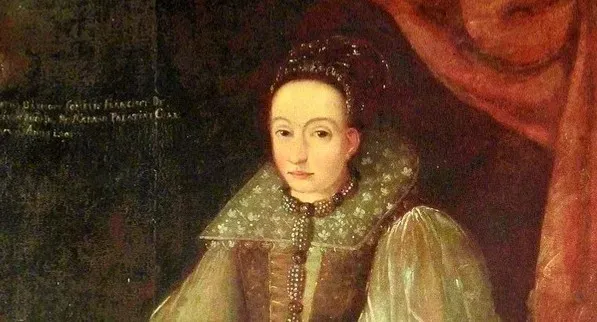
Bloody Mary is a legend of a ghost, phantom, witch, or spirit conjured to reveal the future. She is said to appear in a mirror when her name is chanted repeatedly. The Bloody Mary apparition may be benevolent or malevolent, depending on historical variations of the legend. The origins are deliberately murky, and historians have long argued over who or what the legend actually represents. A number of historical figures have been put forward as candidates for “Mary,” including Mary I of England, daughter of Henry VIII and Catherine of Aragon, who had around 300 religious Protestant dissenters burned at the stake during her reign, earning her the nickname “Bloody Mary.”
While Mary’s gender played a pivotal role in the formation of her image, arguably the most important factor in the “Bloody Mary” moniker’s staying power was the rise of a national English identity built on the rejection of Catholicism. A 1563 book by John Foxe, known popularly as Foxe’s Book of Martyrs, contributed to the creation of this Protestant identity, detailing the torments suffered by men and women burned at the stake during Mary’s reign through word-of-mouth accounts and visceral woodcut illustrations. Beyond the historical queen, there is also a compelling scientific angle. Of particular relevance to the Bloody Mary legend is a perceptual illusion discovered by psychologist Giovanni Caputo in 2010. Caputo found that staring at your own reflection in a dimly lit room results in the perception of strange faces, often including monstrous beings, archetypal faces such as babies or old women, or the faces of deceased relatives.
The Bermuda Triangle: Manufactured Mystery on the Open Ocean

The Bermuda Triangle, also known as the Devil’s Triangle, is a loosely defined region in the North Atlantic Ocean, roughly bounded by Florida, Bermuda, and Puerto Rico. Since the mid-20th century, it has been the focus of an urban legend suggesting that many aircraft, ships, and people have disappeared there under mysterious circumstances. However, extensive investigations by reputable sources, including the U.S. government and scientific organizations, have found no evidence of unusual activity, attributing reported incidents to natural phenomena, human error, and misinterpretation. The story of the Triangle as a supernatural zone was largely born from sensationalist writing. Vincent Gaddis’ 1964 article framed the area as a “triangle of tragedy” with disappearances “beyond the laws of chance,” while Charles Berlitz’s 1974 bestseller sold 20 million copies and connected the legend to unrelated events, such as the Mary Celeste mystery, which happened on the other side of the Atlantic.
When the British Channel 4 television program The Bermuda Triangle was being produced for the Equinox series, the marine insurance market Lloyd’s of London was asked if an unusually large number of ships had sunk in the Bermuda Triangle area. Lloyd’s determined that large numbers of ships had not sunk there. Lloyd’s does not charge higher rates for passing through this area. United States Coast Guard records confirm their conclusion. Even the disappearance of Flight 19 in 1945, one of the legend’s most famous incidents, has a more grounded explanation. Lieutenant Charles Taylor, the squadron leader, was the only experienced pilot in the group. According to researcher Karl Kruszelnicki, Taylor arrived with a hangover, flew without a watch, and had a history of getting lost. He believed his compass was broken and thought he was over the Florida Keys when he was actually near the Bahamas. Radio transcripts reveal that some junior pilots suggested turning west toward land, but Taylor insisted on flying east, deeper into open ocean.
MKUltra: When the “Conspiracy Theory” Was Completely True

One of the most well-known examples of a supposed myth rooted in fact is MKUltra, a CIA program that ran from the 1950s through the early 1970s. Initially dismissed as a myth, MKUltra’s existence was confirmed when documents were released under the Freedom of Information Act in the late 1970s. The program aimed to explore techniques for mind control, often through the use of drugs like LSD, sensory deprivation, and psychological manipulation. Experiments were conducted on often unsuspecting citizens, including hospital patients, military personnel, and even prisoners. The scale of the project was staggering. The CIA’s program, gathering under code names that included MKULTRA, BLUEBIRD, and ARTICHOKE, conducted terrifying experiments using drugs, hypnosis, isolation, sensory deprivation, and other extreme techniques on human subjects, often U.S. citizens, who frequently had no idea what was being done to them or that they were part of a CIA test.
Most MKUltra records were destroyed in 1973 by order of CIA director Richard Helms, making it difficult for investigators to gain a complete understanding of the more than 150 funded research subprojects sponsored by MKUltra and related programs. The human cost of the program was severe and well-documented. During the Rockefeller Commission and Church Committee investigations in 1975, the cryptonym became publicly known when details of the drug-related death of Dr. Frank Olson were publicized. In 1953, Dr. Olson, a civilian employee of the Army at Fort Detrick, leaped to his death from a hotel room window in New York City about a week after having unwittingly consumed LSD administered to him as an experiment at a meeting of LSD researchers called by the CIA. As recently as December 2024, the National Security Archive published a major new scholarly collection bringing together more than 1,200 essential records on the program, confirming that its abuses extended well into ordinary American life. The announcement came 50 years after a New York Times investigation by Seymour Hersh touched off probes that would bring MKUltra abuses to light.
Alligators in the Sewers: Absurd Legend, Real Reptiles
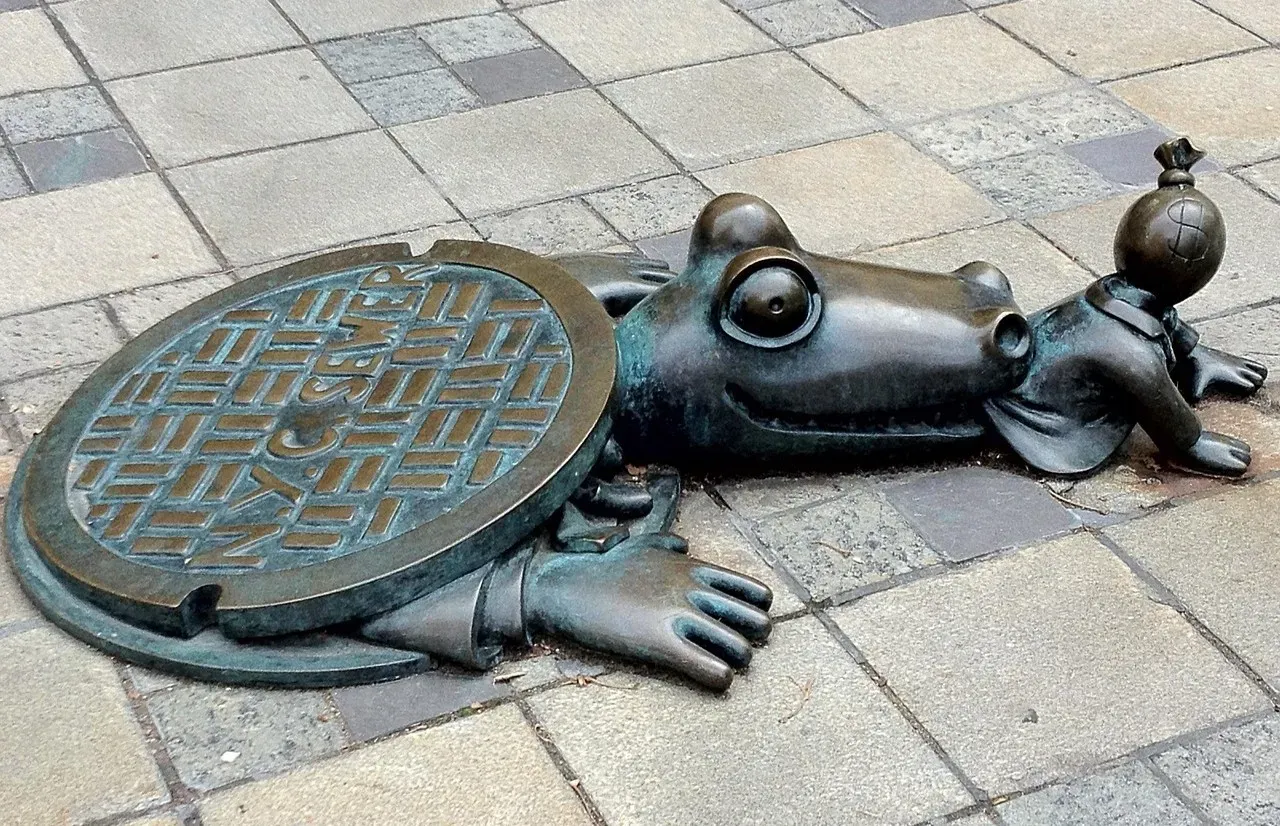
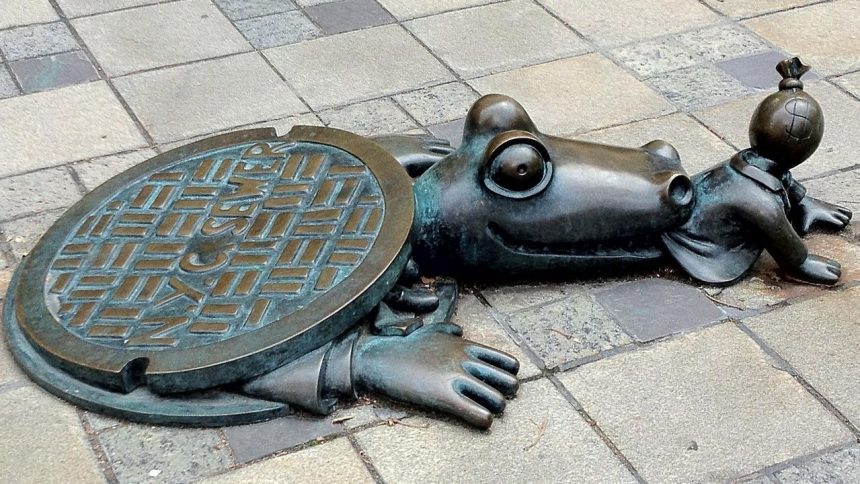
The idea that giant alligators lurk beneath New York City streets has both amused and terrified generations. The myth gained traction in 1935 after a newspaper reported on a group of teenagers pulling a seven-foot alligator from a Harlem sewer. While it’s true that some pet owners have flushed exotic animals into the city’s drainage system, no evidence suggests a breeding population of giant reptiles exists underground. The factual grounding for the legend, however, is surprisingly real in places. One of the only proven instances of an alligator being found in a sewer was in good old New York City, where snow falls for five or more months out of the year. In 2010, authorities in the borough of Queens fished a young alligator measuring two feet long out of the sewers.
Experts from the New York City Department of Environmental Protection have repeatedly stated that the conditions below ground – cold, darkness, and lack of food – make survival impossible for alligators. The original newspaper reports were heavily sensationalized, adding to the myth’s allure. This legend fits a pattern that folklorists have studied for decades. Prevalent themes in urban legends include technology, business and industry, crime, medicine and disease, fast food or contaminated food, disasters, doppelgängers or mistaken identities, and celebrities, as well as traditional themes of death, sex, and money. The alligator legend, with its mix of exotic animal panic and urban infrastructure fear, ticks nearly every box.
The Candyman and the Medicine Cabinet Killer

Released in 1992 and reimagined in 2021, Candyman – based on a short story by Clive Barker – remains a potent horror tale of the revenge undertaken by a murdered artist. While it’s not likely you’ll be able to invoke him by saying his name several times in a mirror, the idea of having a killer burst through a medicine cabinet is actually based in fact. The real event behind this chilling premise is both documented and disturbing. In 1987 the Chicago Reader published a story about Ruth McCoy, a woman living in a Chicago housing project, who made a frantic call to 911 insisting she was being attacked in her apartment. Responders eventually found her dead of gunshot wounds. Investigators determined that her assailants had gained access to her unit by breaking through the connecting wall in the adjoining apartment and climbing in through her medicine cabinet.
Like many famous modern myths, there can be a good deal of truth in the fiction. Whether intentional or a strange coincidence, two of the characters in the 1992 film actually shared the last name McCoy with the real-life victim. The broader phenomenon of urban legends drawing on real crimes is something folklorists have documented extensively. Cases that may have been at least partially inspired by real events include “The Death Car,” traced by Richard Dorson to Michigan, United States, “the Solid Cement Cadillac,” and the possible origin of “The Hook” in the 1946 series of Lovers’ Lane murders in Texarkana, Texas. The Candyman story is a vivid reminder that the line between documented horror and legend can be razor thin.
The Vanishing Hitchhiker: A Global Ghost Story Grounded in Grief
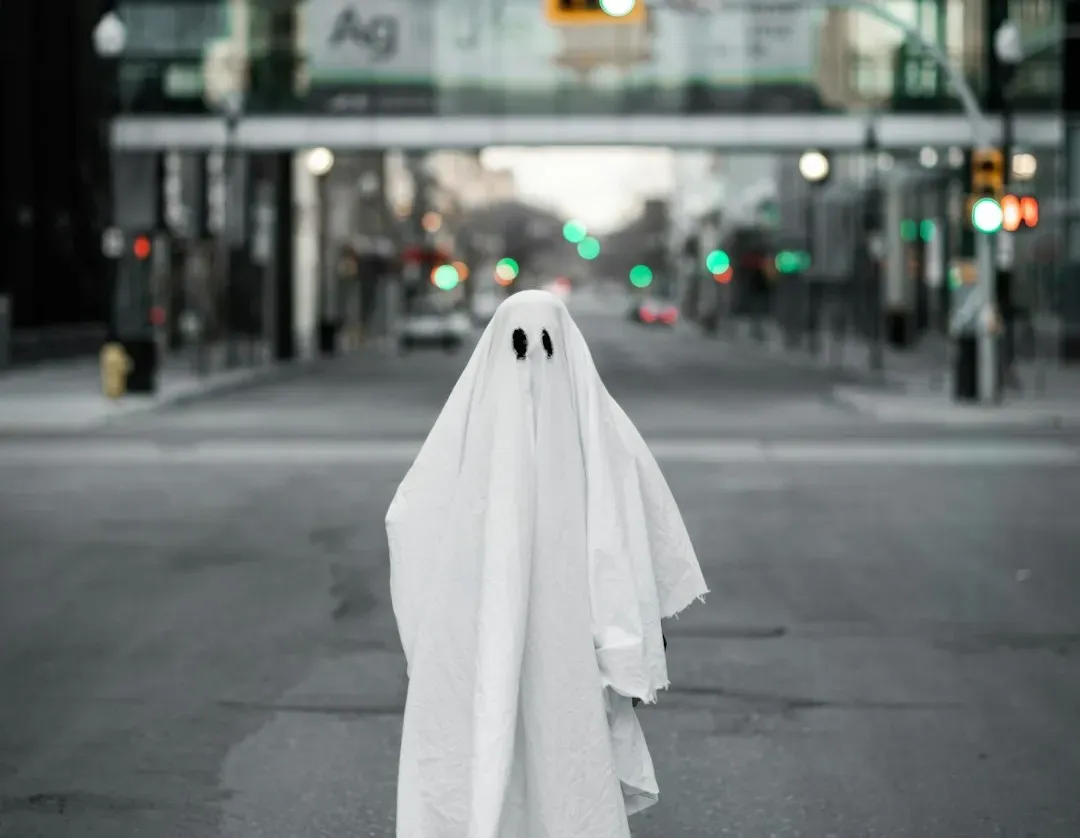
The term “urban legend” began appearing in folklore studies in the mid-20th century to describe the genre of modern “too good to be true” stories shared through oral accounts. The phrase was popularized in 1981 with the publication of The Vanishing Hitchhiker: American Urban Legends and Their Meanings by American folklorist Jan Harold Brunvand. The title refers to one of the most well-known urban legends, that of a person traveling in a vehicle who meets a mysterious hitchhiker. The latter suddenly vanishes and is subsequently discovered to have been a ghost. The tale has adapted to every era and culture. More recent accounts of the vanishing hitchhiker often occur in subways or airports or incorporate recent events. For example, after the devastating tsunami of 2004, tuk-tuk drivers in Thailand began to share a common “wandering dead” story of picking up a fare urgently headed to the airport, only to find that the passengers had vanished upon arrival at their destination.
Chicago’s legend of “Resurrection Mary” is named after a ghost said to appear to drivers on a road past Resurrection Cemetery in the city’s southwest suburbs. This local variation has been told and retold for nearly a century, with witness accounts continuing into the modern era. While at least one classic legend, the “Death Car,” has been shown to have some basis in fact, folklorists have an interest in debunking those narratives only to the degree that establishing non-factuality warrants the assumption that there must be some other reason why the tales are told, re-told, and believed. As in the case of myth, the narratives are believed because they construct and reinforce the worldview of the group within which they are told, or because they provide coherent and convincing explanations of complex events. The vanishing hitchhiker, more than almost any other legend, captures humanity’s oldest fear: that the dead do not always stay gone.