
There’s a quiet but intensely real battle being fought in American neighborhoods right now. It doesn’t always make the front page, but its effects ripple through schools, police precincts, community clinics, and kitchen tables across the country. The fight over sanctuary cities has never been louder, more legally complicated, or more consequential than it is today.
From small Massachusetts towns to the sprawling streets of Los Angeles, questions about who enforces immigration law and who protects the people living next door are dividing communities and reshaping local governance in ways most Americans don’t fully realize. Let’s dive in.
What Exactly Is a Sanctuary City – and Why Does It Matter?

Here’s the thing: there is no single, agreed-upon definition. Sanctuary cities are places where local officials limit their contributions to civil immigration enforcement. That might sound simple enough, but the reality is far messier.
Under a sanctuary policy, state and local officials will limit their cooperation with federal immigration officials but do not actively prevent federal officials from carrying out their immigration enforcement duties. Think of it like a boundary between a neighbor and a landlord. Sanctuary policies do not conceal or shelter undocumented immigrants from detection, nor do they shield immigrants from deportation or prosecution for criminal activities.
In general, sanctuary cities are jurisdictions that prioritize the safety and well-being of all residents by limiting cooperation with federal immigration authorities, allowing limited local resources to be used to support local community members. Sanctuary policies are often adopted in areas with large immigrant populations, and about a dozen states and hundreds of cities are currently considered sanctuaries.
The Scale of the Debate: How Many Jurisdictions Are We Talking About?

The numbers here are genuinely striking. According to the Center for Immigration Studies, as of January 7, 2025, there were 13 states and hundreds of cities and counties with some sort of sanctuary laws that limit cooperation with federal immigration authorities.
Partly because there is no agreed-upon definition of “sanctuary” jurisdictions, different entities enumerate these jurisdictions using different criteria. For instance, the Center for Immigration Studies identifies 13 states and 225 localities with “sanctuary” policies as of January 2025. The Immigrant Legal Resource Center takes a different approach entirely and maps out local cooperation with ICE on a sliding scale rather than a hard count.
Any count of sanctuary jurisdictions remains imprecise because jurisdictions regularly create, change, or eliminate such policies. It’s a moving target – one that makes clear this isn’t a frozen debate but an actively evolving one.
The Executive Order That Shook Everything
January 20, 2025 was a turning point. On that date, Trump issued an executive order seeking to withhold federal funding from sanctuary jurisdictions and threatened prosecution of public officials who decline to use their resources to comply with federal immigration enforcement.
The executive order – titled “Protecting the American People Against Invasion” – went further than most anticipated. The new order directs the DHS Secretary and Attorney General to “evaluate and undertake any other lawful actions, civil or criminal,” against any sanctuary jurisdiction that interferes with the enforcement of federal immigration law.
In February 2025, the Department of Justice published policy guidance stating, among other things, that sanctuary jurisdictions will not receive DOJ grants and that DOJ will evaluate funding agreements with nongovernmental organizations that support unauthorized noncitizens. Honestly, the speed and scope of these moves caught many city governments off guard.
States Are Splitting Into Two Camps – Fast
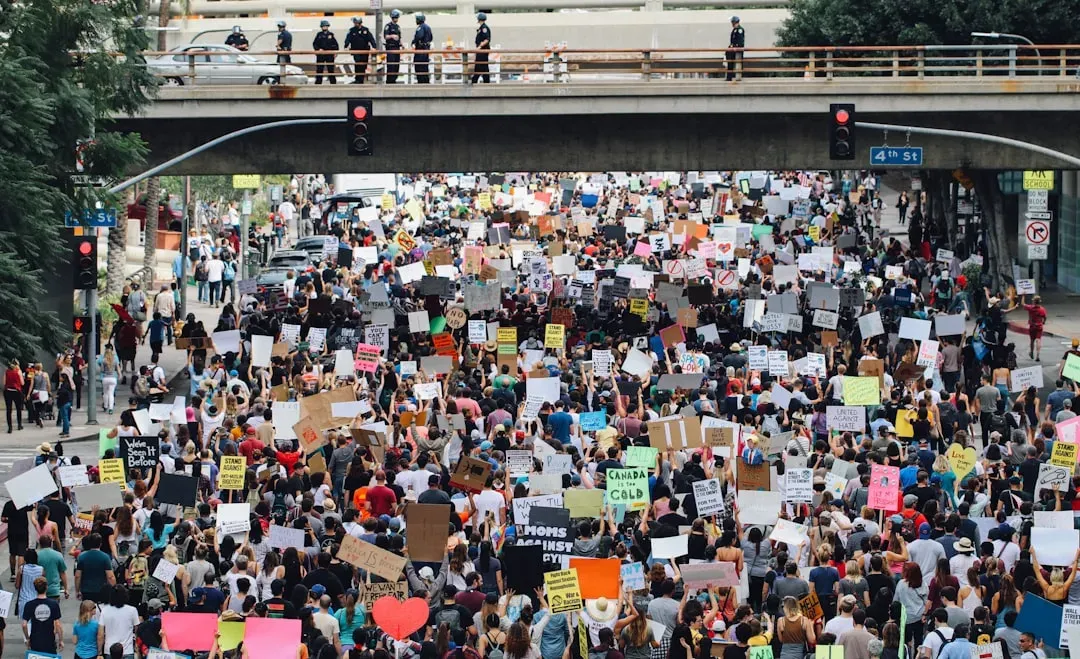
The country is dividing, and it’s not doing it slowly. According to data collected by the Human Rights First Democracy Watch Legislation Tracker, around 90 anti-sanctuary bills have been introduced between 2024 and 2025, paired with a continued upward trend of dangerous anti-immigration legislation.
Since 2025, nine states have passed anti-sanctuary bills, such as South Dakota’s S.B.7 and Wyoming’s H.B.0133, which prohibit the adoption or implementation of certain policies related to immigration enforcement. Meanwhile, on the other side of the ledger, when averaged across all parameters, two states had particularly strong and comprehensive laws protecting immigrants and fell into the most protective category: Oregon and Illinois.
Five states have particularly aggressive and comprehensive anti-sanctuary laws that force local agencies to be significantly involved in deporting their constituents: Florida, Georgia, Iowa, Texas, and West Virginia. The divide between states has never been this stark, and ordinary people in those communities are feeling it.
Boston vs. ICE: A Case Study in Defiance

Few stories illustrate this standoff better than what happened in Boston in early 2026. Boston Police Commissioner Michael Cox said the department ignored all 57 immigration detainer requests issued by federal authorities in 2025, citing a city law that shields noncitizens from deportation under certain circumstances. Cox attributed the department’s non-compliance to the Boston Trust Act, which prohibits BPD and other city departments from cooperating with ICE on civil immigration detainers.
ICE pushed back hard, disputing the numbers. ICE Acting Director Todd Lyons stated that ICE lodged 167 immigration detainers against criminal illegal aliens in Boston police custody during 2025, far more than the Boston Police Department was admitting to. The dispute became public and deeply contentious.
Boston Police Commissioner Cox, Mayor Wu, and current and former city councilors have argued that the Trust Act increases public safety because when undocumented residents fear deportation, they become less likely to engage with local law enforcement and other officials, whether to report a crime, cooperate in criminal investigations, seek help, or otherwise get involved in civic life. That argument gets to the heart of what sanctuary cities are really about.
The Money Weapon: Federal Funding as a Pressure Tool

Let’s be real – cutting off money is one of the most powerful levers any federal government has. And that lever is now being used aggressively. The administration’s threatened cuts would remove over $10 billion in taxpayer dollars from plaintiff cities and counties, hurting their residents.
The potential fallout for individual cities is enormous. Philadelphia, which received $2.2 billion in federal funding in the last fiscal year – nearly one-fifth of its total budget – would be severely impacted if the president makes good on his promise. That has some city leaders concerned, with City Councilmember Rue Landau saying that much of those federal dollars went largely toward health and social services programs.
The administration’s threatened cuts would hurt hundreds of communities that rely on these dollars for critical services and programs like roads and transit infrastructure, homelessness prevention, gang violence prevention, disaster relief, health care, opioid treatment, victim services, and emergency response. These aren’t abstract budget lines. These are fire trucks, food assistance, and clinics.
The Courts Step In – Blocking the Cuts

Cities didn’t just roll over. They lawyered up. On February 7, 2025, the City and County of San Francisco and the County of Santa Clara, along with a coalition of cities and counties, filed a lawsuit against the Trump administration in San Francisco v. Trump, challenging its attempts to cut or condition federal funding to sanctuary jurisdictions.
The courts listened. On April 24, 2025, a federal judge blocked the Trump administration from withholding federal funds to 16 sanctuary cities and counties. Although the Department of Justice has vowed to continue fighting in court, the judiciary remained firm in upholding the law.
Proposed legislation like H.R. 32 may violate the anti-commandeering doctrine of the Tenth Amendment, which prohibits the federal government from forcing states to enforce federal law. The Supreme Court has also ruled in NFIB v. Sebelius (2012) that the federal government cannot attach coercive conditions to funding that would force states to comply with the federal government’s orders. The legal battle is far from over.
What the Data Actually Says About Crime and Safety
This is where the debate often gets loudest – and most distorted. I think the data here genuinely surprises people on both sides. A statistical analysis of the effects of sanctuary policies on crime found that violent crime and property crime rates are lower in sanctuary counties. On average, 35.5 fewer crimes are committed per 10,000 people in sanctuary counties compared to non-sanctuary counties.
Again and again, studies show that there is no correlation between sanctuary policies and increased crime. A 2017 study examined overall violent crime, property crime, and assault rates in U.S. cities from 2000 through 2014 both before and after the implementation of sanctuary policies, finding no statistical relationship between an increase in crime rates and implementation of sanctuary policies.
Research shows that when local police aren’t viewed as extensions of ICE, neighborhoods are safer. People are more likely to report crimes, cooperate with investigations, and come forward as witnesses. When fear of deportation silences victims and community members, it jeopardizes public safety and law enforcement’s ability to deliver justice.
The Economic Dimension Nobody Talks About Enough

It’s hard to say for sure how much of this filters into everyday economic consciousness, but the financial stakes of sanctuary policies are significant. Data from a 2017 study by Professor Tom Wong, NILC, and CAP found that sanctuary jurisdictions report higher median household income, less poverty, higher employment-to-population ratios, and lower unemployment rates.
Immigrants comprise fourteen percent of the country’s population but account for seventeen percent of the gross domestic product, pay $524 billion in taxes, and have $1.4 trillion in spending power. That is not a small number. That is a foundational contribution to the American economy.
One study shows that working with ICE costs local communities upwards of $3.28 billion annually. So the argument that cracking down on sanctuary cities saves money turns out to be a lot more complicated when you look at what local cooperation with federal enforcement actually costs taxpayers at the municipal level.
Surveillance, Technology, and the New Frontier of Enforcement
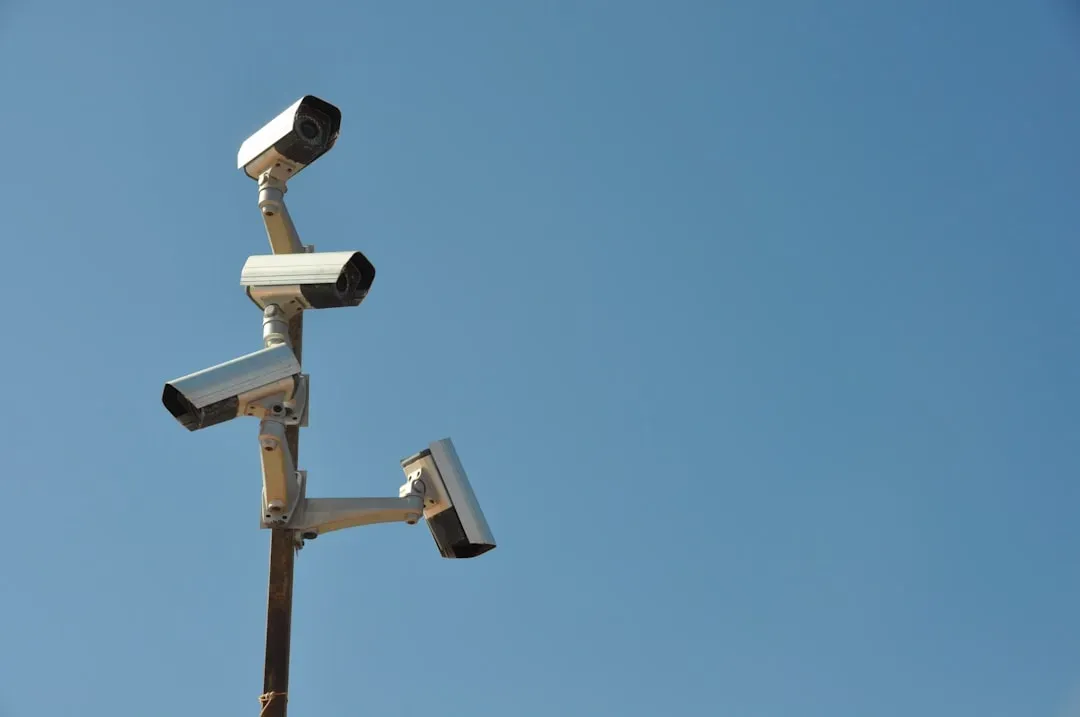
Beyond detainer requests and funding fights, a quieter but equally significant shift is happening in how enforcement actually occurs at the neighborhood level. AI facial recognition, surveillance camera, and predictive crime mapping tools are disproportionately applied to Black, Latino, and immigrant neighborhoods. One erroneous match or unlawful data transfer can mean detention or deportation for someone with no criminal history.
In 2025, Berkeley disclosed, buried in a surveillance technology report, that the police limited access to the city’s automated license plate reader data after seeing that the city appeared in three statewide searches that mentioned ICE or CBP in the search terms. That’s remarkable. License plate readers – tools designed for local crime prevention – being used as digital fishing nets for immigration enforcement.
U.S. immigration enforcement is undergoing a marked transformation, as state and local law enforcement authorities once largely on the sidelines have become central partners to the Trump administration. State and local participation is growing in size and scope, including the signing of hundreds of 287(g) deputization agreements. The technology angle is only going to intensify as surveillance infrastructure expands.
What This All Means for Your Neighborhood

Here’s where everything comes home. Literally. Some local governments have strengthened their support for immigrant communities, while others have scaled back or adjusted certain practices in response to federal guidance or state laws. These changes impact how local agencies coordinate with immigration authorities and how residents engage with public services.
Collaboration between local law enforcement and federal immigration enforcement is associated with housing instability, chronic student absenteeism, low birth weight, negative child well-being outcomes, and decreased use of preventive and prenatal care for immigrant communities and their children. These are not political talking points. They are documented public health outcomes for real families.
People are more afraid to access health care, take their kids to schools, or report when they have been victims of a crime when faced with the chilling effect of immigration enforcement. These consequences are exacerbated by the current administration’s decision to rip away long-standing protections against immigration enforcement in sensitive locations such as schools, religious institutions, and healthcare facilities. The neighborhood impact is not hypothetical – it is already unfolding in communities across the country.
The sanctuary debate is one of the defining domestic policy struggles of this era. It involves constitutional boundaries, community trust, billions of dollars, and the daily lived reality of millions of people. What’s most striking is that the data consistently points in one direction on crime and economic health, yet the political pressure moves in another. Whether cities hold the line, lose their funding, or find new legal footholds will shape what American neighborhoods actually look like for years to come. What kind of neighborhood do you want to live in? That question, it turns out, is now a federal matter.