
For centuries, humans have marveled at the strange theater of their nightly visions. We wake with fragments of impossible scenarios, vivid emotions attached to people we’ve never met, or surreal landscapes that dissolve like mist. Dreams remain one of neuroscience’s most enduring puzzles, even as researchers deploy sophisticated brain imaging and electrophysiology techniques to crack open their secrets.
While scientific consensus on dream function remains elusive, recent years have brought remarkable breakthroughs. Understanding how dreams are generated and what their function might be is one of science’s biggest open questions right now, according to University of Montréal researcher Remington Mallett, who chaired a 2024 session at the Cognitive Neuroscience Society annual meeting. What we do know is that the sleeping brain is anything but quiet.
The Neural Architecture of Dreaming
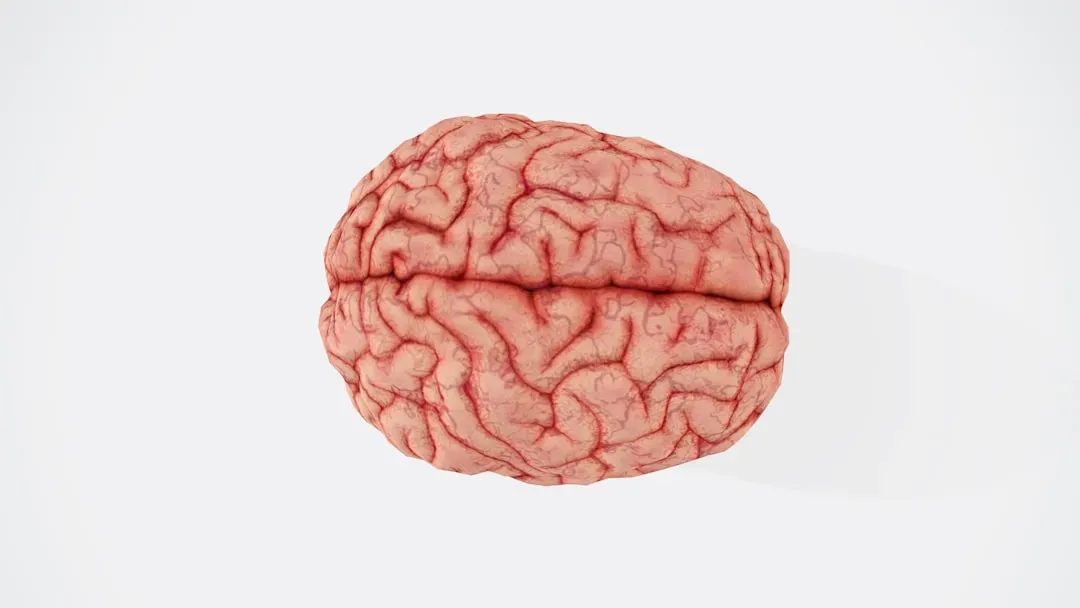
On average, most people dream for around two hours per night. Dreaming can happen during any stage of sleep, but dreams are the most prolific and intense during the rapid eye movement stage. Still, here’s where things get interesting. The paradigmatic assumption that REM sleep is the physiological equivalent of dreaming is in need of fundamental revision, as mounting evidence suggests that dreaming and REM sleep are dissociable states, and that dreaming is controlled by forebrain mechanisms.
The human brain is composed of approximately 80 billion neurons, and their combined electrical chatter generates oscillations known as brain waves, including five types: alpha, beta, theta, delta, and gamma, each indicating a different state between sleep and wakefulness. Researchers have shown that specific brain regions become activated during dreaming. Honestly, the complexity is staggering when you consider that the brain, disconnected from external stimuli, can generate entire worlds of experience autonomously.
Memory Consolidation and Dream Content

Dreams incorporate recent experiences, and memory-related brain activity is reactivated during sleep, suggesting that dreaming, memory consolidation, and reactivation are tightly linked. This connection has become one of the most compelling areas of dream research. Pattern analyses of spontaneous electrical brain activity revealed the neural reprocessing of audiobook content during REM sleep.
Let’s be real: your brain doesn’t just passively replay the day’s events. During sleep, the brain co-activates multiple memories simultaneously, combining the activation of recent experience with the reactivation of remote, long-past memory, a process that could function to help the brain update older memory networks with new information over time. While it is still unknown whether dreaming about recent learning experiences causes changes in memory, it is well established that dreaming about a recent learning experience is positively associated with subsequently improved performance. Think of it as your brain conducting a nighttime rehearsal, connecting dots you didn’t even know existed.
The Emotional Processing Function

People who report dreaming show greater emotional memory processing, suggesting that dreams help us work through our emotional experiences, according to UC Irvine professor Sara Mednick. This finding from a 2024 University of California, Irvine study revealed something remarkable about how we process difficult experiences during sleep. The findings indicate a trade-off in which emotionally charged memories are prioritized, but their severity is diminished.
Participants who reported dreaming had better recall and were less reactive to negative images over neutral ones, a pattern that was absent in those who did not remember dreaming. Even more fascinating? The more positive the dream, the more positively that individual rated negative images the next day. Emotional intensity in dreams increased significantly throughout the night, with late-night dreams being more emotional than dreams collected during earlier sleep. Your sleeping mind seems to be running a desensitization program, softening the emotional edges of difficult experiences.
Threat Simulation and Adaptive Functions

Threatening content in dreams ultimately serves to strengthen waking threat perception skills and threat avoidance behaviors that help to self-cope with the challenging realities of waking life. This threat simulation theory posits that dreams have evolved as a virtual training ground for handling real-world challenges. I think there’s something profound about this: your sleeping brain might be your most dedicated survival instructor.
Analysis of 896 dreams from 234 individuals across BaYaka and Hadza foraging groups and Global North populations, recorded using dream diaries, showed that dreams in forager groups serve a more effective emotion regulation function due to their strong social norms and high interpersonal support. Past negative memories are reprocessed and combined in dreams with new, realistic, and safe contexts, suggesting the possibility of desensitization or extinction functions for dreaming, potentially exposing us to threatening situations while providing us with efficient solutions to these situations. The cross-cultural consistency here is compelling evidence that dreaming serves an adaptive psychological purpose.
The Continuity Hypothesis

Researcher Michael Schredl of the University of Mannheim gave a keynote talk analyzing over 12,000 of his dreams, and overall, the patterns seemed to support the continuity hypothesis of dreaming, which holds that our dreams are influenced by events and concerns that are happening in our waking lives. This isn’t just abstract theory. Your daily worries, relationships, and unresolved tensions don’t vanish when you fall asleep; they resurface in transformed, often symbolic ways.
One of the most consistent predictors of more frequent dream recall has been a positive attitude towards dreaming; if you think dreams are important, you’re probably more motivated to try and remember them more often. The relationship between waking life and dream content runs deeper than simple replay. It’s hard to say for sure, but dreams seem to function as a bridge between our conscious concerns and unconscious processing.
The Unresolved Mystery

Experts in the fields of neuroscience and psychology continue to conduct experiments to discover what is happening in the brain during sleep, but even with ongoing research, it may be impossible to conclusively prove any theory for why we dream. Despite decades of research and technological advances, definitive answers remain frustratingly out of reach. The functional purposes of the various sleep states are not known, and whereas most sleep researchers accept the idea that the purpose of non-REM sleep is at least in part restorative, the function of REM sleep remains a matter of considerable controversy.
What we’ve learned from recent research is that dreaming appears to serve multiple functions simultaneously. Memory consolidation, emotional regulation, threat simulation, and creative problem-solving may all be happening in parallel during our nightly mental journeys. The brain doesn’t operate in neat categories; it multitasks in ways we’re only beginning to comprehend. Perhaps the most remarkable aspect is that this all happens automatically, every single night, whether we remember it or not.
So what does it all mean? Dreams are not random noise or meaningless byproducts of a sleeping brain. They represent sophisticated neural processes that help us adapt, learn, and emotionally recalibrate. The science suggests that when we dream, we’re not escaping reality – we’re processing it in ways our waking mind simply cannot achieve. What mysteries still hide within those two hours of nightly visions? That’s a question for the next generation of neuroscientists to unravel. What would you give to truly understand your own dreams?