
Las Vegas doesn’t sleep, and neither does its gig economy. Between the rideshare drivers ferrying tourists down the Strip at 3 a.m., the freelance photographers shooting corporate events at convention halls, and the independent entertainers filling every corner of the city’s hospitality circuit, Vegas has quietly become one of the country’s most dynamic markets for independent work. Cities like Las Vegas now offer freelancers some of the highest average earnings in the country, according to a Fiverr Freelancer Economic Impact Report released in late 2025. What most of those workers share, though, is something far less glamorous than the city itself: no employer-sponsored retirement plan.
Only about sixteen percent of freelancers have access to retirement plans, compared to roughly half of traditional employees, and thirty-eight percent of gig workers say they simply can’t save for retirement because they don’t earn enough. The Solo 401(k) was designed precisely for situations like this. It’s one of the most powerful retirement tools available to self-employed individuals, yet it remains underused and misunderstood. Here’s what every Vegas freelancer and independent worker needs to know.
What Exactly Is a Solo 401(k)?

A Solo 401(k), also known as an individual 401(k), is a qualified retirement plan for self-employed individuals or business owners with no employees other than a spouse. The structure is simple in concept but powerful in practice. You wear two hats simultaneously: employer and employee, each with their own separate contribution capacity.
You may contribute as the employee through salary deferrals and as the employer through profit-sharing contributions, and this dual contribution structure is what makes the Solo 401(k) one of the most powerful retirement savings tools available to self-employed individuals. That distinction matters enormously when you start running the actual numbers, because it means you can save significantly more than with almost any other individual retirement account. The Solo 401(k) is the only self-employed retirement plan that allows contributions in two separate capacities simultaneously, generating a combined deduction that consistently outperforms alternatives at moderate to high income levels.
Las Vegas and the Rise of Gig Work

Among the fastest-growing markets for the number of freelancers, Las Vegas grew by twenty-two percent, joining Orlando and Miami at the top of the list. That’s not a coincidence. The city’s economy, built on hospitality, entertainment, conventions, and transportation, creates a natural breeding ground for contract-based and flexible work arrangements. Independent professionals in the Las Vegas market average around $62,083 per year in earnings, making it the highest-earning market among the top thirty U.S. cities tracked.
In 2025, more than 70 million Americans are estimated to be part of the gig economy, representing approximately thirty-six percent of the total workforce. Vegas reflects that national shift on a local and intensified scale. Full-time independent workers more than doubled from 13.6 million in 2020 to 27.7 million in 2024, and by 2027, freelancers are projected to make up over fifty percent of the U.S. workforce. For a city like Las Vegas, that trajectory reinforces why tools like the Solo 401(k) are no longer optional luxuries; they’re financial necessities.
The 2025 and 2026 Contribution Limits

For 2025, you may contribute up to $23,500 in elective deferrals as an employee to your Solo 401(k) plan, and if you’re age 50 or older by the end of 2025, you can make an additional catch-up contribution of $7,500, for a total elective deferral limit of $31,000. There’s also a newer provision worth knowing about. If you are age 60, 61, 62, or 63 in 2025, a higher catch-up contribution limit of $11,250 applies, making the total elective deferral limit $34,750 for those in that age range.
The total contributions to your Solo 401(k), including both employee deferrals and employer contributions, cannot exceed $70,000 for 2025, or 100% of your compensation, whichever is less, and if you are age 50 or older, the overall limit increases to $77,500. Looking slightly ahead, the combined limit for employee and employer contributions for a Solo 401(k) plan in 2026 has increased to $72,000 for individuals under the age of 50. These limits adjust annually for inflation, so staying current each year is part of smart planning.
How the Dual Contribution Math Works

The math behind the Solo 401(k) is where most freelancers find themselves pleasantly surprised. At $100,000 in net self-employment income, the Solo 401(k) allows approximately $42,235 in total contributions, combining $23,500 as an employee with roughly $18,735 as the employer, versus only about $18,587 for a SEP IRA. That gap is substantial, especially over multiple years of compounding growth.
In addition to the elective deferral, the business can make a profit-sharing contribution of up to 25% of compensation as the employer. For sole proprietors, the calculation is a bit more involved. For self-employed individuals, “compensation” means your net earnings from self-employment, less half of your self-employment tax and the plan contributions you made for yourself. It’s worth using an IRS worksheet or working with a tax professional to nail down the exact figures, especially in your first year. The maximum amount of compensation that can be considered for contribution purposes is $350,000 for 2025.
The Retirement Savings Gap Among Freelancers

Despite the flexibility and high earning potential that gig work offers, retirement savings remain a widespread blind spot. Almost a third of freelancers identify the lack of retirement plans as the main pitfall of their career choice. This isn’t just a personal problem; it’s a growing structural issue as independent work becomes the dominant mode of employment for a large share of the workforce. Without employer-sponsored benefits, access to consistent retirement planning remains a major hurdle for freelancers across the country.
Despite the many benefits of gig work, one of the most significant concerns is the lack of access to traditional employee benefits, with only about forty percent of American gig economy workers having access to medical insurance. The retirement picture is even bleaker. Only sixteen percent of freelancers have access to retirement plans, compared to fifty-two percent of traditional employees. Opening a Solo 401(k) doesn’t require an employer. It requires only self-employment income and a plan document, which most major brokerages can help you set up in less than an hour.
Solo 401(k) vs. the SEP IRA: Key Differences

The SEP IRA is the plan most commonly mentioned alongside the Solo 401(k), and for good reason. Both are designed for self-employed workers, and both carry high contribution ceilings. The differences, though, matter quite a bit depending on your situation. A SEP IRA has the same overall contribution limit as a Solo 401(k), but the only difference is that there’s no elective employee contribution portion with a SEP IRA, just the profit-sharing portion.
That structural difference has real consequences at middle income levels. For most self-employed professionals earning between $50,000 and $250,000, the Solo 401(k) produces larger deductions and greater total tax savings than any competing retirement vehicle. Beyond the numbers, Solo 401(k) plans can allow participant loans, which allow participants to borrow from their account balance and repay the loan with interest, while SEP IRAs cannot, and while retirement loans should be used cautiously, some business owners value having this flexibility. The Solo 401(k) also offers a Roth option, something the traditional SEP IRA largely does not provide in practice. The SEP IRA’s lack of Roth options constrains tax planning strategies, which can impact long-term tax efficiency, particularly for those anticipating higher tax brackets in retirement.
The Roth Option and Tax Strategy
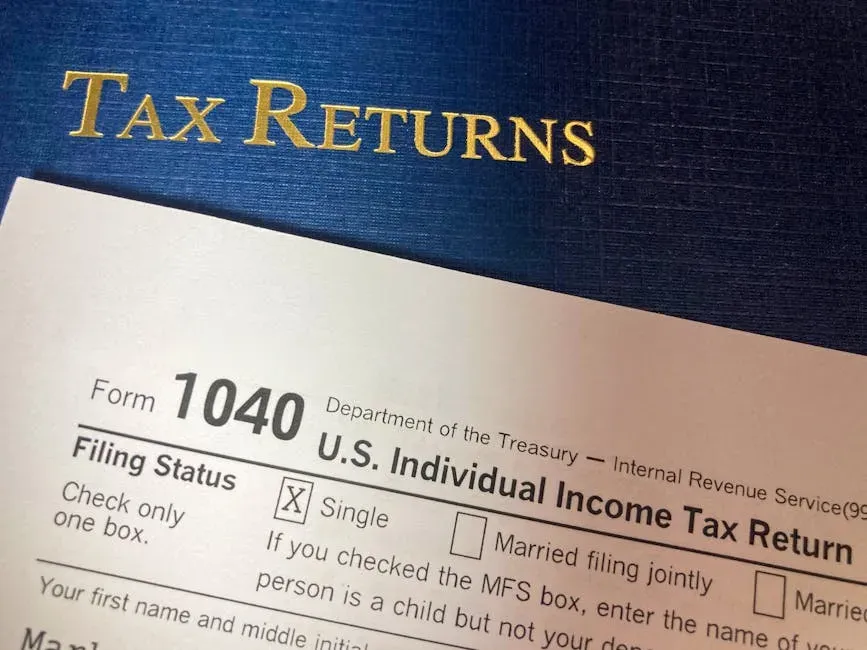
One of the more underappreciated features of the Solo 401(k) is the ability to make Roth contributions. A Roth feature as part of your Solo 401(k) allows you to make after-tax contributions, meaning you pay taxes now on your deferrals, but enjoy tax-free withdrawals in retirement, including on investment earnings, if certain conditions are met. For a Vegas freelancer whose income fluctuates year to year, this creates a real strategic opportunity. In higher-income years, you lean toward traditional pre-tax contributions. In leaner years, Roth contributions become more attractive.
Roth deferral contributions may be especially appealing if you expect to be in a higher tax bracket in retirement or want to diversify your tax exposure. There’s also a meaningful change coming for some earners under SECURE 2.0. Starting tax year 2026, Section 603 of SECURE 2.0 requires a 401(k) plan to require catch-up contributions to be made on a Roth basis for any plan participant who made in excess of $145,000 in FICA wages in 2025, and the income threshold rises to $150,000 for the following tax year. Knowing where you fall relative to that threshold is worth checking before year-end.
Loan Provisions, Compliance, and Plan Setup

A Solo 401(k) may allow participant loans if the plan document permits them, with the general limit being the lesser of $50,000 or 50% of the vested account balance, and a SEP IRA does not allow loans at all. This can be a meaningful safety net for freelancers who face income volatility, equipment costs, or unexpected business expenses. That said, borrowing from retirement accounts carries real risk, and any loan taken must typically be repaid with interest within five years.
On the compliance side, most Solo 401(k) owners have very little to worry about in the early years. If your Solo 401(k) plan’s assets exceed $250,000 at the end of the plan year, the IRS requires you to file Form 5500-EZ. You must also file Form 5500-EZ for the final plan year regardless of the plan’s asset value, to report that all assets have been distributed or transferred, and failure to file when required may result in penalties. Setting up the plan itself is straightforward. Major institutions like Fidelity, Vanguard, and Charles Schwab all offer Solo 401(k) accounts, often at no cost to establish, with contributions due by your tax filing deadline including extensions.
Getting Started as a Vegas Freelancer
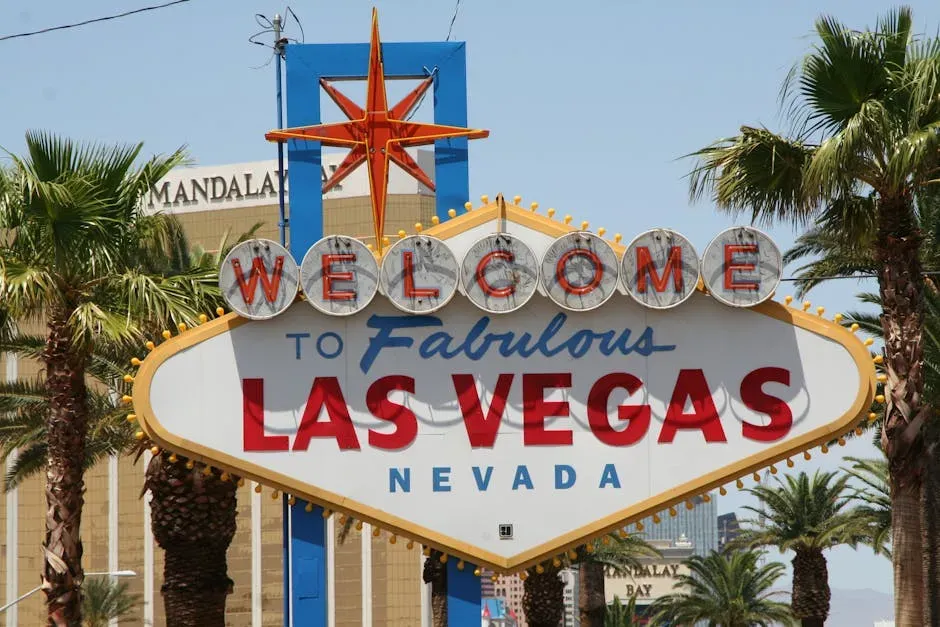
Opening a Solo 401(k) is more accessible than most people assume. You need to have self-employment income from a business in which you have no full-time employees other than a spouse. That covers rideshare drivers, photographers, musicians, event coordinators, consultants, and the wide range of independent professionals that make up the backbone of Las Vegas’s working economy. The Solo 401(k) is designed specifically for business owners with no full-time employees other than a spouse, which allows participants to contribute as both an employer and an employee, maximizing their savings potential.
Timing matters too. The deadline for self-employed individuals and owner-only businesses to make both the employee salary deferral and company profit-sharing contribution is the business’s tax filing deadline, including extensions, and contribution deadlines may be different in the year the plan is established. Starting early in the calendar year gives your money more time to grow and makes hitting the contribution ceiling far more manageable. Solo 401(k) contribution rules offer unmatched savings potential, but they require careful calculation, and with the correct numbers in hand, business owners can confidently plan contributions, avoid excess contribution penalties, and take advantage of advanced strategies like Roth conversions and spousal planning.
The freedom that draws so many people to gig work in Vegas is real. The trade-off is that financial security doesn’t come automatically. A Solo 401(k) won’t solve every challenge that comes with self-employment, but for independent workers serious about building long-term wealth, it’s one of the most efficient tools available. Setting it up today costs little; not setting it up may cost far more in the years ahead.