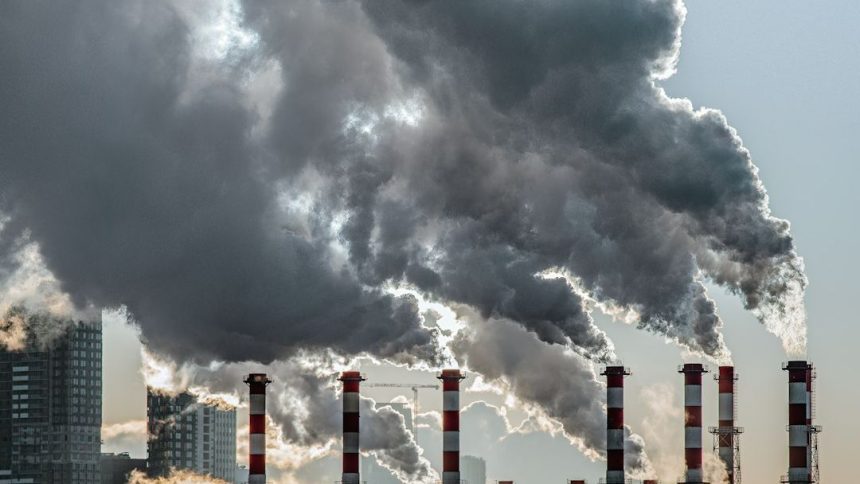


Fact vs fiction when it comes to industrial carbon pricing and Canadian oil and gas – Image for illustrative purposes only (Image credits: Unsplash)
Recent analysis from the Canadian Climate Institute highlights how industrial carbon pricing systems in Canada, particularly in Alberta, deliver substantial emissions reductions at remarkably low cost to producers. The sector has long faced claims that such policies impose heavy financial burdens, yet detailed modeling shows otherwise. Current effective prices add just nine cents per barrel on average to oil sands operations, with projections reaching only fifty cents by 2030 under strengthened rules. These figures stand in sharp contrast to broader narratives about affordability and competitiveness.
The Actual Price Tag on Emissions Reductions
Industrial carbon pricing operates through systems like Alberta’s Technology Innovation and Emissions Reduction regulation, which sets performance standards for large emitters. Facilities that exceed benchmarks earn credits they can sell, while those falling short must purchase them or pay into a fund. This market-based approach rewards efficiency rather than punishing production outright.
Independent calculations confirm the modest scale of these costs. At today’s levels, the average burden remains under ten cents per barrel. Even with an increase to an effective one hundred thirty dollars per tonne by 2030, the added expense equates to roughly the price of a single Timbit. Producers who invest in lower-emission technologies often see net financial gains through credit sales, turning the policy into an incentive rather than a penalty.
Claims of Lost Competitiveness Lack Supporting Data
Critics frequently argue that carbon pricing undermines Canada’s position in global energy markets. Yet seventeen years of provincial trade data across multiple sectors reveal no measurable decline in exports attributable to these policies. After adjusting for oil prices, commodity cycles, and U.S. demand patterns, the estimated impact on trade volumes sits at zero within statistical margins of error.
Partner offer

Oil and gas leaders have pointed to the absence of similar levies in other major producing nations as a disadvantage. However, the design of Canada’s industrial systems includes output-based benchmarks that shield export-oriented facilities from disproportionate hits. Recent windfall revenues from higher oil prices further illustrate the sector’s resilience, with annual profits potentially reaching tens of billions even amid modest carbon costs.
Emissions Outcomes Hinge on Policy Strength
Modeling from the Canadian Climate Institute demonstrates that tightening Alberta’s industrial carbon market could drive meaningful national progress toward net-zero targets. The province’s system covers roughly one-quarter of Canada’s total greenhouse gas emissions, making improvements here especially consequential.
A robust agreement under the Canada-Alberta memorandum of understanding would accelerate deployment of low-carbon technologies and stabilize investment signals. Weaker provisions, by contrast, risk stalling momentum and leaving larger gaps in the country’s overall emissions trajectory. The difference between an effective and ineffective framework could determine whether Canada meets its 2050 goals.
Fact Versus Fiction at a Glance
| Common Claim | Evidence-Based Reality |
|---|---|
| Carbon pricing makes operations unaffordable | Current costs average nine cents per barrel; future levels reach only fifty cents |
| Exports suffer from reduced competitiveness | Trade data show no statistically significant contraction linked to pricing |
| Policy delivers little environmental benefit | Strengthened systems project major emissions cuts across covered sectors |
These distinctions matter as negotiations continue. Industrial carbon pricing remains Canada’s primary tool for large-scale reductions, with potential to reshape investment patterns across oil, gas, and related industries without disrupting economic fundamentals.
Partner offer
Planning a trip to Vegas?
Compare hotel rates and show tickets on VEGAS.com.