There is something deeply comforting about nursery rhymes. From the very first time we heard them – usually in a parent’s lap or a classroom circle – they felt safe, playful, almost magical. A tumbling Jack. An egg on a wall. A ring of roses in a field. Simple enough for a toddler, right?
Well, not exactly. Dig just a little beneath the surface of these beloved little verses and you’ll find a world soaked in royal politics, medieval taxation, religious persecution, and centuries of storytelling passed down through whispers rather than books. The truth behind these rhymes is far stranger and more fascinating than anything the nursery walls suggest. Be ready to look at your childhood soundtrack in a completely different light.
Ring Around the Rosie: Not About the Plague After All

Here’s one of the most popular myths in all of nursery rhyme history, and honestly, it’s a hard one to let go of. For decades, people have confidently explained that “Ring Around the Rosie” is a coded description of the Black Death or the Great Plague of London. The rosy rash, the pocket full of posies to mask the stench, the sneezing, the falling down dead – it all sounds convincing.
The Library of Congress notes that the first mention of “Ring Around the Rosie” and the plague comes in the middle of the 20th century, a full 700 years after the bubonic plague. That is a rather enormous gap. It was James Leasor’s book “The Plague and the Fire” in 1961 that first drew a connection between “Ring Around the Rosie” and any sort of plague – 80 years after the nursery rhyme even appeared in print.
Folklore scholars consider the Great Plague explanation of the rhyme to be unfounded for several reasons. Firstly, the plague explanation did not emerge until the mid-twentieth century, while the symptoms described do not align closely with those of the Great Plague. So what is it really about? According to folklorists, “Ring Around the Rosie” is historically connected not to the Black Death, but to playful dance practices in 19th-century America and England during a time when dancing was socially discouraged. The rhyme was part of “play parties” where children would sing and move in circles, simulating courtship and crushes.
A German rhyme, first printed in 1796, closely resembles “Ring a Ring o’ Roses” in its first stanza and includes similar actions, with sitting rather than falling as the concluding gesture. The many versions that exist across Europe further undermine the single-event plague theory. The fact that so many variants exist means that it likely did not originate via a single historical event like the Great Plague.
Humpty Dumpty: The Egg That Was Never an Egg

Every child pictures a cheerful cartoon egg perched on a wall. That image is so embedded in our culture that it almost feels like fact. Yet nowhere in the “Humpty Dumpty” nursery rhyme does it say that Humpty is an egg – the egg interpretation came much later.
The earliest known version was published in Samuel Arnold’s “Juvenile Amusements” in 1797 with the lyrics: “Humpty Dumpty sat on a wall, Humpty Dumpty had a great fall. Four-score men and four-score more, could not make Humpty Dumpty where he was before.” Originally, the rhyme most likely worked as a riddle. The riddle may have had an answer for the question: what might sit on a wall and, when it falls, can’t be put back together again? The answer: an egg.
According to the Oxford English Dictionary, in the seventeenth century, the term “humpty dumpty” referred to a drink of brandy boiled with ale. The riddle probably exploited the fact that “humpty dumpty” was also eighteenth-century slang for a short and clumsy person. One popular theory links the character to King Richard III. By modern standards of ethics, it hardly seems acceptable to refer to somebody with a physical disability as “Humpty Dumpty,” but this seems to have been a reference to Richard’s humped back. When the rhyme refers to him falling off a “wall,” this would seem to be a reference to his horse, which Richard is recorded as falling off at the Battle of Bosworth Field.
There is no evidence that the cannon-at-Colchester story is true: no contemporary accounts mention a cannon called “Humpty Dumpty,” the rhyme itself is not recorded until 150 years after the supposed event, and no one ever claimed the rhyme related to Colchester for another 200 years after that. In the end, what seems clear is that there is no single origin story for the Humpty Dumpty rhyme. Rather, it was a rhyme inherited from the early modern world from medieval times.
Jack and Jill: Kings, Taxes, and a Tragic Somerset Love Story
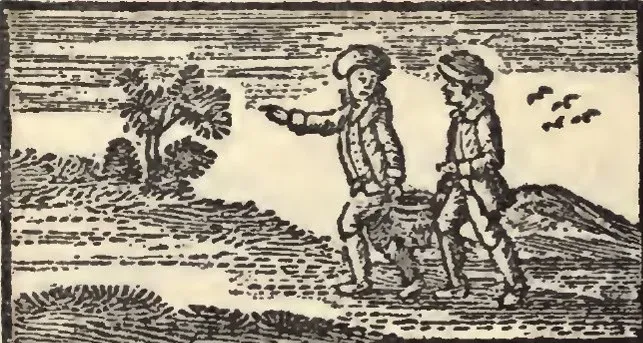
Jack and Jill went up the hill to fetch a pail of water. Simple, right? Not remotely. Jack and Jill is an 18th-century English nursery rhyme, but its possible roots stretch in several very different directions simultaneously – and that is what makes it so fascinating.
Some people say that a hill dubbed “Jack and Jill Hill” in Kilmersdon, Somerset was the inspiration for the nursery rhyme. According to the Kilmersdon story, Jack and Jill were a couple expecting a baby. As the lyrics attest, Jack popped out to fetch water but had an accident on the hill and sadly died. Jill experienced a heartbreak so severe that she passed away just after giving birth to her son.
Another quite fun theory is that the rhyme satirises tax measures taken by King Charles I on beer – specifically reducing the volume but maintaining the cost in a Jack, which is a rather stingy eighth of a pint, and the Gill which is a quarter pint that “came tumbling after.” There is also a Norse mythology angle: in an Old Norse myth, the moon steals two children, Hjuki and Bill, from Earth. The kidnapping happens as the two children are collecting water from a well, and the story was told to young children to try and prevent them from going out alone after dark.
Intriguingly, “Jill” was originally spelled “Gill,” which is typically a boy’s name, in the earliest version of the rhyme. That single detail alone throws most theories into question. It is clear from the many possible interpretations that no one knows for sure what the true origins of this famous nursery rhyme are.
Baa Baa Black Sheep: A Wool Tax Hidden in Plain Sight
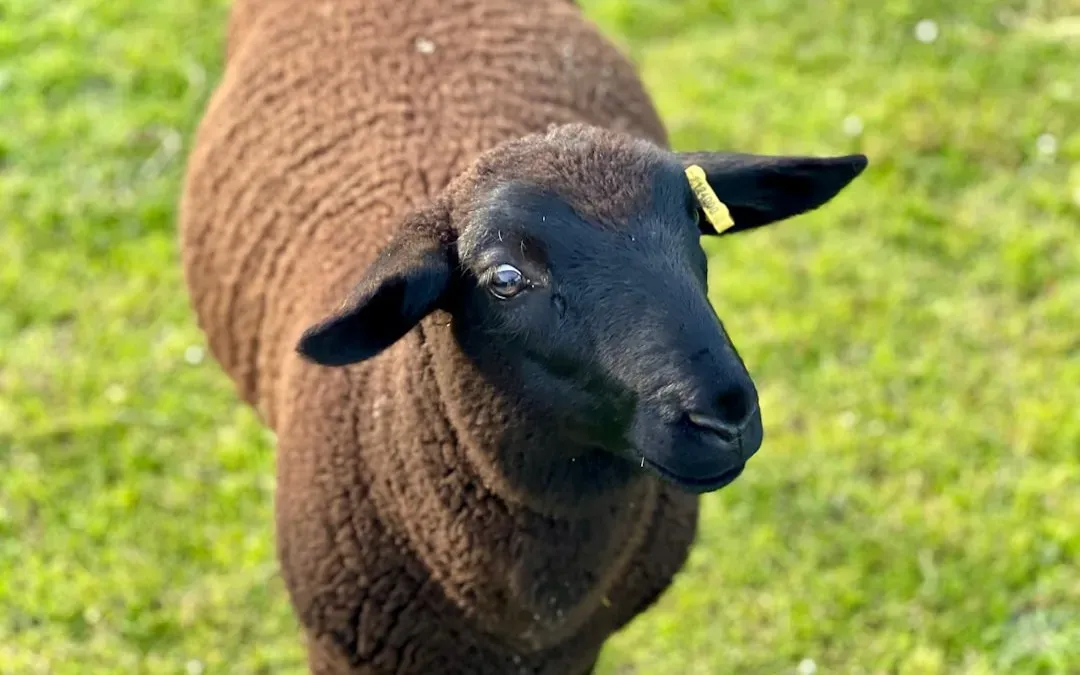
Few rhymes sound as innocent as this one. A talking sheep and three bags of wool. What could be sinister about that? The rhyme was first printed in “Tommy Thumb’s Pretty Song Book” of about 1744. The words have stayed remarkably consistent for nearly three centuries, which is itself unusual in the world of nursery rhymes.
The rhyme is often believed to refer to events in the late 13th century, when King Edward I of England was fighting expensive wars in Wales and Scotland. The treasury was nearly empty, so the King raised taxes heavily, even on the Church, which until then had been mostly untouchable. Wool was everything back then. Wool was England’s biggest export at the time, and the new law demanded that each farmer give one-third of his wool to the King (the “master”), another third to the local noble or Church (the “dame”), and keep only the remaining third for himself – represented in the rhyme as “the little boy who lives down the lane.”
More recently, the rhyme has been alleged to have a connection to the slave trade, particularly in the Southern United States. This explanation was advanced during debates over political correctness in the 1980s, but has no supporting historical evidence. The wool tax interpretation is far better supported. Wool was England’s most important export at the time, and the tax caused widespread resentment among farmers and shepherds. The nursery rhyme subtly criticizes the social and economic inequalities of its time, making it much more than just a children’s singalong.
Mary, Mary, Quite Contrary: Blood in the Garden

On the surface, this is a rhyme about an eccentric woman and her unusual garden. Silver bells. Cockleshells. Pretty maids all in a row. Sounds lovely. It is not. This nursery rhyme dates from 1744, hinting at deeper tales with its garden of symbols.
Most scholars agree that the rhyme references Mary I of England, better known as “Bloody Mary.” During her reign in the 16th century, Mary sought to restore Catholicism and is said to have ordered the execution of hundreds of Protestants. The garden metaphor is a dark one. Some say that the “garden” is a reference to the graveyards that were filling with martyred Protestants under her reign, while the “silver bells” represent thumbscrews and “cockleshells” are instruments of torture.
The rest of the rhyme depends on your interpretation, as “silver bells and cockleshells” might be symbols of a Catholic mass, or 16th-century torture devices. “Pretty maids all in a row” might be nuns praying, or they might be lines of corpses buried as if planted in a garden. It is worth noting that these are theories, not proven facts – but they are compelling ones. The rhyme “Mary, Mary, Quite Contrary” serves as a political commentary on Mary I of England. The phrase “quite contrary” reflects her controversial reign, marked by religious conflict and persecution.
Little Jack Horner: A Pie, a Plum, and a Real Estate Scandal
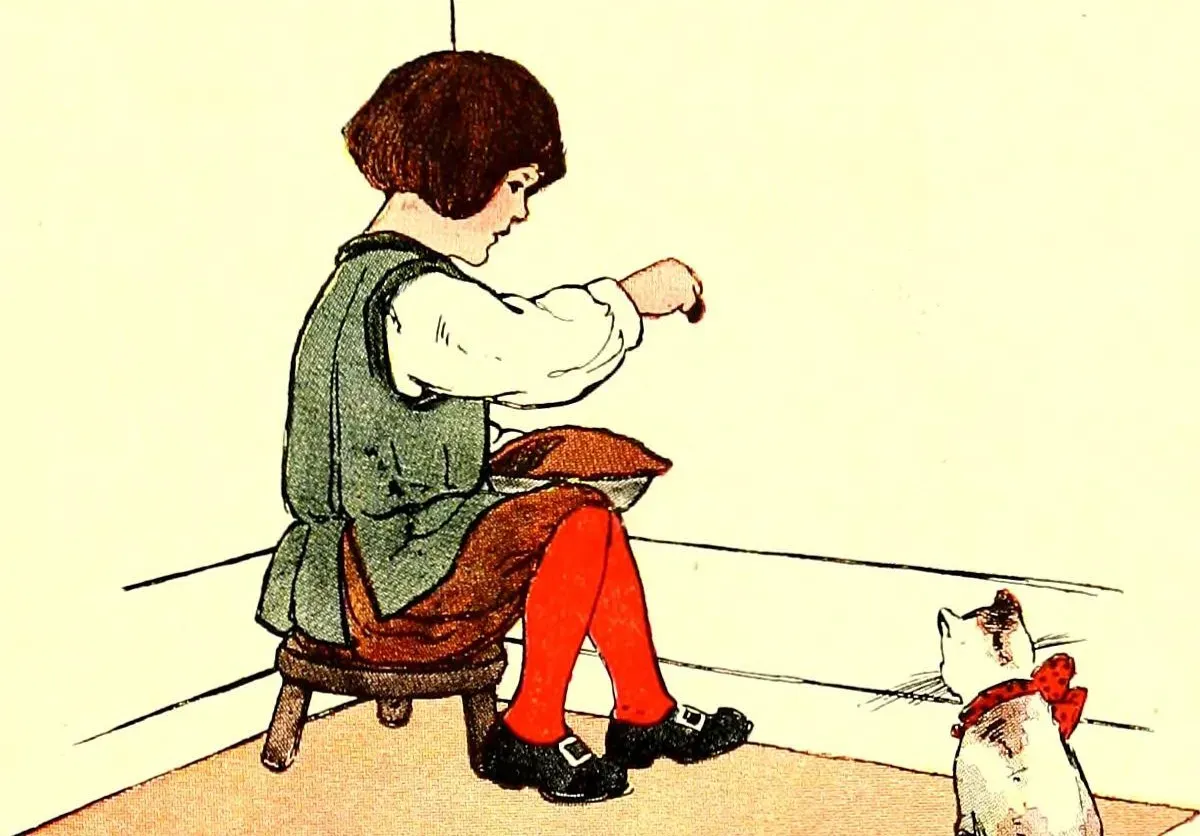
A boy sitting in a corner eating pie and congratulating himself. That is the surface reading. Underneath? What many scholars believe is one of the most audacious property grabs in Tudor England. According to one interpretation, the rhyme refers to Thomas Horner, a contemporary of King Henry VIII who served Richard Whiting, the head of the monastery in Glastonbury, England.
Whiting sent Horner to Henry VIII with a large Christmas pie, inside of which were hidden the deeds to twelve manors – a desperate attempt to save the monastery at a time when Henry was breaking with the Catholic Church and seizing church property. During the journey, Horner supposedly stole one of the deeds – the deed to the manor at Mells – and later became its owner. Despite receiving the other eleven manors, Henry VIII did not spare the monastery. It was closed down, and Whiting was accused of treason and executed.
Some sources say that it was John Horner who was Whiting’s steward, but regardless of whether it was John or Thomas, John Leland actually reports in his “Itinerary” that the Horners legally bought Mells Manor from the crown in 1543 – four years after Glastonbury was seized. So was it theft, or a savvy purchase? Even if the real Thomas Horner acquired his manor fair and square, tongues may have wagged in those divided times. In the last analysis, we’ll probably never know for sure just how closely the events of Thomas Horner’s life and the pie-poking events described in the rhyme were related.
Three Blind Mice: Protestant Martyrs in Disguise
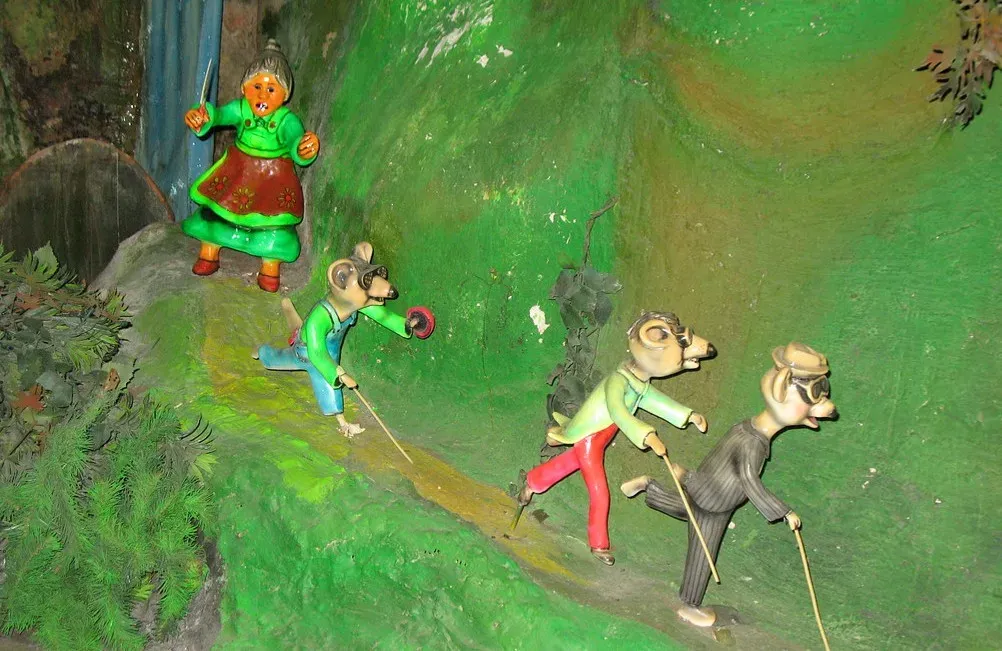
Three mice chasing a farmer’s wife who cuts off their tails. Grim even at face value. What lies behind it is grimmer still. The origins of “Three Blind Mice” are steeped in political violence. The “mice” are believed to symbolize three Protestant bishops – Hugh Latimer, Nicholas Ridley, and Thomas Cranmer – who opposed Queen Mary I’s return to Catholicism during her reign in the mid-1500s.
They were arrested, tried, and ultimately burned at the stake for heresy, a fate mirrored by the mice being chased and mutilated by the “farmer’s wife.” The rhyme is thought to have been composed as a covert criticism of the queen’s brutal persecution of religious dissenters. There is a recurring pattern here worth noticing – “Bloody Mary” turns up as the suspected villain behind more than one nursery rhyme. The use of blindness is often interpreted as referring to the bishops’ supposed spiritual blindness, but it may also have been a way to disguise the rhyme’s true subject from the authorities.
Indeed, “Three Blind Mice” is believed to serve as a satire against Queen Mary I. The three characters in the rhyme symbolize Protestant bishops who opposed her Catholic policies. The phrase “cut off their tails” may allude to the brutal consequences they faced during her reign. This nursery rhyme reflects the turbulent religious climate and tensions of the time.
Georgie Porgie: The Prince Who Made Girls Cry
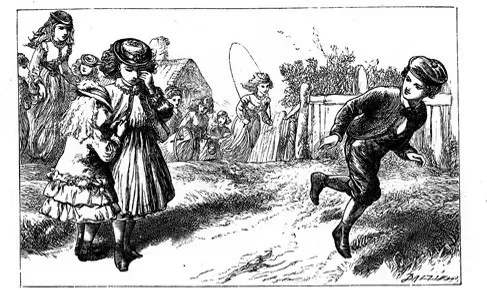
Georgie Porgie, pudding and pie, kissed the girls and made them cry. Today we’d call that behavior something very different from a harmless rhyme. This is a popular English language nursery rhyme with the Roud Folk Song Index number 19532. Its first recorded appearance in print dates to 1841, described as an “old ballad,” which suggests it circulated orally long before anyone thought to write it down.
It is thought that the “Georgie Porgie” in question was actually the Prince Regent, later George IV. Tending toward the heavy side, George weighed more than 17 and a half stone with a 50-inch waist, making him a constant source of ridicule in the popular press of the time. His reputation was, let’s be real, not admirable. Despite his large size, George had also established for himself a rather poor reputation for his lusty romps with the fairer sex that involved several mistresses. When he was 23, he fell in love with the beautiful Maria Anne Fitzherbert and persuaded her to go through with a secret marriage. The marriage would never have been allowed as she was both a commoner and a Roman Catholic.
During one of the illegal prize-fights George attended, a boxer was knocked to the floor and subsequently died of his injuries. Frightened of being implicated, the prince made a very quick exit from the scene – hence “when the boys came out to play, Georgie Porgie ran away.” Unsubstantiated conjectures also link the character Georgie Porgie to King George I and George Villiers, 1st Duke of Buckingham – claims that have been copied in other works of reference to this day.
London Bridge Is Falling Down: Vikings May Have Had Something to Do With It
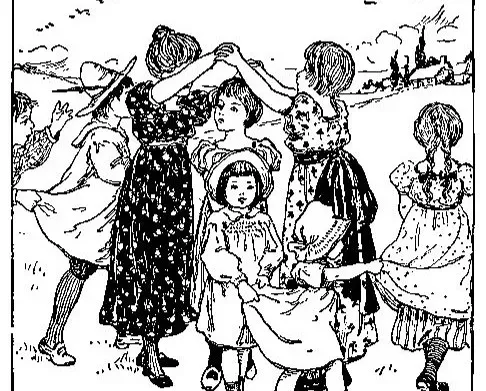
London Bridge is falling down, falling down, falling down. One of the most recognized rhymes on earth, and one with a genuinely contested history. Most people assume it is just a playful building-and-knocking-down game for children. It may be something considerably more dramatic.
Some experts argue quite convincingly that it refers to an alleged Viking invasion in 1014, during which London Bridge was pulled down. Though the attack has never been proven, a collection of Old Norse poems written in 1230 contains a verse that sounds much like the nursery rhyme, translating as “London Bridge is broken down. Gold is won, and bright renown.” That connection is tantalizing. However, there is a catch.
The theory largely hinges on Samuel Laing’s 19th-century translation of an Old Norse poem that seems to mirror the well-known “London Bridge.” It is quite likely that the translation was, in fact, intentionally mimicking the already well-known nursery rhyme. A more accurate translation from years later renders the similarities between the skaldic verse and the children’s rhyme basically non-existent. I think this is one of those cases where the exciting theory refuses to die, because the boring alternative – that the rhyme was just a construction game – is far less interesting. Honestly, who can blame anyone for preferring the Viking story?
Why Nursery Rhymes Keep Their Secrets So Well
There is a reason these rhymes carried hidden meanings for so long. Nursery rhymes were a way for adults to keep their children informed and aware of some of the darker realities of the world in a way that they could easily digest. Think of it as the medieval version of embedding complicated news inside a catchy jingle. The rhyme spreads fast, the real meaning stays protected.
Nursery rhymes were passed down orally from parents to their children for many, many years before anyone thought to write them down, and this makes it very hard to work out exactly how old they are, where they originated, or the original wording that was used. That oral tradition is both the beauty and the problem. Words shift, verses are added or dropped, and original meanings blur. Over the years, new variations of the most famous nursery rhymes appeared, making it even harder to trace the rhymes back to their origins or work out what they mean.
We humans abhor ambiguity and randomness, leading us to seek out logic and meaning where none exists. That impulse is not a flaw – it is what keeps folklore alive and evolving across generations. The stories we attach to these rhymes become, in their own way, just as meaningful as the original verses themselves. It is a loop of human storytelling that never really closes.
What is most striking, when you step back and look at all of it together, is how much history got quietly smuggled into children’s playgrounds. Taxation, executions, royal scandal, war, plague and heartbreak – all of it wrapped up in gentle rhyme and rhythm, handed down from parent to child for centuries. The next time you hear a nursery rhyme, you might want to pause before you smile. There is a good chance something darker is hiding just behind those cheerful, sing-song words. What do you think – does knowing the true history change the way you feel about these childhood classics? Leave your thoughts in the comments.