You see them everywhere. On your phone, your coffee cup, your sneakers. These iconic symbols have become so embedded in our daily lives that we rarely stop to think about where they actually came from. Most people assume famous logos must have elaborate backstories involving expensive design agencies and months of careful planning. The truth? Many of the world’s most recognizable logos were born from the simplest, sometimes almost accidental ideas.
Some were sketched on napkins during lunch breaks. Others were created by college students for pocket change. A few weren’t even designed by professionals at all. What makes these stories so fascinating is how something so minimal ended up representing billion-dollar empires. Let’s dive in.
Apple’s Bite-Sized Accident
The Apple logo seems almost too perfect to have a simple origin, but it does. Designer Rob Janoff created it in 1977, and the famous bite wasn’t added for any deep symbolic reason. Janoff simply wanted to make sure people wouldn’t mistake the apple for a cherry or tomato when shrunk down to smaller sizes. The bite gave it scale and made the shape immediately recognizable.
The rainbow stripes? Those were just trendy at the time and showed off what the Apple II could do with color. Steve Jobs approved the design quickly, and that was that. No focus groups, no endless revisions. Just a straightforward solution to a practical problem that ended up defining one of the most valuable brands on Earth.
Nike’s $35 Masterpiece

The swoosh is everywhere now, but back in 1971, it was just a student project. Phil Knight, Nike’s co-founder, needed a logo fast and didn’t have much money. He asked Carolyn Davidson, a graphic design student at Portland State University, to come up with something that suggested movement.
Davidson presented several options. Knight wasn’t thrilled with any of them but picked the swoosh because he was running out of time. He supposedly said something like, “I don’t love it, but maybe it’ll grow on me.” She got paid thirty-five dollars for her work. Years later, Nike gave her a diamond ring with the swoosh and an envelope full of company stock, but that initial payment remains one of the best bargains in branding history.
Twitter’s Bird From a Stock Image Site
Before Larry the Bird became the sleek icon we know today, Twitter went through several logo iterations. The original bird was actually purchased from iStock, a stock photography website, for roughly fifteen dollars. The co-founders needed something quick and cheap, so they browsed stock images until they found a suitable blue bird.
Eventually, they commissioned a proper custom design, but the spirit remained the same. Simple, recognizable, and lifted from the most mundane source imaginable. It’s hard to say for sure, but that fifteen-dollar investment might be the most cost-effective branding decision in tech history.
Target’s Bullseye Born From Retail Logic
When the Dayton Company launched Target in 1962, they wanted a name and logo that communicated precision and value. The bullseye made perfect sense. Hit the target, get what you want, right on the mark. The design was created in-house by the company’s own staff, not by some fancy external agency.
What’s brilliant is how universal the symbol is. You don’t need language to understand a target. The red and white color scheme came from wanting something bold and memorable that would stand out in suburban shopping centers. Decades later, it remains virtually unchanged because it was right from the start.
McDonald’s Golden Arches Were Actually Architecture
Those golden arches weren’t originally a logo at all. They were literal arches built into the architecture of early McDonald’s restaurants in the 1950s. The structures made the buildings distinctive and visible from highways, which was crucial for attracting road-trippers.
Designer Jim Schindler saw the potential and incorporated the arches into the branding. The M shape worked perfectly as an initial for McDonald’s, but it started as a functional design element. Sometimes the best logos aren’t invented, they’re just observed and adapted from what already exists.
Google’s Playful Typography Started in a Free Font
Google’s colorful logo looks deliberate, but it began with Sergey Brin experimenting in a free graphics program called GIMP. He chose the Catull font and colored each letter to look playful and approachable. The choice of primary colors with one rebellious green “L” was meant to signal that Google doesn’t follow all the rules.
Ruth Kedar later refined it professionally, but the spirit came from Brin’s casual tinkering. There was no grand vision initially, just two Stanford students who needed something that didn’t look too corporate. Mission accomplished.
The NBC Peacock Was About Selling Color TVs
NBC’s peacock logo made its debut in 1956 for a very specific reason: the network’s parent company, RCA, manufactured color television sets. The peacock’s colorful feathers were designed to encourage viewers to upgrade from black and white TVs. It was essentially a sales pitch disguised as a logo.
John J. Graham and Herb Lubalin designed the original eleven-feathered version. Over time, it was simplified to six feathers, but the concept remained unchanged. It’s one of the rare cases where a logo was born entirely from a business strategy rather than abstract brand identity work.
Starbucks’ Siren Was Pulled From Old Books

When the founders of Starbucks wanted a nautical theme to honor Seattle’s port history, they searched through old marine books. Terry Heckler stumbled upon a sixteenth-century Norse woodcut of a twin-tailed siren. The image was striking and mysterious, perfect for a coffeehouse trying to stand out.
The original logo showed a lot more of the siren than the current version does. Over the years, they zoomed in on her face and simplified the design, but the core image came straight from historical archives. No original illustration, just smart borrowing from the past.
Amazon’s Arrow Wasn’t There From the Start

The Amazon logo seems so obvious now. The arrow pointing from A to Z suggests they sell everything, and it doubles as a smile. Genius, right? But that arrow wasn’t part of the original design when the company launched in 1995. Back then, the logo featured the letter A with a river running through it, a reference to the Amazon River.
Turner Duckworth added the arrow in 2000 when the company expanded beyond books. Sometimes the perfect logo element comes later, after you truly understand what your brand has become. The simplicity was always there, but the meaning evolved.
Volkswagen’s Initials Were a Nazi Contest Winner
This one has an uncomfortable history. The Volkswagen logo, a simple VW inside a circle, was supposedly designed by Franz Xaver Reimspiess, an employee at the Porsche office, during a 1937 logo competition held by the Nazi regime. The contest aimed to create branding for the “people’s car” project.
After the war, Volkswagen distanced itself from those origins and simplified the design even further. The post-war versions emphasized clean lines and accessibility. Today, the logo represents German engineering and reliability, but its beginning was tied to propaganda efforts. History is messy.
The Mercedes-Benz Star Honored Three Elements

Gottlieb Daimler drew a three-pointed star on a postcard to his family back in the 1870s, symbolizing his ambition to motorize land, sea, and air. When Daimler-Motoren-Gesellschaft needed a logo decades later, his sons remembered the drawing and suggested using it.
The star was officially adopted in 1909, and the circle was added in 1916 to differentiate it from competitors. It’s one of the few logos that genuinely started with a personal symbol rather than a corporate brainstorming session. The connection to the founder’s dreams gives it an authenticity that focus-grouped logos can’t replicate.
Adidas’ Three Stripes Were About Function First

Adi Dassler, founder of Adidas, added three stripes to his shoes in 1949 not for branding, but to provide better support for athletes’ feet. The stripes helped stabilize the shoe’s structure. Only later did he realize they also made the shoes instantly recognizable on the field.
The stripes became the logo almost by accident. Dassler trademarked them after seeing how effective they were at differentiating his products from competitors. Function created form, which is the opposite of how most logos are born. Sometimes the best design choices solve problems first and look good second.
FedEx’s Hidden Arrow Was an Afterthought

Lindon Leader designed the FedEx logo in 1994, and while he intentionally created the arrow between the E and X, it wasn’t the main focus of his pitch. He emphasized the bold, modern typography. The arrow was just a clever bonus detail that suggested speed and precision.
What’s funny is that many people still don’t notice the arrow even after years of seeing the logo. Once you spot it, you can’t unsee it. It’s become one of the most celebrated examples of negative space in design, but it started as a subtle Easter egg rather than the headline feature.
The Shell Logo Evolved From Literal Shells

Shell’s founder, Marcus Samuel, originally dealt in decorative seashells imported from the Far East before moving into oil. The company’s first logo in 1900 featured a realistic mussel shell. Over more than a century, the image was gradually simplified and stylized into the iconic yellow and red scallop shell we recognize today.
Each redesign stripped away more detail until only the essential shape remained. It’s a perfect example of how logos evolve slowly, each generation removing a bit more until you’re left with something timeless. The origin was literal, but the abstraction made it immortal.
The AT&T Globe Represented Worldwide Service
Saul Bass, a legendary designer, created the AT&T globe logo in 1983 after the company’s monopoly breakup. The globe with horizontal lines suggested global reach and connectivity through communication lines. Bass was known for his minimalist approach, and this logo is no exception.
The design cost AT&T tens of thousands of dollars, which was substantial at the time but reasonable given Bass’s reputation. It wasn’t cheap, but compared to modern rebranding budgets that run into millions, it was still relatively straightforward. Bass delivered exactly what was needed without overthinking it.
The Rolling Stones’ Tongue Came From a Magazine Doodle
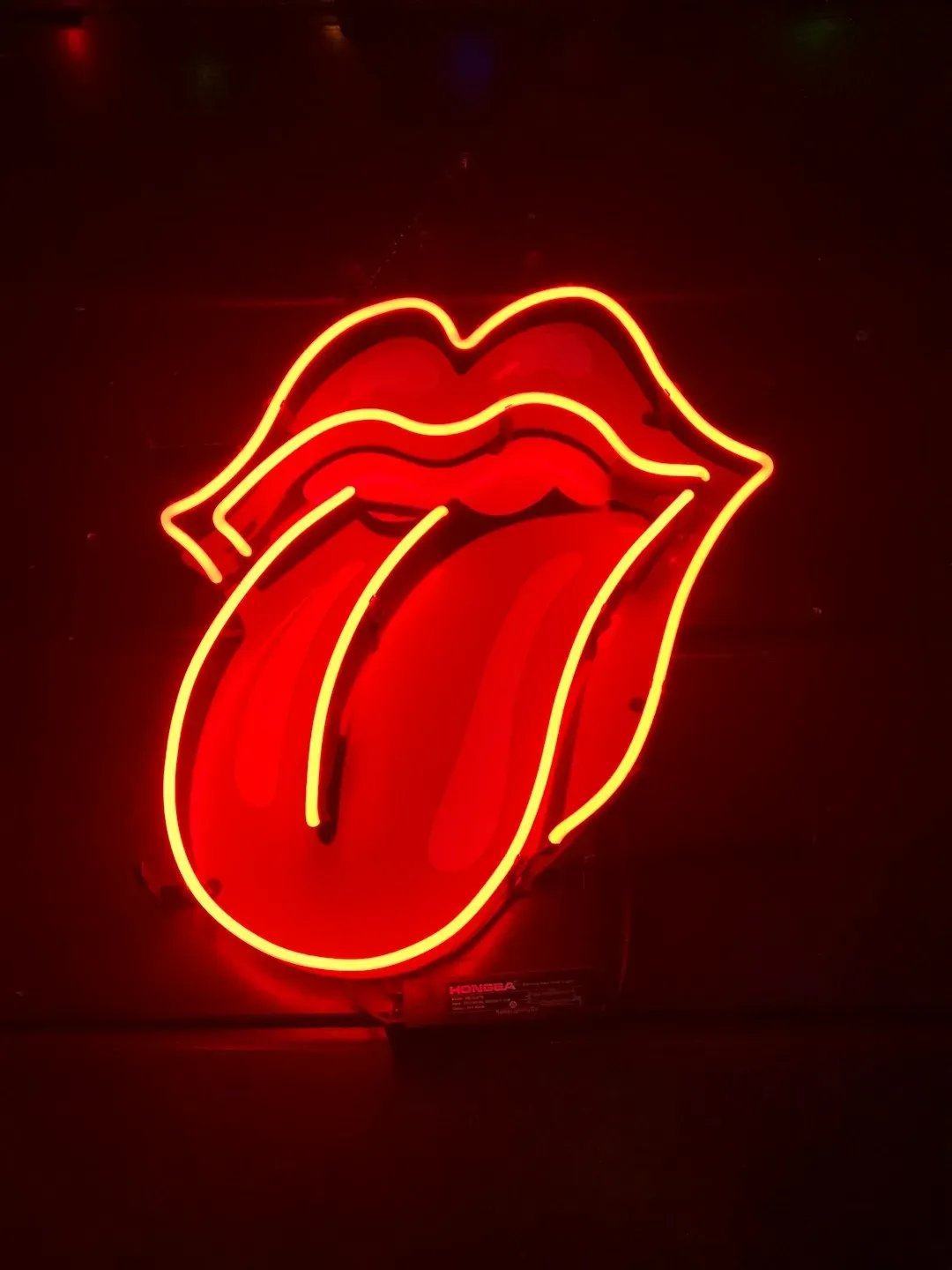
John Pasche was a student at the Royal College of Art when Mick Jagger commissioned him to design a logo for the Rolling Stones in 1970. Pasche was paid fifty pounds initially. He sketched several concepts, and Jagger picked the tongue and lips design because it captured the band’s rebellious, cheeky energy.
The design was inspired partly by the Hindu goddess Kali, but mostly by Jagger’s own prominent mouth. It became synonymous with rock and roll itself. Pasche later received an additional two hundred pounds and eventually sold his original artwork at auction for nearly one hundred thousand dollars. Not bad for a college assignment.
The BP Sunflower Tried to Rewrite Oil’s Image

BP’s green and yellow sunflower logo, introduced in 2000, was part of a massive rebranding campaign to position the oil giant as environmentally conscious. The company spent millions on the redesign and the “Beyond Petroleum” slogan. The sunflower symbolized energy, warmth, and sustainability.
The design itself is clean and memorable, but its origins are purely corporate strategy. It was created by Landor Associates, a major branding firm, and every petal was carefully calculated. Unlike many logos on this list, this one was anything but accidental. It was a deliberate, expensive attempt to change public perception. Whether it succeeded is debatable.
The Bluetooth Symbol Combines Viking Runes
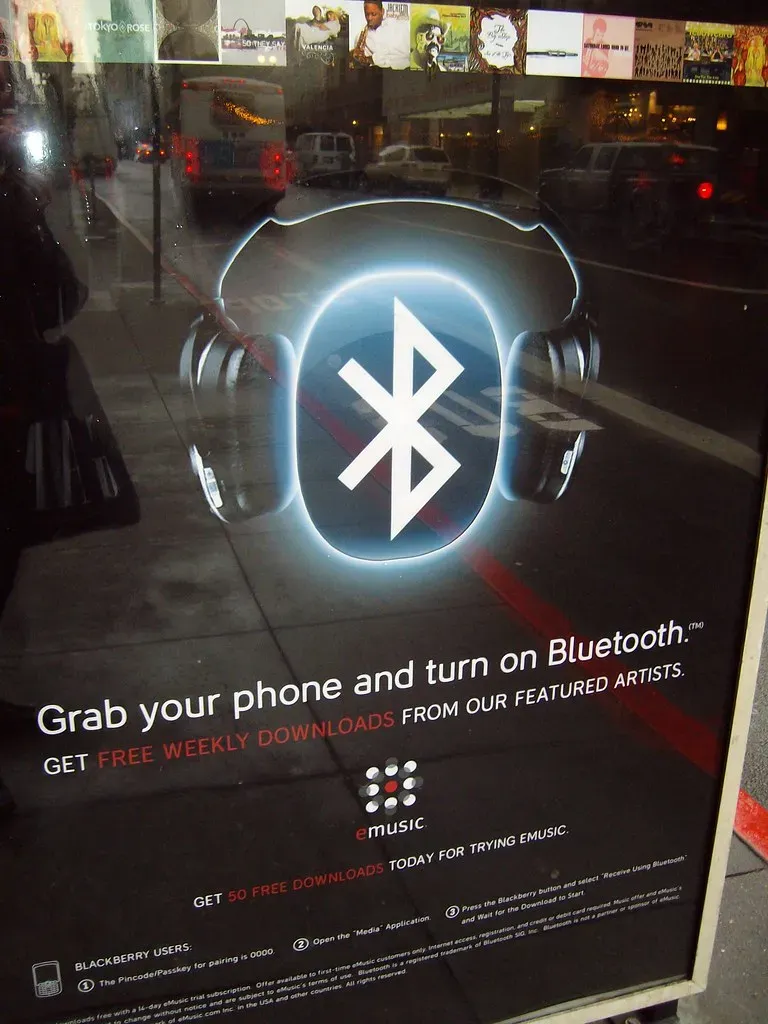
Bluetooth technology was named after Harald Bluetooth, a tenth-century Scandinavian king known for uniting Denmark and Norway. The logo combines the Nordic runes for his initials, H and B, forming a unique symbol. Intel engineer Jim Kardach suggested the name and symbol during a planning session.
The design was meant to be temporary until marketing could come up with something better. They never did. The runic combination stuck, and now billions of devices carry a logo inspired by medieval Scandinavia. Sometimes the placeholder becomes permanent because it just works.
The Olympic Rings Represented Unity From the Start
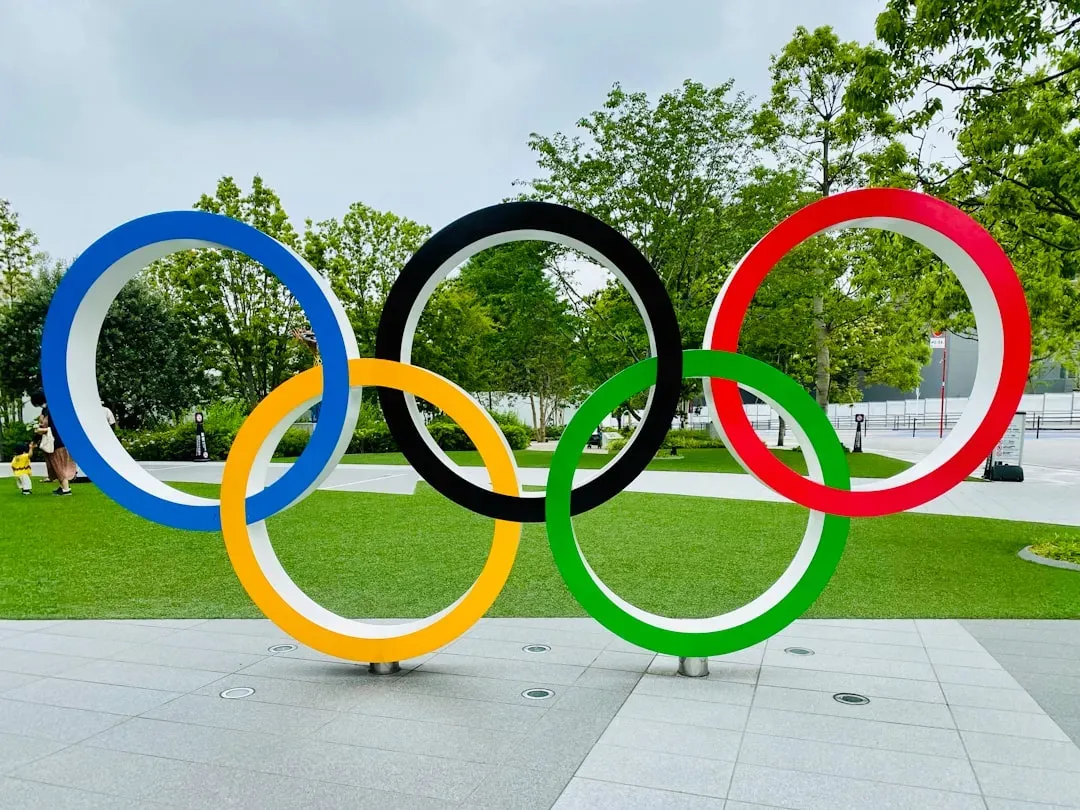
Pierre de Coubertin designed the five interlocking rings in 1913 to represent the unity of the five inhabited continents. The colors – blue, yellow, black, green, and red – were chosen because at least one of them appeared on every national flag at the time. The design was simple and powerful from day one.
Coubertin sketched it out himself. There was no agency, no committee approval process. He understood the power of a universal symbol and created one that has remained unchanged for over a century. It’s a reminder that good design doesn’t always need elaborate processes.
The London Underground Roundel Was Born From Congestion

In 1908, London’s underground stations were cluttered with competing ads, making it hard for passengers to spot station names. The solution was brilliantly simple: a red circle with a blue bar across it, creating clear space for station names that couldn’t be covered by advertisements.
Edward Johnston refined the design in 1919, but the core concept came from practical necessity. It wasn’t about branding initially, just wayfinding. Yet it became one of the most recognized transport symbols in the world. Function created an icon, which is often how the best design happens.
Conclusion

These logos prove that sometimes the best ideas aren’t the most complicated ones. A student’s quick sketch, a borrowed image from a history book, or a functional design element can become the face of a global brand. What matters isn’t how much money or time you spend, but whether the symbol actually connects with people and serves its purpose.
The next time you spot one of these logos, you’ll know the surprisingly humble story behind it. Did you expect any of these origins? Let us know what surprised you most in the comments.