
Music has always been America’s most honest storyteller. From dusty highways to neon-lit cities, these melodies capture what words alone can’t express. They tell us who we were, who we are, and sometimes who we’re afraid of becoming.
Five songs stand out as the soundtrack to the American experience. They’re not just hits – they’re historical documents wrapped in rhythm and rhyme. Each one captures a different chapter of this wild, contradictory, beautiful mess we call the United States. Let’s dive in.
1. “Born in the U.S.A.” by Bruce Springsteen

This 1984 anthem is America in a nutshell – loud, misunderstood, and more complicated than it first appears. Most people hear the thundering chorus and think it’s pure patriotism. They play it at political rallies and Fourth of July barbecues without catching the bitter irony.
Springsteen wrote it about a Vietnam veteran struggling to find his place in a country that sent him to war and then forgot about him. The verses tell a story of broken promises and economic desperation. It’s a protest song disguised as a celebration, which makes it perfectly American.
The Boss captured something essential here. He showed us that loving your country and questioning it aren’t oppositions – they’re two sides of the same coin. This song represents the working class dream and its frequent betrayal.
What makes it resonate decades later is its honesty. Springsteen didn’t sugarcoat the American experience. He gave us the grit and the glory in equal measure.
2. “This Land Is Your Land” by Woody Guthrie

Woody Guthrie penned this folk classic in 1940 as a direct response to Irving Berlin’s “God Bless America,” which he found too complacent. His version tells a different story – one of inequality, trespassing signs, and relief office lines. The verses most people never hear are the ones that matter most.
Guthrie walked across Depression-era America and saw firsthand how the land belonged to the wealthy while ordinary folks struggled for scraps. His guitar bore a sticker that read “This Machine Kills Fascists.” He wasn’t playing around.
This song became a schoolyard staple, sung by children who had no idea they were performing a radical critique of American capitalism. That’s the genius of it. Guthrie smuggled revolutionary ideas into a melody so catchy that even conservatives embraced it.
It’s hard to say for sure, but this might be the most subversive song ever written about America. It challenges ownership itself while sounding like a friendly campfire singalong.
3. “Strange Fruit” by Billie Holiday
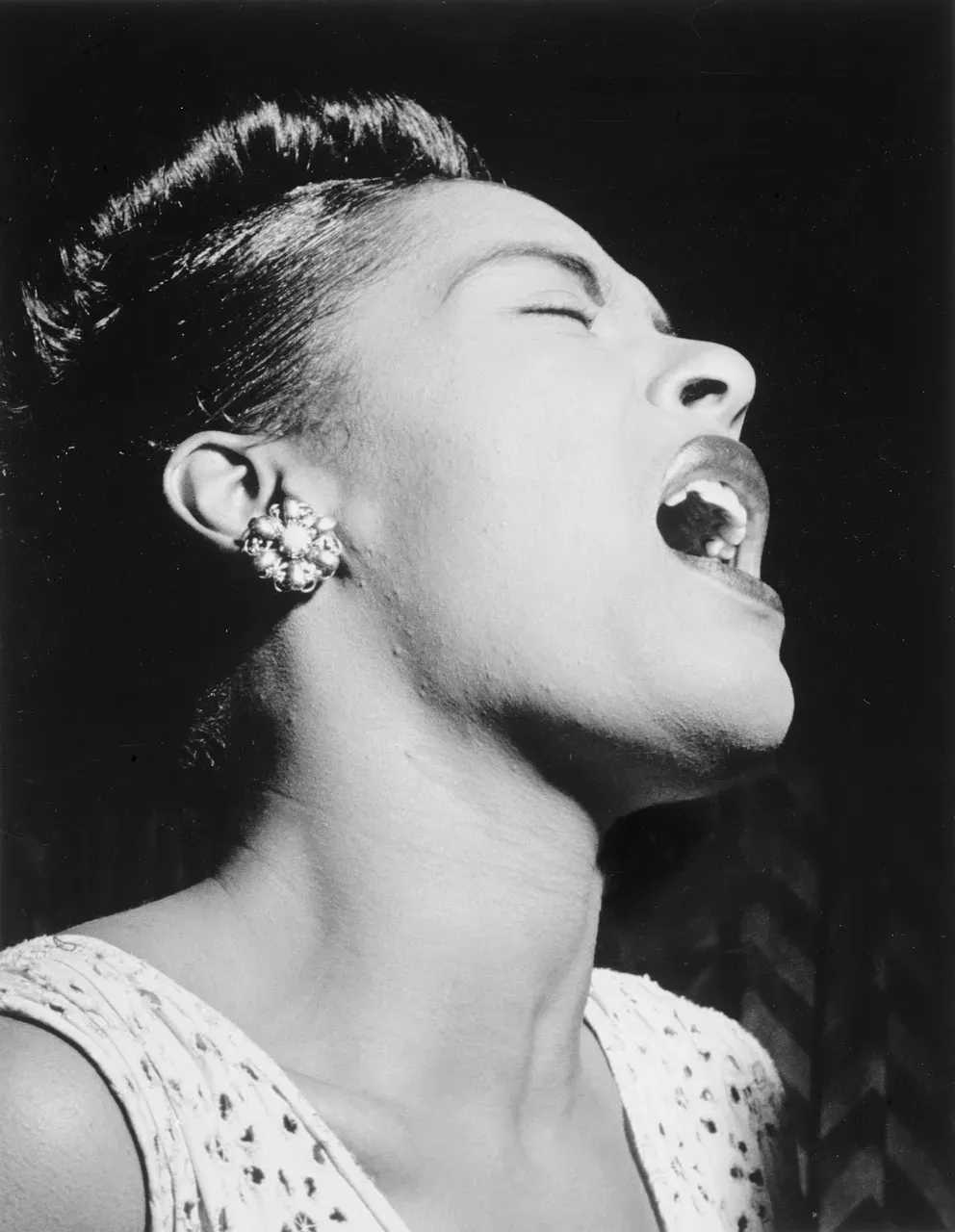
Let’s be real – this one is uncomfortable. Billie Holiday first performed it in 1939 at a New York nightclub, and the room fell silent. Abel Meeropol wrote the lyrics after seeing a photograph of a lynching, and Holiday made them unforgettable.
The “strange fruit” hanging from Southern trees are Black bodies. There’s no way to soften that image or make it palatable. Holiday’s haunting delivery forces listeners to confront America’s original sin – the one we keep trying to bury under patriotic rhetoric and false nostalgia.
This song doesn’t represent the American dream. It represents the nightmare that dream was built upon. Holiday risked her career every time she sang it, facing threats and FBI surveillance.
What makes “Strange Fruit” essential is its refusal to let America off the hook. It demands acknowledgment. Some stories can’t be told with metaphors or gentle language, and this is one of them.
4. “Empire State of Mind” by Jay-Z featuring Alicia Keys

Fast forward to 2009, when Jay-Z and Alicia Keys created a love letter to New York that became an anthem for American ambition everywhere. This song captures the hustle, the immigrant story, the concrete jungle where dreams are supposedly made of.
Jay-Z raps about arriving in the city with nothing and building an empire. It’s the classic American bootstrap narrative, but with a twist – he acknowledges both the struggle and the triumph. He mentions Tribeca lofts and Brooklyn projects in the same breath.
Alicia Keys’ soaring chorus provides the emotional counterpoint. Her voice carries hope and exhaustion simultaneously. Honestly, that balance is what makes this song work so well.
New York represents America’s melting pot mythology at its finest and most challenging. This song doesn’t shy away from either aspect. It shows a city that chews people up and spits them out, but occasionally lets someone win big.
5. “Blowin’ in the Wind” by Bob Dylan
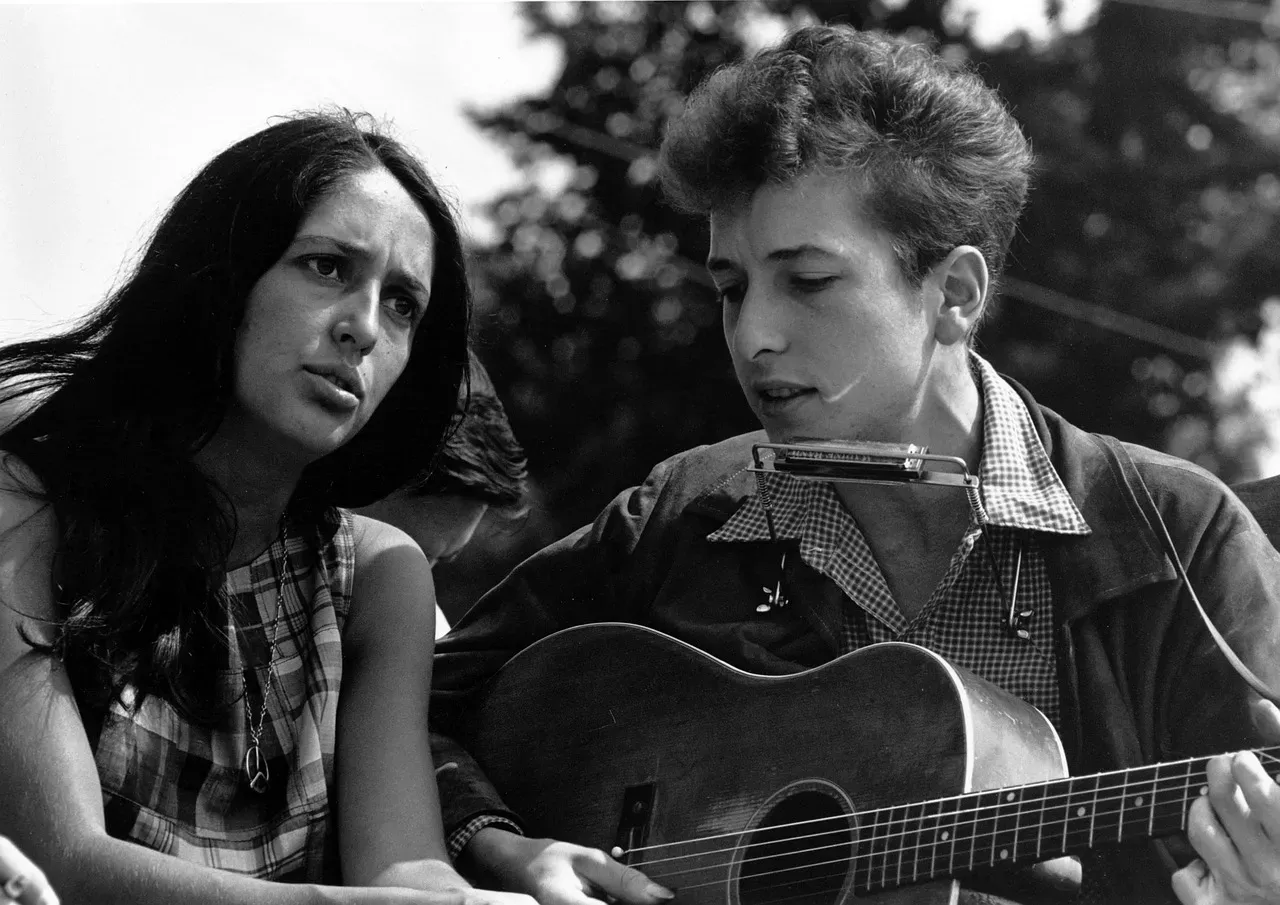
Dylan dropped this one in 1962, right when America needed to hear it most. The civil rights movement was gaining momentum, Vietnam was heating up, and young people were starting to ask uncomfortable questions. Dylan gave them a protest anthem that worked through inquiry rather than declaration.
The beauty of “Blowin’ in the Wind” lies in its refusal to provide answers. Instead, it poses questions that remain relevant decades later. How many roads must a man walk down? How many ears must one man have? The answer, my friend, is blowin’ in the wind.
This song became a rallying cry for the counterculture without ever explicitly telling anyone what to do. Dylan tapped into something universal about the American character – our tendency to question authority and seek truth even when it’s inconvenient.
Pete Seeger and Joan Baez covered it. Peter, Paul and Mary took it to number two on the charts. The song transcended Dylan himself and became a movement.
Conclusion

These five songs paint a picture of America that’s far more complex than any single narrative could capture. They show us protest and pride, struggle and success, brutal honesty and impossible optimism. Together, they form a playlist that doesn’t shy away from America’s contradictions – it embraces them.
The real story of the USA isn’t found in textbooks or political speeches. It’s hiding in three-minute songs that somehow manage to say what a thousand pages can’t. These tracks remind us that America has always been a work in progress, a nation constantly arguing with itself about what it means and what it should become.
What songs would make your American playlist? Drop your thoughts in the comments.