Every writer has heard the pep talk about persistence, but the actual numbers behind some of publishing’s biggest success stories are still startling even after you’ve heard them a dozen times. Behind the glossy covers and the decades of sales figures sit stacks of rejection letters, some blunt, some almost apologetic, and a few downright wrong in their predictions. What follows is a closer look at seven books that publishers turned down again and again before readers proved everyone wrong.
Harry Potter and the Philosopher’s Stone by J.K. Rowling


By the mid 1990s, Rowling had finished a manuscript about a boy wizard while working as a single mother in Edinburgh, and her agent Christopher Little began sending it out to publishing houses. According to Little’s own account, the book was turned down by every major publisher in Britain, 12 in all. Reasons varied from the story’s length to worries that a boarding school setting would feel too narrow for general readers, as Little later explained.
The manuscript finally landed on the desk of Bloomsbury editor Barry Cunningham, and the decisive moment reportedly came from an unlikely critic. The novel got off the ground largely because of the daughter of Bloomsbury’s chairman, an eight year old girl named Alice who was enthralled by the manuscript’s first chapter. Even then confidence was thin, since Cunningham told Rowling to get a day job because children’s books rarely made money, and the first print run numbered only 500 copies.
Carrie by Stephen King

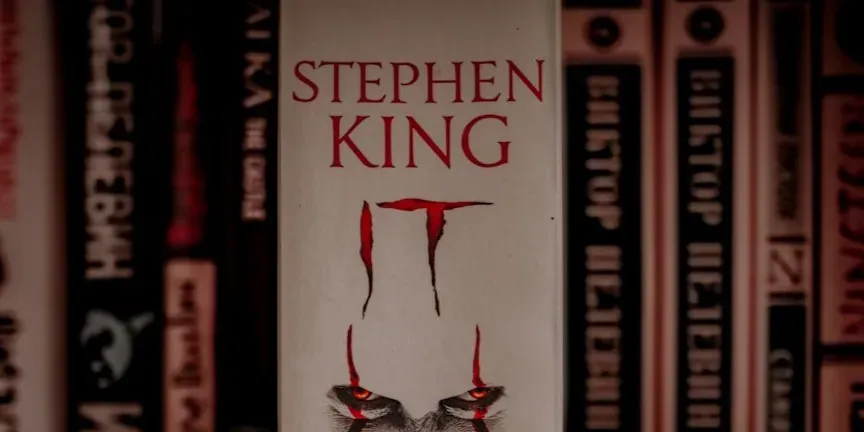
King’s debut novel almost never existed in any form. He started writing it as a short story, hated his own early pages, and tossed the first three pages in the trash because he could not relate to the main character and it did not move him emotionally. His wife Tabitha retrieved the crumpled pages, read them, and pushed him to keep going and finish the book.
Even after King completed the manuscript, the road to a bookstore shelf was long and discouraging. The story of a bullied teenage girl with telekinetic powers was rejected by publishers thirty times before it finally found a home. Doubleday eventually took a chance on it in 1974, and the paperback rights alone sold for four hundred thousand dollars, a staggering figure for a first time novelist at the time.
Zen and the Art of Motorcycle Maintenance by Robert Pirsig


Pirsig’s philosophical road narrative, part memoir and part meditation on quality and meaning, holds a rejection record that has never been broken. Pirsig received 121 rejections before an editor finally accepted the book for publication, and even then the editor believed it would never generate a profit. That editor, James Landis at William Morrow, reportedly wrote before publication that the book was probably a work of genius.
The gamble paid off in ways nobody predicted. The book ended up selling fifty thousand copies in its first three months and more than five million copies since. The Guinness Book of World Records has recognized it as the bestselling book rejected by the largest number of publishers, a distinction Pirsig apparently never chased but earned anyway through sheer persistence.
Chicken Soup for the Soul by Jack Canfield and Mark Victor Hansen

Few origin stories in publishing sound as grueling as this one. Canfield later described how the manuscript was turned down by thirty three publishers in New York and another ninety at a booksellers convention in Anaheim before it finally found a home. The consistent complaint from editors was that short story collections simply did not sell, and that the manuscript’s tone was too sentimental for a skeptical market.
Canfield and Hansen took an unusual approach to prove the doubters wrong, collecting written promises from audience members at motivational seminars that they would buy the book once it existed. Their tally of rejections eventually rose to 144 before a small Florida publisher agreed to take it on. The series went on to become one of the best known nonfiction franchises in modern publishing history, spawning hundreds of themed volumes.
The Help by Kathryn Stockett

Stockett’s novel about Black domestic workers in 1960s Mississippi took years to write and even longer to sell. According to accounts of her journey to publication, the manuscript for The Help was rejected sixty times before it was finally accepted, with many literary agents passing on the project during that stretch. Stockett kept revising and resubmitting rather than shelving the book, a decision that eventually changed the trajectory of her career entirely.
Once published in 2009, the novel spent well over a hundred weeks on bestseller lists and was adapted into a widely seen film a few years later. The persistence behind the sixty rejections is often cited in writing circles as a reminder that a strong voice can outlast a string of no’s, even when those no’s stretch on for years rather than months.
Jonathan Livingston Seagull by Richard Bach


Bach’s slim fable about a seagull who refuses to accept the limits of his flock sat unfinished for years before he figured out how to end it. Once completed, the short manuscript still faced a rough path to print, as eighteen publishers rejected it before Macmillan finally agreed to publish the book. The story’s simplicity and spiritual overtones apparently struck several editors as too thin or too strange for a commercial audience.
That skepticism did not hold up for long once readers got their hands on it. The book went on to sell more than seven million copies in numerous languages, making Bach an internationally recognized author almost overnight. It remains one of the more unlikely bestsellers of the 1970s, a slender parable that outsold far more conventional novels of its era.
Catch-22 by Joseph Heller


Heller’s satirical take on military bureaucracy during World War II confused more than a few early readers inside publishing houses. Records of the book’s path to print note that it was rejected twenty two times before finding an editor willing to take it on. Some early rejections reportedly cited the novel’s fractured, nonlinear structure as a barrier, since it jumped between timelines in a way that felt disorienting on first read.
Simon and Schuster eventually published the novel in 1961, and it slowly built a devoted readership through word of mouth rather than an immediate splash. Its title eventually became a common phrase in English for an impossible bind, a linguistic legacy that few of the twenty two publishers who passed on it could have anticipated. The novel is now regularly taught in literature courses and ranked among the defining American novels of the twentieth century.
Final Thoughts