Humans have always been obsessed with knowing what comes next. From ancient oracles to modern economists, the urge to predict the future is deeply wired into us. Sometimes those predictions are bold, visionary, even slightly poetic. Other times? They are so magnificently, catastrophically wrong that they almost defy belief.
What’s fascinating is that many of the worst predictions in history were not made by fools. Quite the opposite. They were made by some of the smartest, most respected, and most powerful people of their era. Scientists. Business leaders. Military commanders. People who had every reason to know better. Let’s dive into ten of the most jaw-dropping examples of confident predictions that crashed and burned.
1. “The Titanic Is Unsinkable” – The Most Dangerous Confidence in History

There are bold predictions, and then there is this one. Multiple people involved with the ship proclaimed it unsinkable prior to its terrible voyage, and the words of its Captain Edward Smith may be in retrospect the worst of any the predictions made. Smith expressed supreme confidence in the vessel’s design before it ever hit the open ocean.
Though not the only one to claim the ship unsinkable, Smith’s words were some of the most adamant. Not only did Smith claim the ship unsinkable, he specified that no disaster at all would happen. Only a few weeks later, the Titanic would hit an iceberg on its maiden voyage in April 1912 and sink, resulting in the deaths of over 1,500 passengers and crew.
Phillip Franklin, vice president of the White Star Line, made it even more explicit. He stated, “There is no danger that Titanic will sink. The boat is unsinkable and nothing but inconvenience will be suffered by the passengers.” History responded swiftly and brutally to that particular idea.
2. Lord Kelvin Says Flying Is Impossible – Then the Wright Brothers Happen
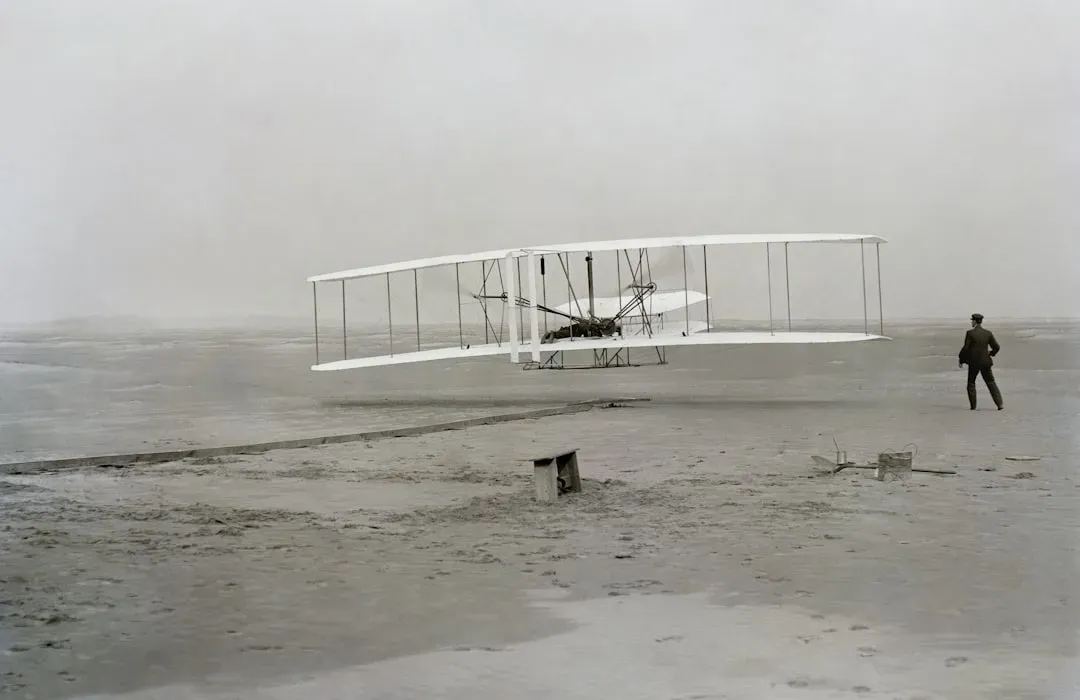
Imagine being one of the world’s most celebrated scientists and declaring something physically impossible, only to be proven wrong just four years later. That is exactly what happened to Lord Kelvin. In 1895, the physicist and thermodynamics expert said that it would be impossible to create an aeroplane due to its weight. “Heavier-than-air flying machines are physically impossible,” he declared.
Even when Kelvin made his infamous statement, scientists and engineers were closing rapidly on the goal of heavier-than-air flight. Just four years after his prediction, the Wright Brothers would prove him wrong with their first successful flight. It is almost poetic, really. The man who said it couldn’t be done watched humanity do exactly that within his own lifetime.
Kelvin was not finished, either. He also declared “Radio has no future. Heavier-than-air flying machines are impossible. X-rays will prove to be a hoax,” putting three catastrophically wrong predictions into a single statement. One wrong prediction is unlucky. Three in one go is something else entirely.
3. Decca Records Rejects the Beatles – One of History’s Greatest Business Blunders

On New Year’s Day, 1962, the Beatles drove ten hours to London in a fierce snowstorm to audition for Decca Records and were rejected in what has gone down as one of the greatest mistakes in the history of the music industry. Honestly, it’s hard to fully wrap your head around how badly this decision aged.
About a month later, Decca rejected the Beatles. The executives’ opinion was “guitar groups are on the way out” and “the Beatles have no future in show business.” The band that would go on to become the most commercially successful act in music history was dismissed in a few dismissive sentences.
Decca instead chose Brian Poole and the Tremeloes, who auditioned the same day as the Beatles, because they were local and would require lower travel expenses. So the Beatles were passed over, partly, to save on train tickets. The Tremeloes had a decent run. The Beatles changed the entire world. Decca reportedly signed the Rolling Stones shortly after, presumably while wincing.
4. Steve Ballmer Calls the iPhone Dead on Arrival

In the category of tech predictions, this one belongs in a hall of fame. When Apple launched the iPhone in 2007, one of the biggest and loudest skeptics was Steve Ballmer, who was CEO of Microsoft at the time. He did not just doubt it quietly. He laughed at it publicly and on the record.
He laughed at the high-priced iPhone, saying it would not appeal to consumers because it lacked a physical keyboard. “There’s no chance that the iPhone is going to get any significant market share,” Ballmer said. He said it with absolute certainty, not a hint of hesitation. It is the kind of statement that haunts a career.
Since then, Microsoft tried to no avail to morph its Windows Mobile business into something that could compete against the iPhone and Android. The company failed miserably. Ballmer left the company as a result. The iPhone went on to generate more revenue than most nations produce in GDP. History is undefeated.
5. “The Automobile Is Just a Fad” – The Horse Stays, the Car Goes?
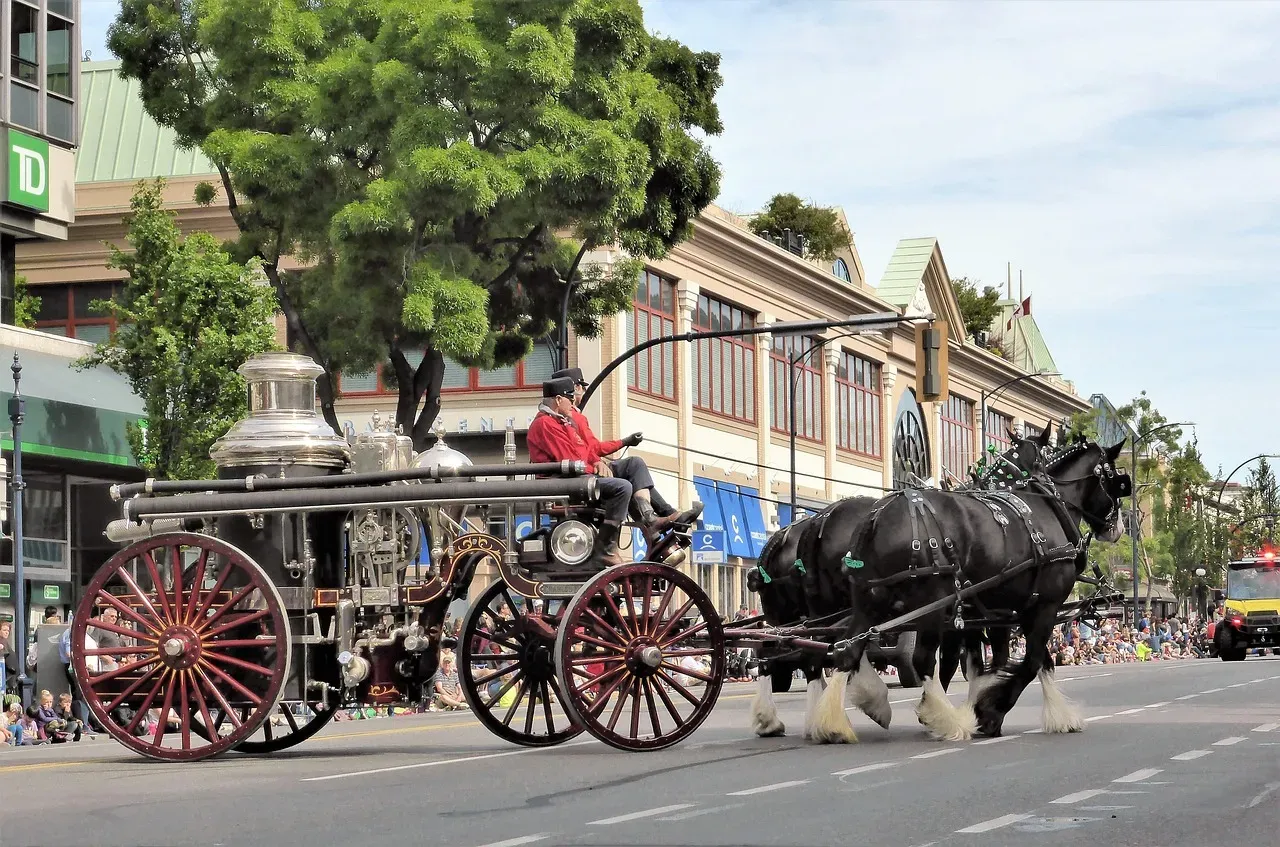
In 1903, the president of Michigan Savings Bank warned Henry Ford’s lawyer, Horace Rackham, to protect his money. “The horse is here to stay, but the automobile is only a novelty, a fad,” he advised. From today’s vantage point, that sounds almost comedic. At the time, it probably seemed perfectly sensible.
That’s how the President of the Michigan Savings Bank tried to discourage Henry Ford’s lawyer from investing in the newly formed motor company. Horace Rackham ignored the advice and quickly turned his $5,000 investment into $12.5 million, as cars replaced horses. That is what happens when you bet against transformation. You get left behind.
There was more tone-deafness to come. In a similar vein, Scientific American stated in its January 2nd edition of 1909 that “the automobile has practically reached the limit of its development,” suggested by the fact that no radical improvements had been introduced that year. The internal combustion engine would go on to reshape civilization. Oops.
6. Lord Kelvin Declares Physics Finished – Einstein Responds Almost Immediately
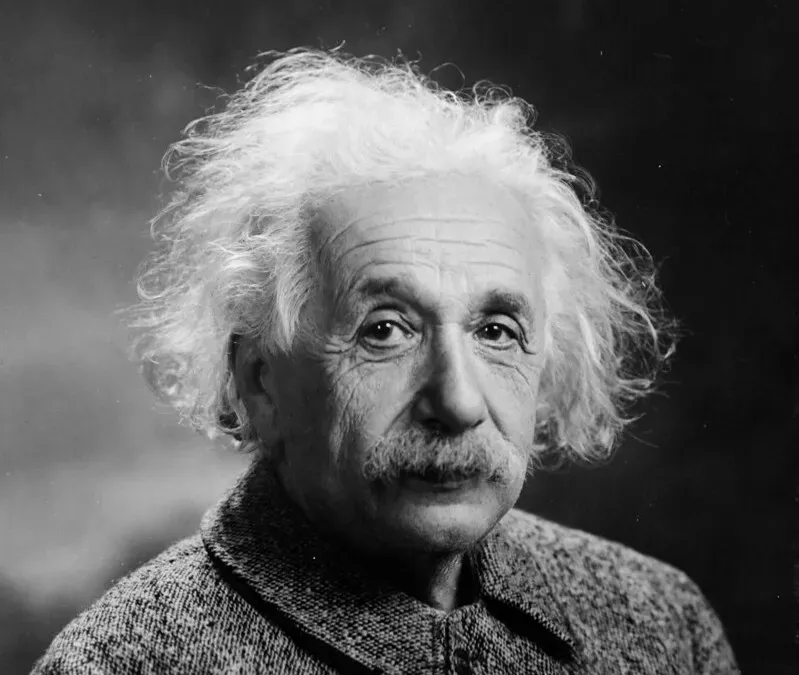
Here’s the thing about expertise: it can sometimes convince you that there is nothing left to learn. A renowned physicist of the time, Lord Kelvin proclaimed in 1900 that “There is nothing new to be discovered in physics now; all that remains is more and more precise measurement.” He said this with the full weight of his distinguished career behind him.
Within a few short years, groundbreaking developments such as Albert Einstein’s theories of relativity and the advent of quantum mechanics fundamentally transformed our understanding of the physical world. From concepts of the curvature of spacetime to the probabilistic nature of particles, the world of physics was alive with new and exciting discoveries. Physics was not finished. Physics had barely begun.
It is a staggering miscalculation, and it serves as a permanent warning against intellectual overconfidence. If even the greatest minds of an era can look at an entire field of human knowledge and declare it complete, then perhaps no one is truly safe from this kind of spectacular blindness. The universe, it turns out, had a few surprises left.
7. IBM and the Computer Market – A Prediction That Stuck (Even If the Quote Didn’t)

Few predictions are quoted more often than this one. Although Watson is well known for his alleged 1943 statement, “I think there is a world market for maybe five computers,” there is scant evidence he said it. Author Kevin Maney tried to find the origin of the quote, but has been unable to locate any speeches or documents of Watson’s that contain this. Still, the spirit of the idea was very much alive in the era.
Watson’s comment reflected the prevailing belief at the time that computers were extremely expensive and complex machines. They were primarily used for specialized tasks in scientific research and military applications, making them accessible only to a few large organizations and governments. The idea that every household might one day own several of them was genuinely unthinkable.
In a time when we all carry a computer in our pockets, with processing power that exceeds that of supercomputers from just a few decades ago, the quote seems almost unbelievable. The broader attitude it represents, that computing would never be for ordinary people, turned out to be one of the most expensive miscalculations in business history. Today there are billions of personal devices in use globally.
8. Khrushchev Promises to Bury the West – The Soviet Union Falls Instead

Sometimes predictions are not just wrong. They are almost perfectly reversed by reality. In 1956 during the height of the Cold War, Soviet Premier Nikita Khrushchev famously declared, “Whether you like it or not, history is on our side. We will bury you!” directed at the West and capitalism in general.
Spoken during a reception at the Polish embassy in Moscow, Khrushchev clearly demonstrated confidence that communism, and specifically the Soviet Union, would ultimately prevail over Western capitalism. Just a few decades later in 1991, the Soviet Union would collapse, while the West remained. The confidence was breathtaking. The result was the opposite of everything he predicted.
Economic stagnation, political corruption, and the unsustainable arms race between Russia and the US eventually led to the Soviet Union’s collapse. In hindsight, Khrushchev’s declaration reads less like a warning and more like an accidental prophecy about himself. History was on someone’s side. Just not his.
9. The Y2K Bug – A Crisis Without Precedent That Was Also Without a Crisis

Perhaps one of the most famous duff predictions from recent history is the Y2K debacle. As the 1990s drew to a close, IT experts around the world thought that they’d stumbled upon a computing error that would lead to global catastrophe. Many important computer systems around the world, including those used by banks and airlines, recorded years in two digits.
While this situation was a particular problem for the financial industry, paranoia took hold in every sector. Some people believed that all of their personal data would be compromised, that database snafus would cause food shortages and that nuclear missiles would launch themselves. It was full societal panic, broadcast in real time around the planet.
Governments poured vast sums of money into preventing a disaster that, largely, did not materialize. The midnight of January 1, 2000 arrived quietly. Planes stayed in the air. Banks kept their records. The lights stayed on. It’s hard to say for sure whether the remediation efforts truly prevented catastrophe or whether the panic was simply overblown from the start. Either way, the prophesied apocalypse failed to appear.
10. “Guitar Music Is on the Way Out” – And Other Things the Music Industry Got Wrong

In 1906, composer John Philip Sousa warned the world about “The Menace of Mechanical Music” in an article attacking machines that brought symphonies into people’s homes. He bemoaned the fact that fewer and fewer cheap lutes were being purchased, “all because the automatic music devices are usurping their places.” He was convinced recorded music would destroy the art form entirely.
Then there was the New York Times, which had its own take on the future of entertainment. Decca Recording Co. rejected the Beatles in 1962, saying “We don’t like their sound, and guitar music is on the way out.” The New York Times, after a prototype demonstration at the 1939 World’s Fair, warned that the problem with television was that people would have to sit and keep their eyes glued on a screen, and that the average American family hadn’t the time for it.
These predictions cluster around a single shared failure mode: the inability to imagine how deeply human beings will adapt to new forms of entertainment and technology. Recording did not kill music. Television became the centerpiece of family life. And the Beatles, of course, became the best-selling musical artists of all time. There are many other examples of awfully wrong predictions across history. The majority appear to almost tempt fate, claiming technology to be absolutely infallible or an event to be completely impossible, only for the opposite to come true, sometimes almost immediately.
Conclusion: The Lesson in Every Wrong Prediction

Looking back at these ten moments, a pattern becomes impossible to ignore. Intelligence, authority, and expertise offer no protection against the failure of imagination. The most confident voices in any room are sometimes the most spectacularly wrong. It is almost reassuring, in a strange way.
Every era has its blind spots. We laugh at the banker who called the car a fad, but somewhere out there right now, someone equally confident is dismissing the next transformative idea with equal certainty. The only real safeguard is humility, and even that is hard to maintain when you believe you already understand how the world works.
History does not forgive overconfidence quietly. It enshrines it, quotes it, and repeats it for generations. Which prediction from our own time do you think will make this list in fifty years? That might be the most unsettling question of all.