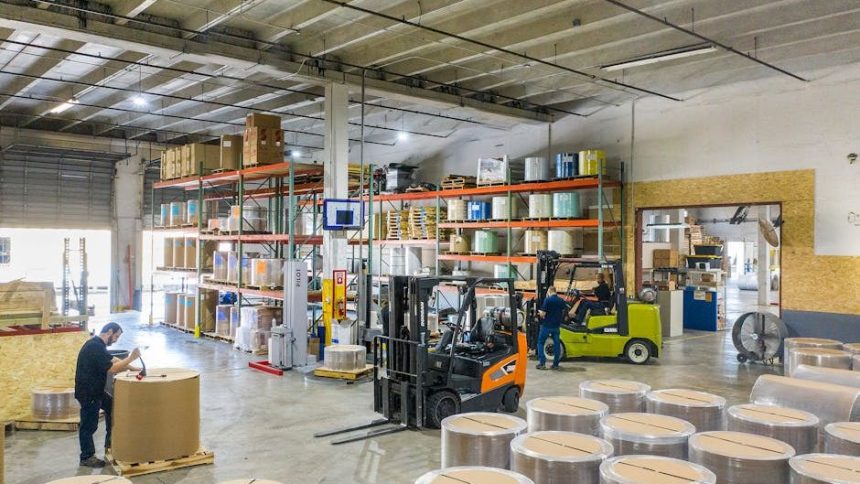
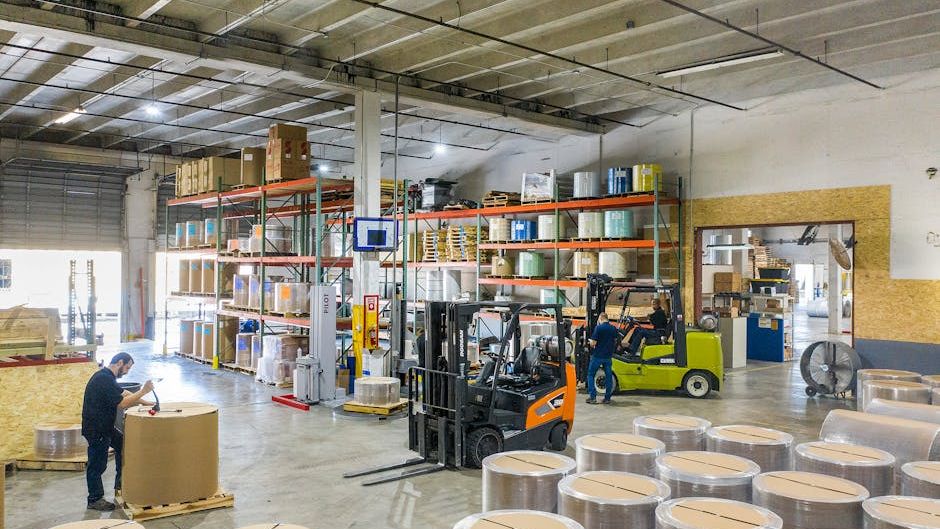
Life and death near Chicago suburbs' booming warehouse hub – Image for illustrative purposes only (Image credits: Pexels)
At the crossroads of Route 53 and Laraway Road, 40 miles southwest of Chicago, semi-trucks pass in an unbroken line on a typical weekday afternoon. The vehicles rumble past faded roadside memorials and youth ballfields, carrying goods bound for major retailers. Three decades ago the surrounding land was largely open prairie and quiet subdivisions. Today it forms one of the nation’s densest concentrations of warehouses.
From Prairie to Logistics Hub
The shift began in earnest in the early 2000s as online shopping accelerated and retailers demanded faster delivery. Developers built the CenterPoint Intermodal Center just outside Elwood, creating the largest inland port in North America where rail and truck traffic converge. Amazon opened its first Illinois facility in Joliet in 2015. By 2022 the Chicago region contained roughly 6,800 warehouses whose combined floor space exceeded that of the Los Angeles area by 13 percent.
Since 2000 more than 146 million square feet of warehouse space has been added across the metro region. Will County now lists warehousing and transportation as its largest employment sector, with nearly 37,000 workers. Amazon ranks as the county’s single biggest employer.
Jobs Arrive Alongside Heavy Costs
Local officials and business leaders point to the economic benefits. Mark Denzler, president of the Illinois Manufacturers’ Association, has described the growth as an advantage for communities seeking new employment. Yet many residents report that promised restaurants and retail centers never materialized. Some still travel several towns away for groceries despite living amid facilities stocked with everyday goods.
Property values have climbed sharply in places where developers secured tax incentives. At the same time, most full-time positions at Amazon’s Joliet site paid less than $34,000 annually in 2024. A new 1.1-million-square-foot logistics building is scheduled to open this year directly beside the only school in Elwood, less than a quarter mile from its baseball field.
Traffic Surges and Safety Declines
Daily truck volume through Joliet now averages 20,000 vehicles, with as many as 6,400 using local roads and state highways rather than interstates. That figure is more than five times higher than before the warehouse expansion. A New York Times analysis of state crash data from 2014 through 2024 found that truck-involved wrecks on roads surrounding major warehouse clusters rose 8 percent from 2021 to 2024 compared with the pre-pandemic period of 2016 to 2019. During the same years, crashes involving other vehicles on those roads declined.
On average nearly 550 people suffer injuries each year in truck crashes near these developments, and one person dies every month. Residents have nicknamed a stretch of Interstate 80 the “Die-80.” A Facebook group tracking conditions along the I-80 and I-55 corridor has drawn more than 60,000 members. In the fall of 2024 alone, at least seven people died in Will County truck crashes within two months.
Residents and Officials Push Back
Local governments have responded with enforcement. Joliet’s truck unit collected $2.2 million in fines during its first 15 months. Manhattan increased its dedicated truck patrol officers from three to eight over five years. Several towns have posted “no trucks” signs and pursued agreements that route vehicles onto designated networks.
Still, residents remain wary. Delilah LeGrett helped form a group opposing a proposed five-million-square-foot logistics complex that would sit behind homes in Manhattan. Lawsuits delayed the project, though a settlement last year cleared one path for truck access. County Executive Jennifer Bertino-Tarrant has noted that Will County is spending record sums on road repairs, safety upgrades, and pollution controls. In Manhattan, stop signs were added at the intersection where 13-year-old Chance Hunnicutt was struck and killed while riding his bicycle last October.
Long-Term Trade-offs for Communities
The warehouse expansion has delivered employment and tax revenue, yet it has also produced measurable increases in road damage, air pollution, and fatal collisions. Data show that more than 200 crashes between 2014 and 2024 damaged homes, playgrounds, or schools when trucks left approved routes. Enforcement officers report that some drivers view fines as an acceptable cost of avoiding congested interstates.
Communities across the country that pursue similar development now have a detailed local example of both the gains and the persistent challenges. The pace of construction continues, with additional facilities planned near existing residential areas. How local leaders balance those competing pressures will shape daily life for residents long after the current wave of projects is complete.