Trump’s Direct Threats Signal Escalation Risks (Image Credits: Pexels)
Persian Gulf — President Donald Trump raised the prospect of U.S. forces capturing Iran’s Kharg Island oil terminal as military strikes persisted between the United States, Israel, and Iran. The comments came during an ongoing war that entered its second month, with both sides exchanging attacks on Monday. Diplomatic initiatives, however, hinted at potential de-escalation, including Iran’s allowance of oil tankers through the Strait of Hormuz.[1][2]
Trump’s Direct Threats Signal Escalation Risks
Trump outlined his thinking in a Financial Times interview published early Monday. He stated his preference would be to “take the oil” in Iran and floated the idea of seizing Kharg Island, noting, “Maybe we take Kharg Island, maybe we don’t. We have a lot of options.”[1][2] The president dismissed Iranian defenses on the island, claiming, “I don’t think they have any defense. We could take it very easily.”[1]
Such a move would require a sustained U.S. presence, as Trump acknowledged it “would mean we had to be there for a while.” He escalated rhetoric further on Truth Social, threatening to “blow up and completely obliterate” Iran’s electric plants, oil wells, and Kharg Island if no deal emerged soon to reopen the Strait of Hormuz. These statements followed U.S. airstrikes that targeted military sites on the island earlier in the conflict, sparing oil infrastructure “for reasons of decency.”[3][4]
Kharg Island’s Pivotal Role in Iran’s Economy
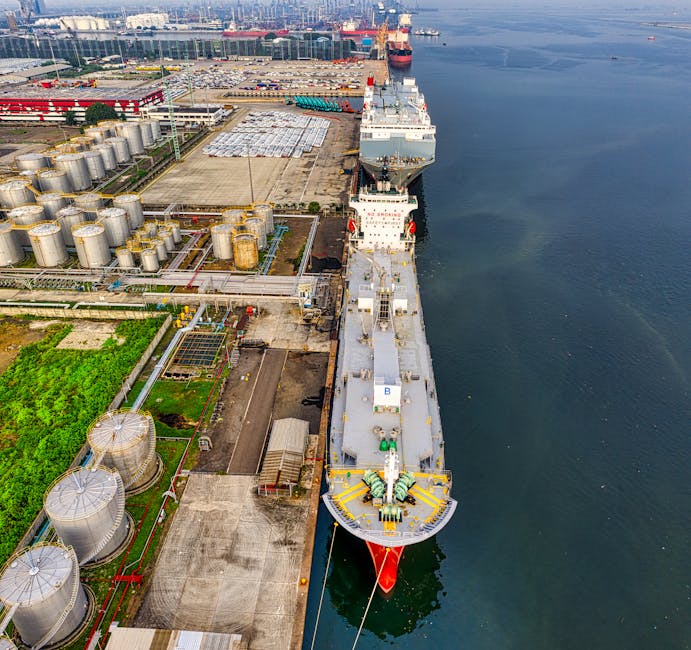
The small coral outcrop, located 24 kilometers off Iran’s coast, handles 90 percent of the country’s crude oil exports, processing up to 1.5 million barrels daily via pipelines from the mainland.[2][4] Tankers carrying as much as two million barrels dock at its jetties, primarily shipping to China, Iran’s largest buyer. Control of the terminal funds operations of the Islamic Revolutionary Guard Corps and could serve as leverage to secure the Strait of Hormuz, through which one-fifth of global oil flows in peacetime.
Seizing the island might provide a U.S. platform for mainland strikes, but experts highlighted challenges. Iranian reinforcements, including air defenses, mines, and missiles within range from the shore, complicate any landing. The Pentagon prepared for potential ground operations, with 2,500 Marines already in the region and more en route.[1][2]
Military Exchanges Intensify Across the Region
U.S. and Israeli forces maintained pressure with strikes on Iranian targets. Israel hit weapons sites in Tehran, a petrochemical facility in Tabriz, and power equipment causing blackouts, while downing drones from Yemen.[1][5] A U.S.-Israeli attack killed two at an Iranian orphanage, according to state media. Iran retaliated with missiles at Saudi Arabia, Bahrain, Dubai, and a Kuwaiti power-desalination plant that killed one worker and injured others.
Casualties mounted steadily. Over 1,900 died in Iran, 19 in Israel, and 13 U.S. service members perished. In Lebanon, Israel’s ground invasion against Hezbollah claimed over 1,200 lives and displaced more than one million, with two U.N. peacekeepers killed Monday.[1] Iranian-backed militias in Iraq and Houthi rebels in Yemen joined the fray.
- U.S. airstrikes targeted over 90 military sites on Kharg Island, including missile bunkers and a naval base.
- Iran threatened to mine the Gulf and invade Gulf states if U.S. troops landed.
- Israel planned to expand its Lebanese security zone amid rocket exchanges.
- Gulf defenses intercepted dozens of Iranian drones and missiles.
Ceasefire Talks Offer Glimmer of Hope
Pakistan emerged as a mediator, set to host U.S.-Iran discussions soon, possibly direct or indirect. The U.S. presented a 15-point plan demanding the Strait’s reopening; Iran countered with five points asserting sovereignty. Trump described talks as “extremely well” but cautioned about Iran’s reliability.[1]
Iran permitted 20 tankers through the strait Monday “as a sign of respect,” a step the White House viewed positively. Yet Tehran’s parliament speaker dismissed negotiations as a U.S. troop buildup ruse, vowing to “set them on fire.” Secretary of State Marco Rubio noted fractures in Iranian leadership amid unconfirmed regime shifts.[3]
Oil Shockwaves Hit Global Markets
Trump’s words drove Brent crude to $116 per barrel Monday, up nearly 60 percent since the war began February 28. The surge evoked fears of a 1990s-style energy crisis, with U.S. gas at $3.99 a gallon, the highest since 2022. Leaders in Britain, Australia, and Egypt responded with energy talks and fuel tax cuts.[5][4]
Longer-term, capturing Kharg could flood markets with Iranian oil, but escalation risks prices hitting $200. Attacks on desalination plants threatened Gulf water supplies, amplifying regional vulnerabilities.
Key Takeaways
- Kharg Island processes 90% of Iran’s oil exports, making it a prime strategic target.
- U.S. Marines reinforce the region as strikes continue, but talks allowed limited tanker passage.
- Oil prices soared to $116/barrel, stoking global economic fears.
As military and diplomatic tracks collide, the fate of Kharg Island could redefine the conflict’s trajectory. A seizure might cripple Iran’s war machine but invite fierce retaliation; a deal could avert deeper chaos. What do you think the next move should be? Tell us in the comments.