Something fundamental has shifted in the way people decide who or what is worth believing. It’s not just political cynicism or media fatigue, though both play a role. The 2020s have brought a more structural rearrangement: the old pathways of trust, built on authority, credentials, and institutional prestige, are being quietly replaced by something more fragmented and more personal. This isn’t entirely new. Distrust has been building for decades. What the 2020s have done is accelerate the collapse and force the question into everyday life in a way that can no longer be ignored.
The Long Slide: Decades of Declining Institutional Trust

Back in 1958, roughly three quarters of Americans trusted the federal government to do the right thing almost always or most of the time. That number tells a story of a different era entirely. Trust in government began eroding with the escalation of the Vietnam War, continued declining through the Watergate scandal and worsening economic struggles of the 1970s, and by 1980 only about a quarter of Americans expressed a high level of trust.
Since 2007, the share of Americans saying they can trust the government always or most of the time has never climbed above 30 percent. The floor has effectively been reached, and it keeps holding there. Over the last half-century, trust in American institutions has steadily declined, and this mistrust has rapidly increased in recent years, with U.S. rates of mistrust now exceeding those of many other nations.
The Grievance Economy: When Distrust Turns Volatile

The 2025 Edelman Trust Barometer reveals that economic fears have metastasized into grievance, with six in ten respondents reporting a moderate to high sense of grievance, defined by a belief that government and business harm them and serve narrow interests, and ultimately the wealthy benefit while regular people struggle. That’s not a fringe feeling anymore. It’s a majority position worldwide.
The 25th anniversary edition of the Edelman Trust Barometer revealed a profound shift to acceptance of aggressive action, with political polarization and deepening fears giving rise to a widespread sense of grievance. The Barometer also found a 30-point trust gap in institutions between those with high and low grievance. The gap between the grieved and the satisfied is no longer a matter of mood. It’s a chasm that shapes political behavior and social cohesion in measurable ways.
Government Trust: Partisan, Fragile, and Deeply Personal

In a spring 2024 survey, only 22 percent of U.S. adults said they trust the federal government to do the right thing just about always or most of the time. That figure has bounced slightly in different directions depending on who holds power in Washington. Since the 1970s, trust in government has been consistently higher among members of the party that controls the White House than among the opposition party.
Among people ages 18 to 34, about a third now say they trust the government, more than twice as many as in 2024, making younger adults the group that currently trusts the government the most, albeit by a small margin. That shift is striking given how little faith younger generations have historically expressed. Whether it holds is another question entirely.
The Media Trust Collapse: A Twenty-Year Unraveling

Overall, 56 percent of U.S. adults say they have a lot of or some trust in the information they get from national news organizations, down 11 percentage points since March 2025 and 20 points since the question was first asked in 2016. Two decades of erosion have left the news industry in a position it has never faced before. Research found that trust in mainstream media has plummeted to roughly 30 percent among American adults, while the vast majority actively fact-check their news sources.
Republicans and Republican leaners are much less likely than Democrats to trust the information they get from national news organizations, reflecting a deeply polarized media landscape where the same outlet can be seen as gospel by one group and propaganda by another. The result is that audiences are no longer choosing between sources. They’re choosing between realities.
Misinformation, Deepfakes, and the Crisis of Knowing

According to a global survey in 2025, nearly two thirds of participants expressed worry that AI-generated content could influence elections, while roughly seven in ten admitted they struggle to trust online information because they cannot tell if it was generated by AI. That’s a remarkable figure. When people can’t tell what’s real, trust doesn’t just decline. It destabilizes.
Online influencers and personalities were identified as among the top two biggest global threats for spreading false or misleading information, equal to the perceived propaganda threat from national politicians. The perceived risk of sources spreading fake news or disinformation dovetails with a broader worry, expressed by a majority of the public, that discerning between truth and lies online is growing ever more difficult. The information environment has become a verification problem for ordinary people who never signed up to be fact-checkers.
Science Under Pressure: Trust in Expertise Fragments


Some 57 percent of Americans say that science itself has had a mostly positive effect on society, still a majority, but a smaller one than at any point in the last eight years of Pew Research Center polling. That quiet erosion matters. A nationwide survey during the COVID-19 pandemic found a 30-point drop in trust in physicians and hospitals, falling from nearly 72 percent in 2020 to roughly 40 percent in 2024.
The partisan divide is reflected in sharply diverging views about health institutions, with the CDC receiving a 78 percent favorable rating among Democrats in summer 2024 but only a 33 percent approval rating among Republicans. Scientific institutions are being read through a political lens in a way that makes the concept of shared evidence increasingly difficult to maintain. That’s a genuinely new development in public life.
Trust in Education: Schools and Universities Caught in the Crossfire
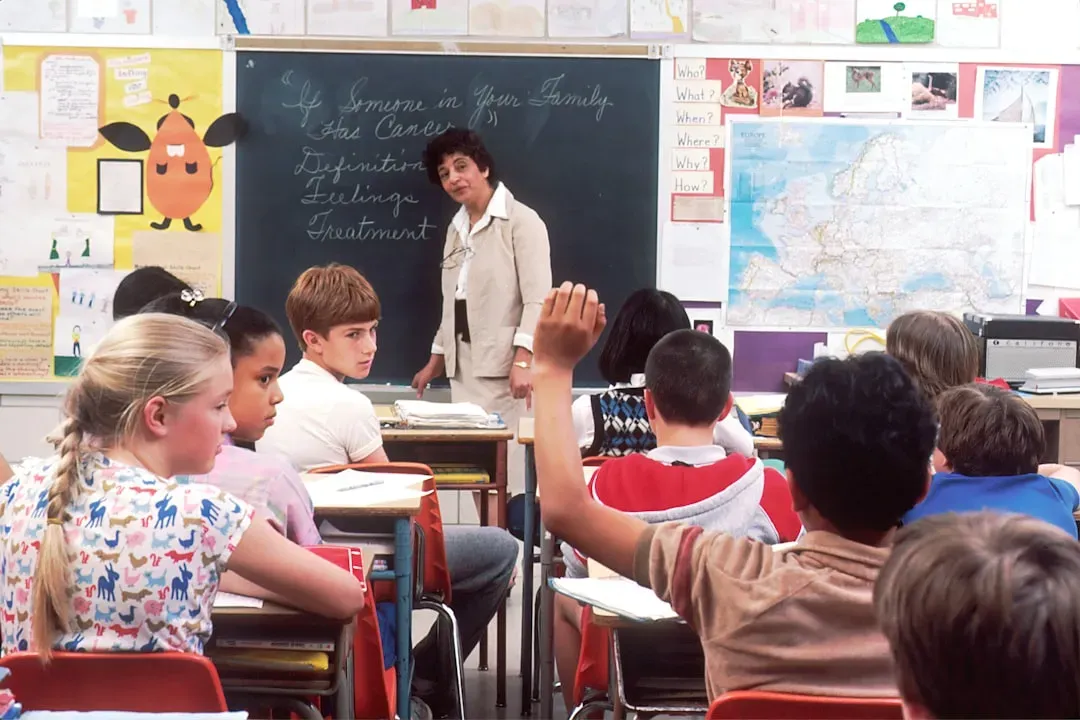
The past decade has seen a major shift in opinion about higher education, beginning long before recent campus protests and coming largely from the ideological right. In 2010, Republicans were more likely to say that colleges and universities were having a positive impact than a negative one. By the second half of that decade, their views had flipped entirely.
In a 2024 survey of U.S. public school teachers, nearly half felt that most Americans don’t trust them much or at all, and a large majority of teachers said that public K-12 education had gotten worse over the past five years. Teachers are among the most visible representatives of institutional trust in local communities. When they feel that trust has been withdrawn, the implications stretch well beyond the classroom.
The Peer-to-Peer Turn: Trusting People Over Institutions
Pew Research Center tracked the same Americans across two surveys, in early 2020 and in early 2025, asking whether most people can be trusted, and over that tumultuous five-year period, roughly a quarter of respondents changed their minds. The direction of travel wasn’t uniform. While slightly more people gained trust than lost it, financial hardship was clearly tied to losing trust: those who said they didn’t live comfortably were more likely to become less trusting than those who lived more securely.
Business is part of a wider trust recession, one that’s shaping political behavior, policy debates, and public expectations around the world. In the UK, questions around political conduct and transparency have dominated headlines, reflecting how the decline of trust in one area can spill into broader public sentiment, with people increasingly alert to issues of accountability, integrity, and alignment between words and actions. The peer level, neighbors, colleagues, local communities, is where trust has migrated when larger institutions have failed to maintain it.
AI and the New Frontier of Trust

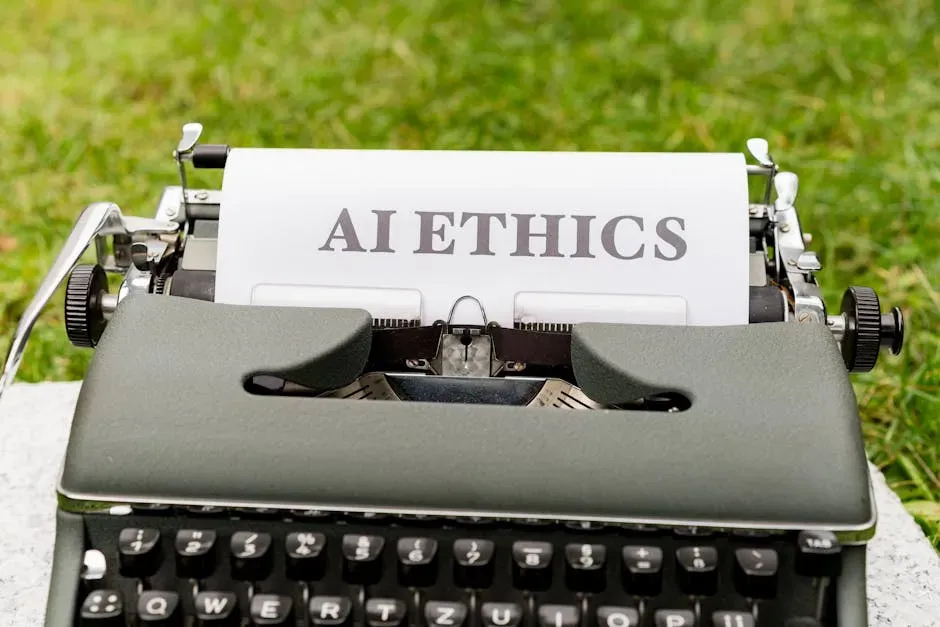
AI adoption is not without challenges, particularly regarding trust, which plays a crucial role in determining whether individuals are willing to rely on AI, delegate tasks to AI systems, and work alongside AI tools. Fostering trust in AI is complicated by features such as the “black box” nature of these systems, where internal decision-making processes are opaque, along with biased outcomes and issues like hallucinations.
Research has found that higher reliance on AI was associated with lower trust in human sources such as peers and authority figures, reinforcing findings that diminished confidence in human informants may drive AI preference across epistemic, social, and moral contexts. In other words, some people are turning to AI not because they trust it deeply, but because they trust people less. That’s a significant shift in how trust itself functions as a social mechanism.
What Remains: Pockets of Durable Trust

A large majority of Americans, roughly 86 percent, say that small businesses have a positive impact on the country. Fire departments and libraries were consistently the most trusted institutions across multiple years of national polling in the U.S., suggesting that proximity, community presence, and direct service remain powerful anchors for trust even in a cynical era.
Americans who express trust in others are more likely to help their friends and neighbors in various ways. For example, the vast majority of those who say most people can be trusted say they would bring in mail or water plants for a neighbor, compared with roughly two thirds of those who distrust others. A worldwide Gallup study of happiness in 2024 also reported that a “global surge in benevolent acts,” especially the helping of strangers, began during the pandemic in 2020 and has continued in subsequent years. That data offers a quieter counterpoint to the dominant story of collapse.
Trust in the 2020s is not simply declining. It’s redistributing: away from governments, media, and large institutions, toward peers, personal experience, and in some cases, algorithms. Whether that redistribution builds something more resilient or simply makes fragmentation permanent is the defining social question of the decade. The answer may depend less on what institutions do to earn trust back, and more on whether people still believe that kind of repair is possible.