
ADL reports a sharp drop in US antisemitic incidents in 2025, driven by a steep fall on campuses – Image for illustrative purposes only (Image credits: Unsplash)
New York — A significant reduction in antisemitic incidents swept across the United States in 2025, marking the first yearly decrease in five years. The Anti-Defamation League attributed much of the progress to a 66% plunge in campus-related cases, from 1,694 in 2024 to 583 the following year. Colleges responded to pressures from the Trump administration by tightening controls on protests, contributing to the broader trend. Overall, the ADL recorded 6,274 incidents of assaults, harassment, and vandalism, down from a peak of 9,354 in 2024.
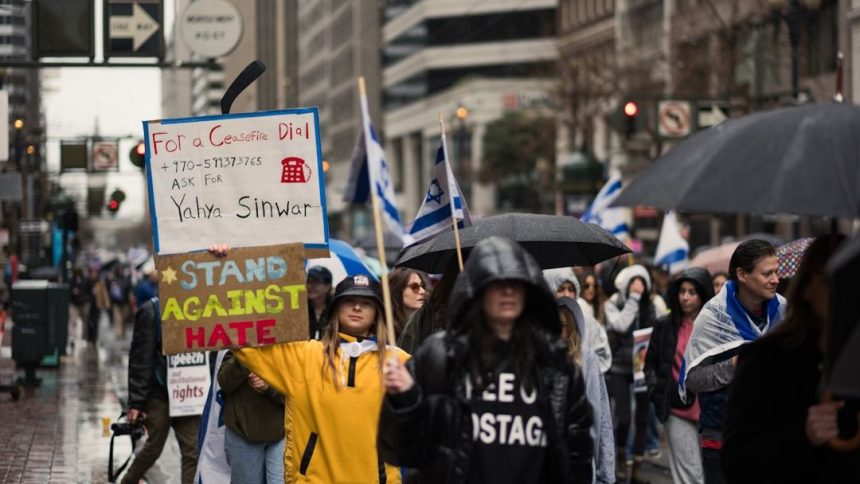
Campus Protests Fade Under New Pressures
The sharp drop on college campuses stood out as the primary driver of the national decline. Pro-Palestinian and anti-Zionist demonstrations had surged in 2024 amid the Israel-Hamas war, pushing incident numbers to unprecedented levels. By 2025, many institutions implemented stricter measures, including limits on rallies and encampments, which curbed the rise.
New York led with 1,160 incidents statewide, followed by California at 817 and New Jersey at 687. Anti-Israel events featuring rhetoric deemed antisemitic by the ADL fell 67% overall and 83% on campuses. The organization noted that such gatherings often crossed into vilification of Jews or Zionism.
Record Assaults and Fatalities Temper the Gains
Even with fewer total incidents, violence against Jews remained alarmingly high. The ADL counted a record 203 physical assaults in 2025, alongside three killings that underscored ongoing dangers. Two Jewish individuals died in a May 21 shooting outside the Capital Jewish Museum in Washington, D.C., while an 82-year-old woman succumbed to injuries from a June 1 firebombing at a Boulder, Colorado, event focused on Israeli hostages.
ADL CEO Jonathan Greenblatt described the year as one of the most violent for American Jews. “Numbers that would have shocked us five years ago are now our floor,” he stated. “People are being murdered because of antisemitism on American soil, and thousands more are threatened.” Greenblatt emphasized that campus figures, though reduced, stayed nearly four times higher than in 2021.
Methodology Sparks Ongoing Debate
The ADL’s auditing approach has fueled discussions about what qualifies as antisemitism. Critics argue its criteria capture too much criticism of Israel or Zionism, while supporters see it as essential for tracking threats. In 2025, 45% of incidents linked to Israel or Zionism, down from 58% the prior year when opposition to Israel’s Gaza operations peaked.
The group maintains it distinguishes legitimate policy critiques from hatred, yet gray areas persist. Vilifying Zionism as a movement for a Jewish state draws ADL scrutiny, a stance some Jewish critics reject. Aryeh Tuchman, a former ADL extremism center leader now at the Nexus Project, acknowledged the organization’s concerns while calling for varied definitions. “There are a lot of people who would disagree with that,” he said. “It’s important that there be room for multiple approaches.”
Campus Accountability and Counter Responses
To hold schools responsible, the ADL introduced a Campus Antisemitism Report Card in 2024, grading institutions on antisemitism policies. It pursued lawsuits and settlements, including one with Pomona College alongside other Jewish groups. Greenblatt welcomed the downturn but urged vigilance. “We welcome any decrease in antisemitic incidents on college campuses or in other settings,” he told the Associated Press. “It is indisputably a good thing, and we hope this is just the beginning of a downward trend.”
The Council on American-Islamic Relations countered with its Unhostile Campus Campaign, defending pro-Palestinian speech. It flagged Columbia University, the City University of New York, and the University of Michigan as most hostile to such views. These efforts highlighted tensions between free expression and safety concerns.
Global Echoes of Persistent Threats
While U.S. numbers improved, antisemitism worries intensified abroad. In Britain, Prime Minister Keir Starmer called for stricter protest measures after stabbings of two Jewish men in London, amid synagogue arsons and police warnings of unprecedented risks fueled by social media. Australia probed rising hatred following a December massacre at a Bondi Beach Hanukkah event that killed 15.
A Tel Aviv University study deemed 2025 the deadliest year for such attacks since 1994, with 20 fatalities across the U.S., U.K., and Australia. The findings reinforced that declines in one nation did not signal global relief. For American Jews, the ADL’s report offered cautious optimism amid calls for sustained action to prevent backsliding.