
Weekly Climb Signals Broader Trend (Image Credits: Unsplash)
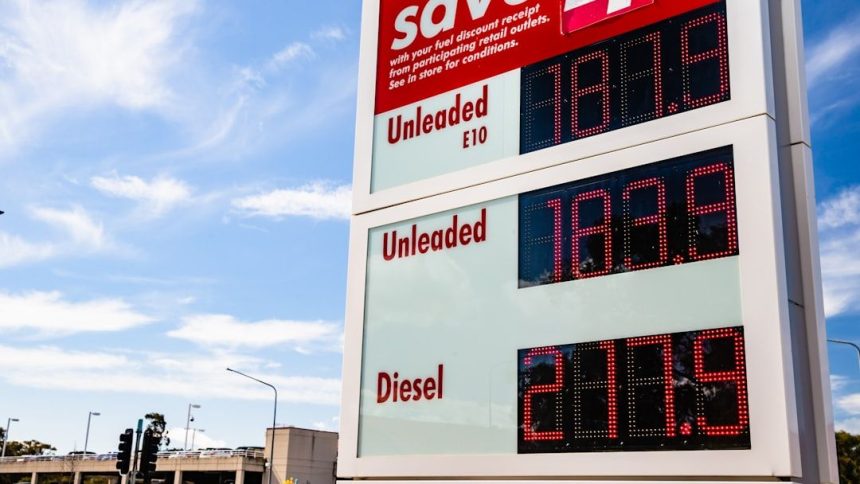
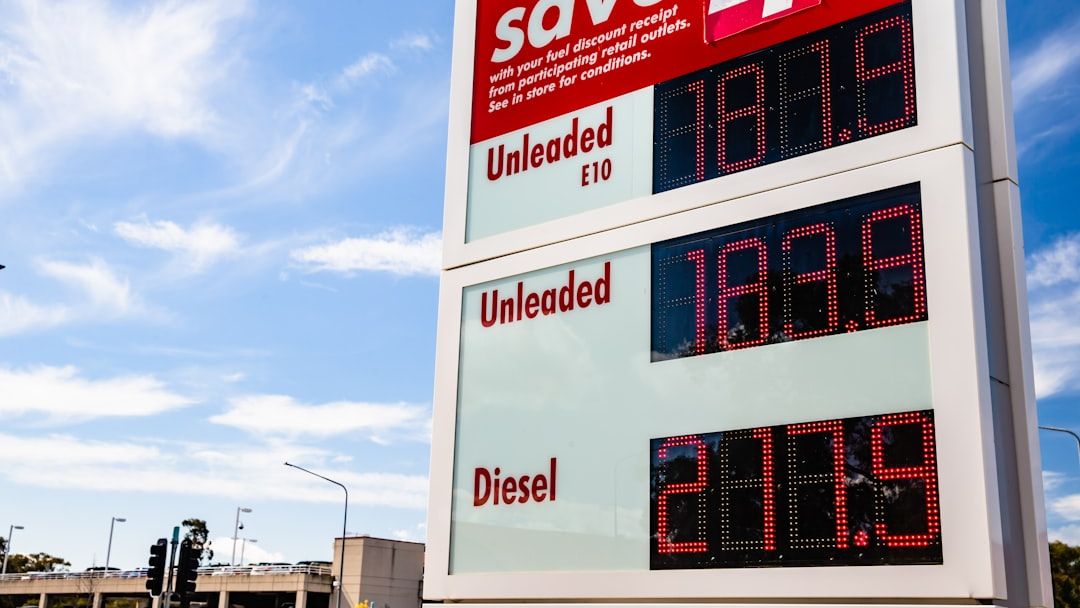
United States — Gasoline prices across the nation reached $4.23 per gallon on Wednesday, marking a sharp weekly increase that has prompted warnings of even higher costs ahead.[1] This escalation, fueled by intensifying U.S.-Iran tensions, places renewed pressure on household budgets and the broader economy at a time when drivers already face elevated expenses. Industry watchers now anticipate the national average could climb to $4.50 per gallon in the near term.
Weekly Climb Signals Broader Trend
The national average rose 21 cents from $4.02 per gallon a week earlier, reflecting sustained upward momentum.[1] Prices advanced in 39 states during this period, with particularly steep gains on the West Coast. California led the pack at $5.98 per gallon, up 15 cents from the prior week.
Such rapid shifts highlight how quickly fuel costs can fluctuate. Diesel prices showed similar upward pressure, compounding challenges for trucking and logistics sectors. Refining and distribution costs contributed alongside crude oil benchmarks, which responded to global market signals.
Analyst Flags Imminent $4.50 Milestone
Patrick De Haan, head of petroleum analysis at GasBuddy, issued a direct alert on social media. “Ohhh yeah watch out folks… National average could quickly hit $4.50/gal,” he posted on X.[2][1]
“Oil prices have been climbing again as markets react to renewed geopolitical tensions and the cancellation of talks between the U.S. and Iran. As a result, gasoline prices are set to rise further this week, with diesel expected to follow.”[1]
De Haan’s forecast drew from real-time data tracking pump prices nationwide. His analysis carries weight given GasBuddy’s extensive network of reported station prices.
Geopolitical Tensions Drive the Spike
Escalating conflict between the United States and Iran emerged as the dominant factor. Canceled diplomatic talks rattled energy markets, pushing crude oil values higher and rippling through the supply chain.[1] Crude oil accounts for roughly 51% of gasoline pricing, per the U.S. Energy Information Administration, making it highly sensitive to international disruptions.
Refining operations (20%), taxes (18%), and distribution (20%) fill out the cost structure. Global trading dynamics amplified the effect, as traders priced in prolonged uncertainty. This scenario echoed past episodes where Middle East instability translated directly to U.S. pumps.
Regional Disparities Widen
Western states bore the brunt of the increases. Hawaii followed California at $5.63 per gallon, while Washington, Oregon, and Nevada clustered around $5.12 to $5.54.[1]
- California: $5.98 (up 15 cents)
- Hawaii: $5.63 (down 3 cents)
- Washington: $5.54 (up 16 cents)
- Oregon: $5.12 (up 15 cents)
- Nevada: $5.12 (up 15 cents)
These figures underscored stark contrasts, with some regions already exceeding the predicted national benchmark. Drivers in high-cost areas felt the pinch most acutely.
Consumers might explore fuel-efficient options or public transit to mitigate impacts. Long-term, diversified energy sources could buffer against such swings.
Outlook Remains Uncertain
Further rises appear probable in the coming weeks unless tensions ease. De Haan’s projection positions $4.50 as a realistic near-term ceiling, contingent on oil stabilization. Historical patterns suggest prices could peak before receding if supply chains adapt.
Authorities and industry groups urged preparedness. The episode served as a reminder of fuel’s ties to global events, prompting reflection on energy independence strategies.