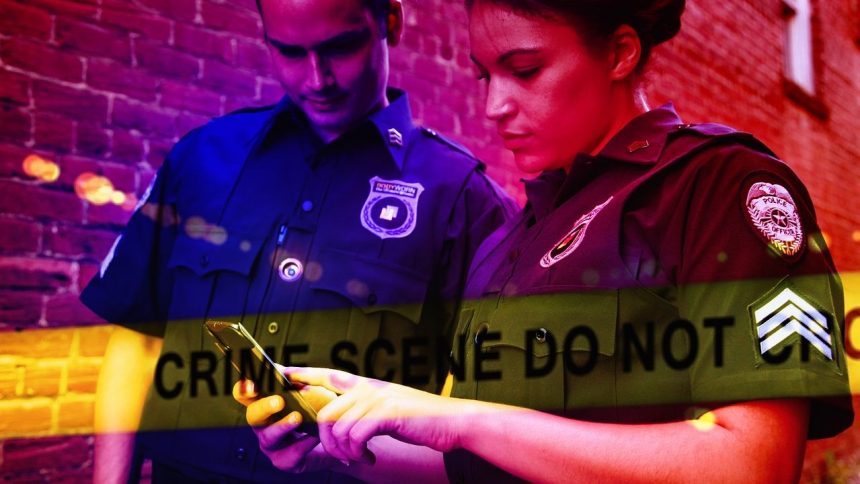
Las Vegas is a city built on spectacle, on bright lights, enormous crowds, and the constant hum of something happening. But underneath all of that noise, there is a quieter, far darker world that the city rarely advertises. It is a world of unanswered questions, grieving families, and files that get thicker with the years but never closer to a resolution.
Between 1980 and 2019, Nevada recorded roughly 7,200 homicides. Out of those, around 4,850 have been solved, leaving well over 2,300 cases unsolved, many of which remain ice cold. That is not just a statistic. That is thousands of families waiting. Let’s dive in.
The Scale of the Problem: A City With a Long Memory

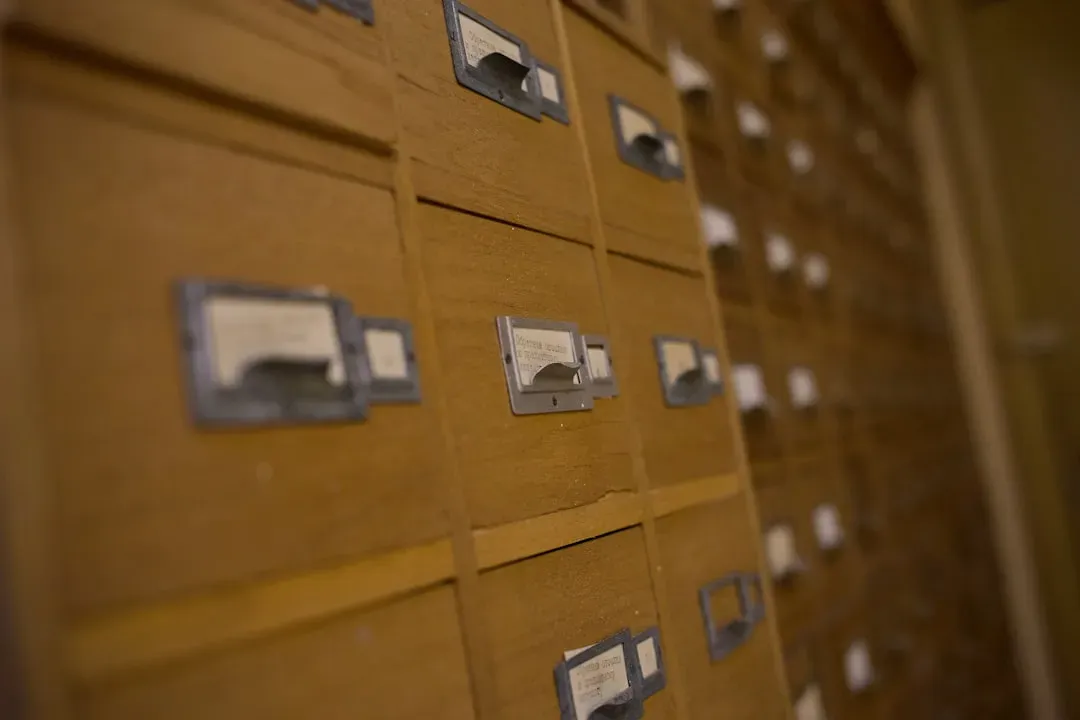
Las Vegas might have one of the best-known police departments in the country, but even the best can’t win them all. The LVMPD launched a dedicated Cold Case Homicide Unit in 2022, leading to active reinvestigations of more than 1,000 unsolved murders. That number alone is staggering when you let it sink in. More than a thousand open murder files, sitting in that unit, each one representing a person who never came home.
By definition, a cold case is any murder, missing person, or suspicious death not actively investigated by the original assigned investigators. Cold case murders normally fall into three categories: unsolved, meaning no known suspects exist, or unresolved, where suspects are known but never successfully prosecuted. That second category is arguably the more maddening of the two. Someone is known. Charges are never filed. The case gathers dust.
In 2025, Metro logged 90 murders, a drop from 115 in 2024 and 142 in 2023. Metro counted a total of 117 homicides in its jurisdiction in 2025, down from 136 the previous year. The trend is moving in the right direction. Still, the backlog of unresolved cases from prior decades remains one of the department’s most significant challenges.
Case #1: The Murder of Tupac Shakur (1996) – The World’s Most Famous Cold Case

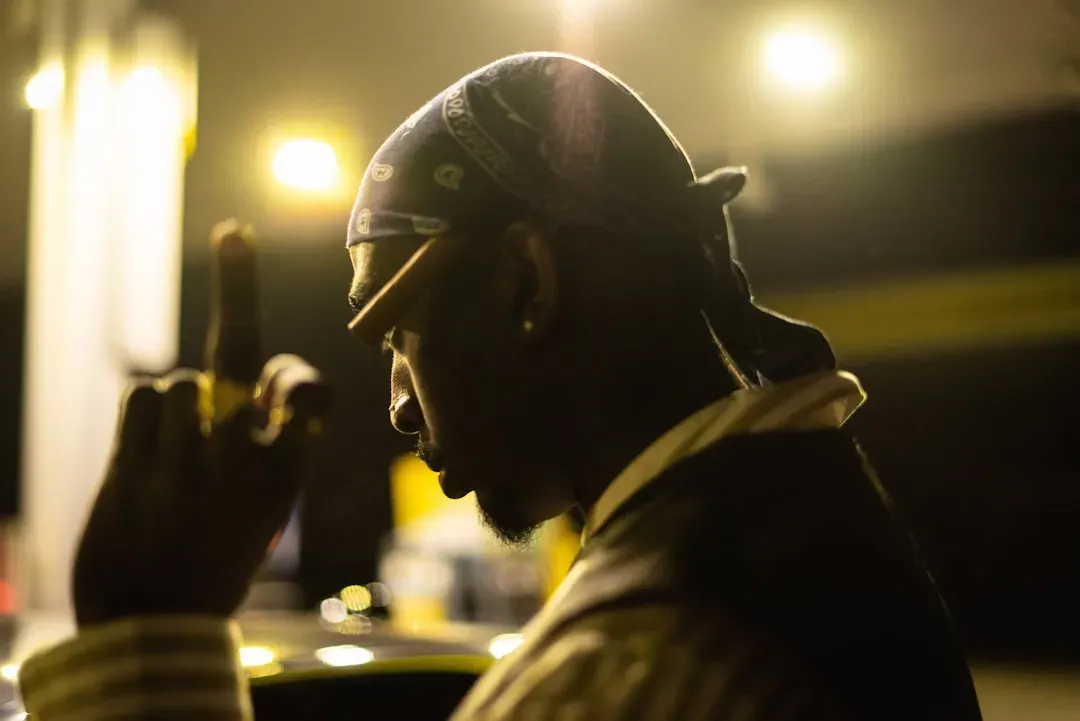
Honestly, you could argue this is the most well-known unsolved murder in modern American history. The killing occurred on the bustling streets of Sin City and remained unsolved for nearly 30 years, mired in police scandals and turf wars, and a street code that frowns upon snitches. Nearly three decades of silence, despite the entire world watching.
On their way from Mike Tyson’s fight against Bruce Seldon, Shakur was gunned down at a red light in the passenger seat of the BMW being driven by rap impresario Marion “Suge” Knight. Shakur was rushed to the hospital and died six days later from his wounds. He was 25 years old. The world lost one of its most electrifying voices in an instant.
Duane “Keffe D” Davis is charged with first-degree murder for his alleged role in Shakur’s shooting death. He has pleaded not guilty and has been held without bail since his arrest in September 2023. Prosecutors have claimed that Davis orchestrated Shakur’s murder and provided the gun used in the shooting. As of late 2025, Davis’ trial was again delayed, this time to August 10, 2026. After all these years, the case still twists and turns with no final verdict in sight.
Case #2: The Homeless Shootings (2005 Onward) – A Predator No One Caught

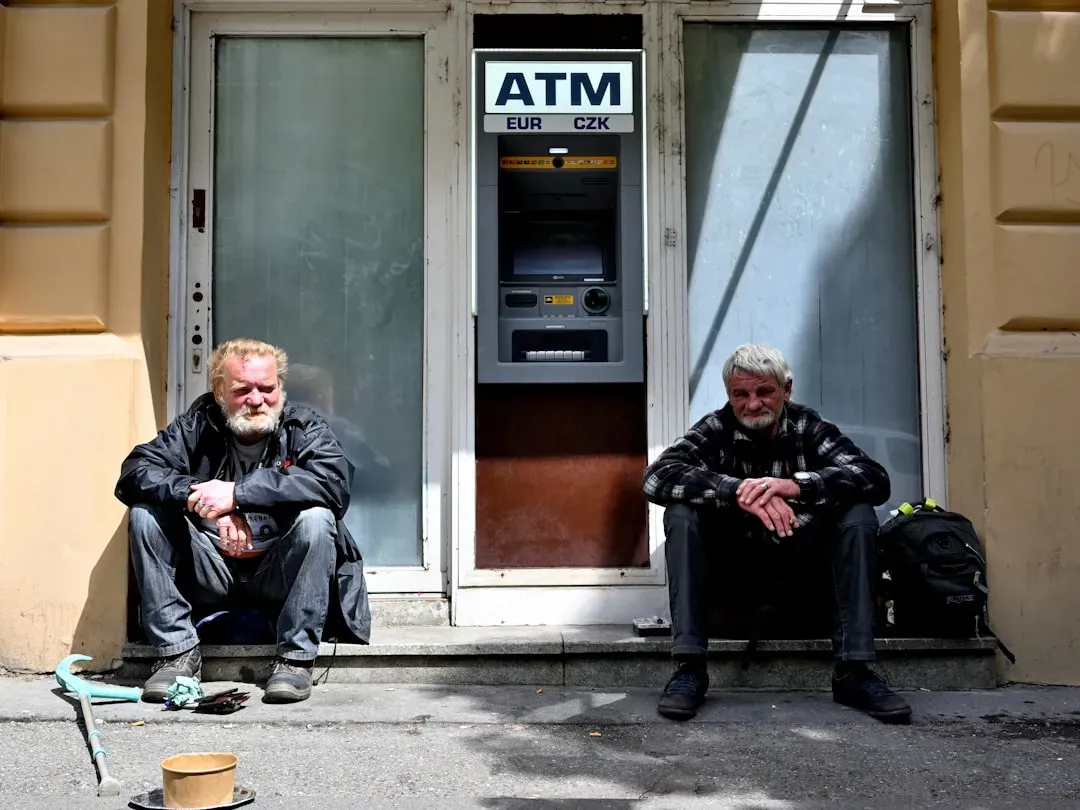
This one does not get enough attention, and I think that says something uncomfortable about whose lives we treat as urgent. In December 2005, a panhandler was fatally shot in the street while begging for change. This crime is still unsolved, and marked the first in a series of deadly attacks against the Las Vegas homeless population. Since 2005, five other homeless people have been randomly shot.
Thankfully, two of the victims survived their injuries. All of the victims were shot with small caliber weapons, for no apparent reason, on or near bus benches. The pattern is chillingly methodical. A specific type of victim. A specific type of weapon. A specific type of location. This is not random chaos. This has the fingerprints of a calculated, serial predator.
In 2011, after the last two victims were shot, Las Vegas authorities formed a task force to investigate the similarities of the crimes, and hopefully identify a suspect. The series of murders remains unsolved. A task force was formed. Tips were solicited. Nothing stuck. Someone out there knows something, and for whatever reason, they haven’t spoken up yet.
Case #3: Stephanie Isaacson (1989) – The Cold Case That Broke a World Record, Then Hit a Wall


Here is a case that is worth knowing in full detail, because it represents both the horror of cold cases and the incredible power of modern science applied to them. One notable case involved the murder of 14-year-old Stephanie Isaacson, who disappeared in June 1989 while walking to Eldorado High School. Despite initial setbacks with DNA testing, the case was solved in 2021, linking her death to Darren Roy Marchant, who committed suicide in 1995.
By 11 p.m., a Las Vegas police canine unit had found Stephanie bludgeoned in the brush near the residential area of Stewart Avenue and Linn Lane. She had been sexually assaulted and strangled. The case sat cold for 32 years. Her killer was never prosecuted. He had taken his own life six years after the murder.
Othram set a record for solving a cold case with the least amount of DNA, the equivalent of about 15 human cells. In a typical consumer DNA test, the collection kit will collect 750 to 1,000 nanograms of DNA. The suspect in Stephanie Isaacson’s murder was identified using only 0.12 nanograms. That is a jaw-dropping technological achievement. Yet, because Marchant had died decades earlier, there was never a trial. The family got identification, but not justice in a court of law.
Case #4: The 1978 Luxor District Double Homicide – Sandra Owens and June Noah

Some cold cases stretch back so far that the original investigators have retired or passed away themselves. This is one of those. On September 20, 1978, a neighbor went to the front door of a residence and saw two victims, a mother and daughter, lying in a pool of blood. The subsequent investigation determined that both victims were brutally murdered and suffered numerous wounds including stab, gunshot, and blunt trauma. It appears that a good deal of money and valuables had been stolen from the residence.
Sandra S. Owens was 38 years old. June L. Noah was 57. A mother and daughter, killed in their own home, with enough violence to suggest real rage, or a robbery that spiraled completely out of control. This was not a quick crime. Whoever did this was either deeply disturbed or desperately driven. It’s hard to say for sure, but the combination of three different methods of killing points toward something deeply personal or extremely chaotic.
The case remains officially open on LVMPD’s cold case registry, with no known suspects ever formally charged. Over forty-five years have passed. Nearly everyone who may have witnessed something that night in the neighborhood has long since moved, aged, or died. The window for a witness-led breakthrough grows narrower with every passing year.
Case #5: The Murder of Melonie White (1994) – Found Near Lake Mead, Still Haunting

Here’s the thing about this case. It technically got a partial breakthrough, which is more than most cold cases ever get. But it still remains unresolved in the fullest sense. White was 27 years old when hikers found her body near Lake Mead National Recreation Area, around 10 miles east of Las Vegas, on August 27, 1994. Nearly 30 years to the day she was killed, the Las Vegas Metropolitan Police Department identified White’s suspected killer as Arthur Joseph Lavery using DNA testing and forensic genetic genealogy. He died in 2021, according to police.
After White’s body was found, an autopsy ruled the cause of her death as homicide with evidence of strangulation and blunt force trauma to the head. She had been strangled with a ligature, bludgeoned and dragged by a car into the desert wash. The sheer brutality of what was done to her is difficult to comprehend. She was dragged by a vehicle into a desert wash. This was a deliberate attempt to both kill and conceal.
At the time of the investigation, police tracked down multiple leads, but no suspect was ever identified. The case went cold. For decades, her grieving family was left with no answers and a devastating desire for the truth. Because Lavery died before he could be prosecuted, the family received a name, but no trial, no testimony, no formal justice. That kind of partial resolution leaves wounds that never fully heal.
How LVMPD Is Fighting Back: DNA and Technology


It would be wrong to tell only stories of failure. The LVMPD has made serious strides in recent years, and the technology behind those advances is genuinely remarkable. DNA is a powerful piece of evidence for solving cases. Sometimes even the smallest amounts have solved cases that occurred decades ago. Forensic Genetic Genealogy has revolutionized how law enforcement solves cold cases and identifies missing persons.
The department has been looking for a forensic genealogist to help identify homicide suspects through DNA. In the meantime, a local nonprofit continues to lend its assistance. That nonprofit, the Vegas Justice League, has become one of the most remarkable citizen-led crime-fighting organizations in the country. Founded in 2020 by entrepreneur Justin Woo, the Vegas Justice League has helped solve 41 cold cases across the country, including nine murders in Las Vegas.
Each case submitted to Othram costs about $7,500, with the nonprofit relying on donations and its own contributions to fund these efforts. Since October 2024, Metro has also used a fleet of drones to help with its response and investigative efforts. The combination of boots-on-the-ground policing and cutting-edge technology is slowly but genuinely changing what is possible in this field.
The Role of ShotSpotter and Modern Surveillance
One of the most quietly significant changes in how Las Vegas polices violent crime has been the rollout of acoustic gunshot detection technology. Data shows a 93 percent clearance rate so far in 2025, and the department has remained steady with a more than 90 percent clearance rate for a few years. That is an impressive number by any standard, and technology is a big part of why.
The detective and the lab now work in genuine partnership in a way they simply could not a generation ago. Think of it like having a second set of microscopic eyes at every scene, eyes that don’t tire, don’t forget, and don’t miss details invisible to the naked eye. The cases that remain cold are precisely those where those eyes weren’t present, or where the evidence was too scarce to yield a result.
The Human Cost: Families Left Without Answers


Each unsolved case is not just a statistic. It’s a story of broken families, frozen memories, and prayers for closure. Parents pass away not knowing what happened to their children. Siblings grow older searching for answers that never come. That reality needs to sit with all of us, because it is easy to read crime statistics and forget that every number is a person.
Justin Woo of the Vegas Justice League recalled meeting the parents of Stephanie Isaacson, saying they told him they had cried every single day for the last 30-something years of their life. They were so happy for that little bit of closure. Even partial answers, even a name attached to the crime, can carry enormous weight for a family that has been living in limbo for decades.
The grief of cold case families is its own kind of wound. It does not scab over. It does not fade with time the way normal grief does, because it is sustained by the open question that never gets answered. Closure, it turns out, is not just an emotional concept. It is something people genuinely need to move forward with their lives.
What Happens Next: The Road Ahead for LVMPD
The story of cold cases in Las Vegas is not simply one of failure. It is also one of relentless reckoning with the past. Cold cases once considered unsolvable are now being reopened thanks to powerful new tools. DNA advancements and forensic genealogy are making it possible to identify both unknown suspects and Jane Doe victims, and Nevada law enforcement now routinely works with private labs to crack cases previously left in boxes.
The Vegas Justice League has also funded ongoing DNA testing for at least 82 other ongoing cases. It costs about $7,500 per case, with the costs covering million dollar sequencing machines and the staff of geneticists and researchers who help put all the puzzle pieces together. Community money, applied with scientific precision, is genuinely solving murders. That is not something you’d have predicted even fifteen years ago.
Honestly, the momentum is there. The tools are better than they have ever been. The willingness of the community to get involved, through nonprofits, DNA donations, and anonymous tips, has created an ecosystem around cold case investigation that didn’t exist before. The question is not whether more of these cases will be solved. The question is whether justice can still mean something when the perpetrator died years before the identification was made.
Conclusion: The City That Never Sleeps, and Never Forgets

Las Vegas is famous for forgetting. Forget your losses. Leave your past at the door. Start fresh every morning. But the LVMPD cold case files tell a different story entirely. These cases do not disappear. They wait.
Some of the names in those files are famous, like Tupac Shakur, whose murder captivated the world for nearly three decades. Others are quiet tragedies known only to the families who carry them, like a mother and daughter killed in their home in 1978, or a teenager who never made it to school one June morning. Each case is its own universe of grief and unanswered questions.
Technology is closing the gap. The Vegas Justice League is closing the gap. Even time, paradoxically, sometimes helps, as old witnesses reconsider, as new evidence techniques emerge, and as the cultural code of silence slowly erodes. The city of Las Vegas may never fully settle its debts to its dead. But it hasn’t stopped trying. What would justice even look like for a crime committed half a century ago? That is the question that haunts not just these five cases, but every cold case file sitting in a drawer somewhere, waiting for someone to open it again.