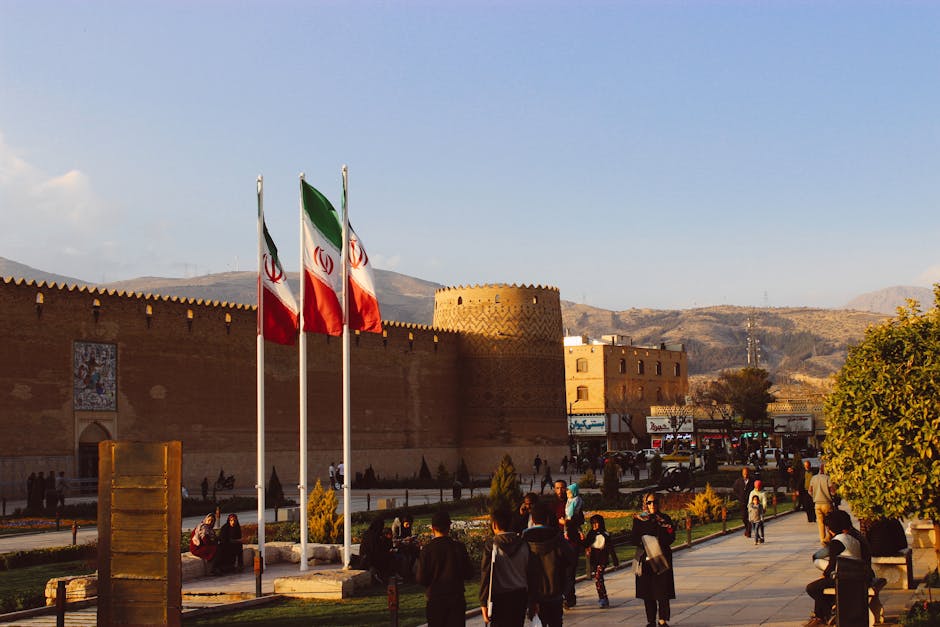

Operation Epic Fury Ignites the Powder Keg (Image Credits: Pexels)
U.S. and Israeli forces plunged into conflict with Iran last week, prompting a North Las Vegas resident to question whether history foreshadows more trouble ahead.[1]
Operation Epic Fury Ignites the Powder Keg
On February 28, 2026, American and Israeli militaries unleashed nearly 900 strikes across Iran in just 12 hours under Operation Epic Fury. Targets included missile sites, air defenses, key infrastructure, and top leadership. Supreme Leader Ali Khamenei perished in the opening salvo, alongside dozens of high-ranking officials.[2]
Iran responded swiftly with hundreds of missiles and thousands of drones aimed at U.S. embassies, bases, and oil facilities throughout the Middle East. Strikes hit vessels in the Strait of Hormuz and even damaged Dubai International Airport on March 1. By early March, further U.S.-Israeli attacks leveled a Tehran building tied to Iran’s leadership selection process.[2]
Casualties mounted quickly. More than 1,000 people died in the initial exchanges, including over 160 near a girls’ school in Minab. The U.S. reported at least seven service members killed and 140 wounded.[2]
Trump’s Bold Claims Amid Ongoing Clashes
President Donald Trump projected confidence during a March 9 press conference at Mar-a-Lago. He described the operation as “very complete” and “ahead of schedule,” predicting an end “very soon” while stressing the need to curb Iran’s nuclear ambitions for decades.[3]
Trump also voiced interest in shaping Iran’s leadership transition, rejecting Khamenei’s son as a successor. Yet the fighting persisted into March 10, with Hezbollah resuming attacks on Israel and Iranian drones prompting NATO interceptions near Turkey.[2]
Partner offer

Such optimism contrasts sharply with a local letter published March 9, which dubbed the effort a fleeting “Seagull War” – a quick incursion destined to leave chaos behind.[1]
Patterns from Iraq, Afghanistan, and Libya
U.S. military ventures in the Middle East have often followed a familiar arc: decisive initial blows followed by drawn-out instability. The 2003 Iraq invasion toppled Saddam Hussein swiftly, but “Mission Accomplished” banners belied years of insurgency and sectarian strife.[1][4]
Afghanistan’s 2001 ouster of the Taliban gave way to two decades of conflict, ending in a chaotic 2021 withdrawal. Libya’s 2011 NATO-backed intervention removed Muammar Gaddafi but unleashed militias and civil war.[4]
- Overreliance on air power without ground commitments prolonged engagements.
- Post-victory power vacuums fueled militias and extremism.
- High costs eroded public support, leading to abrupt exits.
- Regional proxies exploited divisions for their gain.
- Optimistic timelines rarely held amid cultural complexities.
Global Ripples and Expert Doubts
International responses underscored divisions. Russia offered only rhetoric despite Iran’s alliance, while China issued evacuation warnings tied to oil dependencies. European nations decried the strikes’ legal basis, evoking Iraq 2003 memories.[5]
Disruptions rippled worldwide: Middle East flights halted, shipping detoured from the Strait of Hormuz and Red Sea, and oil prices climbed over 5 percent. Experts warned of quagmire risks, proxy escalations, and nuclear proliferation dangers.[5][2]
The path forward remains uncertain as Iranian proxies activate and global trade strains under the pressure.
Key Takeaways
- Initial strikes achieved tactical wins but sparked fierce retaliation.
- Historical interventions highlight risks of prolonged chaos.
- Leadership transitions in Iran could invite further U.S. entanglement.
While leaders tout victory on the horizon, the shadows of past conflicts urge caution. Quick resolutions have proven elusive before. What do you think lies ahead for this escalating confrontation? Share your views in the comments.
Partner offer
Planning a trip to Vegas?
Compare hotel rates and show tickets on VEGAS.com.