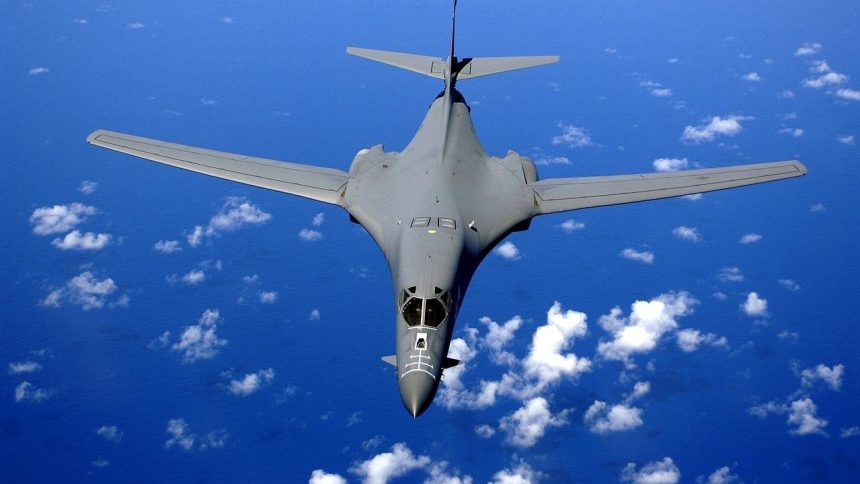


UAE reports drone and missile attack after US says it traded fire with Iran – Image for illustrative purposes only (Image credits: Pixabay)
The United States military struck Iranian facilities in the Strait of Hormuz after intercepting attacks on three Navy ships, marking the latest breach in a month-old ceasefire that has already disrupted global energy flows. Hours later, the United Arab Emirates reported intercepting Iranian missiles and drones that wounded three people on its territory. Iran, meanwhile, has moved to formalize control over the vital waterway by creating a new government agency to vet and tax vessels seeking passage.
US and Iranian Forces Trade Blows
The U.S. military confirmed it responded to Iranian attacks late Thursday by targeting facilities responsible for the strikes on its ships. None of the American vessels were hit, according to the Pentagon. Iranian state media reported exchanges of fire on Qeshm Island and defensive activity in western Tehran, while Iran’s Foreign Ministry condemned U.S. actions against two oil tankers near the port of Jask and nearby coastal areas.
President Donald Trump described the U.S. response as a “love tap” during a call with ABC but warned that full-scale operations could resume if Iran fails to reopen the strait and address its nuclear program. Iran’s Foreign Ministry called the strikes a clear violation of the ceasefire agreement reached after the U.S. and Israel began operations on February 28.
Iran Creates Agency to Control Shipping
On Thursday, shipping data firm Lloyd’s List Intelligence reported that Iran established the Persian Gulf Strait Authority to screen and tax all vessels transiting the strait. The agency positions itself as the sole authority granting permission for passage, a move that has raised immediate concerns among maritime law experts who argue it violates the United Nations Convention on the Law of the Sea.
Hundreds of commercial vessels remain bottled up in the Persian Gulf as a result. The U.S. has threatened sanctions on any company paying tolls to Iran, while Washington and its Gulf allies seek a new U.N. Security Council resolution to condemn the restrictions. A previous resolution on reopening the strait was blocked by Russia and China.
Partner offer

Oil Markets and Regional Impacts
The effective closure of the strait has driven up global fuel prices and forced South Korea to cap gasoline and petroleum product prices after one tanker that passed through in mid-April reached its coast carrying one million barrels. South Korea normally routes more than 60 percent of its crude imports through the waterway.
A Chinese-crewed oil tanker registered in the Marshall Islands became the first vessel affiliated with China to come under attack near the strait, prompting Beijing’s Foreign Ministry to express concern. No casualties were reported in that incident. The developments have left importers and shippers facing higher costs and uncertain schedules.
Diplomatic Efforts Continue
U.S. Secretary of State Marco Rubio said he expects a response from Iran later Friday on proposals to end the conflict. “I hope it’s a serious offer,” he told reporters. Pakistani Prime Minister Shehbaz Sharif confirmed his government has maintained day-and-night contact with both Washington and Tehran to extend the ceasefire and reach a broader peace deal.
Separate talks between Israel and Lebanon are scheduled to resume in Washington on May 14 and 15, according to a U.S. official. A nominal ceasefire between Israel and Iran-backed Hezbollah in Lebanon has faced repeated challenges from ongoing fighting in southern Lebanon.
The combination of military exchanges, new shipping controls, and stalled diplomacy leaves energy markets and regional stability under continued pressure as both sides weigh next steps.
Partner offer
Planning a trip to Vegas?
Compare hotel rates and show tickets on VEGAS.com.