Walk through any casino floor and the noise hits you first. Slot machines flash, beep, and pull at attention from every direction. Most players drift toward them almost automatically. Serious gamblers, the ones who track their results and understand expected value, tend to walk right past and settle in front of something quieter: a video poker machine.
That gap in behavior is not random. It reflects a real difference in mathematics, strategy, and long-term outcomes. Video poker is not just another machine game with better graphics. It is a fundamentally different product, one that rewards knowledge in ways that slots never will.
The Numbers Don’t Lie: House Edge and Return to Player


The single biggest reason disciplined players gravitate toward video poker is the house edge. Many slot machines carry a house edge of five to ten percent, while some video poker games run as low as half a percent to one percent. That difference is enormous when you’re sitting at a machine for hours at a time.
A full-pay 9/6 Jacks or Better game offers an RTP of 99.54%, meaning a player could expect to get back 99.54 for every 100 wagered. Compare that to a typical slot at a regional casino, and the gap becomes immediately obvious. Slot machines feature the widest RTP variance among casino games, ranging from 85% to over 98% depending on the individual game selection.
Even a one percent change in RTP makes a significant difference over thousands of hands, especially for consistent players. This is precisely why the pros care so much about which machine they sit down at.
Skill Changes Everything


Unlike slot machines, where outcomes are completely decided as soon as the spin button is pushed, video poker lets you make decisions that directly affect your winning chances. That one fact separates it from virtually every other machine game in a casino. You are not a passive participant.
Video poker may seem like a game of chance to less experienced gamblers, but avid players and experts know that it is, for the most part, a game of skill. Every decision made during play will have an impact on the outcome of the game, whereas this is never the case with slots.
Perfect mathematical play is essential to achieving the theoretical return percentages quoted for video poker games. Deviating from optimal strategy can increase the house edge substantially, often by several percentage points for recreational players. The machine does not reward guessing.
Reading the Paytable: The First Move That Matters

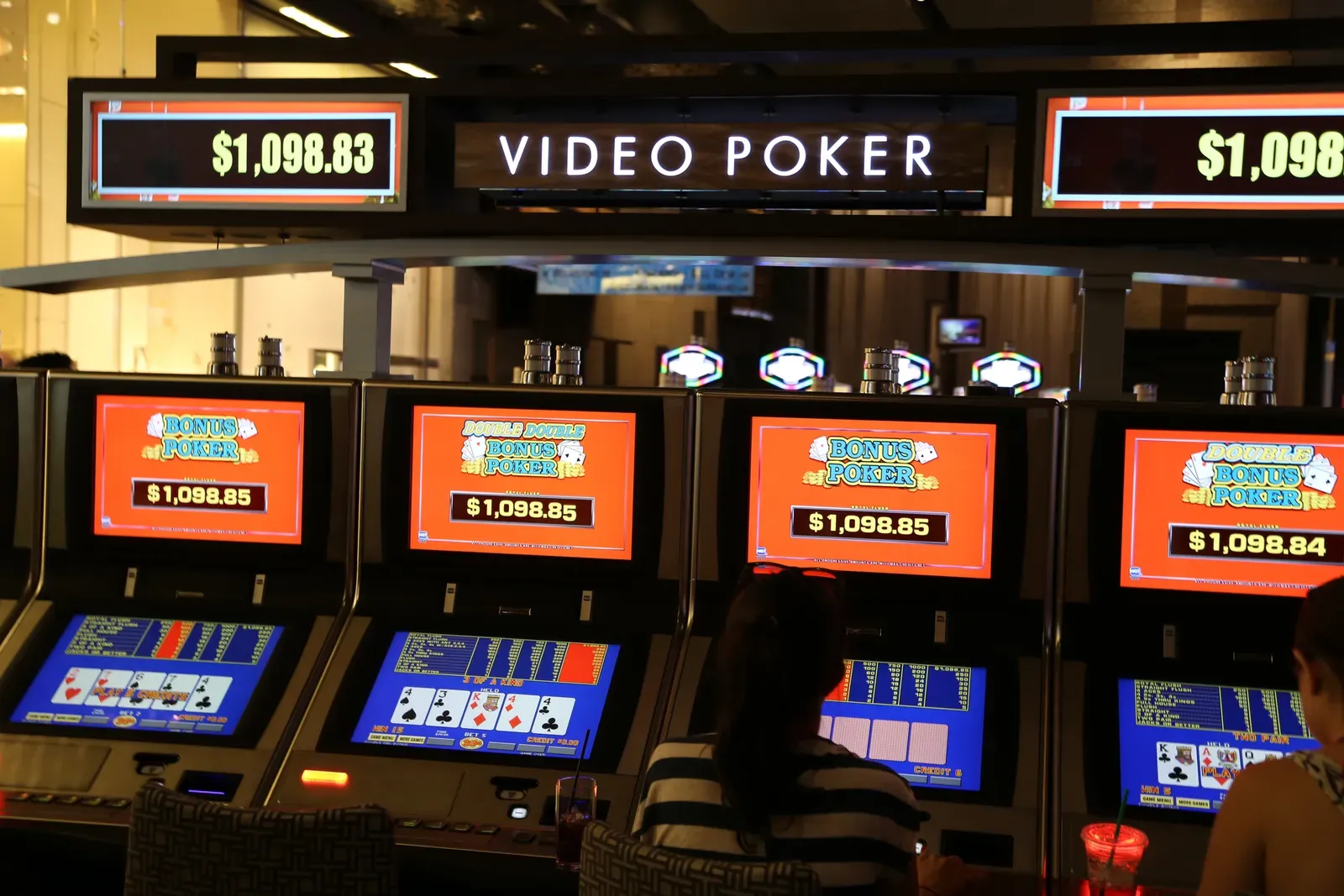
Video poker house edges vary dramatically depending on the specific game variant and paytable offered. Unlike slot machines, where house edges are often opaque, video poker returns can be calculated precisely from the published paytables. This transparency is rare in casino gaming.
A so-called full-pay Jacks or Better game, which pays 9x on the full house and 6x on the flush, has an RTP of 99.56%. The so-called 8/5 version that pays 8x on the full house and 5x on the flush only carries an RTP of 97.3%. That swing of over two percentage points comes from two small numbers on a paytable.
Reducing the full house payout from 9 to 8 coins increases the house edge by over one percent, while cutting the flush payout from 6 to 5 coins adds another full percentage point to the house advantage. Knowing this before you sit down is not optional. It’s the job.
Full Pay Deuces Wild: The Game With a Player Edge


Among all video poker variants, full-pay Deuces Wild holds a special place. It is one of the very few casino games on earth that offers a mathematically positive expected return for skilled players. Full-pay Deuces Wild is the 9/5 paytable variant with an RTP of 100.76% when played optimally. That figure is not a typo.
Some Deuces Wild video poker games are known as “full pay” Deuces Wild. These games offer 100.76% payback for perfect play, making it one of the only games in any casino that has a positive expected value when played perfectly. The casino is, in theory, working against itself when a skilled player sits down.
The strategy of Deuces Wild is much more complex than the strategy of Jacks or Better. The most important strategy advice is to never discard a deuce. Beyond that golden rule, mastery requires learning dozens of ranked hand scenarios. Using a simplified but solid strategy on a full pay machine still results in an expected return of 100.71%, and compared to the optimal strategy return of 100.76%, mistakes in the simple strategy cost only about 0.05%.
Transparency vs. the Slot Machine Black Box

One key aspect of video poker is the transparency of its odds. The probability of drawing any given hand is based on a standard deck of cards, which makes the calculation of odds and the house edge straightforward. You’re working with known mathematics, not hidden software algorithms.
Video poker makes it unusually easy to audit what you’re buying as a player, because you can look at the paytable and immediately see whether you’re playing a strong or weak version. For Jacks or Better, the famous example is “9/6” vs. “8/5,” where those two numbers refer to the full house and flush payouts, and changing them changes the overall return.
Slots offer none of this. Slot paytables show symbol payouts, but the total RTP depends on hidden feature frequencies, bonus triggers, and internal math the player cannot easily verify. That fundamental opacity is exactly what separates machine gambling from machine gaming.
The Mathematics Behind Each Hand

Each hand is dealt from a standard 52-card deck using a certified random number generator, ensuring that every card combination has exactly the same probability as it would in a physical deck. This creates a game with known, calculable odds that remain constant across all play sessions. The mathematical foundation rests on combinatorial analysis: there are precisely 2,598,960 possible five-card poker hands that can be dealt from a standard deck.
A four-card flush draw improves nearly one in five times, while chasing an inside straight only succeeds about one in twelve draws. Knowing those numbers is what separates a pro’s hold decision from a recreational guess. In a standard video poker hand, the player has exactly 32 ways to play each hand they are dealt.
Jacks or Better requires learning approximately 32 basic decision rules, while Deuces Wild involves over 60 different strategic considerations due to the wild card complications. The learning curve is real, but unlike slots, the effort actually changes outcomes.
The Royal Flush: Rare, Valuable, and Worth Planning For

Every video poker player thinks about the royal flush. It is the top of the paytable, paying 4,000 coins on a max five-coin bet in most full-pay games. With perfect play, a player can expect to hit a royal flush roughly once every 40,000 hands. At a pace of 600 hands per hour, that works out to significant waiting time between royals.
Playing 600 hands per hour, a player can expect to get a royal flush once in every 60 hours of play, on average. Sometimes you’ll hit more than one royal in 60 hours, and other times you’ll experience a drought where it takes longer than 60 hours, which is why having enough bankroll is so important.
The royal flush is not just exciting. It’s structurally necessary. Players will recoup their losses over time when they hit a royal flush. Since a royal flush only occurs once in every 40,000 or so hands on average, patience and enough bankroll to sustain play between royals is essential. Sizing your bankroll to survive that wait is a core part of professional video poker play.
Can You Actually Win Consistently? The Honest Answer
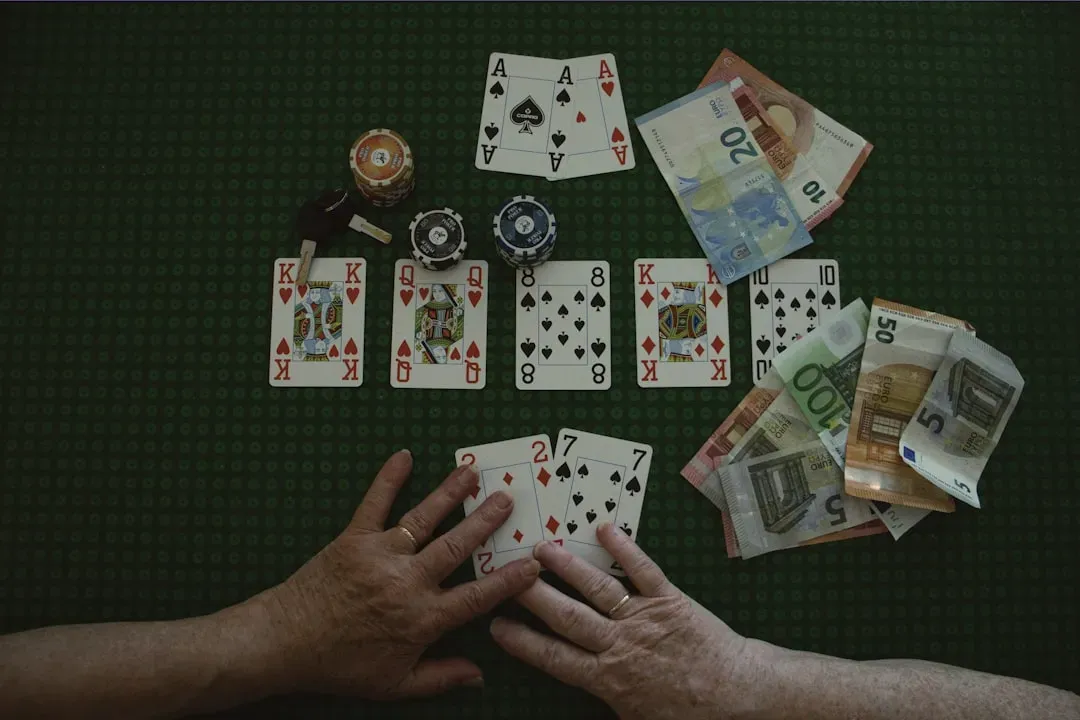
An important difference between video poker and slot machines is the fact that players can actually be consistently profitable at video poker, while slot machines are always a loser’s bet. By finding good pay tables, using perfect video poker strategy, and using a player’s card, it is actually possible to exceed a 100% rate of return. Of course this isn’t easy, and it takes a lot of dedication, but it can be done.
In slot machines it is simply impossible to be playing at a 100-plus percent rate of return. That hard ceiling is the defining structural difference between the two game categories. One has a mathematical ceiling that permanently favors the house; the other does not, under specific conditions.
The caveat matters though. Video poker offers some of the best mathematical odds available in casino gaming, but only when played with perfect strategy on full-pay machines. Playing an 8/5 paytable with sloppy strategy erases every advantage the game has to offer.
Strategy Cards, Practice Tools, and Getting Better
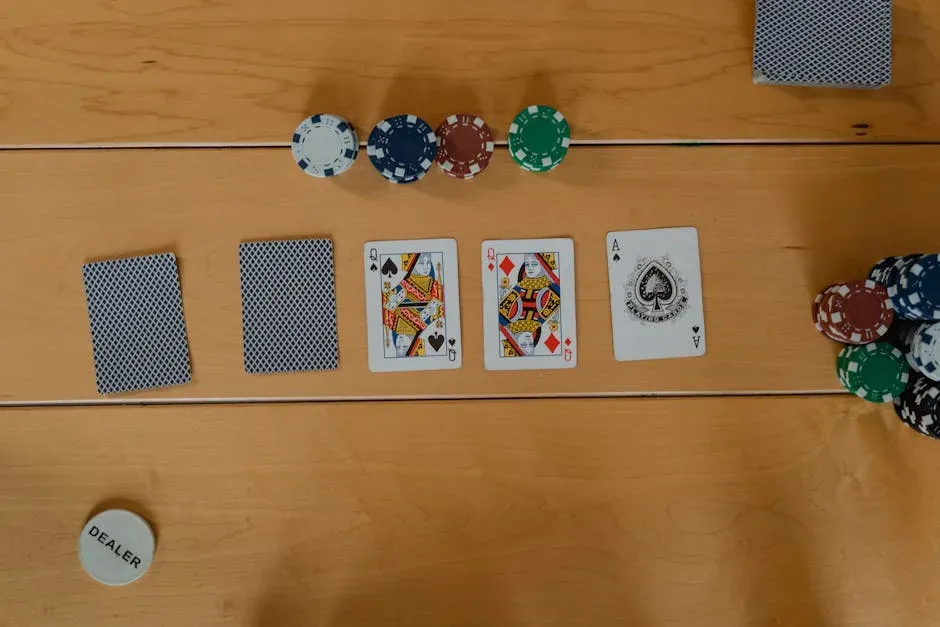
Another advantage of video poker is that players can practice the game and gradually become better at it over time, which makes it particularly appealing to poker players and serious gamblers who always look for an edge. This is a genuine skill game that responds to study and repetition.
Video poker players who do not learn the proper strategy can give up a substantially higher house edge compared to experts. One big advantage of playing online is the ease of using a strategy card while playing to find the optimal play for every hand. There is nothing illegal or frowned upon about consulting a strategy chart. The casino knows you can do it.
You can’t actually get better at slots by playing a lot or by learning strategies. While some will try to tell you there are secrets to playing slots, that’s simply not true. Video poker rewards the work. Slots cannot make that promise.
Bankroll Management and the Long Game

Variance measures how much individual results deviate from mathematical expectations over time. Video poker exhibits moderate to high variance compared to other casino games, meaning short-term results can differ dramatically from long-term theoretical returns. Understanding variance helps players set realistic expectations and manage their bankrolls appropriately for extended play sessions.
High-variance video poker games mean the player’s balance will decrease until a high-ranking hand produces a big win. Careful game selection and bet sizing is essential to surviving the swings between those premium hands. This is not slot machine thinking. It requires discipline.
A lower house edge means your bankroll lasts longer and your chances of walking away ahead improve. Choosing games with strong paytables and playing optimal video poker strategy can further reduce the edge. Every decision, from which machine to sit at to which cards to hold, compounds over thousands of hands into a meaningful difference.
Conclusion

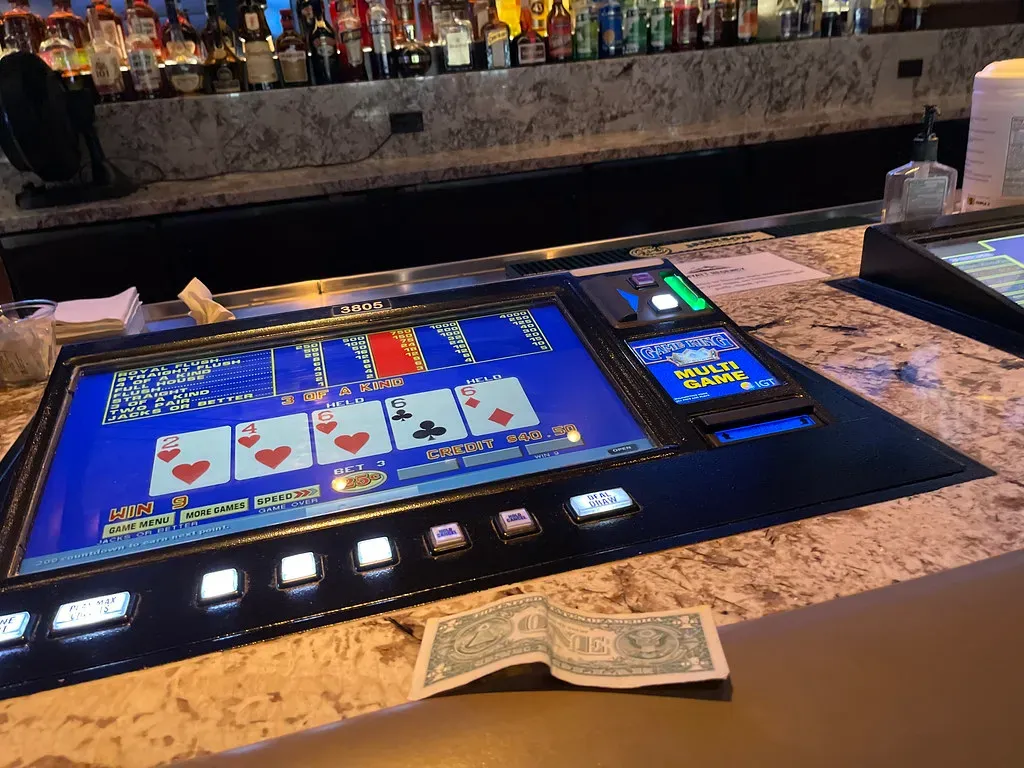
Video poker is not a casual game dressed up in math clothing. It is a genuine skill game built on transparent, calculable odds, and that quality sets it apart from virtually everything else on the casino floor. The machines look similar to slots. The experience is completely different.
Professionals play video poker because it rewards what slots never will: preparation, patience, and correct decision-making. A full-pay 9/6 Jacks or Better machine with optimal strategy and a full-pay Deuces Wild variant that can exceed 100% return are not myths. They are documented mathematical realities.
The edge is there if you earn it. Most players never will, not because video poker is too hard, but because they never take the time to learn it. The pros do. That’s the whole story.