Some of the greatest tools we rely on every day started out as total accidents, failed experiments, or ideas so strange that nobody wanted to fund them. Think about that for a second. The things sitting on your desk, cleaning your floors, or saving lives in disaster zones were once dismissed as ridiculous. Inventors were laughed at. Products flopped. Companies nearly pulled the plug.
Yet here we are. Let’s dive into seven of the most wonderfully weird inventions that somehow, against all odds, made our lives genuinely, measurably better.
1. The Post-it Note: A Failed Glue That Stuck Around
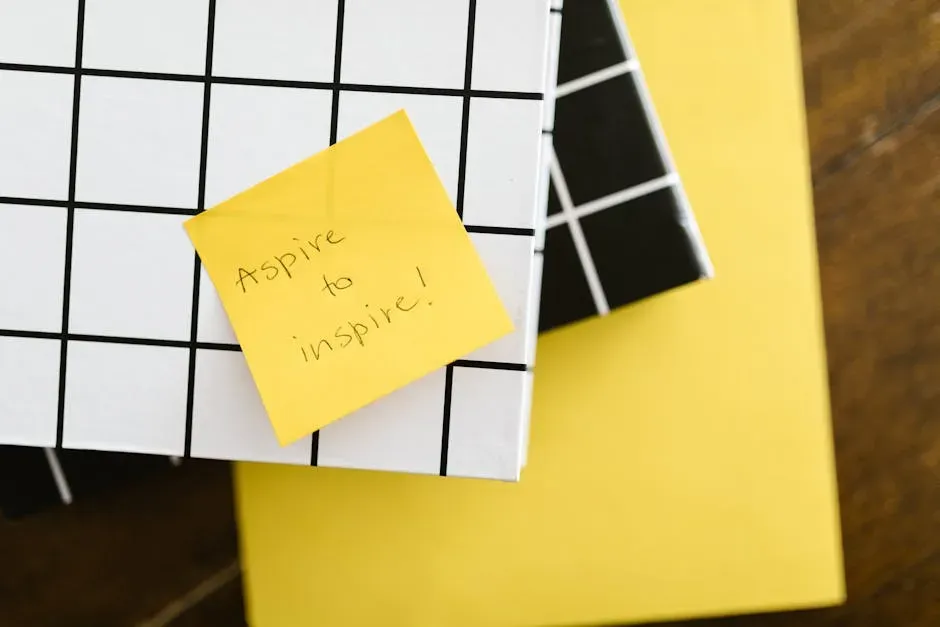
In 1968, Spencer Silver, a researcher at 3M, was working on creating a super-strong adhesive for use in the aerospace industry. What he ended up with was the opposite – a low-tack adhesive that stuck lightly to surfaces and could be removed without leaving residue. That is, to put it simply, a magnificent failure. Nobody at 3M knew what to do with it for years.
While Spencer Silver developed the adhesive, it was his colleague Art Fry who had the breakthrough idea. Fry needed a bookmark that would stay in place in his hymnal book at church, without damaging the pages. Remembering Silver’s strange adhesive, he tried applying it to small pieces of paper – and it worked perfectly. Sometimes genius really does start in a church pew during a boring sermon.
When Fry and his team began developing the product, they could only find yellow scraps of paper to experiment with. The signature Post-it Note yellow of today can be traced back to this “accident.” Honestly, even the color was a mistake. Today, 3M produces over 50 billion Post-it Notes annually, with more than 600 variations sold in over 100 countries. Not bad for a glue nobody wanted.
A workplace study showed the average professional now receives 11 messages on Post-it Notes each day, and Post-it Notes are sold in more than 100 countries. What started as a hymnal bookmark became one of the most iconic communication tools in human history. That’s the kind of plot twist no one writes in advance.
2. The Roomba: The Disc That Conquered Dust
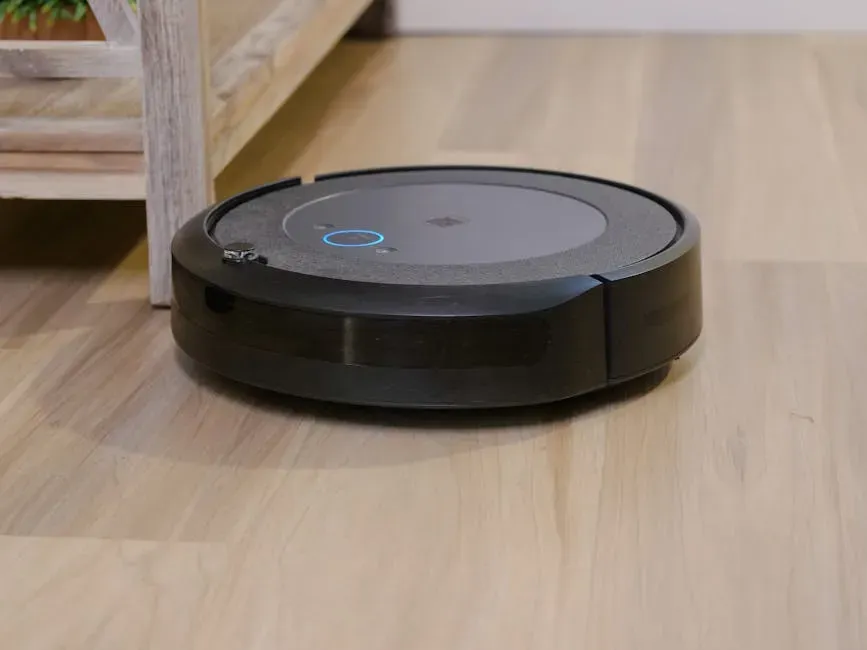
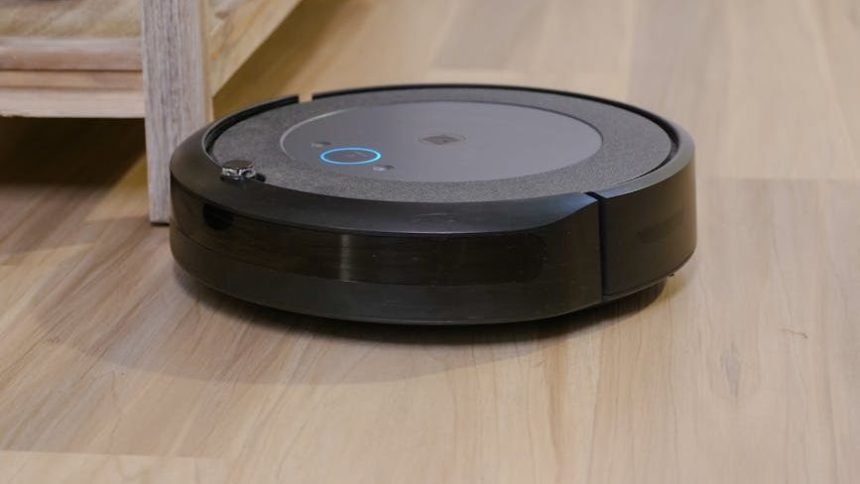
Imagine pitching a robot that blindly bumps around your living room and calls it a cleaning solution. Sounds ridiculous, right? Well, the world disagreed. iRobot introduced the first Roomba robot vacuum in 2002. Today, iRobot is a global enterprise that has sold more than 50 million robots worldwide. Fifty million. That’s not a gadget. That’s a revolution in disguise.
The robotic vacuum cleaners market size has grown rapidly in recent years. It will grow from roughly nine and a half billion dollars in 2024 to over eleven billion in 2025, at a compound annual growth rate of nearly 18 percent. When a market grows that fast, something is clearly working. People don’t spend billions on things that don’t improve their lives.
Smart-connected models comprised about two thirds of robotic vacuum unit share in 2024 globally, driving demand significantly via voice and app integrations. On March 11, 2025, iRobot unveiled its largest product launch in history with a new suite of Roomba floor cleaning robots, available in North America and select European markets, with advanced features including ClearView Lidar Navigation and PrecisionVision AI. The little bumbling disc has grown up into something genuinely smart.
Over three quarters of newly launched robot vacuums between 2023 and 2024 include combined vacuuming and wet-mopping features worldwide. It no longer just vacuums. It mops. It maps your rooms. It remembers where your pet tends to leave surprises. The Roomba started weird and became essential.
3. The LifeStraw: Drinking From a Stick That Saves Lives

A straw that filters water. Sounds like something a child might dream up. In reality, it might be one of the most important inventions of the past two decades. LifeStraw, known for its large-scale water filtration solutions, has introduced a personal option called LifeStraw Sip. This portable straw, made of stainless steel, uses advanced microfilters to remove bacteria, parasites, and microplastics from up to 1,000 liters of water. Compact and reusable, it’s ideal for travelers and outdoor enthusiasts.
With humanitarian roots, the company was founded over 25 years ago with the creation of its Guinea worm filter, which has played a crucial role in the near-eradication of Guinea worm disease. That is not a minor footnote. Eradicating a disease is the kind of impact most inventions can only dream about. The company reached over 161,000 children with safe drinking water through its Give Back Program in 2024, bringing its total impact to more than 11.8 million children since the program began.
Diarrhoeal diseases are a leading cause of mortality in children under five years, claiming the lives of approximately 525,000 children each year. Almost 90 percent of these deaths occur in sub-Saharan Africa and South Asia. A straw. A simple, portable straw is working against that grim reality. LifeStraw Family point-of-use water filters were the first filters evaluated by the World Health Organization in its water treatment evaluation scheme to provide comprehensive protection against many diarrhoea-causing pathogens.
LifeStraw maintained its Climate Neutral Certification in 2024, offsetting over 7,000 tonnes of CO₂ emissions. Every product sold directly funds a year of safe water for a child in need, fueling the company’s Give Back program. I think this might be the most profound “weird” invention on this list. It looks strange. It does extraordinary things.
4. The Video Doorbell: A Rejected Shark Tank Idea That Became a Billion-Dollar Product
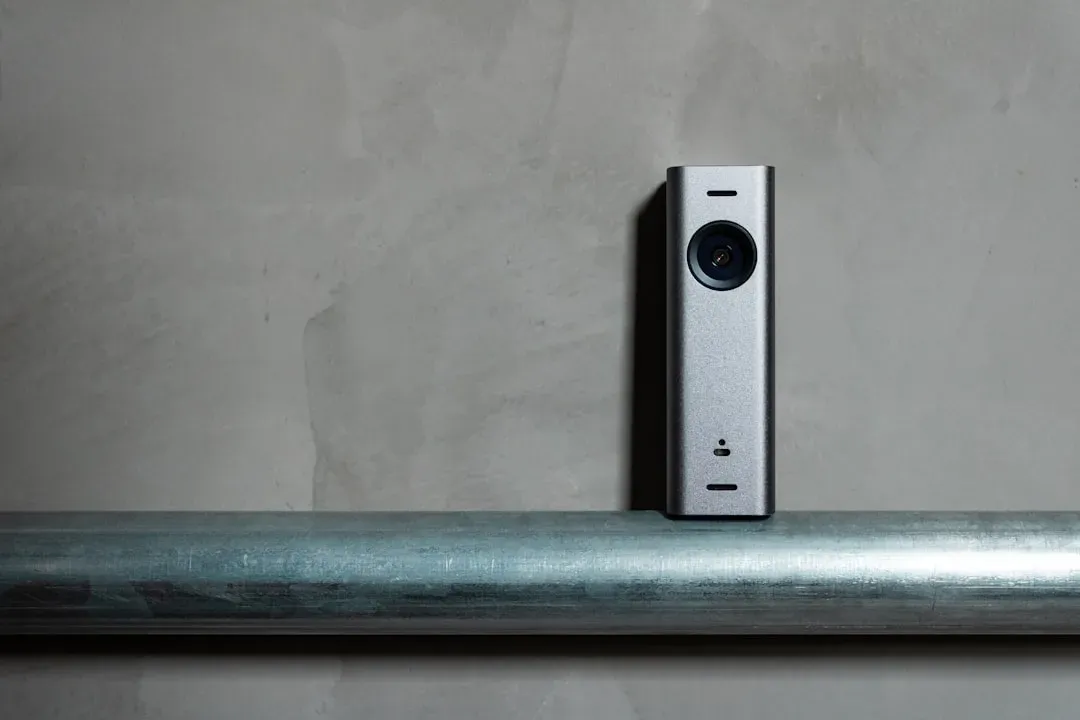
Here’s one of the best underdog stories in tech. In 2013, Jamie Siminoff went on the TV show Shark Tank with his video doorbell, the DoorBot, which records activity outside the front door. Though the panel of judges didn’t make him an offer that worked for him, he launched it on his own. He changed the name to Ring, sold it to Amazon in 2018 for more than one billion dollars, and the rest is innovation history.
Ring manufactures a line of smart doorbells, home security cameras, and alarm systems, and operates Neighbors, a social network that allows users to discuss local safety and security issues and share footage captured with Ring products. What began as a simple camera on a doorbell became an entire connected security ecosystem. The estimated 20-plus million Ring doorbell owners in the United States suggest the concept resonated far beyond what anyone on Shark Tank could have imagined.
A 2024 University of Adelaide criminology paper analyzed 1,200 burglary incidents across four suburbs where more than 30 percent of homes used Ring. The study found a 5 percent drop in break-ins compared to comparable suburbs without Ring. The numbers are modest, not miraculous. There is very little published data on the effectiveness of Ring as a crime prevention or deterrent tool, and the cameras may have little to no impact on crime in Los Angeles, a city with a relatively high concentration of the devices. Honest truth: the jury is still out on its crime-fighting power. Yet the sense of security it provides millions of households is real and measurable in its own way.
In 2024, Ring introduced the “Pan-Tilt Indoor Cam” as an upgraded Ring Indoor Cam with 360-degree panning and 169-degree tilting capabilities. The product keeps evolving. From a rejected TV pitch to a global household staple, the video doorbell is a masterclass in persistence paying off.
5. The Artificial Heart: A Machine That Keeps You Alive While You Wait

If you told someone fifty years ago that a fully mechanical device could replace the human heart even temporarily, they might have called it science fiction. Today it is very much science fact. Heart failure remains a leading cause of death worldwide, but BiVacor’s artificial heart offers a promising alternative. Unlike traditional transplants, this device can circulate blood throughout the body, potentially serving as a long-term replacement for a failing heart. Initial trials in the U.S. have already shown success, keeping patients alive while they await transplants. Future developments aim to extend the device’s use indefinitely, eliminating the need for donor hearts.
In 2024, TIME included Northwell Health’s Double Neural Bypass on its list, noting that in a first-of-its-kind surgery, scientists implanted microchips into a patient’s brain to connect his thoughts to arm and hand movement, creating a two-way link that allowed signals to travel in both directions. Now Keith Thomas, who was paralyzed in a pool accident, can open his hand, lift his arms, flex his biceps. He can even feel textures. That detail, the ability to feel his dog’s fur again, is the kind of thing that makes you stop and sit with what science is actually capable of.
In a groundbreaking surgery, scientists implanted a microchip into a patient’s brain, connecting thoughts with arm movements and creating a two-way connection, allowing signals to be transmitted in both directions. Now Keith Thomas, who was paralyzed in a pool accident, can open his palm, raise his arm, flex his biceps, and even pet his dog and feel the texture of its fur. It sounds bizarre. It is real. The experimental technique is one of a series of exciting developments that are helping bridge the signal from brain to body.
6. Bike Sharing: A Solar-Powered System That Changed Urban Transport

At first glance, renting a bicycle from a docking station sounds like a minor convenience. Dig a little deeper, and it turns out to be a genuinely transformative urban system. When the city of Montreal built its Public Bike System, nicknamed Bixi, the designers packed in all the technology they could find. Equipped with solar-powered docking stations, RFID tags to make the bicycles trackable, and fully enclosed parts to resist weather and accidents, the system took off. The tech behind Montreal’s scheme became the backbone for bike-sharing programs in London, New York, Chicago, and dozens of other places.
In 2022, Lyft Urban Solutions bought the hardware and software firm that spun out from Montreal’s bike-sharing program. In 2024, riders took over 13 million trips on Bixi bikes, and more than 180 million globally. 180 million trips on shared bikes in a single year. That is not a quirky experiment. That is infrastructure-level impact, reducing car journeys, cutting emissions, and quietly improving urban health one pedal stroke at a time.
Think of it like this: the entire system works the same way a library does. You borrow it, you use it, you return it. Except instead of books, it’s a bicycle, and instead of reducing ignorance, it’s reducing traffic. Copenhagen had started a system in 1995, but the tech behind Montreal’s scheme became the backbone for programs that turned two wheels into a genuine option for navigating cities. Sometimes the simplest ideas, done with smart engineering, change how millions of people move through the world.
7. YouTube: 19 Seconds About a Zoo That Became 20 Million Videos a Day
Here’s something that genuinely sounds strange in retrospect: in 2005, someone uploaded a 19-second clip about a trip to the zoo and accidentally helped launch one of the most powerful communication platforms in human history. Videos existed on the internet, but never quite like this. In April 2005, YouTube started hosting video clips, its first 19-second upload being about a trip to the zoo. By the following fall, 70,000 videos were uploaded daily. As of 2025, it’s over 20 million per day.
Twenty million videos every single day. The scale is almost impossible to process, like trying to count grains of sand at the beach while someone keeps adding more. YouTube began as a quirky video-sharing website, the kind of thing people thought was a fun novelty. It became a global library of human knowledge, culture, entertainment, and education that reaches virtually every country on earth.
Throughout history, human ingenuity has led to groundbreaking inventions that have reshaped society in ways no one could have predicted. Some of the most transformative innovations were discovered by accident or were initially dismissed as trivial – only to become indispensable parts of our daily lives. YouTube fits that pattern perfectly. It was not designed to teach millions of people to cook, learn languages, or understand quantum physics. It just became that, organically, because humans flooded it with everything they knew and loved.
It’s hard to say for sure what the full long-term impact of a platform like YouTube will be. But when a 19-second clip about a zoo can trigger a chain of events that leads to over 20 million videos being uploaded daily in 2025, something profound is clearly happening. Each year, groundbreaking inventions redefine the way we live, work, and interact with the world. In 2024, innovation took center stage, with breakthroughs across a wide range of areas, such as healthcare, technology, environmental solutions, and everyday convenience. These technological advancements not only promise to make our lives easier but also tackle some of the most pressing global challenges.
Conclusion: Strange Beginnings, Real Impact
Every invention on this list started somewhere strange. A failed glue. A bumbling disc on wheels. A straw. A rejected TV pitch. A 19-second zoo video. None of them looked like world-changers when they first appeared. That’s maybe the most encouraging thing about human innovation: the best ideas rarely look impressive at the beginning.
The pattern here is remarkably consistent. Some of the most transformative innovations were discovered by accident or were initially dismissed as trivial – only to become indispensable parts of our daily lives. Persistence, creative thinking, and a willingness to look foolish have produced tools that filter water for millions of children, give paralyzed people the ability to feel again, and turn sticky yellow squares into the backbone of office communication worldwide.
So the next time someone shows you a weird idea and you’re tempted to dismiss it, maybe pause for just a moment. History has a funny habit of proving the skeptics wrong. Which of these seven inventions surprised you the most? Drop your thoughts in the comments below.