



Here’s a thought that might keep you up at night. Some of the smartest people who ever lived spent their entire lives building ideas that we later laughed at, tossed aside, and replaced with something shinier. Yet a strange thing keeps happening throughout history: we dig back into the archive of “disproven” or “primitive” ancient thought, and we find ideas that were shockingly close to the truth all along. Sometimes they were precisely right.
The assumption that ancient thinkers were simply guessing in the dark is comforting, in a way. It lets us feel superior. But the record tells a more complicated story, one where brilliance and intuition cut through centuries of ignorance to land on conclusions that took the rest of us millennia to confirm. So let’s dive in and see which old ideas deserve a serious second look.
Democritus and the Atom: The Wild Idea That Was Actually Right


Picture this. No microscopes, no particle accelerators, no laboratory equipment of any kind. Just your own mind, and a burning question: what is everything made of? That was the exact situation facing a Greek philosopher named Democritus around 430 BCE, and what he came up with is genuinely astonishing. Democritus named the building blocks of matter “atomos,” meaning literally “indivisible,” around 430 BCE. He argued that if you kept cutting matter into smaller and smaller pieces, you’d eventually hit something that simply could not be divided further.
Greek philosophers dismissed Democritus’ theory entirely. Sadly, it took over two millennia before the theory of atomos was fully appreciated. The great Aristotle rejected it. Yet today’s Standard Model of particle physics, quarks, leptons, and the whole astonishing zoo of subatomic particles, is essentially the grandchild of that ancient thought experiment. While modern atomic theory bears little resemblance to Democritus’s indivisible particles, the early atomic theorists deserve credit for their conceptual breakthrough. Their insistence that nature’s apparent complexity might be explained by simple, fundamental units obeying consistent rules represents one of science’s most powerful and productive ideas.
Aristarchus and the Sun: The Man Who Was Right 1,700 Years Too Early


Most people credit Copernicus with figuring out that the Earth orbits the Sun. Honestly, that credit is slightly misplaced. Aristarchus of Samos, who lived around 310 to 230 BC, presented the first known heliocentric model that placed the Sun at the center of the universe, with the Earth revolving around the Sun once a year and rotating about its axis once a day. He figured this out using nothing more than careful observation and geometry. He even proposed that the stars were other suns, incredibly far away.
His theory, though noted by contemporary thinkers, was dismissed as implausible, leading to the continued dominance of the geocentric model for the next 1,700 years. Think about that. Nearly two millennia of collective wrongness, propped up by authority and tradition. In 1543, almost two thousand years after Aristarchus, his theory was vindicated by the famous Polish astronomer Nicolaus Copernicus. All Copernicus did was to simply bring back into light the heliocentric theory. Science doesn’t always move in a straight line forward. Sometimes it circles back to reclaim what it previously abandoned.
Continental Drift: When a “Crazy” Idea Reshaped the Earth Itself


In 1910, German meteorologist Alfred Wegener noticed something funny. When examined closely, it appeared that the coastlines of Africa and South America were shaped as though they had once been connected. While he wasn’t the first person to make the observation, the idea that the two continents may have once been one continent stuck in Wegener’s mind, eventually leading to him delivering a lecture on “continental displacement” in 1912. His peers ridiculed him. A meteorologist, telling geologists how the earth worked? The nerve.
Alfred Wegener’s theory of continental drift was rejected for decades before becoming the foundation of modern plate tectonics, which now plays a central role in our understanding of Earth’s geology. Let’s be real, this isn’t just a fun historical footnote. This is a story about how the scientific establishment can be catastrophically wrong, and about how one persistent, slightly eccentric thinker can end up being entirely vindicated. These theories were supported by consistent, reproducible data and stood up to rigorous scientific scrutiny. Wegener’s vindication is arguably the most dramatic example of that in all of modern science.
Ancient Herbal Medicine: The Pharmacy Hidden in the Forest


For thousands of years, people reached for plants when they were sick. Then came the age of modern medicine, and plant remedies were often dismissed as folklore, superstition, or at best, unreliable guesswork. Here’s the thing, though: a remarkable number of those plant-based remedies turned out to have real, measurable biochemical effects. Ancient cultures used willow bark teas to ease pain and fever. Centuries later, scientists isolated salicin from willow bark, which became the key ingredient for aspirin. What started out as herbal folklore evolved into one of the most widely used over-the-counter medications in history.
It all starts with a recommendation in the famous, 3,500-year-old Egyptian Ebers Papyrus about treating an inflamed wound with a concoction made from the leaves of the white willow tree. This makes sense in view of the fact that willow leaves and bark contain a substance known as salicin, which in the body can be converted to salicylic acid. Salicylic acid, of course, is the chemical backbone of aspirin. Ancient healers didn’t have chemistry labs. They had observation, trial and error, and time. Modern research shows garlic contains beneficial compounds with antibacterial and antifungal properties. While it hasn’t been proven to repel supernatural forces, its real biological effects explain why cultures have linked garlic consumption with health and protection from time immemorial.
Music as Medicine: Ancient Rituals That Modern Neuroscience Confirms


Across virtually every ancient culture on earth, music was tied to healing. Shamans chanted. Priests sang. Drums were beaten to drive out illness. For a long time, the scientific community treated this as charming nonsense, a mix of placebo effects and cultural ritual with no real physiological basis. It turns out the ancient healers were onto something significant. Music has been used in rituals and healing ceremonies in cultures all over the world going back to the Stone Age and bone flutes. Neuroscience has proven that music can reduce stress hormones, regulate heart rate, and improve emotional well-being. Though ancient explanations were based in spirituality, modern science does show measurable physiological benefits tied to rhythm and sound.
I think this is one of the most quietly extraordinary cases in the whole conversation about ancient wisdom. The mechanism was misunderstood, yes. Ancient healers thought spirits or divine forces were at work. The actual mechanism involves cortisol regulation and the autonomic nervous system. But the observation that music heals? That part was correct all along. Sometimes getting the “why” wrong doesn’t mean you got the “what” wrong.
Plants Can Communicate: Ancient Folklore That Biology Now Backs


Traditional wisdom in many cultures held that plants responded to their environment in ways that seemed almost intentional. Farmers, herbalists, and indigenous peoples often spoke about plants as being aware of threats and able to signal danger. Scientists scoffed. Plants are passive, they said. They don’t communicate. Except, it turns out, they do. Traditional folk tales have claimed plants sensed threats. Research now shows plants release chemical signals when damaged, warning neighboring plants. While it is not a form of conscious awareness but a biochemical reaction, plant communication systems validate ancient wisdom about responsive behavior in vegetation.
It’s not telepathy, and it’s not magic. It’s volatile organic compounds and root-based chemical signals, a fascinating and complex system of biological information exchange. The ancient framing was wrong in detail but correct in spirit. Indigenous beliefs treated old forests as spiritually vital. Today’s ecology confirms that ancient forests regulate climate, preserve biodiversity, and stabilize ecosystems on a local and even worldwide scale. What used to be walled off in the spiritual-cultural realm is now a proven fact of measurable environmental importance.
Mendel’s Genetics: The Monk Whose Garden Changed Everything


When combined with his observations about how children often had the same characteristics as their parents, Mendel’s vegetable experiments led him to develop the basic theory on which genetics would be based: Mendel’s Laws of Inheritance. Unfortunately for Mendel, the theory that would revolutionize our understanding of how life develops was ignored by his contemporary scientists almost entirely, despite Mendel attempting to contact and convince many of the luminaries of his day. It would take several decades for Mendel’s theories to be taken seriously. A monk, tending pea plants in a garden, cracked open the code of heredity, and absolutely nobody cared.
It’s hard not to feel a bit sad about that. Gregor Mendel died without recognition, without vindication, without even a hint that the world would one day build the entire field of genetics on his foundations. His case is a sobering reminder that being right doesn’t guarantee being heard. All theories rest, to some degree, on assumptions. We try to minimize them, because they make up hidden cracks in science’s foundations but, short of actual omniscience, they’re pretty much unavoidable. When a theory falls apart, it’s often because an assumption was wrong. Science is always an educated best guess, after all. Mendel’s assumptions, unlike so many others, turned out to be precisely correct.
Ancient Chinese Astronomy and the Length of the Year


Here’s a statistic that I find genuinely mind-blowing. Chinese thinkers had determined that the length of the year was 365 and a quarter days. The Chinese inscribed the length of the year on fragments of bone or turtle shell called oracle bones, as long as 3,500 years ago. The actual length of the solar year is 365 days, 5 hours, 48 minutes, and 46 seconds. The ancient Chinese were extraordinarily close. Without telescopes, without atomic clocks, without any of the instruments we’d consider indispensable.
The patience and systematic observation required to arrive at that number, over years and years of sky-watching, is almost incomprehensible to modern people who can check the exact time on a device in their pocket. Through the rubble of failed theories, which were proven wrong long ago, lie some of the most fundamental concepts of our understanding of the world. Long before modern scientists could prove some of these theories right, there were occasional flashes of brightness. These rightly predicted future discoveries, some even thousands of years beforehand. The oracle bones are perhaps the most striking example of that phenomenon anywhere in the historical record.
Cold Exposure and the Body: Ancient Ritual, Modern Science


Cold plunges, ice baths, exposure to freezing temperatures as a form of physical discipline. These practices appear in ancient warrior cultures, initiation rites, and religious traditions across the world. For much of the 20th century, mainstream medicine viewed controlled cold exposure as either macho theater or, at worst, dangerously irresponsible. The story has shifted considerably since then. Cold water and air exposure were longtime parts of initiation rituals and toughening people up. Today’s research shows that controlled cold exposure can indeed improve circulation and immune response. The benefit only exists within limitations, which explains why the tradition persisted for so long in different cultures.
The ancient intuition wasn’t scientifically precise, of course. There was no understanding of vasoconstriction, of norepinephrine release, or of the mechanisms through which cold stress trains the body’s regulatory systems. Yet the core observation that controlled cold exposure had tangible health benefits was real, and it took modern physiology considerable time to catch up. Many discarded explanations were once supported by scientific consensus, but replaced after more empirical information became available that identified flaws and prompted new theories which better explain the available data. The reverse is also true. Sometimes the old explanations come back, wearing new clothes.
The Big Takeaway: Ancient Genius Deserves More Respect

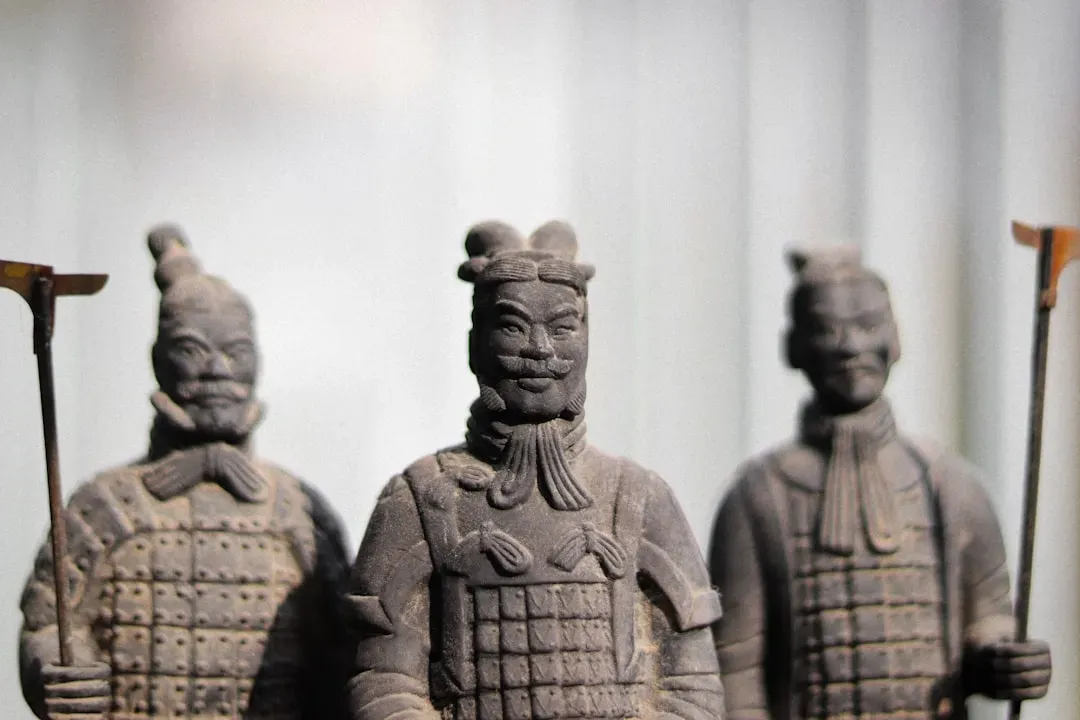
It would be too easy to walk away from all of this feeling smug about how far we’ve come. The more honest reaction is a kind of humility. Yes, there is an exorbitant amount of ancient theories that were wildly inaccurate. But that’s not because early theoreticians were not smart enough. In fact, they were the ones who invented most of the concepts we currently use in our daily lives. The people who proposed atomic theory, heliocentrism, plant-based medicine, and the length of the solar year were not primitive. They were, in many respects, operating at the absolute ceiling of what observation and pure reasoning could achieve without instruments.
The real question isn’t just “which old ideas were right?” It’s “which ideas are we dismissing today that future generations will look back on with amazement?” Scientific progress may seem like a straight line of amassing knowledge and calmly correcting mistaken impressions to get to the truth, but the actual process is much more chaotic than that. Theories that we take for granted today were often met with confusion and hostility when they were introduced. That pattern has never stopped. It is, if anything, the defining feature of how human understanding actually works. What would you have guessed, if you’d been the one watching the stars and wondering?


