The Russian Avant-Garde Scandal That Shook 2024

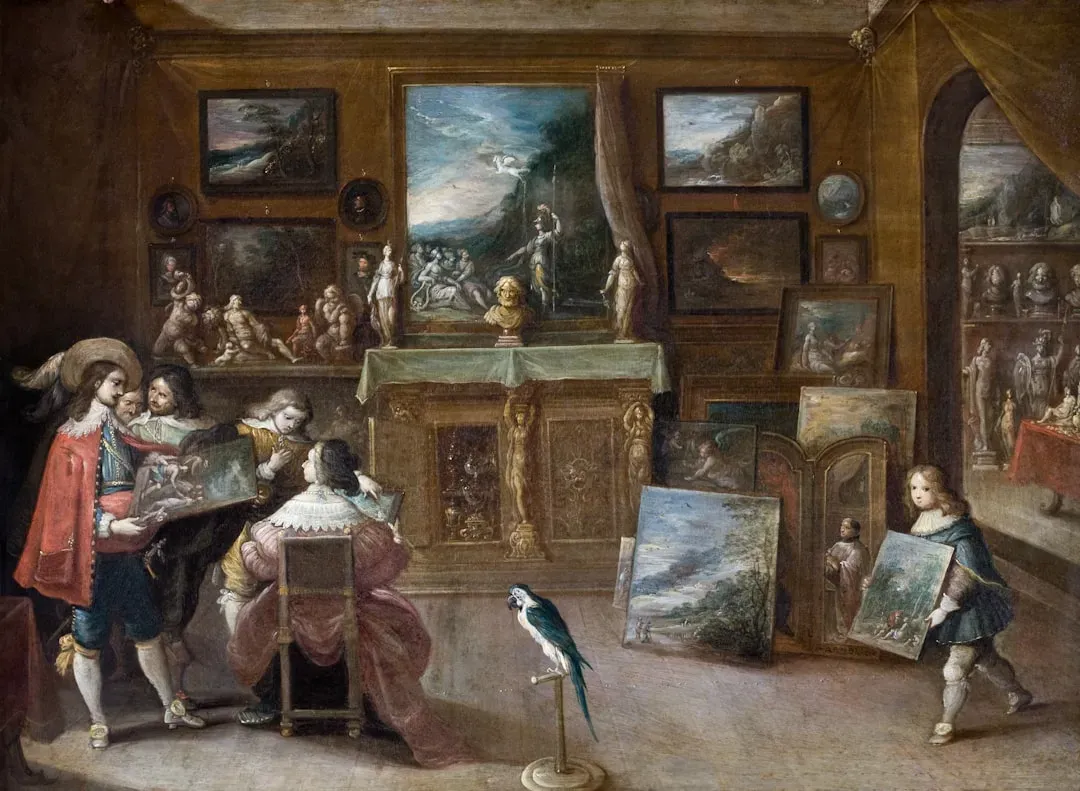
Art forgery is alive and thriving, even here in 2026. Dealers revealed that as many as 95 percent of Russian avant-garde paintings currently in circulation aren’t legitimate, a staggering figure that exposed the vulnerability of an entire market segment. Italian police uncovered a $215 million pan-European forgery network in late 2024, investigating 38 people suspected of selling fake works attributed to Pablo Picasso, Banksy, and Andy Warhol. Around 2,100 forgeries were seized, their provenance revealing a path through auction houses in Italy.
What makes this scandal particularly chilling is the methodology. Fraudsters bolster the provenance of questionable paintings by exhibiting them in major museums, and in separate cases, dubious paintings have been sneaked into exhibition catalogs and catalog raisones to legitimize their provenance. It’s not just about painting skill anymore. The deception runs through paperwork, museum records, and digital archives, creating layers of false authenticity that even experts struggle to penetrate.
Canada’s Morrisseau Forgery Ring: A Cultural Catastrophe


In March 2023, Ontario Provincial Police announced they had uncovered what they called the biggest art fraud in world history, resulting in charges against eight people and the seizure of more than 1,000 paintings. The target was the work of renowned Ojibwe artist Norval Morrisseau, who died in 2007 after creating groundbreaking Indigenous art that merged traditional cosmology with contemporary styles. The forgery ring relied on forced child labour in sweatshops as well as the exploitation of talented young Indigenous artists, transforming art fraud into something far darker.
The precise number of total fakes manufactured over the years is unknown but could be more than 10,000, with the criminal profits amounting up to $100 million. What happened here went beyond simple art fraud. There may be up to ten times more fake Morrisseau works on the market than authentic pieces, essentially erasing and replacing an artist’s legacy with industrial-scale counterfeits. In December 2023, Gary Lamont pled guilty to one count of forgery and one count of defrauding the public above $5,000, and he was sentenced to five years in prison.
Wolfgang Beltracchi: The Master of Invented Masterpieces

Wolfgang Beltracchi admitted to forging hundreds of paintings in an international art scam, and though he was found guilty for forging 14 works that sold for a combined $45 million, he claims to have faked about 50 artists, with total estimated profits surpassing $100 million. Here’s the thing: Beltracchi didn’t copy existing works. He painted his own paintings imitating the style of the artists in question, making up the titles and motives, or claiming that a painting was a lost work only known by its title in old documents or catalogs.
His downfall came from laziness. In 2008, a scientific analysis showed a painting contained titanium white, which was not yet available in 1914, the year the forged Campendonk was supposedly created. When asked if he had done anything wrong, Beltracchi’s answer was succinct: “Yes: I used the wrong tube of white paint”. The case is still reverberating through the art world. As of November 2025, Japan’s Tokushima Modern Art Museum secured a full refund of 67.2 million yen, approximately $426,000, for a counterfeit painting by Beltracchi. As many as 300 of his forgeries hung in the world’s major museums, and eight years after conviction, Beltracchi managed to parlay his notoriety into a lucrative post-prison career.
Han van Meegeren: The Man Who Tricked Hermann Göring

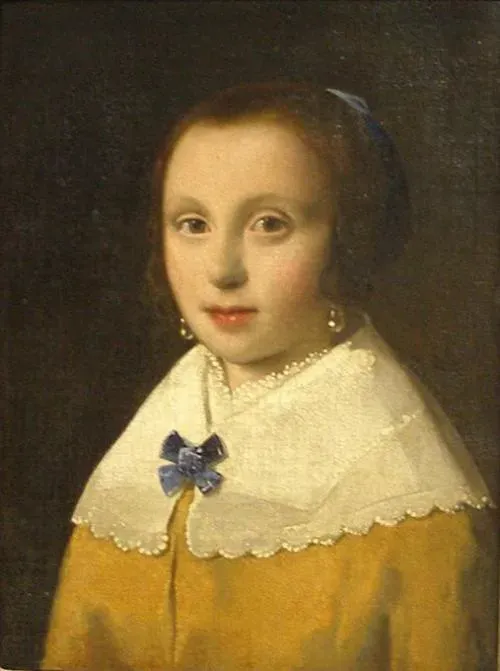
Let’s be real: no forger’s story is quite as dramatic as Han van Meegeren’s. When an Allied art commission discovered a painting called Christ and the Woman Taken in Adultery by Johannes Vermeer among Hermann Göring’s collection, they traced it to van Meegeren and arrested him in 1945, facing charges of collaboration with the Nazis. To save himself from a possible death penalty, he had to prove he was a forger, not a traitor.
A 1967 biography estimated that Van Meegeren duped buyers out of more than $30 million, his victims including the Dutch government. Of van Meegeren’s 14 known forgeries of works by Vermeer and Pieter de Hooch, nine had been sold before the war at enormous profit, including The Supper at Emmaus, which had been proclaimed by scholars as a masterpiece by Vermeer. Van Meegeren claimed he had traded the false Vermeer for 200 original Dutch paintings seized by Goering at the beginning of the war, and he also claimed to have painted five other Vermeers as well as two Pieter de Hoochs. He died less than two months after his conviction, taking his peculiar legacy with him.
Partner offer

John Myatt and the $25 Million Emulsion Paint Scam


Imagine creating forgeries with emulsion paint and KY Jelly. That’s exactly what John Myatt did. John Myatt perpetrated what has been described as the biggest art fraud of the 20th century and in 1999 was convicted of conspiracy to defraud and imprisoned for four months. Myatt was convicted of forging more than 200 modernist paintings over seven years, with about 120 of them still circulating in the art market, and received a prison sentence of one year while his partner Drewe received six years.
Myatt quickly confessed, stating he had created the paintings using emulsion paint and K-Y Jelly, a mixture that dried quickly but was hardly reminiscent of the original pigments, and estimated he had earned around £275,000, though the total sum of profits made through his forgeries exceeds €25 million. His partner John Drewe was the true mastermind. Drewe altered the provenances of genuine paintings to link them to Myatt’s forgeries, and added bogus documents to archives of various institutions in order to prove the authenticity of the forgeries. The sheer audacity of infiltrating museum archives and altering official records remains one of the most brazen aspects of art fraud history.
Elmyr de Hory: The Aristocrat Who Never Was

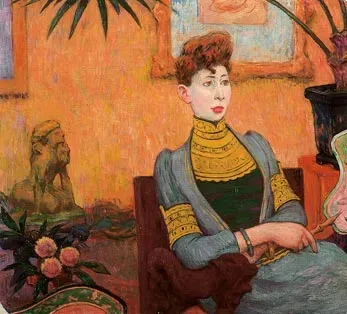
It has been estimated that de Hory inserted more than 1,000 forgeries onto the art market over a period of thirty years, many of which remain in private and public collections. The Hungarian-born forger created a completely fabricated persona as a dispossessed aristocrat selling works from a hidden collection. All de Hory forgeries were sold for more than $50 million in today’s value, making him one of the most financially successful forgers in history.
De Hory’s technique was sophisticated for the mid-20th century. De Hory expanded his forgeries to include works in the manner of Henri Matisse, Amedeo Modigliani and Renoir, mastering multiple artistic styles with remarkable fluidity. His partnership with dealer Fernand Legros lasted nine years, until forty paintings sold to Texas oil millionaire Algur Meadows were identified as forgeries in 1967, after which Legros co-opted experts who would guarantee a work’s authenticity and had their certification stamps copied to produce counterfeit documents. De Hory took his own life in 1976 when facing extradition, cementing his legend in Orson Welles’s documentary F for Fake.
The Knoedler Gallery: When Prestige Meets Deception

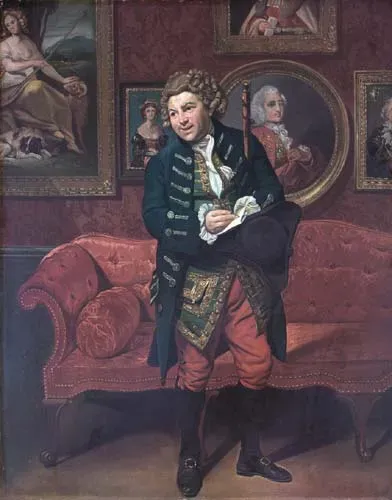
The historic Knoedler Gallery in New York purchased and sold forged paintings over the course of eight years, including a counterfeit Mark Rothko piece which sold for $17 million, as part of an extensive forgery scheme that saddled collectors with losses estimated at a colossal $80 million. Founded in 1846, Knoedler was one of America’s oldest and most respected galleries, which made the revelation even more shocking when it emerged in the 2010s.
The gallery’s director, Ann Freedman, acquired paintings from an enigmatic art dealer named Glafira Rosales, who claimed the works came from an anonymous Swiss collector, but the truth was that the paintings were forgeries created by a Chinese artist named Pei-Shen Qian, and over a span of 15 years, Freedman and the Knoedler Gallery made a fortune selling over 60 forged paintings to wealthy collectors, garnering over £64 million from these transactions. The gallery closed its doors permanently in 2011, ending 165 years of operation under the weight of scandal and litigation. Sometimes the most trusted institutions fall the hardest.
Did it ever occur to anyone that a gallery with such a sterling reputation could be the perfect vehicle for fraud? The trust was the weapon. What do you think about these cases? Which one surprises you most?
Partner offer
Planning a trip to Vegas?
Compare hotel rates and show tickets on VEGAS.com.