Literature is full of brilliant minds who created worlds with their words. But what happens when the creators themselves vanish? Some of the most celebrated authors in history simply disappeared, leaving behind more questions than answers. Their books remain on shelves, their characters live on in our imaginations, yet the writers who breathed life into them are gone without a trace.
These disappearances aren’t just footnotes in biographies. They’re genuine mysteries that have puzzled readers, scholars, and investigators for decades, sometimes centuries. Whether they walked away from fame deliberately or met darker fates, these literary ghosts haunt us still. Let’s dive into the strange cases where the storytellers became stories themselves.
Ambrose Bierce’s Walk Into Revolutionary Mexico

Ambrose Bierce was already a legend when he vanished in 1913. The Civil War veteran turned journalist and author of “The Devil’s Dictionary” had a reputation for savage wit and darker fiction. At 71, he decided he wasn’t done living yet. Bierce traveled to Mexico during its bloody revolution, supposedly to observe Pancho Villa’s forces. His last known letter came from Chihuahua in December 1913.
After that? Nothing. Some say he was killed in the Battle of Ojinaga. Others claim he committed suicide in the Grand Canyon, using Mexico as a cover story. The most romantic theory suggests he wanted to die in battle rather than waste away from old age. Bierce himself once wrote that he wanted to be shot by a firing squad.
The truth is we’ll never know. Mexico during that period was chaos, and plenty of people disappeared without record. But for a man who wrote so eloquently about death and the macabre, vanishing into a war zone feels almost too fitting. It’s the kind of ending he might have written for one of his own characters.
Barbara Newhall Follett’s Teenage Genius Cut Short

Barbara Follett published her first novel at twelve. “The House Without Windows” captivated readers in 1927 with its lyrical prose about a girl who runs away to live in nature. She seemed destined for literary greatness. By her early twenties, she’d published another book and married.
Then her life took a darker turn. Her marriage was troubled, possibly abusive. In December 1939, after a fight with her husband, the 25-year-old Follett walked out of their Massachusetts apartment with just thirty dollars. She told him she was going for a walk. Barbara Follett was never seen again.
Her husband waited two weeks before reporting her missing. Police found no leads, no body, no trace. Some believe she started a new life somewhere, escaping a bad marriage. Others fear she met with foul play that night. The girl who wrote about freedom and escape became a mystery herself, her promising career cut tragically short.
Weldon Kees and the Golden Gate Bridge Enigma

Weldon Kees was a true Renaissance man. Poet, painter, filmmaker, jazz pianist. By the early 1950s, he’d made his mark in multiple artistic circles. But depression haunted him. He talked frequently about disappearing to Mexico, starting fresh somewhere new.
On July 18, 1955, his car was found abandoned near the Golden Gate Bridge in San Francisco. The keys were in the ignition. Kees was nowhere to be found. The obvious conclusion? Suicide by jumping. But his body never surfaced, which isn’t unusual in the Bay’s strong currents.
Here’s what makes it intriguing. Kees had recently withdrawn savings and discussed his Mexico plans with friends. No suicide note was ever found. Some witnesses claimed to have seen him in Mexico City years later. Was it really suicide, or did this troubled artist successfully vanish into a new identity? The Golden Gate Bridge keeps its secrets well.
Everett Ruess: The Desert Wanderer Who Never Returned
Everett Ruess wasn’t famous when he disappeared, but his writings and art made him a legend afterward. At just twenty, this passionate wanderer explored the American Southwest alone, documenting his journeys through letters, poetry, and woodblock prints. He sought beauty and solitude in the desert’s harsh embrace.
In November 1934, Ruess vanished in the Utah wilderness near Escalante. Searchers found his burros in a canyon, but no trace of Everett himself. His last letters spoke of heading into the wild, as he always did. Theories range from accidental death to murder by cattle rustlers to intentionally disappearing to live with Native American tribes.
Decades later, supposed remains were found and DNA tested, but they weren’t his. The desert had swallowed him completely. Ruess left behind haunting words: “I have been thinking more and more that I shall always be a lone wanderer of the wilderness.” He got his wish, for better or worse.
Jim Thompson’s Thai Silk Mystery

Jim Thompson wasn’t primarily a writer, but his autobiography and the mystery of his disappearance have inspired countless books. The American businessman revitalized Thailand’s silk industry after World War II. He’d been an OSS operative, had connections throughout Southeast Asia, and lived in Bangkok in a stunning traditional Thai house.
On Easter Sunday 1967, Thompson went for an afternoon walk in Malaysia’s Cameron Highlands. He simply never came back. Massive searches involving police, military, and local tribes found nothing. No body, no clues, no answers.
Speculation ran wild. Was it Communist guerrillas? A tiger attack? CIA involvement from his spy days? Had he staged his own disappearance? The theories multiply because Thompson was a man of mystery even before he vanished. His disappearance remains one of Southeast Asia’s most enduring enigmas, a real-life thriller that never got its final chapter.
Zane Grey’s Brother Ellsworth’s Strange End

Ellsworth Grey never achieved the fame of his brother Zane, the Western novelist, but he was an author in his own right. More importantly, he was an adventurer who explored remote corners of the Pacific. In 1939, he traveled to Australia, then decided to venture into the interior wilderness.
He went into the outback and never returned. Search parties found no trace. Australia’s vast empty spaces are unforgiving, and European travelers regularly underestimated their dangers. But Ellsworth Grey had survival experience. His complete disappearance puzzled those who knew his capabilities.
Some say he simply got lost and died of exposure or thirst. Others wonder if he met with misfortune from hostile encounters. The outback keeps its dead well hidden. Whatever happened to Ellsworth Grey, the Australian wilderness claimed another victim and left another family without closure.
Richard Halliburton’s Final Voyage
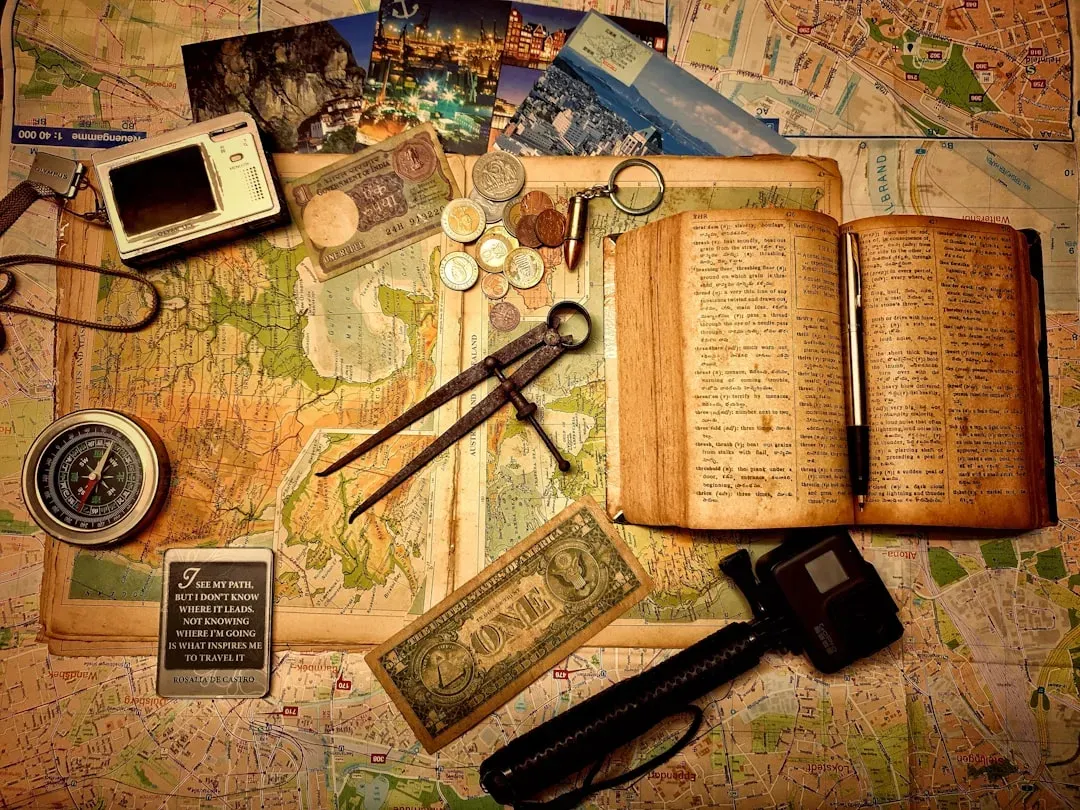
Richard Halliburton was an adventure writer who lived what he wrote. He swam the length of the Panama Canal, flew over Mount Everest, and retraced Hannibal’s route across the Alps with an elephant. His books celebrating global adventure made him wealthy and famous. He was always chasing the next great story.
In March 1939, Halliburton attempted to sail a Chinese junk from Hong Kong to San Francisco for the Golden Gate International Exposition. The ship, called the Sea Dragon, encountered a typhoon in the Pacific. The last radio message came on March 24: “Southerly gales, squalls, high seas, having wonderful time.” Then silence.
Neither Halliburton, his crew, nor the ship were ever found. The Pacific Ocean had claimed the perpetual adventurer. He was only 39. For a man who built his career on daring exploits, dying during one seems almost inevitable, yet his disappearance lacks the closure that even a confirmed death would provide.
Heinrich Böll’s Lost Manuscript Mystery

Okay, Heinrich Böll didn’t disappear, but a major portion of his work did. The German Nobel Prize winner was known for his meticulous record-keeping. Yet an entire manuscript he’d been working on in the early 1970s simply vanished. Böll mentioned it in letters, discussed it with his publisher, then it was gone.
What happened to it? Böll never gave a clear answer. Some speculate it contained politically sensitive material that he or someone else destroyed. Others think it was lost during one of his many moves. The mystery deepens because Böll himself seemed almost relieved it was gone, mentioning it only cryptically in later interviews.
This isn’t a disappeared author, but disappeared work. The ghost manuscript haunts Böll scholars still. What secrets, what stories, what insights vanished with those pages? Sometimes what’s lost matters as much as who’s lost.
Robert McGill: The Vanishing Academic

Robert McGill was a promising literature professor and occasional essayist who specialized in modernist poetry. In 1984, he left his university office in Vermont one afternoon, telling colleagues he’d return for an evening lecture. He got into his car and drove away. McGill never showed up for that lecture or anywhere else again.
His car was found three days later at a rest stop in Pennsylvania, keys still inside. No signs of struggle, no note, no indication of where he went or why. Police investigated thoroughly but found nothing. His bank accounts remained untouched. No one ever reported seeing him.
Some colleagues noted he’d seemed distracted in the weeks before, possibly troubled by something. But McGill kept his personal life private. Was it depression? A planned escape? Foul play? The academic world has its share of pressure and darkness, and sometimes people crack. Or maybe he simply wanted out and found a way.
Conclusion
The literary world has lost many voices to mysterious disappearances, each leaving behind unanswered questions and theories that may never be resolved. These writers gave us stories, but became stories themselves. Their books remain, their words still resonate, but the authors have stepped off the page into permanent shadow.
Some might be out there somewhere, living quiet lives under different names, having successfully escaped whatever drove them away. Others likely met unfortunate ends in remote places or dangerous circumstances. The truth, whatever it is, stays hidden. What do you think happened to them? Which mystery intrigues you most?