The popular picture of World War II usually centers around beaches, battles, and bombs. Normandy. Pearl Harbor. The liberation of Paris. These moments form a kind of mental shorthand for what we think happened during those years. Yet beneath all that familiar narrative lies a secret layer, missions so quiet or so strange they barely made it into the history books.
Here’s the thing: we’re talking about real operations that shifted the trajectory of the war, but without much fanfare. Some involved climbs up frozen cliffs in darkness. Others relied on inflatable rubber and sonic trickery. A few required dropping corpses into the sea or planting bombs that bounced. Let’s dive in.
Saboteurs on Ice: The Vemork Heavy Water Raid

In February 1943, a team of Norwegian commandos of SOE’s Norwegian Independent Company 1 destroyed the production facility in Operation Gunnerside. On the evening of February 27, 1943, nine Norwegian commandos infiltrated the German-held Vemork plant, a hydroelectric plant owned by Norsk Hydro just outside of Rjukan, Norway. These men didn’t know much about atomic bombs or nuclear physics. What Colonel Tronstad, himself a prewar chemistry professor, was able to tell his men was that the Vemork chemical plant made “heavy water,” an important ingredient for the Germans’ weapons research. Beyond that, the Norwegian troops knew nothing of atomic bombs or how the heavy water was used. The raid caused the Germans to lose about 500 kg of heavy water and decommissioned the plant for a few months. It’s hard to say for sure how close Germany actually was to building a functioning bomb, but this attack bought crucial time.
The Man Who Never Was: Operation Mincemeat

Operation Mincemeat was a successful British deception operation of the Second World War to disguise the 1943 Allied invasion of Sicily. Two members of British intelligence obtained the body of Glyndwr Michael, a tramp who died from eating rat poison, dressed him as an officer of the Royal Marines and placed personal items on him identifying him as the fictitious Captain William Martin. Correspondence between two British generals that suggested that the Allies planned to invade Greece and Sardinia, with Sicily as merely the target of a feint, was also placed on the body. The Germans found the documents and apparently believed them. The Germans acted swiftly on the false information by doubling the number of troops sent to Sardinia, while many additional German divisions were also transferred to Greece and the Balkans. The Allied invasion of Sicily was launched on 9 July 1943 and, as intended, proved a huge surprise to the German defenders. In just over a month the island was fully captured by the Allies, and the lack of enemy reinforcements had proven to be a deciding factor in the success.
Rubber Tanks and Radio Trickery: The Ghost Army

Activated on January 20, 1944, the 23rd Headquarters Special Troops, known as the “Ghost Army,” was the first mobile, multimedia, tactical deception unit in US Army history. Consisting of an authorized strength of 82 officers and 1,023 men under the command of Army veteran Colonel Harry L. Reeder, this unique and top-secret unit was capable of simulating two whole divisions – approximately 30,000 men – and used visual, sonic, and radio deception to fool German forces during World War II’s final year. They blew up inflatable tanks under cover of darkness. They played pre-recorded sounds of construction and troop movements from massive speakers. Painstakingly recorded sounds of armored and infantry units were blasted from sound trucks; radio operators created phony traffic nets; and inflatable tanks, trucks, artillery and even airplanes were imperfectly camouflaged so they would be visible to enemy reconnaissance. The Germans fell for it again and again. Though knowledge of the 23rd Headquarters Special Troops was then public, it was still officially classified until the mid-1990s.
Bouncing Bombs and Precision Strikes: The Dambusters

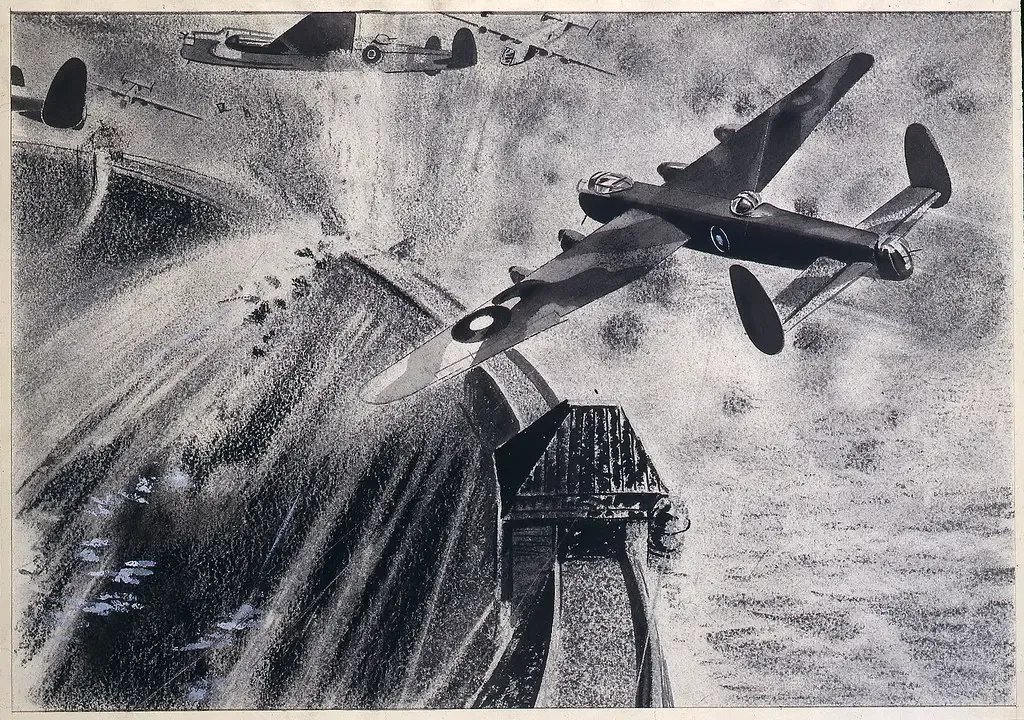
On the night of 16-17 May 1943, Wing Commander Guy Gibson led 617 Squadron of the Royal Air Force on an audacious bombing raid to destroy three dams in the Ruhr valley, the industrial heartland of Germany. The mission was codenamed Operation ‘Chastise’. The dams were fiercely protected. Torpedo nets in the water stopped underwater attacks and anti-aircraft guns defended them against enemy bombers. But 617 Squadron had a secret weapon: the ‘bouncing bomb’. Engineer Barnes Wallis invented a cylindrical mine designed to skip across water like a stone. Operation Chastise, commonly known as the Dambusters Raid, was an attack on German dams carried out on the night of 16/17 May 1943 by 617 Squadron RAF Bomber Command, later called the Dam Busters, using special bouncing bombs developed by Barnes Wallis. Of the 133 aircrew that took part, 53 men were killed and three became prisoners of war. On the ground, almost 1,300 people were killed in the resulting flooding. The mission demonstrated the power of specialized training and precision targeting, though the ethical costs remain a subject of debate.
Women Behind Enemy Lines: SOE Female Agents


The SOE eventually began recruiting women in 1942, though the first female special agent of the war, Krystyna Skarbek, later known as Christine Granville, was in fact serving behind enemy lines before the end of 1939. In total, 75 female special agents were smuggled into France, Belgium and other occupied countries by air and sea, to support the local resistance through coordinating the delivery of money. These weren’t clerks or nurses stationed far from the front. After an interview with a recruiting officer, she was enrolled, passed strenuous training including parachute school, and was sent as an agent into Nazi-occupied France in 1942 to work with the French Resistance as part of the FANY unit. With the codename Lise, she acted as courier to Peter Churchill, coordinator of the Spindle circuit, an SOE network based in Cannes. Many were captured, tortured, or executed. More than one-third of the 41 female agents of Section F did not survive the war; the death toll for more than 400 male agents was one-fourth, and the toll of thousands of French people helping SOE agents and networks was about one-fifth.
German Saboteurs on American Soil: Operation Pastorius

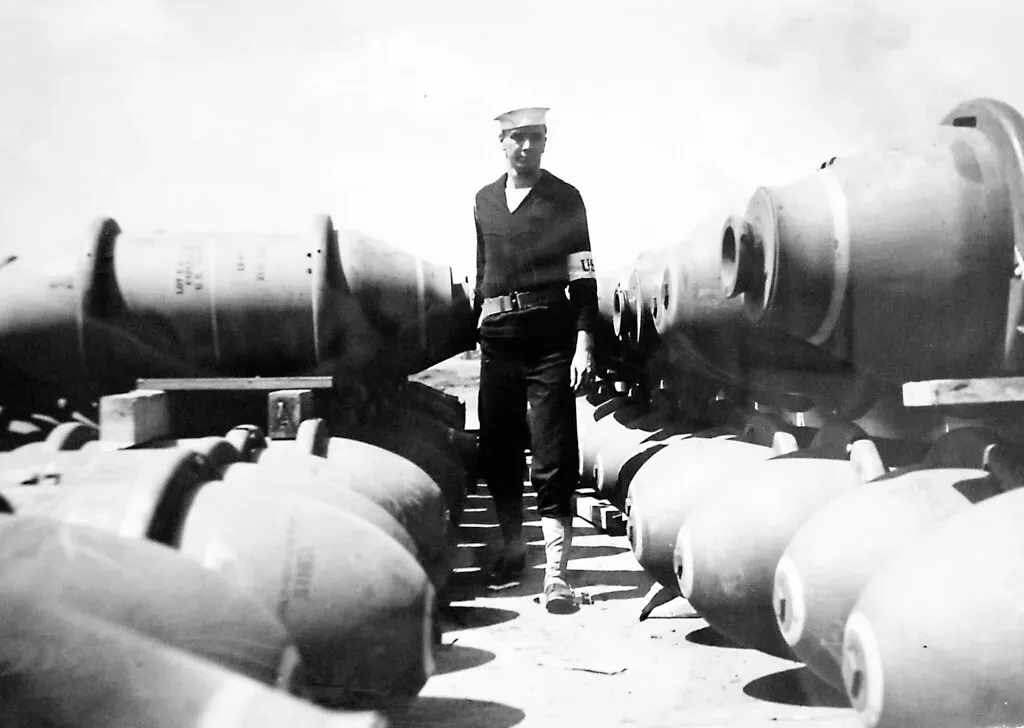
Operation Pastorius was Germany’s attempt to send trained saboteurs onto American soil in 1942. Eight agents landed by submarine in two teams, one on Long Island and another in Florida. They carried explosives and plans to blow up railroads, factories, and infrastructure. The operation collapsed quickly when one saboteur, George Dasch, turned himself in to the FBI and informed on his colleagues. All eight were arrested, and six were executed. The episode revealed serious flaws in German intelligence planning and showed how difficult it was to operate covertly in a country as large and alert as the United States. Internal betrayal, rather than counterintelligence expertise, led to the mission’s failure. It remains a cautionary tale about trust and execution under pressure.
Tokyo’s Inferno: The Fire Raid Planning

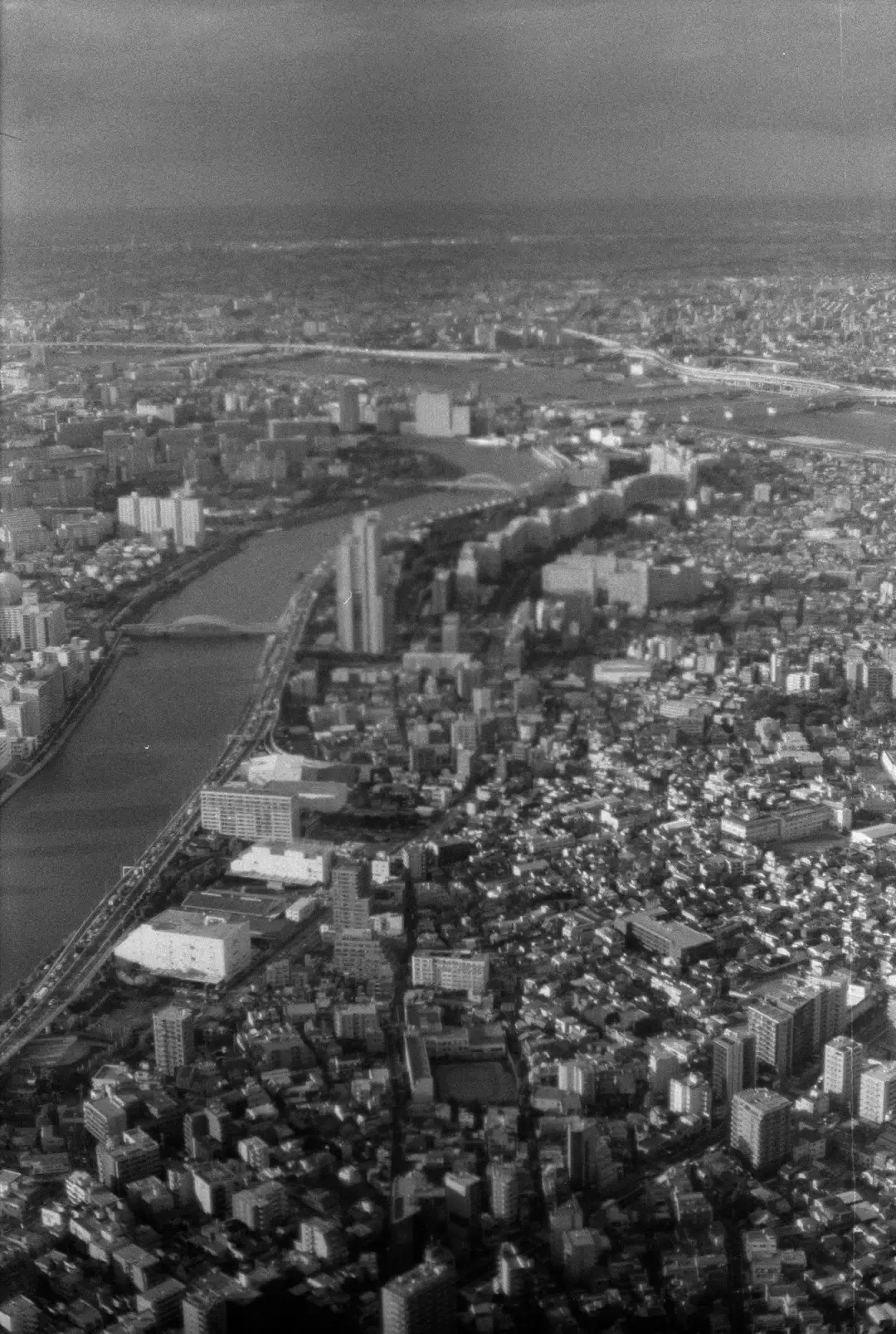
The March 1945 firebombing of Tokyo killed more people in a single night than either atomic bomb would later claim. The operation wasn’t improvised. Military planners used early predictive models to estimate how fires would spread through densely packed wooden structures. They studied wind patterns, building materials, and population density. The objective was not just destruction but demoralization. Strategic bombing surveys conducted after the war documented these planning efforts, including how analysts anticipated civilian casualties. The ethical weight of such calculations continues to echo. Roughly 100,000 people died that night. It was one of the deadliest air raids in history, and the models used to plan it represented an early form of computational warfare analysis.
The Weather That Decided D-Day


Allied forecasters faced enormous pressure in early June 1944. A narrow weather window was the difference between success and disaster for the Normandy invasion. Met Office UK records, republished in recent years, show how meteorologists accurately predicted a brief break in stormy conditions. General Eisenhower trusted their analysis and launched the operation on June 6. German forecasters, lacking Atlantic weather stations, predicted continued bad weather and let their guard down. The invasion caught them off guard. This reliance on meteorological science may seem mundane, but it was as vital as any tank or battleship. The margin between victory and postponement was measured in hours, not days.
Teenage Couriers: The Resistance’s Unsung Heroes


Teenagers often served as couriers in occupied Europe because adults aroused more suspicion. They moved documents, money, and intelligence across checkpoints that would have stopped older operatives. Yad Vashem’s digital archives, updated in recent years, document how young people leveraged their perceived innocence to operate in plain sight. They memorized messages, hid papers in mundane objects, and navigated dangerous urban landscapes. Many were caught and executed. Their contributions rarely received official recognition, partly because of their age and partly because their missions were so secretive. Yet they formed an essential link in the chain of resistance activity, often at tremendous personal risk.
Operation Fortitude: The D-Day Phantom Army

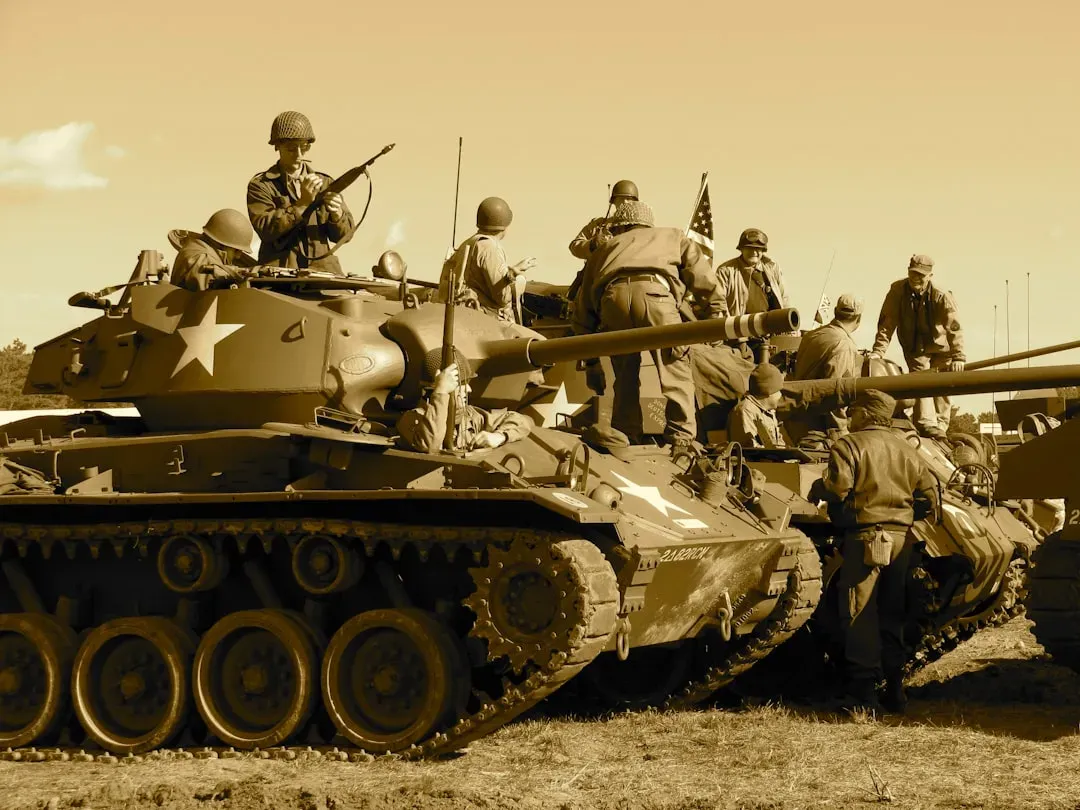
Operation Fortitude was the broader deception campaign designed to convince the Germans that the D-Day invasion would land at Pas-de-Calais rather than Normandy. Fake radio traffic, dummy landing craft, and inflatable military equipment created the illusion of a massive army group stationed in southeast England. General George Patton was even placed in command of this phantom force to add credibility. German intelligence bought it. Hitler kept divisions in Pas-de-Calais for weeks after the Normandy landings began, waiting for an attack that never came. The deception saved thousands of Allied lives by dividing German defenses and delaying reinforcements. It was a masterclass in psychological warfare.
The missions you’ve just read about changed the war in ways most people never learned. They didn’t all involve massive armies or thousands of casualties. Some relied on one good idea, a handful of brave individuals, or a well-placed lie. These stories remind us that history is messier and stranger than the versions we usually hear. The truth often hides in the margins, waiting for someone to look a little closer. What surprises you most about these hidden operations?