There’s something quietly unsettling about picking up a decades-old novel and recognizing your own life in it. Not vaguely, not symbolically, but in the specific details: the way you pay for things, the device in your pocket, the cameras in your street. Science fiction has always been more than entertainment; it’s a testing ground for possibility, and some of the most transformative technologies of our time were first conceived not in Silicon Valley boardrooms, but in the pages of novels.
The authors on this list weren’t guessing randomly. They were observing human behavior, extrapolating with unusual clarity, and writing futures that, decades later, look a lot like Tuesday. Here are ten of those books.
1. 1984 by George Orwell (1949)

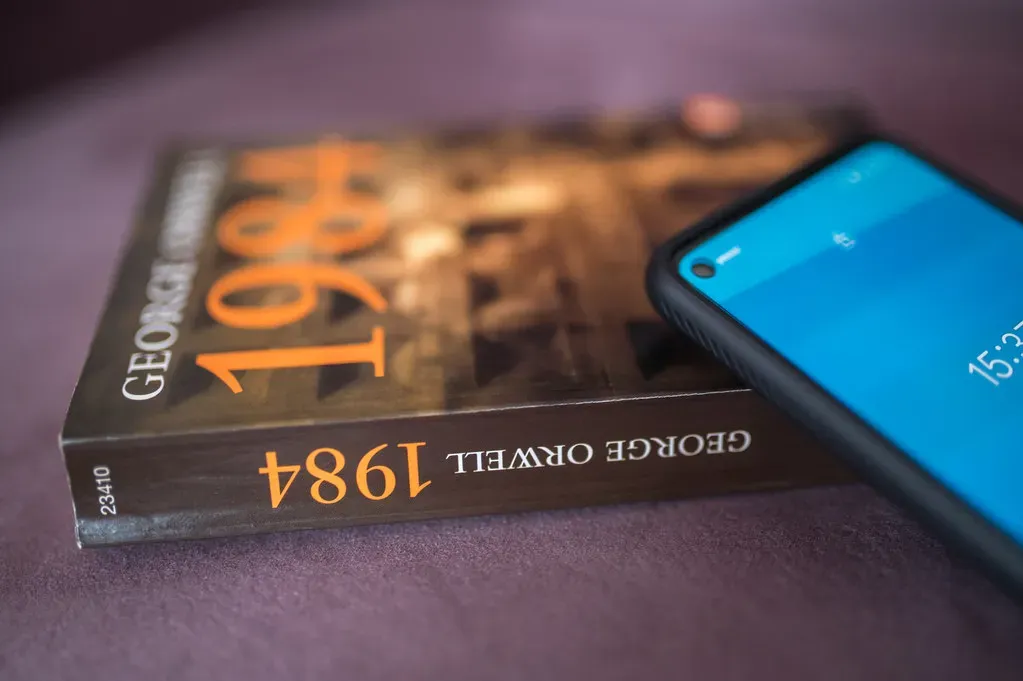
George Orwell’s dystopian novel published in 1949 predicted so many aspects of the future that referring to it has become shorthand for any situations in which technology threatens to control aspects of society. The term “Big Brother,” which today refers to an all-powerful government specifically involving surveillance, originated in the book. Among the technological advancements described is the “telescreen,” essentially a large television used to monitor people’s private lives and identify a person based on their facial expressions and heart rate.
The “speakwrite,” a device that transforms speech into text, mirrors what we now know as Google’s voice-to-text tools, and the “telescreen” functions as a facial recognition device that watches a person’s every move, much like what we know today as CCTV technology. Meanwhile, the Versificator predicted AI software, which can now be programmed to make art and write music, emails, articles, and even fiction.
2. Neuromancer by William Gibson (1984)

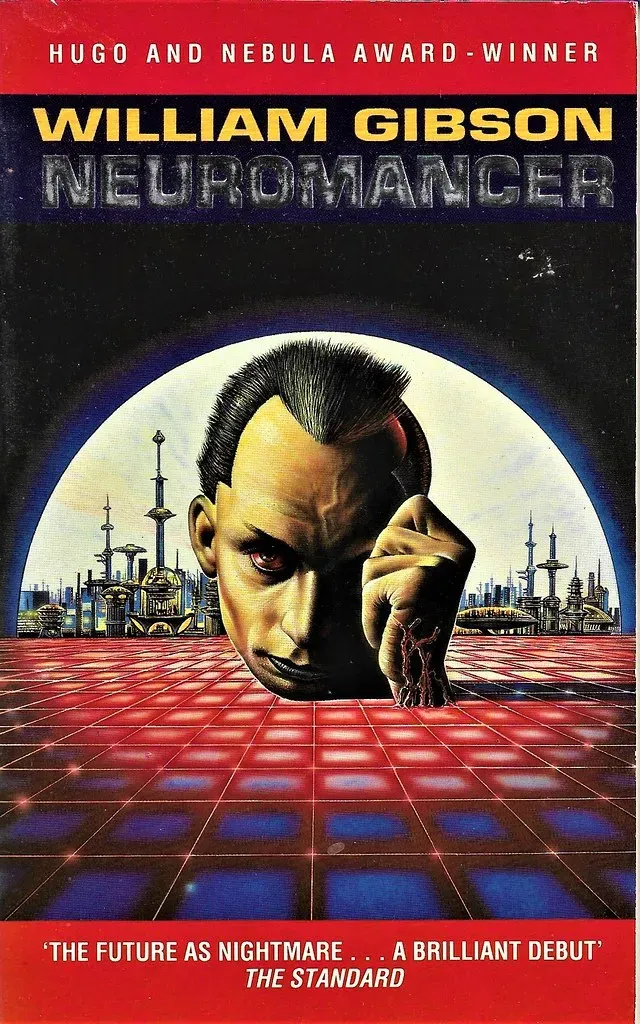
In 1984, five years before Tim Berners-Lee introduced the internet to the world, Gibson coined the term “cyberspace” in his version of the World Wide Web. For 1984, Gibson’s book was ambitiously prophetic, leapfrogging beyond any notion of a text-and-image-based World Wide Web and directly into a computerized virtual reality into which hackers could “jack” themselves using body implants and cables.
Powerful AIs like Wintermute and Neuromancer operate at or beyond human-level cognition and are capable of manipulating global events. This was a striking vision when real-world computers were limited to basic calculations and word processing. In 1984, AI research was primarily focused on expert systems and basic pattern recognition, making Gibson’s view particularly forward-looking. As the novel celebrated its 40th anniversary, the world it depicted seemed less outlandish by the day, with rapid developments in artificial intelligence and nascent efforts toward artificial general intelligence triggering broader conversations about emerging technologies and human identity.
3. Snow Crash by Neal Stephenson (1992)

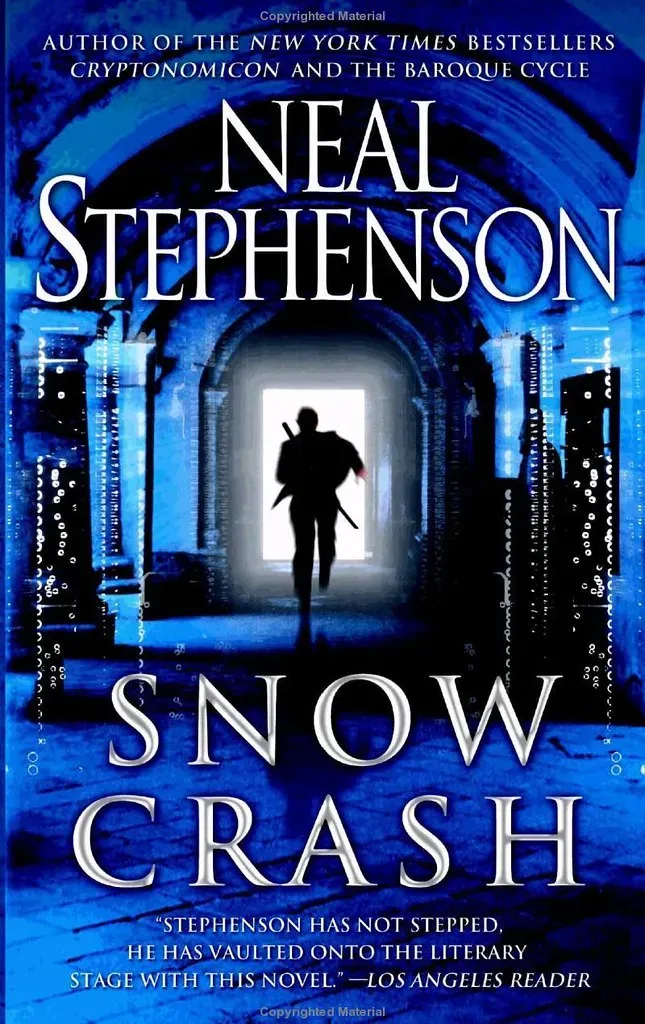
Author Neal Stephenson coined the term “metaverse” in his 1992 science-fiction novel “Snow Crash,” which envisions a virtual reality-based successor to the internet. In the novel, people use digital avatars of themselves to explore the online world, often as a way of escaping a dystopian reality. The headsets characters wear in the book, the avatar customization, and the social hierarchy of virtual spaces all map with uncomfortable precision onto today’s VR landscape.
Today, Oculus Quest headsets from Meta, Vision Pro from Apple, and virtually every other VR headset on the market operate in the same way Stephenson described, with more expensive models providing better immersion and higher resolution than less expensive ones. Snow Crash served as direct inspiration for the tech companies currently developing the metaverse. Facebook was renamed “Meta Platforms” in October 2021, and Zuckerberg invested heavily in Reality Labs to pursue Stephenson’s vision.
4. Fahrenheit 451 by Ray Bradbury (1953)

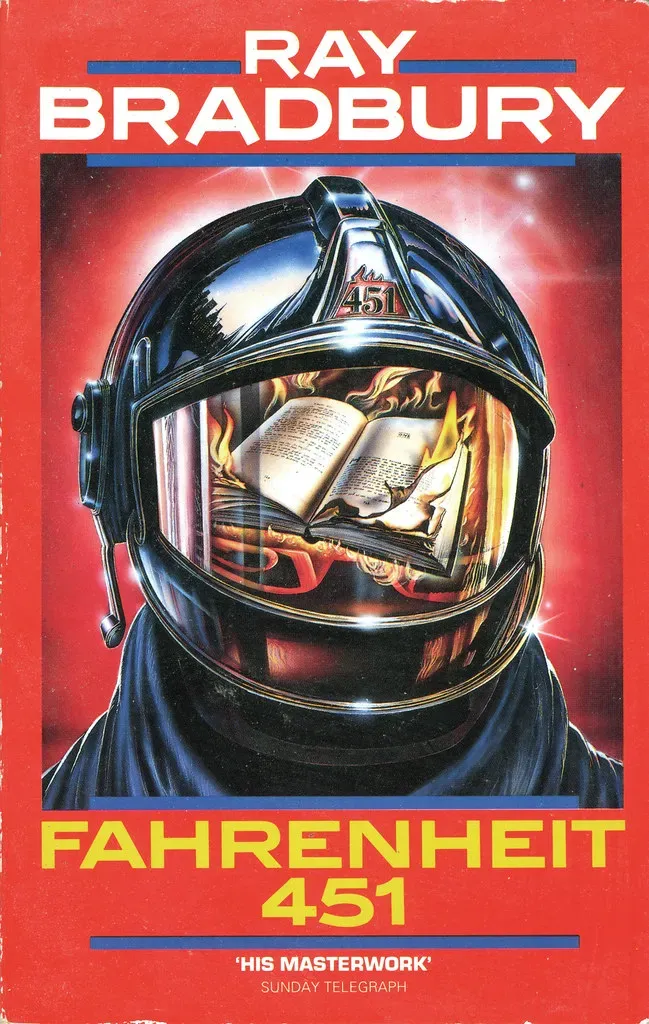
Bradbury’s 1953 dystopia is famous for predicting not only government censorship but also the societal erosion caused by short attention spans and constant informational noise. It eerily foresaw flat-screen wall TVs, “ear shell” personal headphones, and the cultural abandonment of intellectual depth for superficial media. These weren’t peripheral details in the story; they were central to how Bradbury imagined distraction being weaponized.
In the futuristic society he described, direct prototypes of Bluetooth headsets appear, described as tiny shells, alongside flat-screen TVs used to communicate over long distances, much as social network interfaces do today. Walk down any street in 2026 and you’ll see earbuds in nearly every pair of ears. Bradbury wrote that image in the early 1950s.
5. Brave New World by Aldous Huxley (1932)

Aldous Huxley’s novel was written before computers even existed, yet it foresaw a future shaped by science and technology. He described a society built on genetic engineering, where people’s DNA is carefully designed before birth. Today, CRISPR technology gives scientists the power to alter genes with stunning precision, offering genuine hope for treating inherited diseases.
Huxley painted a future where genetic engineering and mood-altering drugs dictated happiness and social roles. Immersive entertainment, once science fiction, is now a reality with VR headsets and lifelike video games. The ethical questions Huxley raised are the same ones we’re wrestling with now, as biotech and pharmaceuticals reshape what it means to be human.
6. Looking Backward by Edward Bellamy (1888)


It seems incredible that this book was written more than a century ago. The main character is a traveler from the late 19th century who wakes up in a utopian society in the 21st century, where people use pocket cards issued by banks that charge money from their accounts. Bellamy predicted credit cards. He also foresaw what we’d now recognize as streaming entertainment, describing a device that let people listen to concerts from home.
Edward Bellamy’s novel imagined the rise of credit cards, instant delivery, and universal healthcare, concepts that have become everyday realities. Today, the vast majority of Americans use credit cards regularly, and global e-commerce companies offer same-day delivery services. Bellamy’s vision wasn’t just about gadgets; it was about how technology would change the way people live, buy, and interact with the world.
7. The Machine Stops by E.M. Forster (1909)

Imagine an information-oriented world where people work from home, communicate via instant messages and videos, and form and maintain friendships electronically. It sounds an awful lot like life in the 2020s. Believe it or not, it’s actually the premise of E.M. Forster’s short story published in 1909. Written more than a century before the pandemic normalized remote work, the story is almost unsettling in its accuracy.
Forster envisioned a society where people lived underground and relied on technology for every aspect of life. The book predicted video calls, instant messaging, and a dependence on machines that feels all too familiar today. This early novella accurately predicted humanity’s total dependence on an interconnected mechanical network, an absolute forecast of the internet and virtual reality.
8. I, Robot by Isaac Asimov (1950)

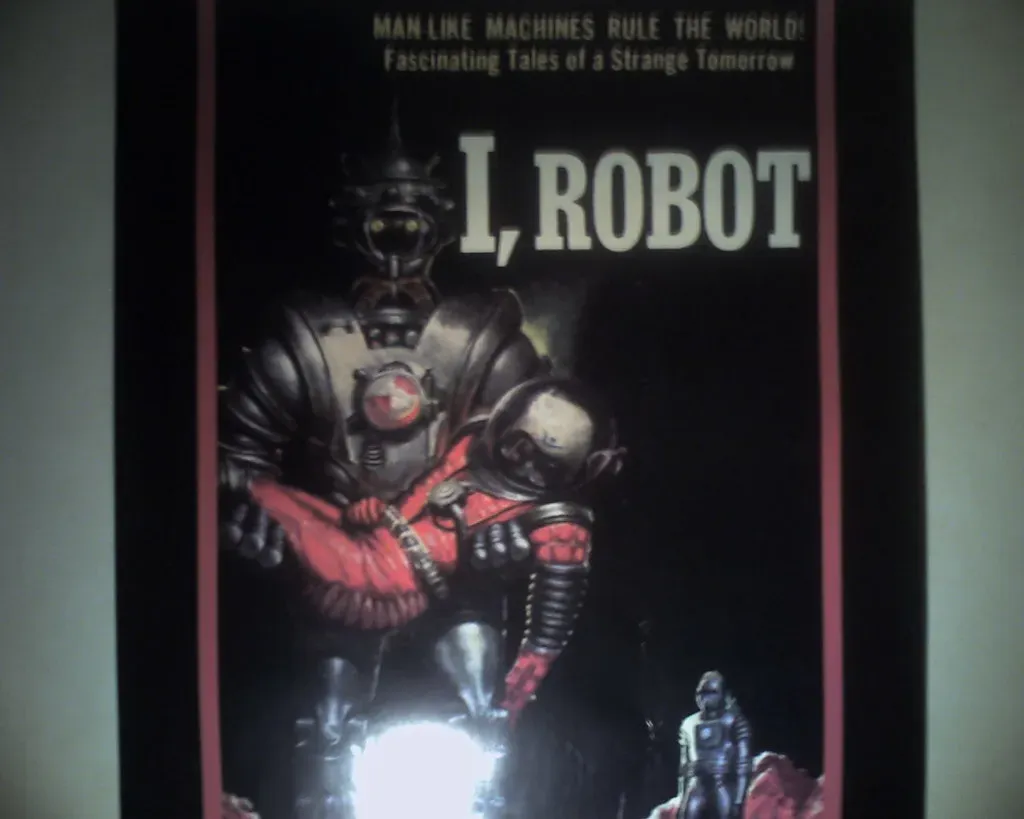
Asimov not only invented the word “robotics,” his Three Laws of Robotics, first written as part of a short story in 1942, have had a massive impact on framing how people think about the development of artificial intelligence and the field of robotics itself. Asimov’s Robot series also predicted intelligent systems governed by ethical frameworks, something we now grapple with in real-world AI ethics, as developers strive to ensure artificial intelligence operates within moral and societal boundaries.
In his “I, Robot” collection, Asimov introduced the Three Laws of Robotics which has become a genre staple governing the rules of robots in both science fiction literature and movies alike. Modern discussions around AI ethics echo many of these dilemmas: if an AI demonstrates intelligence comparable to a human, does it deserve certain rights? How do we correct an AI that misbehaves? Who is accountable for an AI’s actions? To what extent should we allow AI to make decisions that affect human lives? Asimov didn’t offer simple answers, but his fiction frames these issues in ways that remain powerfully relevant.
9. The Hitchhiker’s Guide to the Galaxy by Douglas Adams (1979)

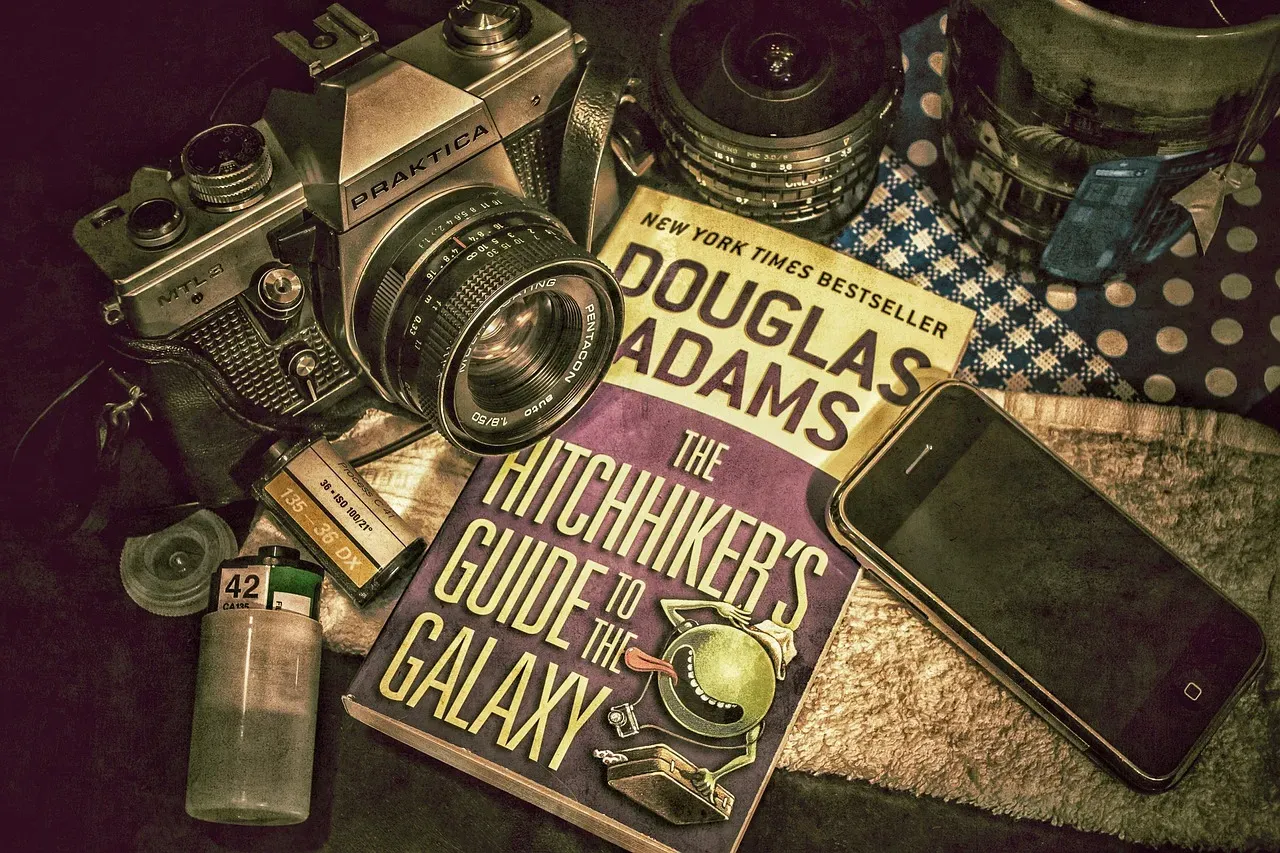
Douglas Adams’ novel offered not only comedy but also remarkable technological predictions. The titular “Guide” is essentially a digital encyclopedia accessed via a handheld device, which bears a striking resemblance to modern smartphones and tablets. Much like today’s Wikipedia, the Guide was a vast repository of information available on demand.
The series also introduced ideas such as voice-controlled interfaces and translation devices, which are now embodied in technologies like Google Translate and AI virtual assistants. Adams’ satirical approach highlighted both the marvels and absurdities of technological progress, offering a reflection on how humans interact with the tools they create. Adams’ blend of humor and foresight showed how technology could be both mind-blowing and mundane, and the idea of carrying a smart, talking guide in your pocket is now so normal that most people don’t even think about how strange it once sounded.
10. Stand on Zanzibar by John Brunner (1968)

John Brunner’s novel is a kaleidoscope of future anxieties, many of which have come true. He predicted a world struggling with overpopulation, a problem that feels urgent now that Earth’s population hit 8 billion in 2023. Brunner also foresaw nonstop media, and today the average person is bombarded with over 10 hours of media per day, according to Nielsen.
Perhaps more than any other book, “Stand on Zanzibar” has gained notoriety for its sheer accuracy. Genetic engineering and electric cars, both featured in his book, are now part of everyday conversation. Brunner built his novel as a deliberately fragmented collage of news snippets, advertisements, and data streams, a structure that today reads less like an experimental literary device and more like a social media feed.
What these ten books share is something harder to define than prescience. Their authors were paying unusually close attention to the direction human ambition was already traveling, and they wrote clearly enough that engineers and technologists actually read them. All of these enormous tech businesses, operating independently, cited the same novels as their inspiration, not as coincidence, but as clear paths that Silicon Valley engineers chose to follow. Fiction became blueprint. That’s the strangest part of all.