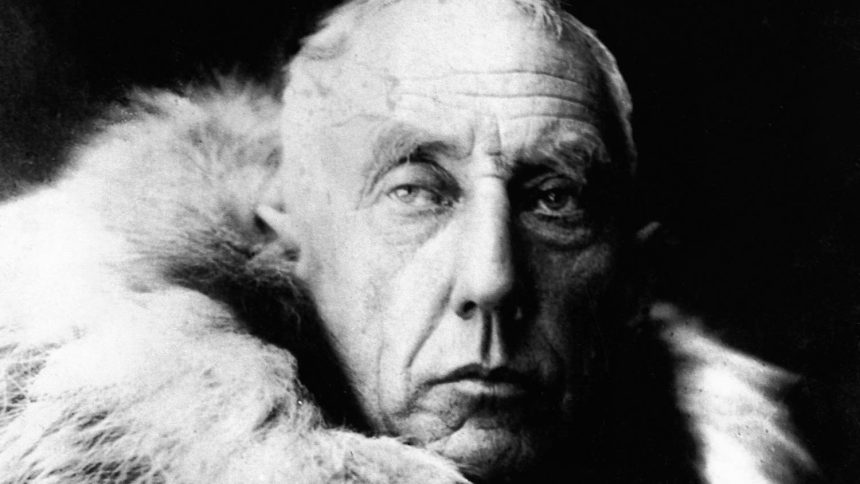
Some people chase fame. Some chase fortune. The rarest kind chase the unknown, venturing into places so remote, so hostile, and so unforgiving that the world never hears from them again. History is full of extraordinary men and women who pushed past every boundary, only to simply vanish. No grave. No wreckage. No final answers.
These are not ghost stories. These are real people, real expeditions, and real mysteries that have baffled historians, archaeologists, and researchers for decades, in some cases for centuries. Some of their disappearances sparked rescue missions that ended in even more tragedy. Others left behind only fragments of evidence, raising far more questions than they ever answered. Let’s dive in.
1. Colonel Percy Fawcett: The Man Who Chased a Lost City
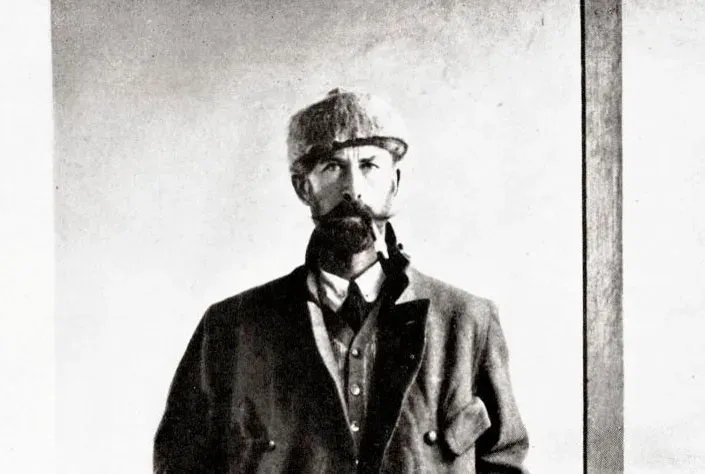
Let’s be real, if there is one disappearance that defined the age of exploration, it is Percy Fawcett’s. Percy Harrison Fawcett was a British geographer, artillery officer, cartographer and explorer of South America. Born in 1867 in Devon, England, he led seven successful expeditions to the Amazon between 1906 and 1924. He was disciplined, legendary in his physical endurance, and utterly obsessed with what he believed lay hidden in the jungle.
British explorer Colonel Percy Harrison Fawcett came across an irresistible Portuguese document at the National Library of Brazil detailing the discovery of a “large, hidden, and very ancient city, without inhabitants, discovered in the year 1753,” telling of grand ruins hidden in the Mato Grosso jungle. Fawcett instantly decided to find the ruins, which he named the Lost City of Z. In 1925, Fawcett, his oldest son Jack, and a young man named Raleigh Rimell set off in search of the fabled lost city. Following a final letter in which Fawcett announced he was venturing into unmapped territory, the group vanished without a trace. Their fate remains a mystery.
It is estimated that as many as 100 people have died in the jungle searching for answers, and a few have followed in the explorers’ footsteps by vanishing without a trace. Recent LiDAR scans in Bolivia’s Llanos de Moxos have revealed vast pre-Columbian urban landscapes, featuring vast structures and water systems, proving that the Amazon rainforest did conceal an ancient lost city. In other words, he may not have been entirely wrong. That makes his fate all the more haunting.
2. Amelia Earhart: The Sky Was Not Enough

Few disappearances have captured the world’s imagination quite like Amelia Earhart’s. She was the first woman to fly solo across the Atlantic and the first person to fly from Hawaii to California. In 1937, Earhart set out to fly around the world, with Fred Noonan as her navigator, in a twin-engine Lockheed Electra. On June 1, the duo began their 29,000-mile journey, departing from Miami and heading east.
Less than a month later they reached Lae, New Guinea, having flown 22,000 miles, with 7,000 more to go. After departing from Lae, they had to fly another 2,500 miles before they reached their next stop, Howland Island, an incredibly small island in the Pacific Ocean, to refuel. Unfortunately, overcast skies, radio transmission issues, and low fuel meant that Earhart and Noonan did not reach their destination. No trace of Earhart or Noonan was ever found.
After the largest search and rescue attempt in history up to that time, the U.S. Navy concluded that Earhart and Noonan ditched at sea after their plane ran out of fuel; this “crash and sink theory” is the most widely accepted explanation. According to the International Group for Historic Aircraft Recovery, it is possible the duo got lost and landed on Nikumaroro Island in the Pacific Ocean. This would explain the human bones and U.S.-made artifacts found on the remote island in the years following their disappearance. The debate, incredibly, rages on to this day.
3. Roald Amundsen: The Greatest Explorer Who Vanished Saving Others
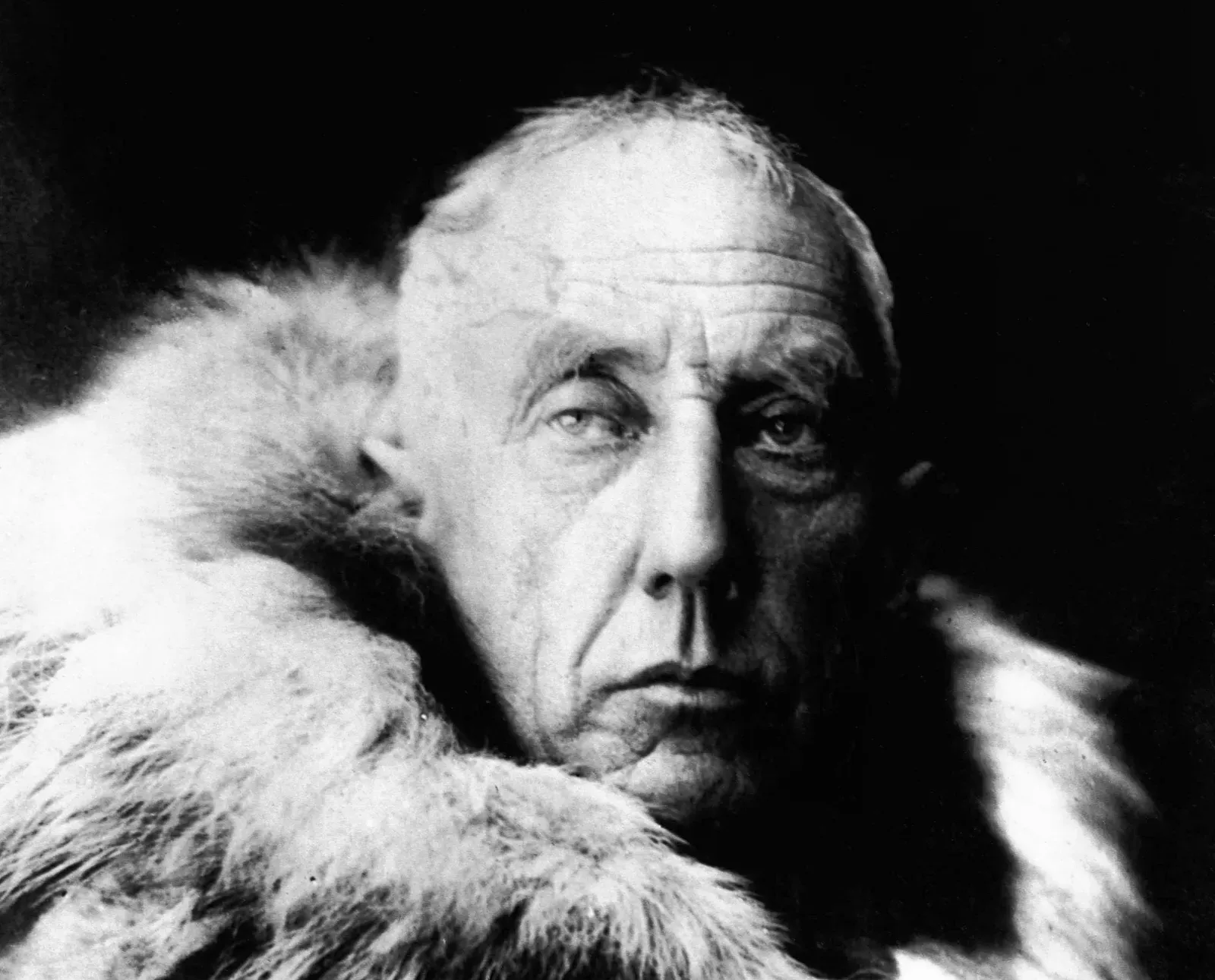
Honestly, Roald Amundsen’s story might be the most bittersweet on this entire list. This man was arguably the greatest polar explorer who ever lived. He and his crew aboard the sloop Gjøa became the first people to transit the fabled Northwest Passage, connecting the Atlantic and Pacific oceans via Canada’s Arctic Archipelago, between 1903 and 1905. Later, he and four men and eleven dogs became the first to reach the South Pole, on December 14, 1911.
Nobile and his crew later embarked on a series of flights over unexplored areas of the Arctic aboard the airship Italia. The Italia crashed on the ice in May 1928. When word of the crash reached Amundsen, he joined the multinational rescue effort. He boarded a French Latham 47 prototype seaplane in Tromsø, Norway, to look for Nobile around North East Land.
On June 18th, 1928, the overloaded aircraft took off into bright sunlight and was described by a fisherman as heading into a bank of fog, climbing to try to fly over it. This was the last anyone ever saw of the aircraft or the men on board. The last radio message was sent at 6pm, after which it was assumed the aircraft crashed into the Barents Sea. The search for Amundsen and his team was called off in September 1928 by the Norwegian government, and the bodies were never found.
4. Sir John Franklin: 129 Men Lost in the Arctic Ice
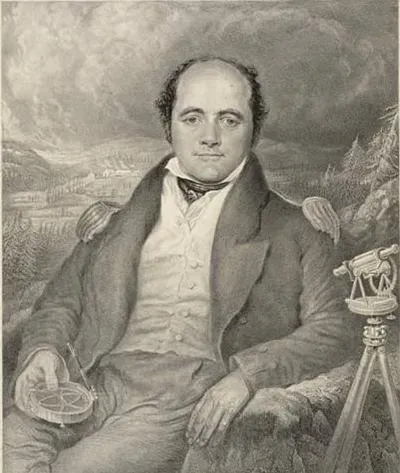
The scale of the Franklin disaster is almost incomprehensible. British explorer Sir John Franklin left England in 1845 with 129 crew members and officers in search of the Northwest Passage, a shipping route from the Atlantic to the Pacific through Canada. The duo led two ships, the HMS Erebus and HMS Terror, on an expedition to discover the elusive Northwest Passage. After passing Baffin Island that July, the expedition vanished without a trace.
Investigations revealed that Franklin and Crozier’s vessels had become trapped in pack ice during the winter of 1846 to 1847. While the expedition had three years’ worth of supplies, all the provisions had been sealed with lead, which almost certainly contaminated the sailors’ food. Study of graves found on the islands suggested that the men may have turned to cannibalism before they perished. That detail alone makes the skin crawl.
In 2014, Inuit and Parks Canada archaeologists discovered the wreck of Erebus in Victoria Strait. The Terror’s remains were found off King William Island two years later in Terror Bay. The discovery of the ships finally brought some closure to one of the greatest mysteries in Arctic exploration’s history. Still, the exact fate of all 129 men remains unknown.
5. Henry Hudson: Mutinied and Set Adrift
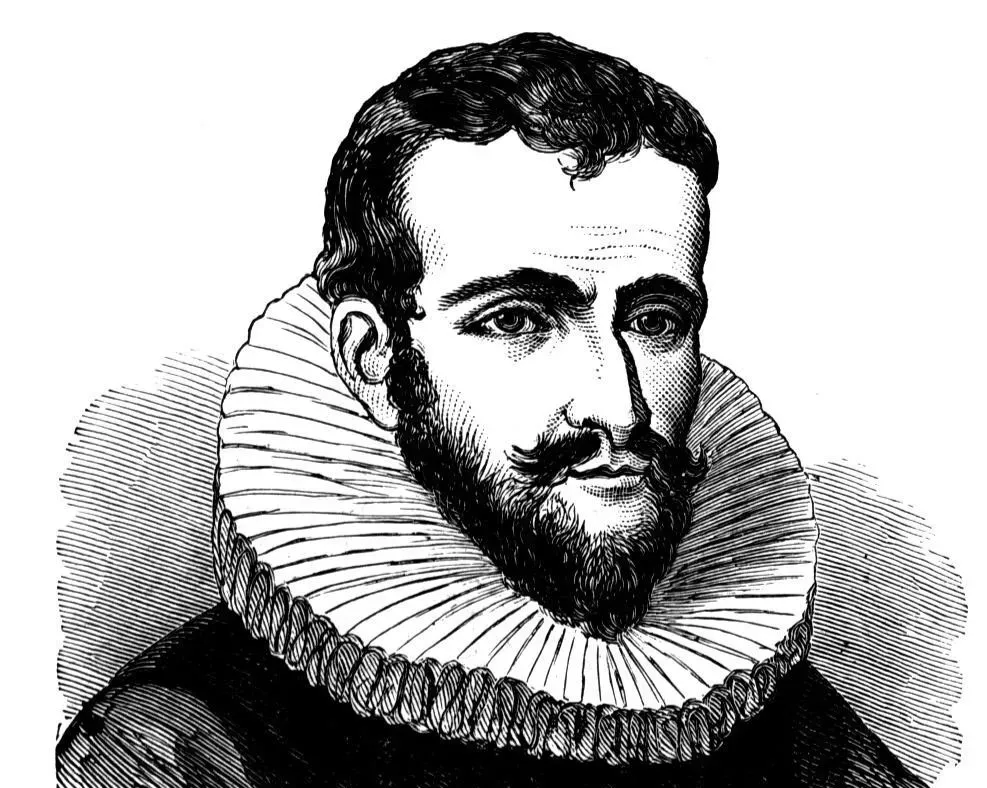
Henry Hudson gave his name to one of North America’s greatest rivers and one of its largest bays. His end, however, was neither grand nor glorious. In 1610, Hudson set sail on his ship, Discovery, never knowing he was not to return. Nearly two months later, after several quarrels among the crew, a riot resulted in Hudson, his son John, and eight loyal crew members being abandoned to a small boat near the Digges Islands.
The explorer who gave his name to the famed river and the bay endured a brutal mutiny in 1611 after his ship got trapped in ice. His crew set him, his son, and a few loyal men adrift in a small boat. They drifted off into the freezing bay, never to be seen again. There was no wreckage, no journal, no survivors. Only silence on that freezing, iron-gray water.
His fate remains uncertain; he may have perished, but Indigenous oral traditions point to the likelihood that he was taken in by local communities. Whether he died of exposure or found shelter among the people of the land, nobody truly knows. Hudson’s story is a grim reminder that exploration was often as much about surviving your own crew as surviving the wilderness.
6. Michael Rockefeller: Heir to a Fortune, Lost in New Guinea

Here is a story that reads like something between a thriller novel and a tragic cautionary tale. Michael Rockefeller was born into the fabulously wealthy Rockefeller family, but unlike his predecessors, he eschewed the worlds of business and politics and opted instead for a life of adventure. The great-grandson of John D. Rockefeller, aspiring explorer and ethnographer Michael Rockefeller had no interest in managing his family’s empire upon graduating from Harvard in 1960. Instead, he set out for the remote wilds of Dutch New Guinea to collect art made by the largely uncontacted Asmat people.
On November 17, 1961, Rockefeller and Dutch anthropologist René Wassing were in a 40-foot dugout canoe about 3 nautical miles from shore when their double pontoon boat was swamped and overturned. Their two local guides swam for help, but it was slow in coming. After drifting for some time, early on November 19, Rockefeller said to Wassing: “I think I can make it.” He was never seen again.
In 2014, Carl Hoffman published a book that included details from the official inquest into the disappearance, in which villagers and tribal elders stated that Rockefeller had been killed and eaten, after swimming to shore in 1961. No remains of Rockefeller or physical proof of his death have been discovered. The official Dutch government ruling listed drowning as the cause of death, but the question of what truly happened to this young man has never been fully put to rest.
7. George Mallory and Sandy Irvine: Did They Summit Everest First?
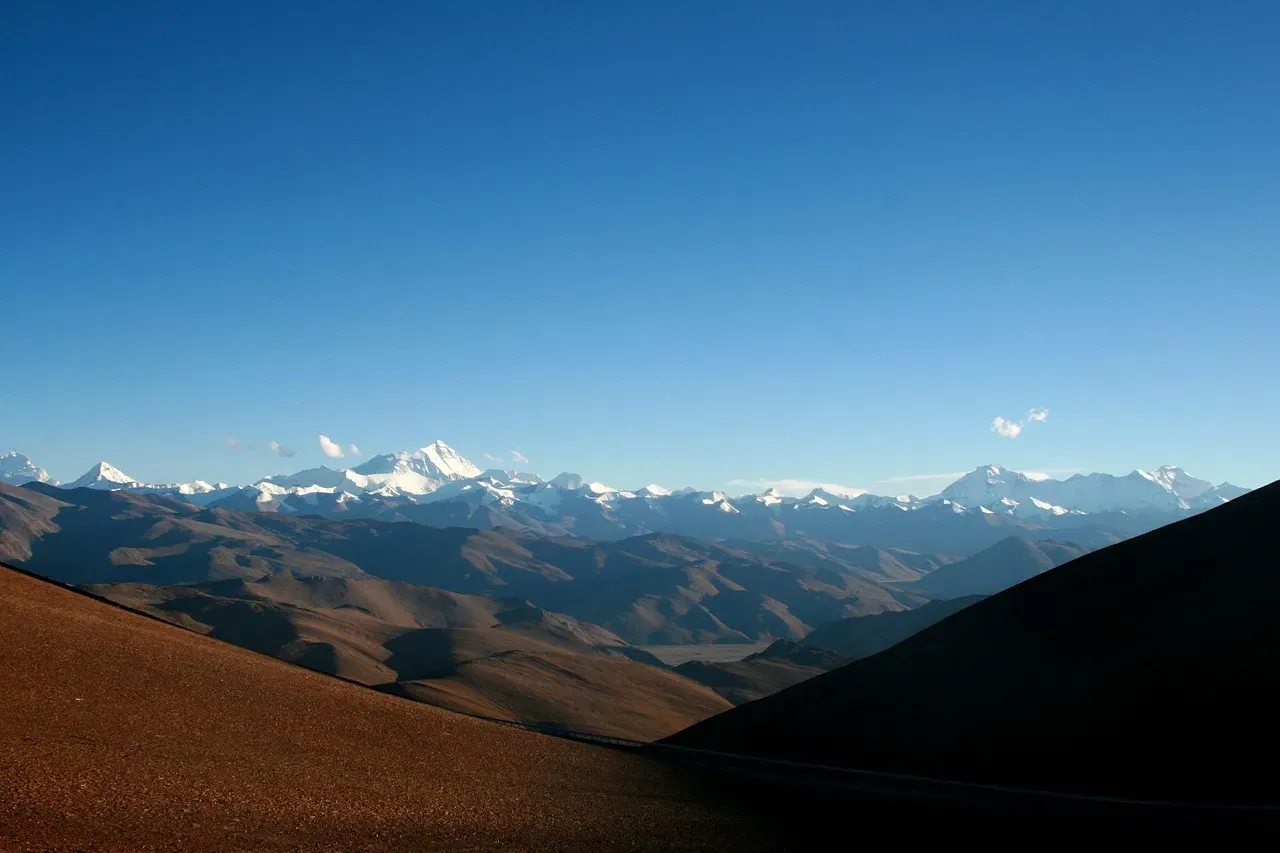
Few unsolved mysteries in exploration carry as much weight as this one. The hopes of the world’s mountain-climbing community were pinned on George Leigh Mallory when he began his third attempt to reach the summit of Mount Everest in April 1924. The handsome English climber had reached 27,235 feet on a 1922 expedition. This time, he intended to make it to the top. On June 8, Mallory and his young companion, Sandy Irvine, set out on what they hoped would be the final sprint.
A fellow climber spotted them, two black spots, about 800 vertical feet below the summit. Then a snow squall closed in, and the climbers disappeared. Whether Mallory was on his way up to the summit or was coming down from a successful ascent is unknown. If he did reach the peak, he would have beaten Edmund Hillary, who has been lauded for being the first man to reach the summit since his successful ascent in 1953. The world may never know.
Mallory’s body was not recovered for 75 years. In 1999, climber Conrad Anker discovered Mallory’s frozen corpse at 26,760 feet on the mountain’s north face. A century later, a boot containing Irvine’s foot was discovered on the slopes of the mountain. Irvine’s body and, crucially, the camera he was carrying have never been found. That camera could answer the question once and for all.
8. Jean-François de Lapérouse: France’s Greatest Maritime Mystery
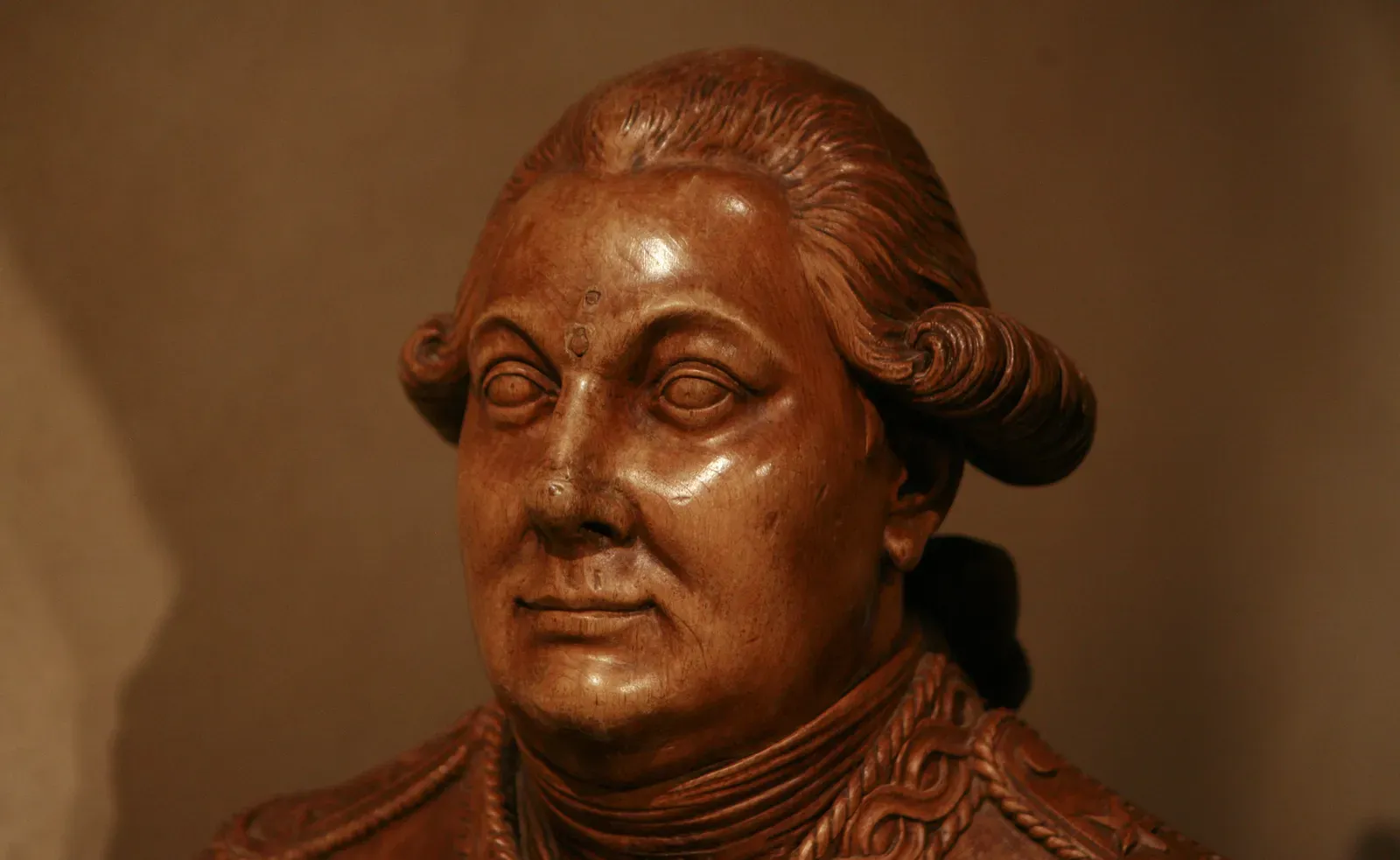
Jean-François de Galaup, better known as the comte de Lapérouse, was France’s most celebrated explorer in the late 18th century. In 1788, he vanished along with his entire crew during a grand voyage of discovery in the Pacific. His two ships, the Astrolabe and Boussole, had been tasked with charting unknown lands and opening new trade routes. It was an enormous mission of national prestige, and it ended in complete silence.
Their disappearance was considered a national tragedy in France and several rescue missions could not find a trace of what had happened to them. Even King Louis XVI, on the day of his execution, was reported to have asked his captors on the way to the guillotine if there was any news of Lapérouse. That detail tells you something profound about how deeply his fate haunted his country.
Decades later, tantalizing clues emerged: wreckage and relics were found on Vanikoro Island, suggesting a devastating storm had dashed the ships on the reef. Human remains and European artifacts confirmed the crew’s struggle to survive, but questions linger about exactly what befell them in their final days. Lapérouse’s tragic story is often called “France’s Titanic,” a mystery that endures in the annals of maritime history.
9. Ludwig Leichhardt: Australia’s Vanished Prince of Explorers
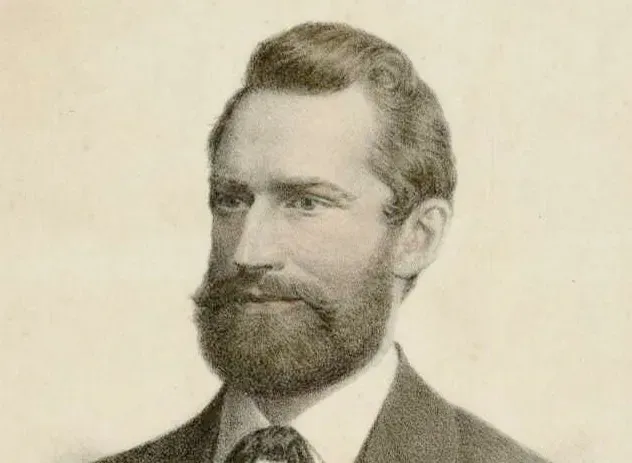
Ludwig Leichhardt was a German explorer who embarked on an ambitious expedition across Australia in 1848. His goal was to traverse the continent from east to west. Leichhardt and his team , sparking one of Australia’s greatest mysteries. Think of it like stepping into the Australian desert with a small group of people and simply ceasing to exist. No signal fire. No remains. Nothing.
Leichhardt’s final and most ambitious expedition included seven men, 50 head of cattle, 20 mules, seven horses, and sufficient supplies. He intended to cross the Australian desert from east to west. The expedition never reached its destination. The only trace found of the trip was a small plaque bearing Leichhardt’s name, allegedly attached to his rifle. Later, trees marked with an “L,” a custom by which the explorer marked his routes, were found, but nothing more.
Searches over the years have yielded few clues, such as a marked tree and scattered artifacts. Theories about his fate include death from natural elements, encounters with indigenous peoples, or internal conflict. Leichhardt’s disappearance remains an enigma of exploration history. It is hard to say for sure, but the sheer absence of evidence across such a massive continental search is both baffling and deeply unsettling.
10. The Corte-Real Brothers: Two Brothers, Two Expeditions, Zero Answers
This one is almost poetic in its tragedy, and honestly, it is the kind of story that sounds too strange to be real. The story of Gaspar and Miguel Corte-Real is a haunting chapter in the early history of North American exploration. Gaspar set sail from Portugal in 1501, aiming to chart the mysterious lands of Newfoundland. He was never heard from again. Driven by loyalty and hope, his brother Miguel embarked on a rescue mission the following year, only to vanish himself.
Upon learning of his brother’s disappearance, Miguel mounted an expedition to rescue him in 1502, but that expedition vanished as well. What became of the two brothers remains unknown to this day. Theories abound: some suggest they were captured or killed by indigenous peoples; others believe they may have been lost to the treacherous North Atlantic storms. Two brothers, two ships, two expeditions, and not a single survivor to tell any part of the tale.
In 1912, Edmund B. Delabarre put forth an interesting hypothesis. He claimed that the unusual petroglyphs found on Dighton Rock in what is now Massachusetts were, in fact, abbreviated Latin, and that, when translated, they read: “I, Miguel Corte-Real, 1511. In this place, by the will of God, I became a chief of the Indians.” If the translation is accurate, that would mean Miguel Corte-Real survived his expedition by at least nine years. Other scholars have refuted this claim, but it remains a popular theory. Imagine surviving a shipwreck in the North Atlantic, making it to an unknown shore, and rising to lead a group of people who had never seen a European before. Whether true or not, it is a story worth sitting with.
Conclusion: The Blank Spaces on the Map
What connects all ten of these explorers is something far deeper than their mysterious fates. Each of them was pulled toward the unknown with a force so powerful that no map, no warning, and no fear could hold them back. They did not disappear because they were careless. They disappeared because they pushed further than anyone else dared.
The jungle swallowed Fawcett. The Pacific swallowed Earhart. The Arctic ice claimed Franklin and all 129 of his men. The Barents Sea took Amundsen in a cruel twist of irony, as one of humanity’s greatest explorers died trying to rescue someone else. These are not footnotes in history. They are the loudest chapters, precisely because they have no ending.
What strikes you most is how many of these mysteries remain genuinely unsolved even in 2026, with satellite imaging, underwater drones, and DNA analysis all at our disposal. Some corners of the world, and some moments in time, simply refuse to give up their secrets. What would you have done, faced with the same blank space on the map? Would you have turned back, or pushed forward?