You’d think changing the world was a grown-up’s game. But history keeps proving otherwise. From ancient Egypt to modern climate strikes, have led armies, defied empires, scored perfect tens, and changed the course of civil rights. Honestly, some of their stories are so outrageous they barely sound real.
What makes a teenager historically influential? It’s more than a viral moment. It’s leaving a permanent fingerprint on civilization before most people have even figured out who they are. Let’s dive in.
1. Joan of Arc – The Teenage Warrior Who Saved France
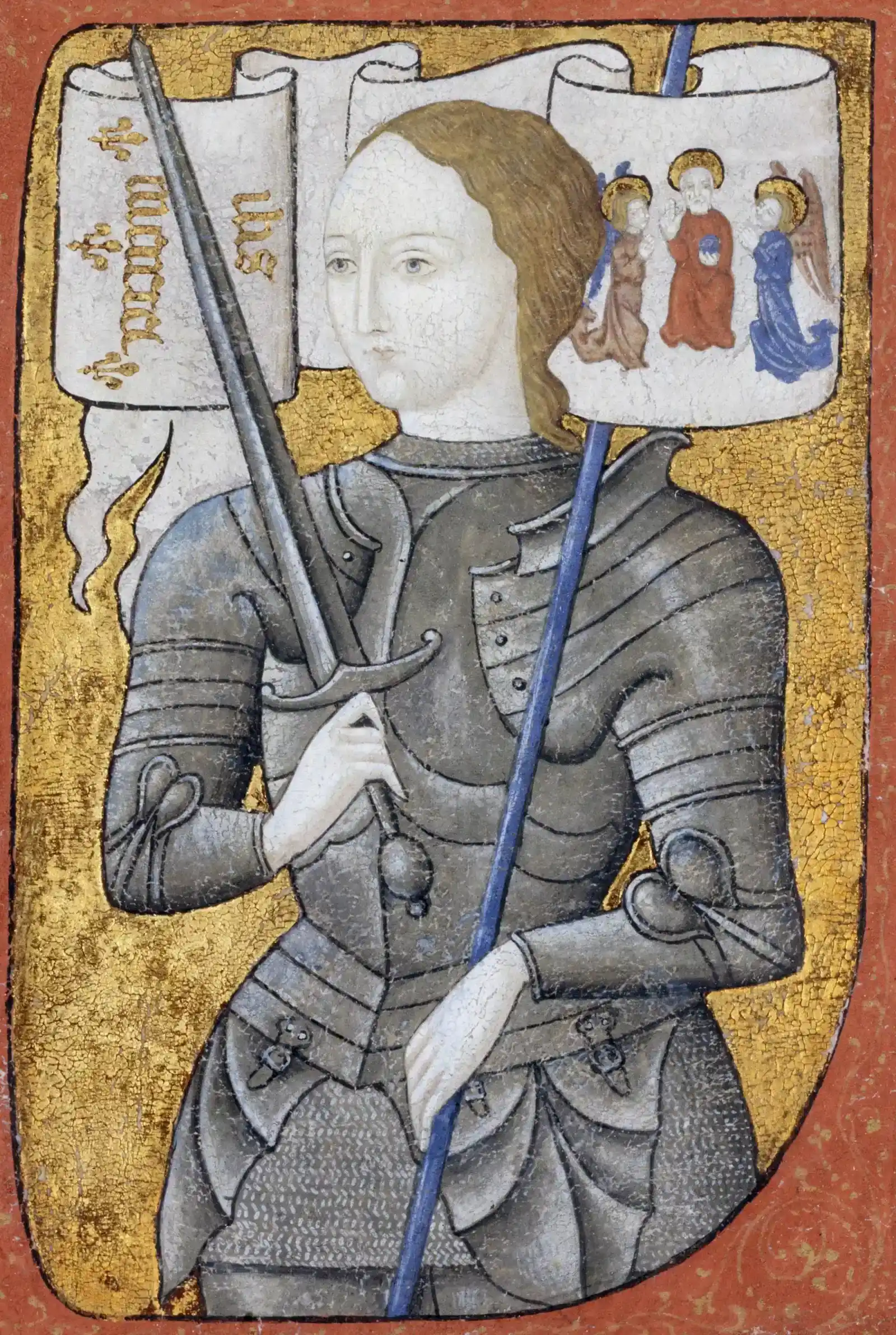
Colour-graded to reveal more detail using GIMP software “curves” tool, Public domain)
At age 16 or 17, believing she was on a mission from God but having no military experience, Joan of Arc led the French army in a major victory against the English at Orléans during the Hundred Years’ War and helped make it possible for Charles VII to regain the kingdom in 1429. That’s not a small thing. That’s a peasant girl reshaping a nation at an age when most kids are worrying about chores.
Joan was not only a woman but a teenage woman without any military experience or professional training in leadership. Yet she became a symbol of national resistance. Though remembered as a fearless warrior, Joan never actually fought in battle or killed an opponent. Instead, she would accompany her men as a sort of inspirational mascot, brandishing her banner in place of a weapon.
Joan of Arc was captured by the English in 1430 and burned at the stake in 1431. She became a French national hero and was, at long last, canonized in 1920, becoming Saint Joan of Arc. The execution couldn’t erase what she had built. It only made her legend grow.
2. King Tutankhamun – The Boy Who Ruled an Empire
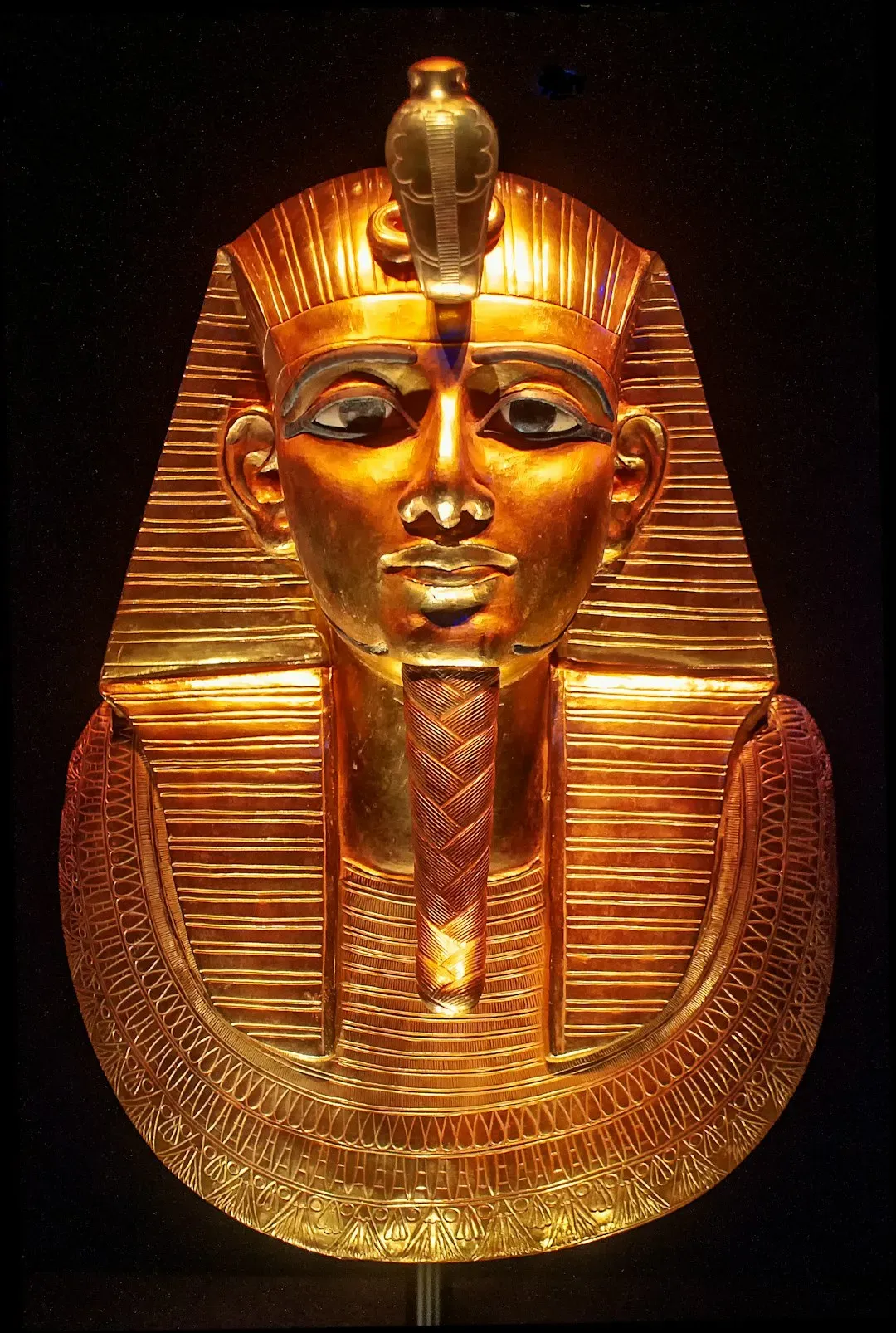
Born around 1343 BCE, Tutankhamun made history as the youngest known monarch to preside over the ancient Egyptian empire. Think about what that actually means. An eight-year-old boy, sitting on the most powerful throne in the ancient world. That image is almost too surreal to process.
The decision to change the state religion was extremely controversial and not well received by the public, and was quickly reversed after King Tut ascended to the throne. The teenage pharaoh effectively restored national order by undoing his father Akhenaten’s radical religious reforms. The Egypt that Tutankhamun inherited was torn apart by religious strife, afflicted by social and economic unrest, and faced a complete collapse of its imperial power abroad.
Of the 62 known tombs in the Valley of the Kings, only Tutankhamun’s remained mostly intact. Although thieves entered the tomb in ancient times, they took only small items and left many treasures behind. The 1922 discovery of his tomb launched global fascination with ancient Egypt and continues to inspire scholars and dreamers today.
3. Alexander the Great – Destined for Greatness Before Adulthood
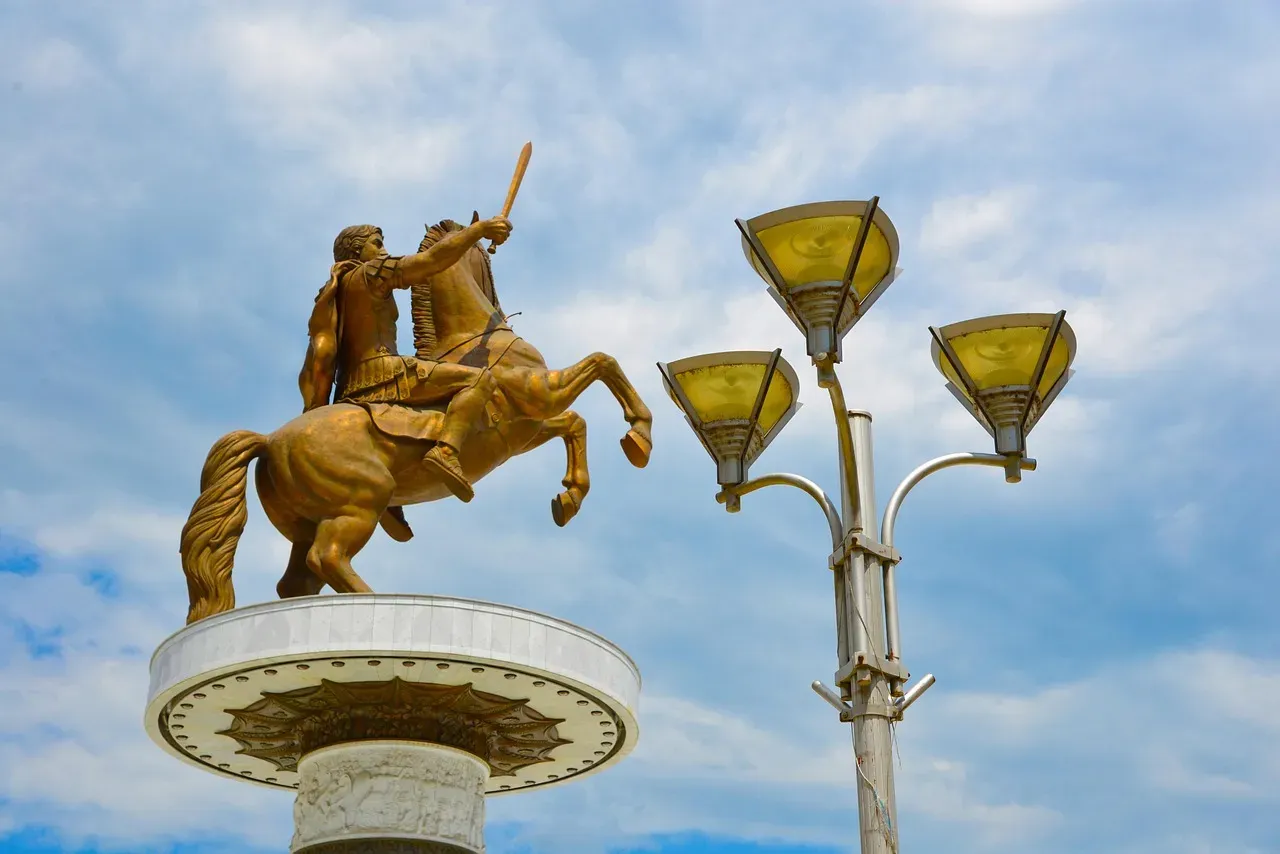
Alexander the Great was already a skilled military commander in his teens, tutored by Aristotle and destined for greatness. By his early twenties, he had conquered most of the known world, stretching his empire from Greece to India. What’s easy to forget is how much of the foundation for that conquest was built during his teen years.
Alexander was already well on the way to becoming ‘great’ by the time he turned 16. Without a doubt, he was one of the most remarkable in human history. He wasn’t just born lucky. He trained relentlessly, studied under the greatest philosopher of the ancient world, and seized every military opportunity that came his way.
Alexander’s ambition and tactical brilliance are legendary, and his campaigns are still studied in military academies around the globe. His youth did not stop him from making bold decisions that changed history. He founded cities, spread Greek culture, and became a mythic figure before his death at 32.
4. Malala Yousafzai – Shot for Going to School, Won the Nobel Prize
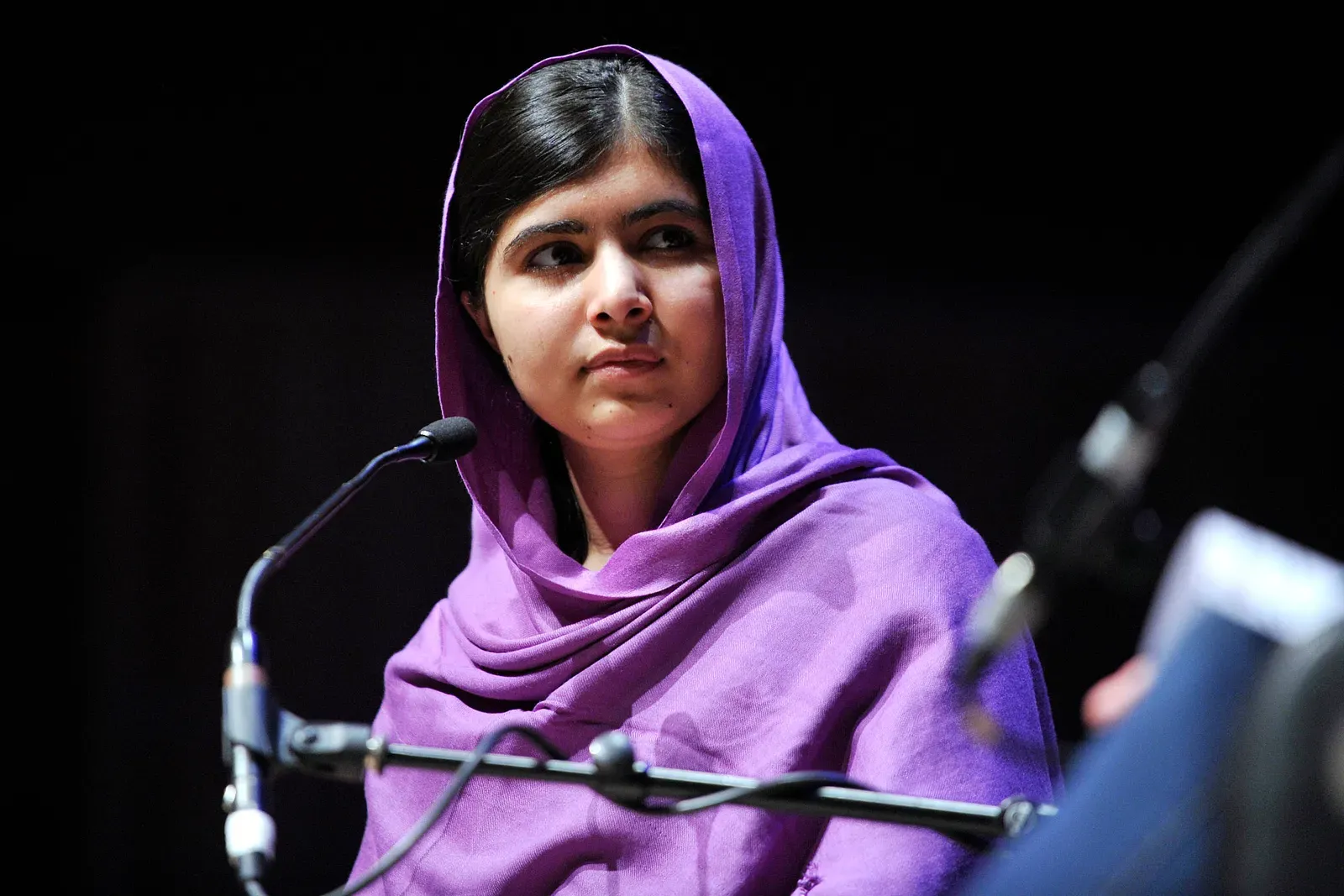
On the morning of October 9, 2012, 15-year-old Malala Yousafzai was shot by the Taliban. Seated on a bus heading home from school, Malala was talking with her friends about schoolwork. Two members of the Taliban stopped the bus. A young bearded Talib asked for Malala by name, and fired three shots at her. She survived. The Taliban did not silence her.
She is the youngest Nobel Prize laureate in history, receiving the Peace Prize in 2014 at age 17, and is the second Pakistani and the only Pashtun to receive a Nobel Prize. Her courage is the kind of thing that makes you sit back and just think for a moment.
On July 12, 2013, her 16th birthday, Malala visited New York and spoke at the United Nations. The Malala Fund helps to provide schooling for girls in Pakistan, Nigeria, Jordan and Kenya. From a bullet to the United Nations podium, her story is one of the most remarkable of the modern era.
5. Claudette Colvin – The Teenager Before Rosa Parks
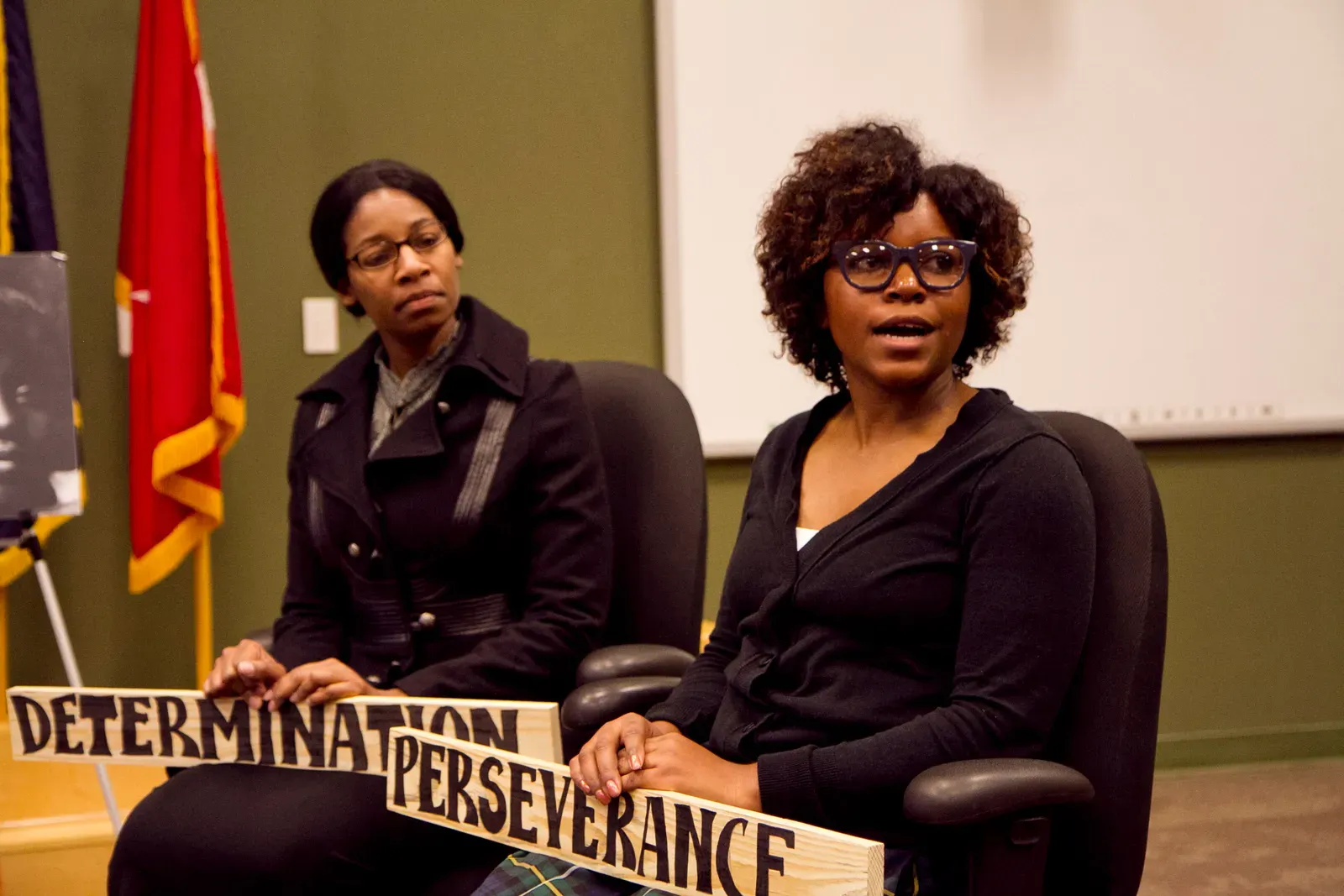
Let’s be real, this is a name far too many people still don’t know. Nine months before Rosa Parks’ famous arrest, 15-year-old Claudette Colvin stood up against segregation in Alabama by refusing to give up her seat on a bus in Montgomery. She was a teenager who had probably just finished reading about her constitutional rights in class.
She was arrested, and a year later was one of the original plaintiffs in Browder v. Gayle, a case that led the U.S. Supreme Court to declare bus segregation laws in Alabama and Montgomery unconstitutional. That is a legal landmark. A teenager helped bring it about.
Beyond a few small stories in the local media, her case remained largely unknown, especially after Parks made her famous act of defiance less than a year later. Much of this was due to Colvin’s young age, but it was also due to her own modesty. History was slow to credit her. Slowly but surely, it is now correcting that mistake.
6. Nadia Comaneci – A Perfect Score the Scoreboard Couldn’t Handle

It’s one of the most iconic photographs in the history of sports: a beaming Nadia Comaneci stands with her arms aloft beside an electronic scoreboard. The scoreboard reads that she scored 1.00 for her gymnastics routine. In fact, she had scored 10.00. However, the organizers of the Olympic Games had told the company that made the scoreboards not to bother making the displays more than three digits. After all, it was simply assumed that a perfect 10.00 would be impossible to achieve.
At just 14 years of age, Comaneci proved them wrong, and made history in the process. It was at the 1976 Summer Olympics in Montreal that the Romanian teenager wrote her name into the history books. The world had declared perfection impossible. She just didn’t get the memo.
Comaneci remains the youngest-ever athlete to win the all-round Olympic title, taking Gold at the age of 14. It’s unlikely this honor will ever be taken away from her – now a gymnast needs to be at least 16 years old to compete in the Olympic Games. The rules literally changed partly because of what she demonstrated.
7. Bobby Fischer – The Youngest Chess Grandmaster in History
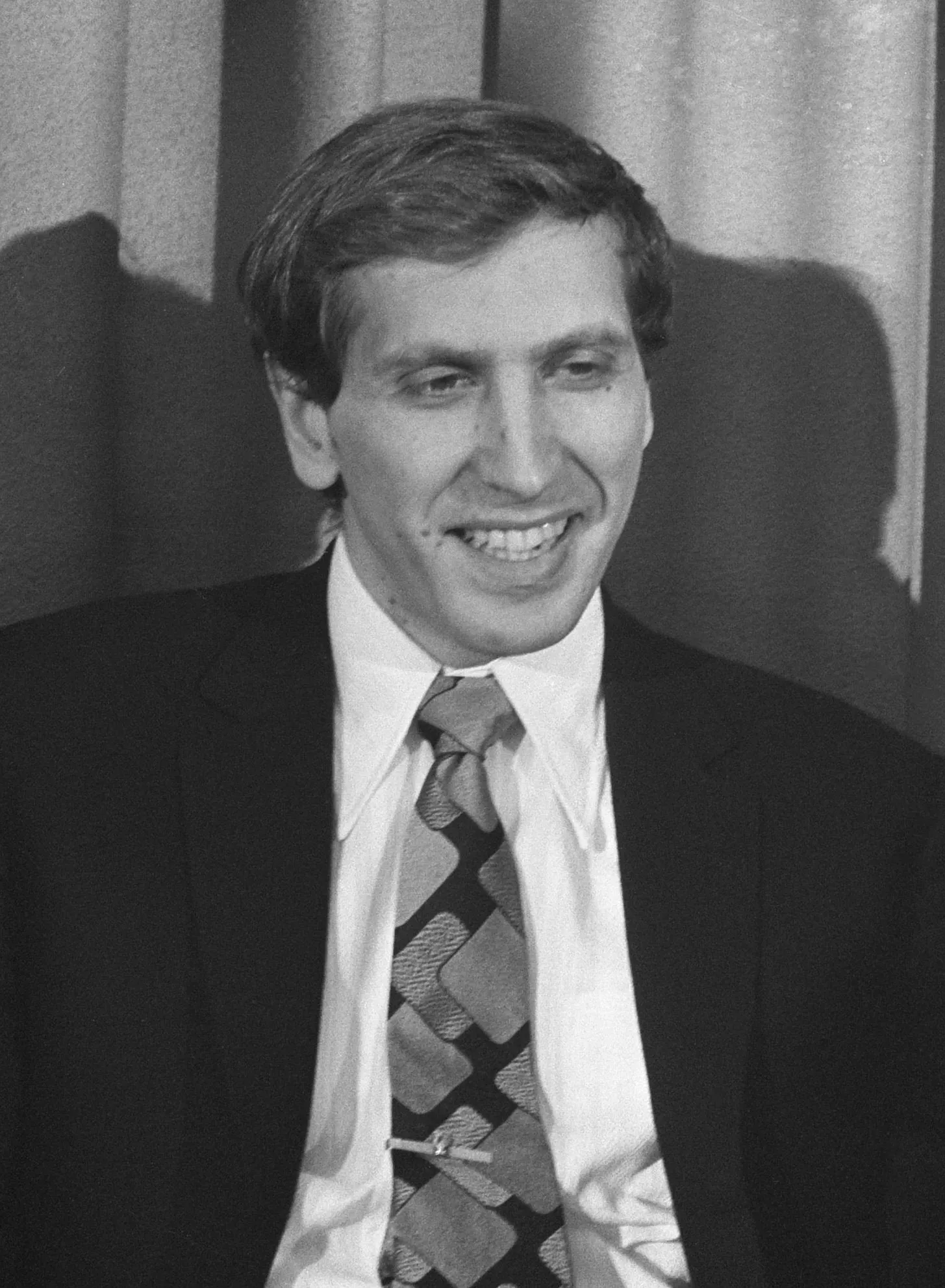
In 1958, at age 15, Bobby Fischer became the youngest chess player in history to be named grandmaster, the highest title possible. Chess had been dominated by Soviet players for decades, and here came this American teenager, all elbows and arrogance, dismantling them one by one.
Fischer’s genius was almost unsettling. He memorized thousands of games, studied openings obsessively, and defeated opponents who had spent decades at the board. His mind worked at a frequency most grandmasters simply couldn’t match. It’s hard to say for sure what drove him, but whatever it was, it produced one of the most electrifying chess careers ever seen.
His 1972 World Chess Championship match against Boris Spassky became a Cold War spectacle watched by millions around the globe. That moment started in a teenager’s obsessive study sessions years before. He demonstrated that one young mind, with enough dedication, could carry the symbolic weight of an entire nation.
8. Sybil Ludington – The Rider History Forgot
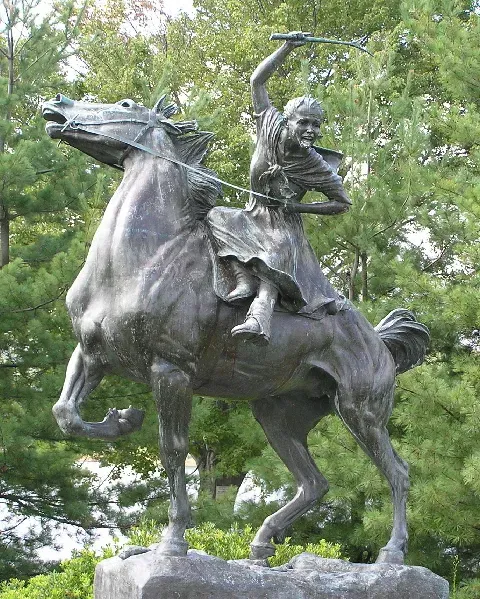
first upload in en wikipedia on 20:08, 23 April 2006 by Anthony22 (I took this photograph of the statue of Sybil Ludington on Gleneida Avenue in Carmel, New York. GFDL-self – GNU Free Documentation License), Public domain)
Sybil Ludington was just 16 when she rode 40 miles through the night to alert colonial forces of a British attack, covering twice the distance of Paul Revere. Twice the distance. In the dark. Through rain. On a horse. At sixteen. Yet somehow, Revere became the household name and Ludington became a footnote.
Her ride rallied hundreds of militia members and played a key part in defending American territory. Despite her heroic actions, Sybil’s story was overshadowed for centuries, but recent scholarship has restored her place in history. It took historians and educators a remarkably long time to give her the credit she deserved.
Monuments and reenactments now honor her bravery, and her story is taught in schools as an example of young women’s contributions to American independence. Sybil’s determination and endurance under pressure remain inspiring to this day. Her ride is a reminder that history is full of unsung young heroes.
9. Greta Thunberg – The Climate Strike That Started With One Girl

Fifteen-year-old Greta Thunberg decided she couldn’t wait any longer – politicians had to do something to save the environment. Instead of returning to school, Greta took a placard and went on strike in front of Sweden’s parliament building. Greta’s protest began the Fridays for Future – or School Strike 4 Climate – movement, which millions have now joined around the world.
She was nominated for the Nobel Peace Prize and named Time Magazine’s Person of the Year in 2019. Greta’s activism shifted the conversation around climate change, giving a new sense of urgency and mobilizing young people everywhere. It is genuinely remarkable what one teenage girl with a cardboard sign managed to set in motion.
Greta Thunberg became the youngest person to ever be named Person of the Year by Time Magazine. Whether you agree with her methods or not, her impact on global climate discourse is undeniable. She made world leaders uncomfortable, which is arguably exactly what the moment called for.
10. Anne Frank – A Diary That Outlived an Atrocity
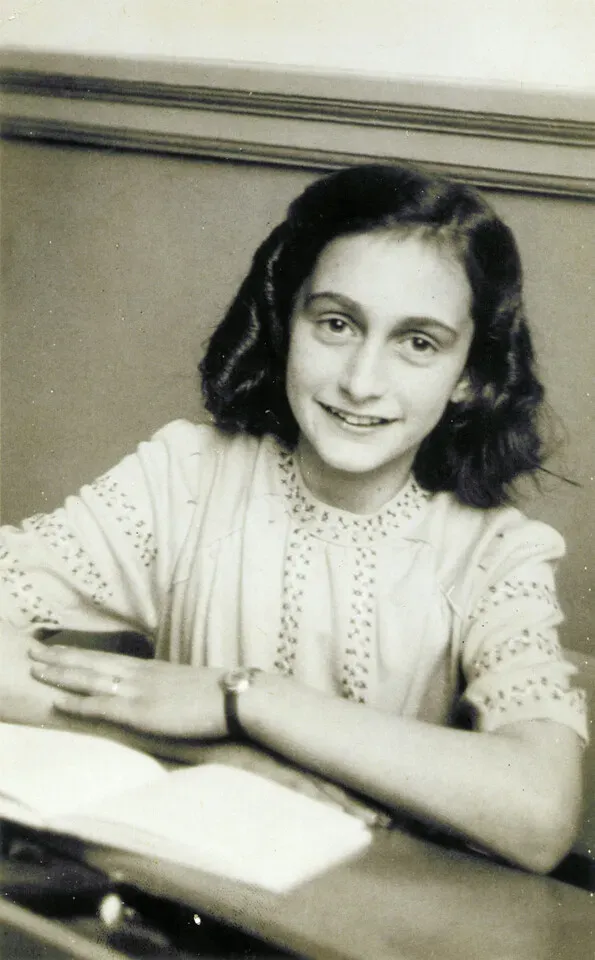
Perhaps the most famous diary ever written, her book was published after Anne Frank’s death in a concentration camp during World War II. Anne Frank was thirteen when she first began writing in the red-checkered diary she received for her birthday. She was fifteen when the diary effectively ended. She was sixteen when she died in Bergen-Belsen in early 1945.
Anne Frank was the young Dutch diarist who wrote of her life during World War II as she and her family hid from the Nazis for 25 months until their eventual capture. Twenty-five months of hiding. Her words during that time captured the inner life of a brilliant, funny, fiercely curious teenager, which made the horror all the more human and all the more devastating.
Her diary has since been translated into more than 70 languages and is one of the best-selling books in history. The United States Holocaust Memorial Museum calls it one of the most important documents of the 20th century. Anne Frank didn’t set out to change the world. She just wrote down what she thought and felt. Somehow, that was more than enough.
What’s perhaps the most striking thing about this entire gallery is not the individual achievements. It’s the pattern. Over and over again, across centuries and continents, young people looked at an impossible situation and decided that their age was not a reason to stay silent. Every name here belongs to someone who had every excuse to do nothing. None of them took it.
Which of these stories surprised you most? Share your thoughts in the comments below.