Adapting a novel for the screen always means cutting something, but every so often a filmmaker does more than trim. Endings get rewritten, characters get killed off or saved, and the entire meaning of a story can shift in the space between the last page and the closing credits. Some of these changes came from studio pressure, some from a director’s personal vision, and a few because the book’s twist simply wouldn’t have worked on camera.
Forrest Gump turns a bittersweet parting into a lasting goodbye
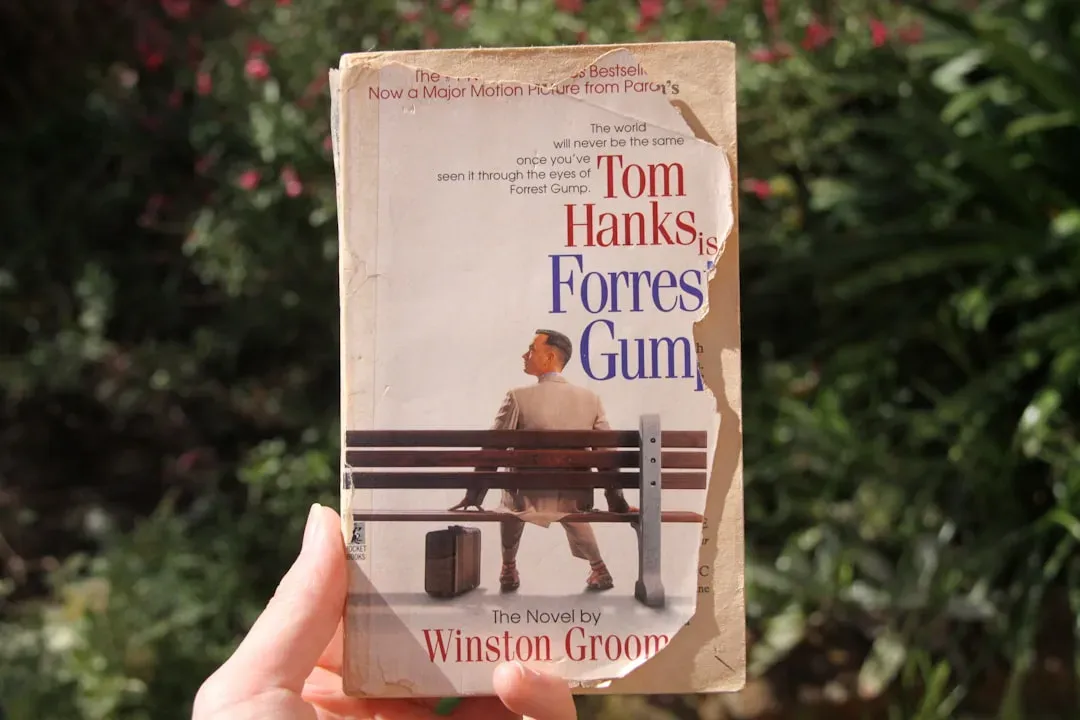
Winston Groom’s 1986 novel follows a version of Forrest who smokes marijuana, spends time in a mental hospital, and even becomes an astronaut alongside an orangutan named Sue. The book strips away much of the sentimentality that made the film iconic, and its final act sends Jenny off in a very different direction. In Groom’s novel, Jenny runs off with another man and takes Forrest’s son away from him, while the 1994 movie’s conclusion has Forrest raising his son himself.
That single change reshaped the entire emotional core of the story. In the book, Forrest doesn’t marry Jenny, and she doesn’t die of AIDS or anything else. The film’s decision to have Jenny return, marry Forrest, and then pass away gave audiences the tearful closure the novel never intended to provide, turning a wandering picaresque tale into a love story with a defined ending.
I Am Legend flips the hero into the villain, then backs away from it

Richard Matheson’s 1954 novel ends with Robert Neville realizing that the infected creatures he has been hunting are not mindless monsters but an emerging society that fears him the way people once feared vampires. The theatrical cut instead gave audiences a more traditional Hollywood ending, where the hemocytes remain mindless savage zombies and Robert dies a hero after discovering a cure for the virus. That swap removed the entire point of the title.
Warner Bros. did film an alternate ending closer to Matheson’s vision, but it never made it to theaters after poor test screenings. In that version, Neville returns a female test subject to the creatures once he realizes their leader only wanted to rescue his partner, and Neville figures out that he is the actual monster in their eyes. Even the film’s own director has since said he wishes that ending had stuck.
World War Z abandons its source material almost entirely

Max Brooks structured his 2006 novel as a global oral history, with dozens of survivors recounting the war years after the fact. The book is compiled by a United Nations investigator ten years after humanity’s near-extinction at the hands of a zombie pandemic, and no single character drives the story. The 2013 film scrapped that entire approach.
The 2013 film significantly changes the narrative structure of the novel and the role of the character Gerry Lane, who served as a narrator and chronicler in the book but becomes the personal hero racing to save humanity in the movie. Even the ending was reworked at the last minute. The movie’s original ending was closer to the book but was revised due to negative feedback from early screenings, leaving the final cut with almost nothing recognizable from Brooks’s pages beyond the title.
The Mist trades a sliver of hope for a gut punch

Stephen King’s 1980 novella ends with protagonist David Drayton and his surviving companions driving blindly through the fog, catching a faint radio signal that might mean rescue. The novella ends with David catching a possible word through radio static, whispering “Hartford” and “hope” to his son, while Darabont changed the ending to have Drayton shoot his son and three other survivors in a short-sighted suicide pact. It remains one of the bleakest rewrites in modern horror cinema.
What makes this change unusual is that King himself approved of it. The novella ends on a more hopeful, open-ended note with the protagonist picking up a radio signal, whereas Darabont’s adaptation is much bleaker, and King has said he prefers Frank Darabont’s film ending. Darabont felt the book’s ambiguity, which reads powerfully on the page, would have felt unsatisfying on screen.
Partner offer
Starship Troopers turns a sincere war novel into biting satire

Robert Heinlein’s 1959 novel is a philosophical defense of military service and civic duty, built around lengthy discussions of morality and citizenship rather than combat. Paul Verhoeven’s 1997 film kept the names and the giant alien bugs but discarded the message completely. Some critics still mistake the film for genuine pro-military propaganda when it is in fact tongue-in-cheek satire, and the confusion makes more sense once you know the book has a far more sincere pro-military message.
Verhoeven wasn’t shy about why he made the change. After licensing the rights to the book, Verhoeven tried unsuccessfully to read it, disliked the novel, gave up, and decided to turn the work into a gory punchline once he learned about its fascist tendencies. The result is a film that uses the source material’s own plot as a weapon against its politics, something readers of the novel rarely see coming.
The Shining removes Jack’s redemption and burns down a different building

In Stephen King’s 1977 novel, Jack Torrance briefly breaks free from the hotel’s influence long enough to warn his son Danny before dying when the Overlook’s faulty boiler explodes, taking the entire building with it. Stanley Kubrick’s 1980 film gives Jack no such redemption arc. Instead, he chases Danny through a hedge maze that doesn’t even exist in the book, where King described topiary animals instead, and freezes to death while the hotel remains standing. Kubrick also stripped out most of the novel’s supernatural backstory and Jack’s personal history of alcoholism and abuse, focusing instead on ambiguous psychological horror. King was famously unhappy with these changes for years, arguing that Kubrick had turned a story about addiction and family into something colder and more detached. The two versions share a title and a haunted hotel, but very little else about how the danger unfolds or resolves.
Stardust rewrites the fate of its two lovers

Neil Gaiman’s 2006 novel sends Tristran and Yvaine on a journey that ends quietly rather than triumphantly. In the book, Tristran never becomes king of Stormhold, and after his death Yvaine, unable to return to the sky as a star, spends the rest of her long life ruling their small village alone. The witch queen Lamia is never definitively destroyed either, and the novel leaves several threads deliberately unresolved. The 2007 film directed by Matthew Vaughn gave audiences a far more conventional payoff. Tristan defeats the witch queen outright, ascends to the throne of Stormhold, and rides off with Yvaine for what the movie frames as a permanent happy ending. It’s a classic case of a studio fantasy film smoothing over a novel’s melancholy final chapters in favor of something audiences could leave the theater feeling good about.
Jaws changes how the shark dies and who survives the cage
Peter Benchley’s 1974 novel is as much a small town drama about infidelity and financial pressure as it is a monster story, and its climax plays out differently than the one audiences remember from Steven Spielberg’s film. In the book, Matt Hooper is killed by the shark while trapped inside the diving cage, a death the movie never includes. Spielberg let Hooper survive, escaping the cage moments before disaster. The shark’s death was rewritten too. In the novel, the great white simply dies from its accumulated harpoon wounds and sinks beneath the waves, an anticlimactic finish for a creature that terrorized an entire town. The film gave it a far more explosive send off, with Brody firing a rifle into a tank of compressed air lodged in the shark’s mouth, a moment that became one of the most quoted scenes in movie history despite having no equivalent on the page.
Blade Runner discards the source novel’s religion and family life
Philip K. Dick’s 1968 novel “Do Androids Dream of Electric Sheep?” surrounds Rick Deckard with a wife, a religious movement called Mercerism built around a shared empathy box, and a culture obsessed with owning real animals as status symbols. Ridley Scott’s 1982 film cut almost all of that away, leaving a leaner, more atmospheric detective story. Deckard’s marriage disappears entirely, and Mercerism is never mentioned. The ending diverges just as sharply. In the book, Deckard retires the replicants, returns home uncertain about his own humanity, and the story closes on a quiet, unresolved note about authenticity and empathy. The film instead builds toward Roy Batty’s dying monologue and sends Deckard off with Rachael, while adding the now famous ambiguity, absent from Dick’s text, about whether Deckard might be a replicant himself.
Practical Magic invents a supernatural showdown the book never had

Alice Hoffman’s 1995 novel is a quieter, more introspective story about two sisters, Sally and Gillian Owens, learning to live with a family curse and the weight of generations of judgment from their small town. Much of the book’s tension comes from internal reflection rather than external threat, and its darker moments are handled with restraint. The 1998 film adaptation needed a bigger climax for the screen. The movie invents an extended exorcism sequence, with the town’s women banding together to expel the spirit of Gillian’s abusive, resurrected boyfriend from her body, complete with visual effects and a group ritual that has no direct equivalent in Hoffman’s original text. It’s a purely cinematic addition designed to give the story a clear villain and a dramatic set piece, elements the more meditative novel never really needed.
Across every one of these examples, the pattern is the same. A novel’s ending or internal logic gets sanded down, sharpened, or reversed once a studio, director, or test audience gets involved, and the result is often a film that shares a title with its source material while telling an almost entirely different story underneath.Partner offer
Planning a trip to Vegas?
Compare hotel rates and show tickets on VEGAS.com.