Winning Best Picture is supposed to guarantee a movie a permanent spot in the cultural conversation, yet history tells a messier story. Some Oscar winners fade quietly into the archives, remembered mostly as trivia answers rather than films people actually return to on a rainy Sunday afternoon. Tastes shift, storytelling styles age unevenly, and what wowed voters decades ago can feel stiff, slow, or even uncomfortable to modern eyes.
The ten films below all took home the industry’s top honor, yet none of them show up often on streaming queues, revival house calendars, or casual movie night lists. That doesn’t necessarily mean they’re bad. It often just means they were products of their moment in a way that hasn’t translated well to today’s viewing habits.
1. Cimarron (1931)

Cimarron holds a strange distinction as the first Western to win Best Picture, a feat it accomplished at the 4th Academy Awards. Cimarron was the first Western to win Best Picture, and would remain the only to do so until Dances With Wolves won in 1990. It swept multiple categories in its era, with Academy Awards for Best Picture, Best Adapted Screenplay, and Best Production Design all going home with the film.
Despite that early success, the movie has not aged gracefully. Among the early Oscar winners, Cimarron takes its place alongside those that are poorly remembered and rarely watched by modern audiences, and it is not generally regarded as a classic. Critics today point out that it is frequently cited on lists of the most undeserving Academy Award winners and is rightfully impugned for racist overtones and scattershot storytelling. Even its IMDb standing reflects the shift in perception, since it has the lowest score of any Best Picture winner according to that rating system.
2. The Broadway Melody (1929)
As one of the earliest sound films to win Best Picture, The Broadway Melody was a genuine novelty when it premiered, giving audiences their first real taste of a Hollywood musical with synchronized dialogue and song. It captured attention simply because the technology behind it was so new, not necessarily because its backstage romance plot was particularly gripping by later standards.
Modern critics have not been kind to it in retrospect. In fact, a recent list of the 10 worst Best Picture Oscar winners created by USA Today put The Broadway Melody in the top spot among all winners. The film’s creaky pacing, primitive production values, and reliance on a plot formula that would be endlessly recycled in later musicals make it feel more like a historical curiosity than something audiences seek out for entertainment today.
3. Cavalcade (1933)

Cavalcade told a sweeping, decades-spanning story of a British family living through major historical events, including the sinking of the Titanic and the outbreak of World War I. At the time, its ambition and technical polish impressed voters enough to earn it the top prize, along with recognition for its direction and art direction.
Today, the film is mostly absent from classic movie rotations, streaming platforms, or revival screenings. Its melodramatic tone and episodic structure, which once felt grand and important, now reads as dated and overly theatrical to contemporary viewers. Unlike other early Best Picture winners that still get occasional attention from classic film enthusiasts, Cavalcade rarely comes up even in serious discussions of 1930s cinema.
4. The Great Ziegfeld (1936)

Clocking in at roughly three hours, The Great Ziegfeld was a lavish biographical musical about Broadway impresario Florenz Ziegfeld. Its elaborate production numbers were considered spectacular for the era, and the film’s scale helped it stand out among the year’s Best Picture nominees.
The problem is that spectacle alone doesn’t guarantee staying power. The film’s length, loose narrative structure, and old-fashioned musical sequences make it a tough sit for modern audiences accustomed to tighter pacing. While it remains historically significant as an example of 1930s studio excess, it rarely gets pulled up for a casual rewatch outside of film history courses or award season retrospectives.
5. The Life of Emile Zola (1937)
This biographical drama about the French writer’s involvement in the Dreyfus Affair was praised in its day for tackling serious themes of justice and antisemitism, at least on the surface. It won Best Picture at a time when prestige dramas about historical figures were considered the gold standard of serious filmmaking.
Looking back, though, many critics and historians have noted that the film soft-pedaled the antisemitic core of the real Dreyfus Affair, choosing to downplay uncomfortable specifics in favor of a more palatable message. That historical vagueness, combined with a stiff, speech-heavy screenplay typical of the period, has left the film feeling more like an artifact than a living piece of drama audiences want to revisit.
6. The Greatest Show on Earth (1952)

Cecil B. DeMille’s circus epic was a massive commercial hit when it hit theaters, thrilling audiences with real circus footage, a star-studded cast, and a train wreck sequence that was considered a technical marvel. Its Best Picture win capped off a career built on grand, crowd-pleasing spectacle.
Modern film buffs, however, often single it out as one of the weaker choices in Oscar history, largely because of its thin plot and overstuffed subplots that feel more like a variety show stitched together than a cohesive film. It’s frequently mentioned in “worst Best Picture winners” conversations, and unlike DeMille’s other epics such as The Ten Commandments, it rarely earns a spot in classic movie marathons today.
7. Around the World in 80 Days (1956)

This globe-trotting adventure, based on the Jules Verne novel, was a box office phenomenon in its time, dazzling audiences with international location shooting and a parade of celebrity cameos. Its ambition and scope made it a natural Best Picture pick during an era when Hollywood loved rewarding big, sprawling productions.
At nearly three hours, though, the film’s episodic travelogue structure hasn’t held up well for viewers used to tighter storytelling. The cameo-heavy approach, which felt like a fun novelty in 1956, now feels more like a distraction than a strength. Outside of classic film circles, it’s rarely brought up as a must-watch, and even Verne enthusiasts often prefer other adaptations of his work.
8. Tom Jones (1963)
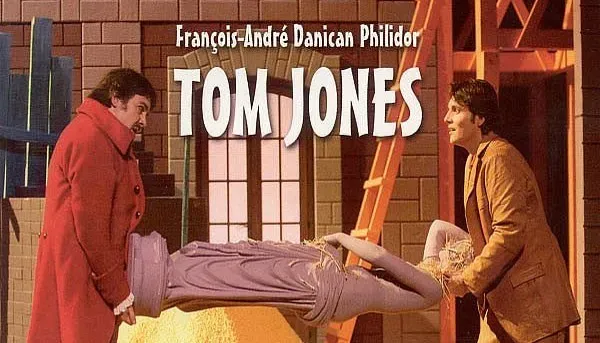
Tom Jones brought a playful, irreverent energy to period filmmaking, using unconventional techniques like direct address to the camera and rapid editing that felt fresh and modern for its time. It won Best Picture in an era when British cinema was experiencing a creative surge, and its cheeky tone stood out against more traditional costume dramas.
Decades later, that same playfulness can come across as dated and try-hard rather than groundbreaking. The film’s bawdy comedic style hasn’t aged as smoothly as other British films from the same period, and its once-innovative techniques now feel more like relics of a specific cinematic trend than lasting artistic choices. It’s a film more often studied than watched purely for enjoyment.
9. Oliver! (1968)

This musical adaptation of Charles Dickens’ Oliver Twist charmed audiences and voters alike with its memorable songs and elaborate production design, earning it the Best Picture trophy during a period when big-budget musicals frequently dominated the category. Its success helped cement the late 1960s as a golden era for movie musicals.
Yet compared to other musicals from the same stretch of years, Oliver! rarely gets the same nostalgic love. Its lengthy runtime and old-fashioned staging make it feel less accessible to younger audiences than contemporaries that still get regular revivals. While the songs remain recognizable, the film itself has slipped into a kind of quiet obscurity outside of dedicated musical theater fans.
10. Crash (2005)

Crash’s Best Picture win remains one of the most debated moments in Oscar history, largely because it beat out Brokeback Mountain, a film many considered the clear frontrunner that year. The BBC suggested that Crash winning the Best Picture Oscar was perhaps the “most controversial decision ever.” The ensemble drama about racial tensions in Los Angeles struck a chord with voters at the time, even as critics later reconsidered its heavy-handed approach.
Two decades on, the film’s reputation has only grown more negative rather than improving with age. Crash has ranked highly on several Worst Best Picture Winners lists, including Collider and USA Today, while IndieWire slotted the film 96th among all 98 Oscar Best Picture winners. Even Haggis himself admitted it wasn’t exactly deserving of the trophy, saying “Was it the best film of the year? I don’t think so.” With Brokeback Mountain now widely regarded as the superior and more culturally significant film, Crash has largely become a footnote people bring up to debate Oscar history rather than a movie they queue up for entertainment.
What ties these ten films together isn’t necessarily poor craftsmanship, though a few of them genuinely haven’t aged well. It’s more that each one reflected the specific tastes, technologies, or cultural blind spots of its particular moment in Hollywood history. Voting bodies reward what resonates in the present, and sometimes that present doesn’t translate cleanly into the future.
None of this erases their place in Oscar trivia or film history courses. Still, there’s a real difference between a movie that’s historically important and one that people actually want to watch again on a quiet evening. For these ten winners, the golden statuette turned out to be a much stronger predictor of prestige than of lasting popularity.