Most of us don’t notice film music until it’s missing. A chase without strings or a tragedy without a swelling piano can feel oddly exposed, and that’s exactly why some directors choose it.
Taking the out changes how a film plays. Footsteps, wind, silence and awkward conversation do the work that an orchestra usually does. Here are ten films that went that way, some completely and a couple very nearly.
Lifeboat (1944)


Alfred Hitchcock confined nearly the whole story to a single drifting lifeboat during the Second World War. With the action stuck on one small set, he also dropped a traditional underscore. The soundtrack is mostly water, wind and the voices of the survivors.
Music only appears when someone in the boat makes it, such as humming or singing. That keeps the audience in the same cramped, uncertain space as the characters. No orchestra tells you who to trust.
The Birds (1963)

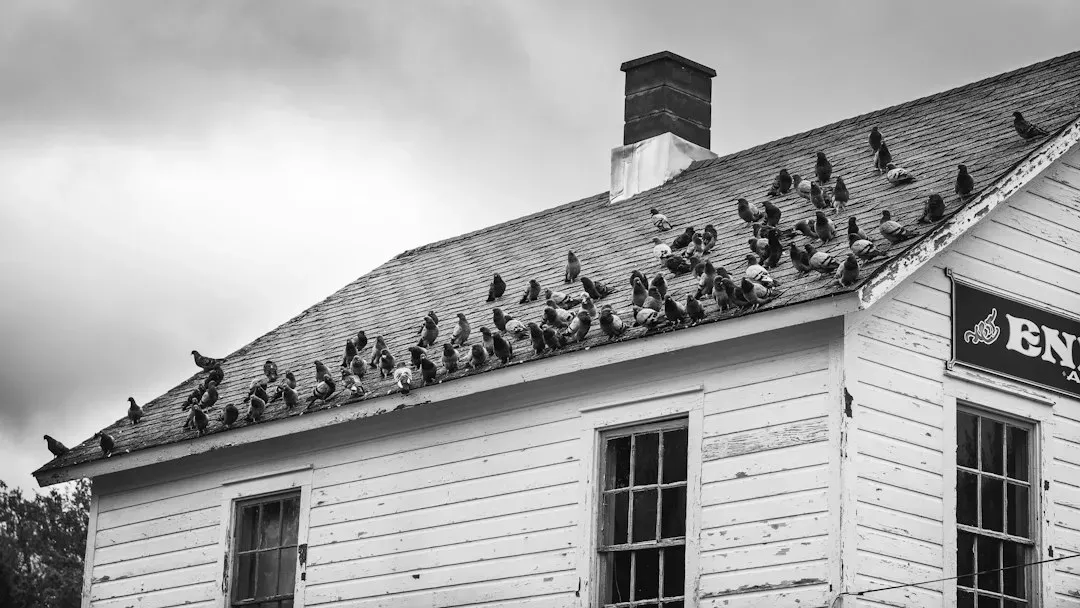
Hitchcock’s bird attack thriller has no conventional score. Instead, the film uses electronically generated bird cries and wing flutters, created with the German composer Oskar Sala and his instrument, the Mixtur Trautonium. Bernard Herrmann, Hitchcock’s frequent composer, served as sound consultant.
The effect is unsettling because the noise feels like part of the world rather than commentary on it. Long stretches play out in near quiet, with only the rustle of birds gathering. When the attacks come, the sound design carries all of the dread.
Winter Light (1963)


Ingmar Bergman’s study of a pastor losing his faith is stripped down in nearly every way. It takes place over a single winter Sunday in a rural Swedish parish. The only music comes from the church services themselves, in the form of hymns and chorales.
Without a score, the silences between the characters carry heavy weight. Church bells and the creak of the sanctuary fill the gaps. It’s a spare film that treats emptiness as part of its subject.
Jeanne Dielman, 23 Quai du Commerce, 1080 Bruxelles (1975)
Chantal Akerman’s film follows three days in the routine of a Brussels widow, and it runs over three hours. The soundtrack consists of the everyday noises of her apartment: pots, taps, light switches and a ticking rhythm of chores. No music cues you on how to feel about her.
That restraint is a big part of why the film still gets talked about. It topped the Sight and Sound critics poll of the greatest films of all time in 2022. The lack of score makes each small disruption in her routine feel enormous.
Festen (1998)
Thomas Vinterberg’s family drama was among the first films made under the Dogme 95 rules. Those rules said that music must not be added separately from the scene being shot. In practice, you hear only songs and performances that happen at the birthday party on screen.
Partner offer

The result is a raw, uncomfortable atmosphere. When a toast turns into a devastating accusation, there’s no soundtrack to soften it. The handheld camera and the lack of score make the audience feel like guests who can’t leave.
The Blair Witch Project (1999)
Presented as found footage from three student filmmakers lost in the Maryland woods, the film has no score in the traditional sense. What you hear are the characters’ voices, rustling leaves and strange noises at night. Songs appear mainly in the closing credits.
That choice supported the illusion that the footage was real. A swelling soundtrack would have broken the pretense that somebody was just holding a camera. The unseen sounds around the tent do much of the frightening.
Cast Away (2000)


Robert Zemeckis’s survival story is often cited for its long stretches of silence. Alan Silvestri’s music is heard at the start and again toward the end. During the central island sequences, the soundscape is mostly waves, wind and the lone voice of Tom Hanks.
That makes it a near case rather than a total one, since the score does bookend the film. Still, the absence in the middle is what people remember. The quiet underlines how isolated the character has become.
United 93 (2006)


Paul Greengrass reconstructed the events aboard the hijacked flight on September 11, 2001, with a restrained, documentary approach. The film doesn’t use a . Air traffic control chatter, cockpit noise and the sounds of the cabin fill the soundtrack.
The choice avoids any sense of dramatizing real tragedy for effect. Many of the roles were played by lesser known actors, and some real air traffic personnel played themselves. Without music, the film feels closer to reconstruction than entertainment.
Paranormal Activity (2007)

Oren Peli made this haunted house film on a tiny budget, mostly inside his own San Diego home. It has no score, and the scares come from ambient noise, thumps, footsteps and the quiet hum of nighttime recordings. The fixed camera in the bedroom turns silence into a source of tension.
Because there’s no music to warn you, the audience watches each empty frame wondering when something will happen. The film became one of the most profitable horror releases ever made relative to its cost. Its silence was a practical and creative choice at once.
No Country for Old Men (2007)

The Coen brothers’ crime thriller is usually described as having almost no music. Carter Burwell composed a sparse set of ambient tones, but they’re so quiet that many viewers assume there’s no score at all. Large portions of the film play with only desert wind, creaking doors and footsteps.
This one also counts as a near case rather than a pure one. Even so, the minimal approach is central to its tension, especially in scenes where a character is stalked in silence. The film went on to win the Academy Award for Best Picture.
Partner offer
Planning a trip to Vegas?
Compare hotel rates and show tickets on VEGAS.com.