
Some books are finished in a single sitting, set down, and mostly forgotten. Others leave a strange residue – a nagging feeling that you missed something, that the story was doing more than you caught in the moment. These are the novels worth going back to, and the experience of rereading them is genuinely different from reading any other book twice.
The ten novels below share a common quality: the first read is incomplete by design. Unreliable narrators, deliberate misdirection, fractured timelines, and layered symbolism all ensure that the full picture only snaps into focus once you already know how things end. If you’ve read any of these, you probably already know the feeling.
1. Gone Girl by Gillian Flynn


The first time through Gone Girl, Amy and Nick’s manipulations keep you guessing. The diary entries, the changing perspectives – it’s all so cleverly misleading. You’re too busy trying to figure out what’s true to notice that Flynn has been playing you the entire time.
After learning Amy’s real plan, a second read becomes an exercise in spotting all her tricks and traps. Suddenly, lines that sounded sincere are dripping with sarcasm, and innocent moments bristle with hidden threat. The novel restructures itself entirely around the reader’s new knowledge, and it’s a more satisfying book the second time, even if the shock is gone.
2. Fight Club by Chuck Palahniuk


Fight Club is a 1996 novel by Chuck Palahniuk, his first published work, and it follows an unnamed protagonist struggling with insomnia. He finds relief by impersonating a seriously ill person in several support groups, then meets a mysterious man named Tyler Durden and establishes an underground fighting club as radical psychotherapy. On a first read, it plays like an anarchic satire of consumer culture, which it absolutely is – but there’s a second layer underneath.
Going beyond its social commentary, Fight Club is notable for its brilliant twist. Throughout the book, the skewed relationship between Tyler and the narrator is complemented by ambiguous statements and odd symmetry. Once readers understand what’s really going on, everything changes, and it’s fascinating to reread the book and discover all the foreshadowing and symbolism Palahniuk places so smoothly. Goodreads readers have voted Chuck Palahniuk’s Fight Club as the “Best Plot Twist” of all time.
3. The Secret History by Donna Tartt

With The Secret History, the question isn’t who did it, but why – and what it does to those left behind. Knowing who dies and how doesn’t ruin the story; it deepens it. Tartt opens the novel by revealing the murder on the first page, which means the suspense was never about the outcome at all.
The Secret History is one of the most gripping dark academia novels of all time, but a second read-through reveals deeper layers, particularly in the motivations and psychology of the characters. Knowing the outcome allows readers to better understand the dynamics within the group and the philosophical ideas that drive their actions. Foreshadowing becomes more apparent, and the small details in character dialogue and interactions gain new meaning. What reads as camaraderie on the first pass reads as something more tragic and inevitable on the second.
4. Never Let Me Go by Kazuo Ishiguro


The quiet horror of Never Let Me Go sneaks up on you. The first read feels almost gentle, with hints of something wrong. When the truth about the students’ fate is revealed, it’s heartbreaking. On a second read, every conversation and classroom scene feels loaded with dread and resignation.
This is an almost unbearably intriguing novel, which reveals the true nature of its narrator very gradually. Kathy is a Carer whose job is to look after organ donors, and she spends much of the book reminiscing about her childhood and the nice-but-peculiar English boarding school she attended. The words Kathy uses to describe her situation don’t feel quite right. It becomes increasingly clear that Kathy is employing euphemisms, and the effect is deeply sinister. On the second reading, that sinister quality is present from line one.
5. Atonement by Ian McEwan

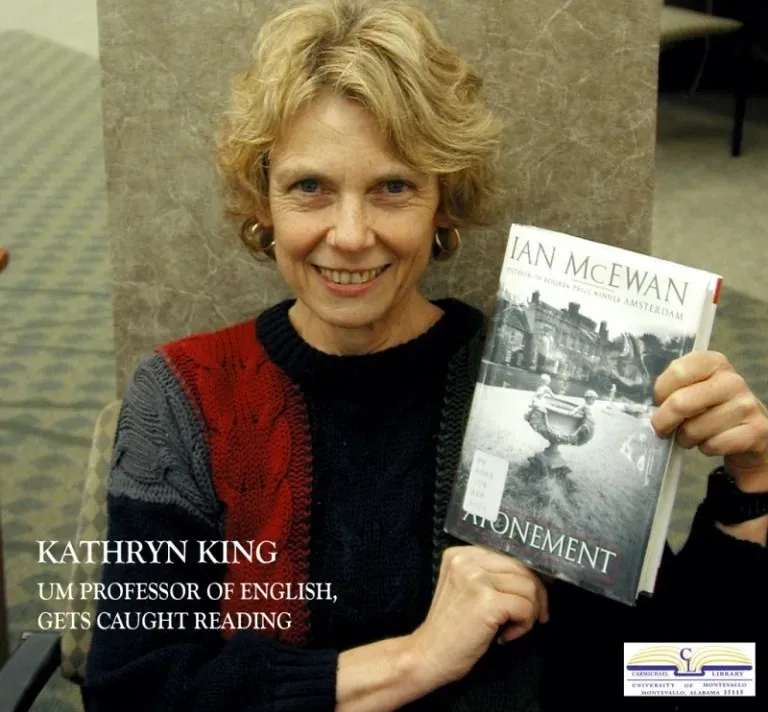
Unreliability and uncertainty are at the centre of Ian McEwan’s Atonement, and discussions of the novel often emphasise this aspect of the text, arguing that it demands to be reread in light of its surprise ending. Before Ian McEwan published Atonement in 2001, he had already earned significant acclaim, but it was Atonement that made McEwan a household name, due in large part to its ending, which included not one twist but two.
On a reread, it’s much like watching an origin story: there’s pleasure in seeing how we get to the destination and in picking out clues en route. Some of these breadcrumbs are sly winks, such as young Briony’s propensity for writing stories about love, adversities overcome, a reunion and a wedding. In 2024, Atonement was ranked 26th on the 100 Best Books of the 21st Century list by the New York Times.
6. House of Leaves by Mark Z. Danielewski


House of Leaves is notorious for its labyrinthine structure. On a first read, it’s almost overwhelming: footnotes, stories within stories, and a house that keeps changing shape. The book feels like a puzzle you can’t quite solve. Many first-time readers give up, which is understandable. Sticking with it is worth it, if only to prepare for the second read.
Both House of Leaves and similarly experimental novels employ unconventional narrative styles and typography. House of Leaves utilizes footnotes, appendices, and unusual page layouts to create a disorienting and immersive experience. The reread lets readers see how Danielewski’s structure mirrors the characters’ unraveling minds. Once you understand what the book is doing, the formal chaos starts to feel precise rather than random.
7. The Turn of the Screw by Henry James
Few ghost stories are as unsettling as The Turn of the Screw. The real trick is figuring out what’s actually happening. Is the governess brave or delusional? Are the ghosts real, or just her imagination? The first time, most readers just feel creeped out and confused. Henry James seems to have designed it that way deliberately.
On a second read, every odd glance and ambiguous line takes on new meaning. Scholars have debated the story’s ambiguity for over a century, and a 2022 article in The Guardian highlighted that most readers change their minds about the truth after a reread. The governess looks completely different depending on whether you trust her – and the second read is really about deciding, finally, whether you do.
8. Life of Pi by Yann Martel


Life of Pi tells the story of Piscine “Pi” Patel, a young Indian boy who survives a shipwreck and is stranded on a lifeboat in the Pacific Ocean for 227 days. He is accompanied by a Bengal tiger named Richard Parker, along with other animals, all of whom play symbolic and practical roles in his struggle for survival. Through Pi’s narration, readers experience his fear, ingenuity, and spiritual reflections as he navigates the ocean.
One of the novel’s defining features is the ambiguity of Pi’s account. At the end, he offers an alternative version of events – one entirely devoid of animals but filled with human cruelty and survival instincts – forcing readers to question which story is “true.” This makes Pi a subtly unreliable narrator: his perspective is filtered through trauma, imagination, and his father, leaving readers to wrestle with the nature of truth and storytelling. The second reading is where those two versions of the story sit in conversation with each other throughout, page by page.
9. Slaughterhouse-Five by Kurt Vonnegut

Slaughterhouse-Five jumps through time with little warning – one moment Billy Pilgrim is in Dresden, the next he’s on an alien planet. The first read can feel chaotic, almost random. But after finishing, and knowing where Billy is “unstuck,” a second read brings order to the madness. The novel’s fractured chronology isn’t a stylistic game for its own sake. It’s the only honest way to write about trauma.
Vonnegut’s treatment of the Dresden firebombing, which he witnessed as a prisoner of war in 1945, gains a different weight on a second pass. The dark humor that reads as absurdist on first encounter reveals itself as a coping mechanism built into the novel’s very architecture. Billy Pilgrim’s passivity, maddening at first, looks more like a portrait of shock than a character flaw once you understand what the book is actually doing.
10. The Brothers Karamazov by Fyodor Dostoevsky

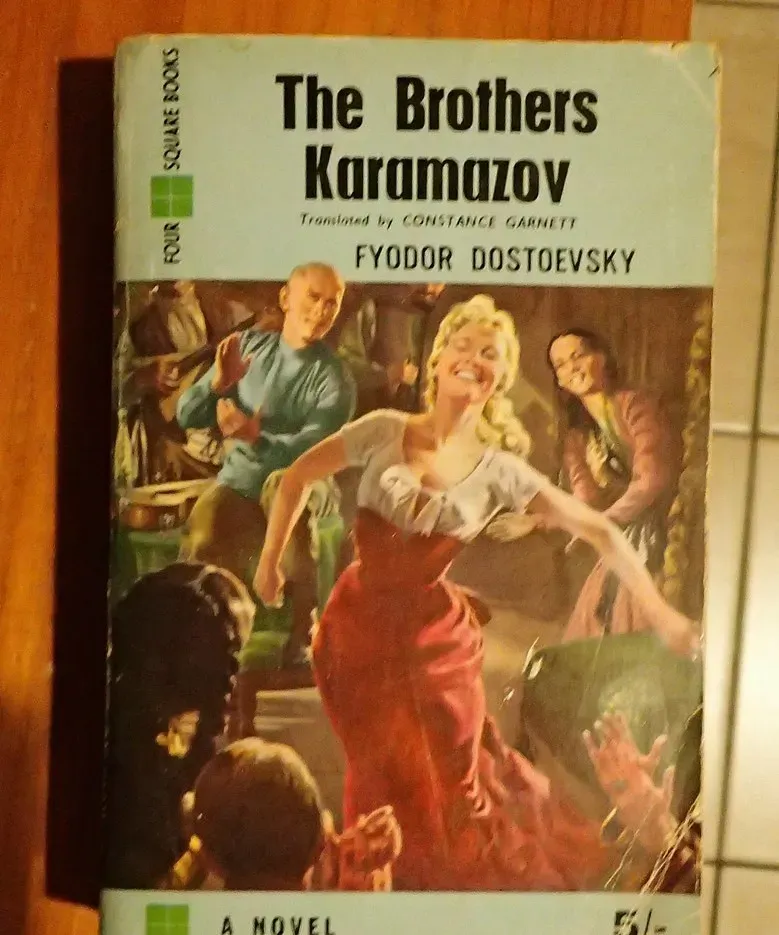
Dostoevsky’s The Brothers Karamazov is a philosophical epic that examines faith, doubt, morality, and familial conflict. The first read may focus on the dramatic story of patricide and sibling rivalry. On a second reading, the novel’s deep philosophical arguments, ethical questions, and psychological complexity become clearer. The tension between reason and faith, guilt and redemption, and passion and responsibility resonates more profoundly with familiarity.
Each reread allows the reader to explore the subtleties of Dostoevsky’s characterizations and the profound moral dilemmas that define human existence, making this novel both intellectually stimulating and emotionally moving. The Grand Inquisitor chapter, which many first-time readers skim as a theological digression, emerges on a second reading as one of the most searching arguments about freedom and belief in all of literature. It’s the kind of chapter that rewards years between reads, not just weeks.
What these ten novels have in common is that they were designed with rereading in mind, even if their authors didn’t always say so. Like a surrealistic film, sometimes you need a second look at something to understand it fully. The things we learn at the end connect clues from the beginning, and to truly understand it all, we need to start again. The reward isn’t just catching what you missed. It’s discovering that the book you thought you read was never the whole story.