Some books you finish and move on. Others stay with you, quietly reshaping how you see the world. Then there are those rare, once-in-a-generation novels that feel like they were written not just for today, but for every generation that comes after. These are the books future readers will dog-ear, debate in university lecture halls, and pass down like heirlooms.
What separates a future classic from a bestseller that fades in five years? Modern classics are books published after World War II that have reached a level of cultural significance on par with those from the classic canon. It’s not just that they’re popular or that they’ve won awards – it’s that their impact has gone beyond the realm of committed readers and academics. The novels below have already cleared that bar, or are sprinting toward it fast. Let’s dive in.
1. James by Percival Everett (2024) – The Reinvention of an American Icon

It takes guts to rewrite one of America’s most studied novels. It takes outright genius to make it feel more urgent than the original. James is a novel by American author Percival Everett published by Doubleday in 2024, and it is a reimagining of Adventures of Huckleberry Finn narrated by Huckleberry’s friend on his travels, the fugitive slave Jim, rather than by Huck, as in the original.
The novel won the 2024 Kirkus Prize, the National Book Award for Fiction, and the 2025 Pulitzer Prize for Fiction. That alone would cement its place in the canon. Everett humanizes the character, who goes by James, reinventing him as a wise and literate man who has conversations with Enlightenment philosophers in his dreams and teaches other enslaved people to read – while James and the other Black characters in the book hide their literacy and wisdom from white characters.
James appeared on 33 lists of the best books of the year, and feature film rights were acquired in 2024 by Universal Pictures, with Amblin Entertainment for production and Steven Spielberg as executive producer. It’s hard to overstate how completely this novel has landed. James is destined to be a major publishing event and a cornerstone of twenty-first century American literature.
2. A Little Life by Hanya Yanagihara (2015) – The Novel That Breaks You Open

Honestly, no book in recent memory has generated the kind of obsessive, almost cult-level devotion that A Little Life has. In 2015, Hanya Yanagihara’s second novel became one of the most buzzed-about titles of the year, receiving rave reviews, being shortlisted for the Booker Prize, and going on to sell millions of copies and build a cult-like online fanbase.
A Little Life follows four college classmates, broke and adrift but buoyed only by their friendship and ambition, as they move to New York in search of fame and fortune. While their relationships, which are tinged by addiction, success, and pride, deepen over the decades, the men are held together by their devotion to the brilliant, enigmatic Jude, a man scarred by an unspeakable childhood trauma.
Writing in The Wall Street Journal, Sam Sacks called the story “an epic study of trauma and friendship, written with such intelligence and depth of perception that it will be one of the benchmarks against which all other novels that broach those subjects will be measured.” A Little Life has also been adapted for the stage, with a theatrical adaptation directed by Ivo van Hove that premiered in Amsterdam in 2018 and later ran in London at the Harold Pinter Theatre in 2023. Ten years on, its literary agents and publishers have openly declared it part of the canon.
3. Never Let Me Go by Kazuo Ishiguro (2005) – A Quiet Masterpiece of Ethical Horror

Nobel Prize laureate Kazuo Ishiguro’s Never Let Me Go is arguably the most influential novel of dystopian speculative fiction of the past 20 years. Set at a seemingly placid boarding school in England, the narrative revolves around a group of students as they begin to unravel the truth about their mysterious purpose there. A Booker Prize finalist, the novel is an exquisite example of Ishiguro’s minimalist style deployed toward maximal ethical inquiry.
Like all Ishiguro’s novels, Never Let Me Go deals with human themes such as identity, loss, love, and missed opportunities. Besides the universal themes, Ishiguro has a unique ability to create a poignant atmosphere of beauty and sadness that goes straight to the heart. That combination is rare and nearly impossible to manufacture. Never Let Me Go breaks through the boundaries of the literary novel. It is a gripping mystery, a beautiful love story, and also a scathing critique of human arrogance and a moral examination of how we treat the vulnerable and different in our society.
4. Wolf Hall by Hilary Mantel (2009) – History as Living Breath
If you think historical fiction means dusty costumes and predictable drama, Hilary Mantel’s Wolf Hall will shatter that assumption in the first paragraph. This Booker Prize-winning historical novel reimagines the rise of Thomas Cromwell in the court of Henry VIII, and Mantel reinvents the genre with razor-sharp prose and a psychologically rich portrait of power and survival.
It won the Booker in 2009 and its sequel, Bring Up the Bodies, also earned the prize, a rare literary feat. Winning the Booker Prize twice for the same fictional universe is the kind of achievement that defines a literary era. The Thomas Cromwell trilogy, completed with The Mirror and the Light in 2020, stands as one of the great narrative accomplishments of modern English literature.
5. White Teeth by Zadie Smith (2000) – The Voice of a New Generation

There are debut novels, and then there is White Teeth. Smith’s dazzling debut novel examines immigration, race, and generational identity in late-20th-century London. A multiracial, multigenerational comedy of manners, White Teeth marked the arrival of a major literary talent at only 24, winning numerous accolades including the James Tait Black Memorial Prize and the Whitbread First Novel Award.
Think of it as a literary earthquake, one that permanently shifted what the English novel could look like and whose stories it could tell. It’s not just that it’s popular or that it won awards; its impact has gone beyond the realm of committed readers and academics. With the reduction of barriers to publication in recent decades, the modern classics category tends to be far more diverse, with authors and subjects that didn’t get a look-in historically. White Teeth was ahead of that curve by two decades.
6. My Brilliant Friend by Elena Ferrante (2011) – Friendship as a Force of Nature

The Neapolitan Novels are one of those rare phenomena where a series actually gets better as it goes. The first of the Neapolitan Novels, My Brilliant Friend tracks the intense and complicated friendship between Elena and Lila in a working-class Naples neighborhood. Ferrante’s nuanced portrayal of friendship, ambition, and class stratification challenges conventional literary representations of women’s interior lives and has catalyzed a reevaluation of feminist narrative structures within contemporary European literature.
The books have sold millions of copies globally and inspired a major HBO television adaptation. I think the series hits so hard because it refuses to sentimentalize women’s lives or their friendships. My Brilliant Friend is incredibly complex and detailed, covering everything from burgeoning womanhood and the politics of small communities to the ramifications of war, poverty, domestic violence, literacy, friendship, and betrayal, and how women’s lives are shaped by class and status.
7. The Road by Cormac McCarthy (2006) – Love at the End of Everything
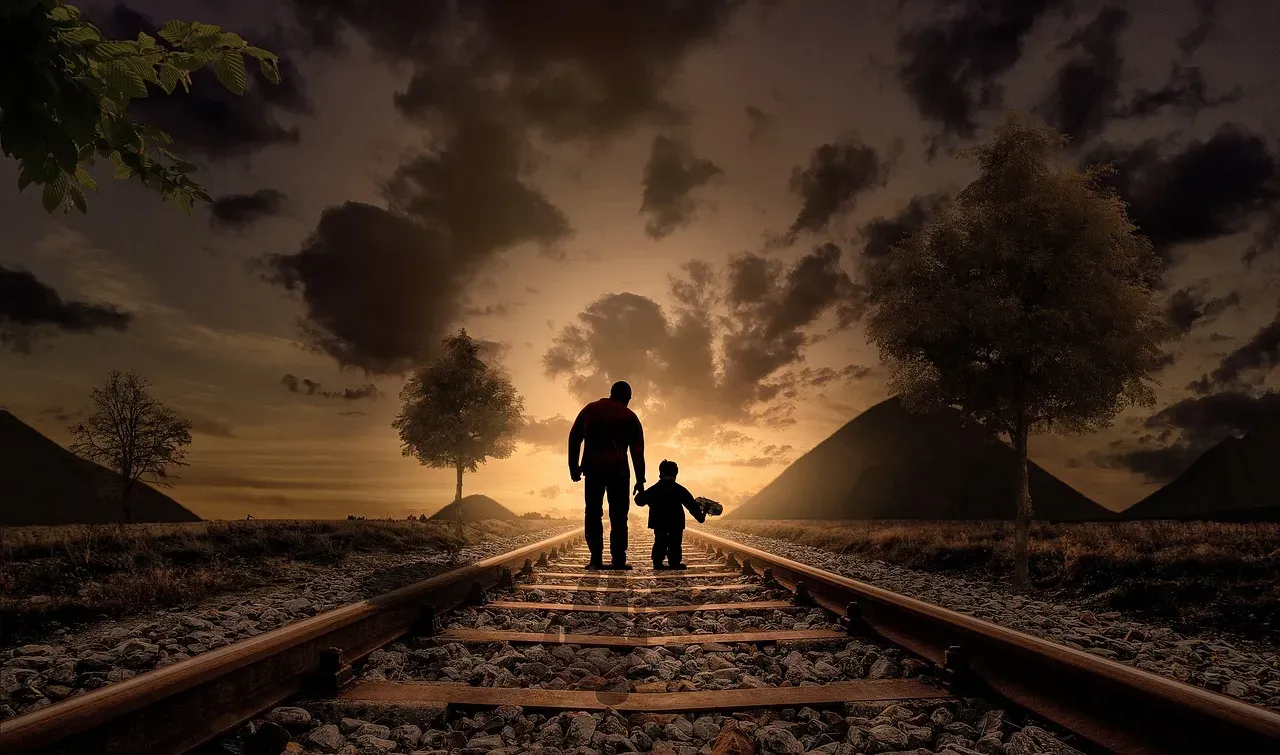
There is nothing quite like The Road in the entire Western literary tradition. With just a pistol between them and the world’s almost unspeakable evils, father and son journey through a post-apocalyptic hellscape. McCarthy’s Pulitzer Prize winning novel is relentless, horrific, and impossible to turn away from.
It won the Pulitzer Prize for Fiction in 2007 and was selected by Oprah’s Book Club, which pushed it into living rooms well beyond the usual literary circles. The prose is stripped to its bones, almost biblical in its rhythms. Here’s the thing: what makes The Road a future classic isn’t the apocalypse – it’s the father and son at its center, which is perhaps the most heartbreakingly pure portrait of parental love in modern fiction.
8. The Kite Runner by Khaled Hosseini (2003) – Guilt, Redemption, and an Unraveling World

Few novels published in the 21st century have reached the global readership that The Kite Runner achieved. Hosseini has mastered the art of telling heartbreaking, gut-wrenching stories set in Afghanistan and the United States. The Soviet invasion of Afghanistan is a motivating influence that leads Amir and his father to leave their country for America, and the Taliban is a threat Amir must face in his quest to retrieve Hassan’s son. These key political and historical factors make The Kite Runner an important piece in the canon of American literature.
Classic works are often described as “timeless.” They remain culturally relevant decades or centuries after they were written, usually because they explore important moments in history or themes and ideas considered universal to the human experience. Few modern novels embody that definition more completely than this one. The Kite Runner has become required reading in countless schools around the world, and that institutional adoption is one of the clearest signs of a novel settling into permanence.
9. Trust by Hernan Diaz (2022) – A Novel About Who Controls the Story

Trust is one of those books that makes you feel smarter for having read it, without ever feeling like it’s showing off. This Pulitzer Prize-winning masterpiece takes on American wealth, influence, and power in a novel whose distinct structure will inspire generations of future writers. Focused on the life of a mysterious financier, Trust is composed of four fictional texts from four different perspectives, and with often contradictory portrayals of the same cast of characters, readers are forced to confront whose accounts of history they believe, and why.
This literary puzzle set amongst the money and power brokers of 1930s New York is already being described as a new American classic. It’s no accident that the novel arrives in the age of misinformation and competing media narratives. Trust feels like it was written specifically for this moment in history, which, paradoxically, makes it timeless.
10. Erasure by Percival Everett (2001) – The Satire That Keeps Getting More Relevant

Percival Everett earns a second slot on this list, and honestly, it’s completely deserved. A scathing satire of race, identity, and the publishing industry, Erasure follows a disillusioned Black academic who writes a pseudonymous “street” novel that becomes wildly successful against its own author’s wishes, with Everett’s biting humor and metafictional playfulness critiquing stereotypes and literary commodification.
Everett’s genre-defying body of work spans satire, Westerns, and experimental prose, and his 2001 novel Erasure was adapted into the Oscar-winning 2023 film American Fiction. The fact that a novel written over two decades ago feels perfectly calibrated to our current cultural moment is the kind of prescience that defines lasting literature. Erasure’s extremely prescient story about the complicated dynamics of race and culture in 21st-century America continues to spark debate in universities, book clubs, and editorial offices.
11. Demon Copperhead by Barbara Kingsolver (2022) – An American Crisis, Novelized

Barbara Kingsolver’s Demon Copperhead accomplishes something almost impossible: it takes the opioid crisis, one of the most complex and politically divisive public health disasters in American history, and transforms it into utterly gripping literature. The novel draws a parallel between the life of its protagonist, growing up in rural Appalachia, and Charles Dickens’ David Copperfield, with striking and deliberate effect.
Demon Copperhead is surely destined to become a contemporary classic, an essential component of the burgeoning canon of books about the generation of lost boys in 21st century America. The novel won the Pulitzer Prize for Fiction in 2023 and the Women’s Prize for Fiction in the same year, a remarkable double achievement. Modern books that will are those with timeless themes, deep characters, and strong storytelling that stays relevant across generations – and Demon Copperhead has all three in extraordinary abundance.
What Makes a Novel Last?
Looking at these eleven books together, a pattern emerges. None of them simply tell a story. Each one interrogates something essential about the time it was written in, while reaching toward something larger. Classic works remain culturally relevant decades or centuries after they were written, usually because they explore important moments in history or themes and ideas that are considered universal to the human experience.
The literary world produces thousands of novels every year. Most fade within a season. The ones on this list have already proven they are different: awarded, adapted, debated, and taught. It takes a lot for a contemporary book to be considered a modern classic, including the quality, subject matter, and relevancy of the text – and these elements come together to create novels that will join the ranks of the literary canon.
It’s hard to say for sure which of these will still be on university syllabuses in a century, but I’d bet on most of them. The ones that make us feel something irreducible, that change the shape of what we think a novel can do – those are the ones that last. Which one surprised you most on this list?