There’s a common assumption that before the industrial age, humans simply lacked the knowledge to build anything truly sophisticated. That assumption doesn’t hold up well against the archaeological record. Scattered across continents and centuries, ancient civilizations quietly produced devices, materials, and systems that modern engineers are still working to fully understand.
Some of these inventions were lost, rediscovered, or simply forgotten. Others never quite caught on despite being genuinely brilliant. What they all share is the ability to make you rethink exactly when human ingenuity really got going.
1. The Antikythera Mechanism: The World’s First Computer
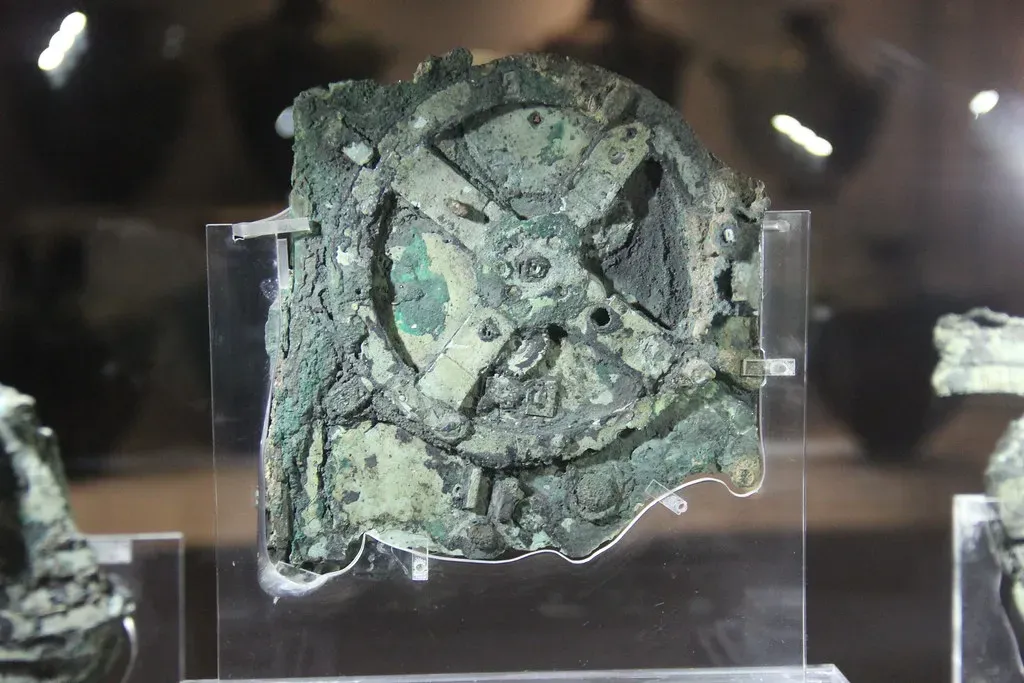
The Antikythera mechanism was an ancient Greek mechanical device used to calculate and display information about astronomical phenomena. The remains of this ancient device, now on display in the National Archaeological Museum in Athens, were recovered in 1901 from the wreck of a trading ship that sank in the first half of the 1st century BCE near the island of Antikythera. It had the first known set of scientific dials or scales, and radiographic images showed that the remaining fragments contained 30 gear wheels. No other geared mechanism of such complexity is known from the ancient world, or indeed until medieval cathedral clocks were built a millennium later.
It was a mechanical computer of bronze gears that used groundbreaking technology to make astronomical predictions by mechanizing astronomical cycles and theories. It calculated lunar and solar positions, the phase and age of the Moon, synodic phases of the planets, eclipse predictions, and the Olympiad cycle. It was the first known device that mechanized the predictions of scientific theories, representing the first steps toward the mechanization of mathematics and science.
2. Roman Concrete: A Self-Healing Building Material
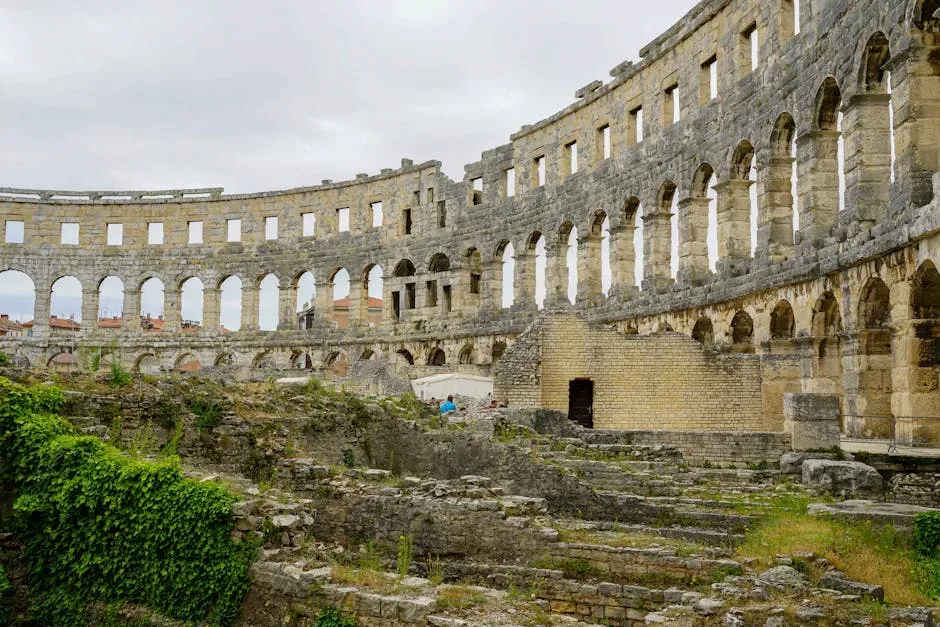
Roman concrete doesn’t just survive the test of time, it actually gets stronger as centuries pass, which is the complete opposite of what modern concrete does. While our concrete crumbles after just 50 to 100 years, Roman structures like the Pantheon have stood firm for nearly 2,000 years. Scientists have discovered that Romans mixed volcanic ash into their concrete, creating a chemical reaction that continues healing cracks over time.
Roman concrete, particularly that used in marine environments, actually grows stronger over time as seawater reacts with the volcanic ash in the mixture to create rare minerals. Modern concrete formulations, despite our advanced chemistry, typically begin degrading within 50 years, especially in saltwater environments. Scientists have analyzed Roman concrete extensively, identifying key ingredients like volcanic ash from Pozzuoli and lime, but replicating the exact durability remains challenging.
3. Zhang Heng’s Seismoscope: Ancient Earthquake Detection
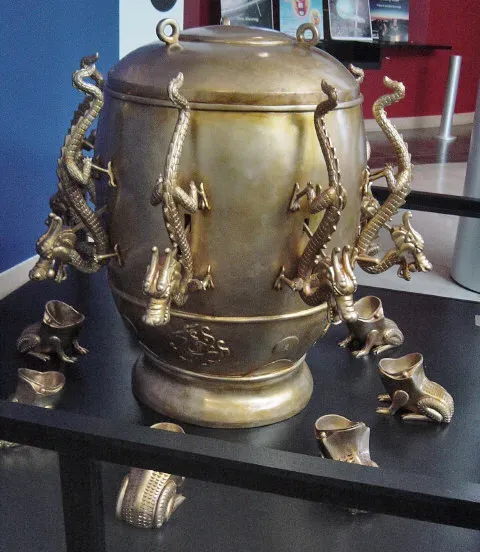
In AD 132, Zhang Heng, official court astronomer and historian to the Eastern Han Dynasty, invented the world’s first earthquake detector. Though not as advanced as today’s seismographs, the Houfeng Didong Yi could determine the occurrence of the slightest earthquake as well as its general direction. Dubbed the Leonardo da Vinci of China, he was an inventor, astronomer, engineer, scientist, scholar, and artist.
The mechanism consisted of a large, decorated copper pot fitted with eight tubed projections shaped like dragon heads. Below each dragon head was placed a copper toad with a large, gaping mouth. This bronze device, about 6 feet in diameter, could detect earthquakes from hundreds of miles away, a technological feat that wouldn’t be matched in the West for over 1,700 years.
4. Damascus Steel: Nanotechnology Before Its Time

The fabled Damascus steel blades were legendary for their unmatched sharpness and durability. Crafted in the Middle East, these swords displayed intricate, swirling patterns and were reputed to slice through almost anything. The pattern emerged during the unique forging process, where small ingots of crucible steel from India, Sri Lanka, or Iran were melted with charcoal and cooled at an incredibly slow rate.
Modern analysis has revealed that the internal structure of Damascus steel is even more remarkable than the visible pattern suggests. In 2006, Peter Paufler and colleagues at the Technical University of Dresden used transmission electron microscopy to examine a genuine Damascus blade and discovered carbon nanotubes embedded within the cementite bands. This was the first identification of carbon nanotubes in a historical artifact and one of the earliest known examples of nanotechnology, albeit achieved through empirical processes rather than deliberate nano-engineering.
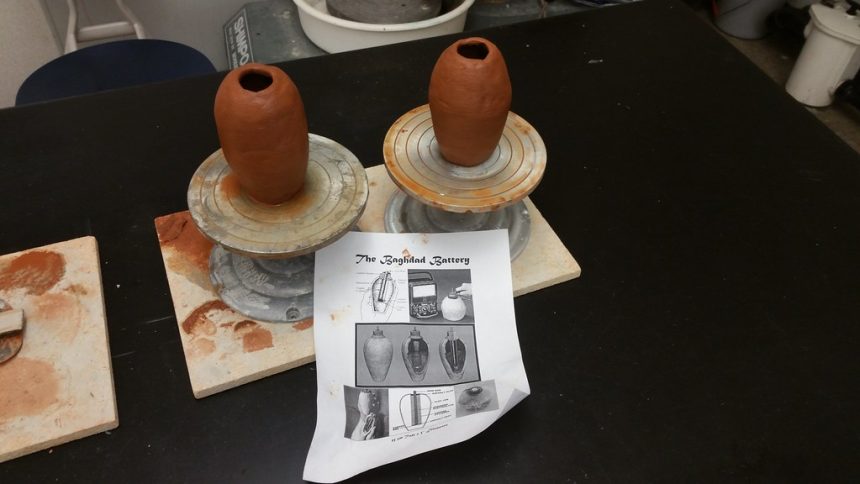
5. The Baghdad Battery: Ancient Electricity in a Clay Jar
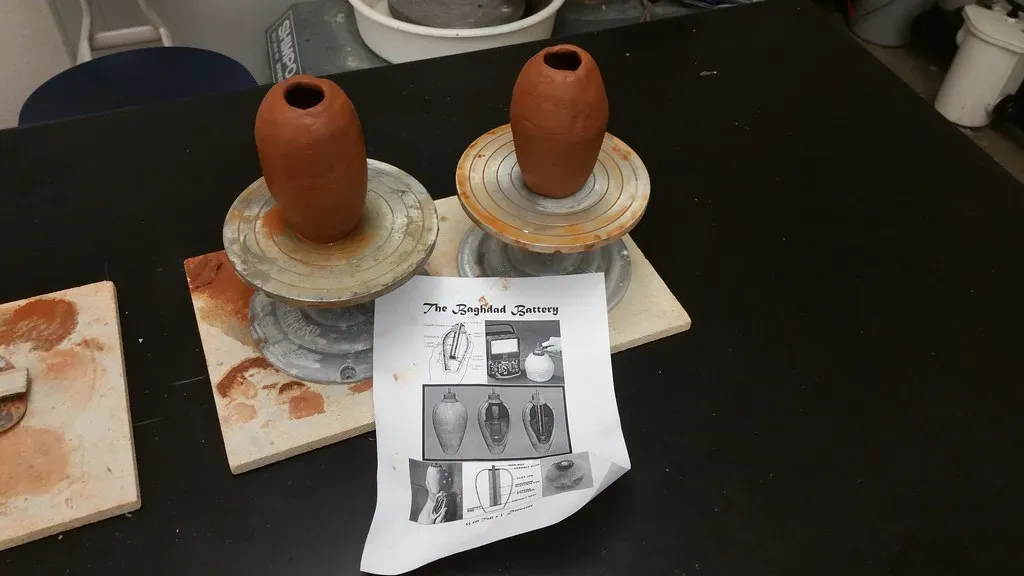
Discovered near Baghdad in 1938, these clay jars dating from around 200 BCE contain copper cylinders and iron rods that, when filled with an acidic liquid, could theoretically generate electrical voltage. Their true purpose remains debated, with theories ranging from electroplating gold onto objects to primitive batteries or religious vessels, though replicas have successfully produced electrical current.
The construction is eerily similar to a modern galvanic cell: the clay jar serves as the container, the copper cylinder as the cathode, and the iron rod as the anode. When filled with an acidic solution like vinegar or wine, the device could theoretically produce about 1.1 volts of electricity. While that doesn’t sound like much, it would have been enough for electroplating, coating objects with thin layers of precious metals.
6. Indus Valley Urban Plumbing: Cities With Running Water in 3000 BCE

The Indus Valley civilization yields evidence of mathematics, hydrography, metrology, metallurgy, astronomy, medicine, surgery, civil engineering, and sewage collection and disposal. Situated in a resource-rich area in modern Pakistan and northwestern India, it is notable for its early application of city planning, sanitation technologies, and plumbing. Cities in the Indus Valley offer some of the first examples of closed gutters, public baths, and communal granaries.
The oldest evidence of a plumbing system is the discovery of copper water pipes in palace ruins of India’s Indus River Valley. These pipes date all the way back to 4000 to 3000 BC. Homes featured indoor toilets connected to covered drains that efficiently removed wastewater, an innovation far ahead of its time. These systems rivaled those of much later civilizations and demonstrated a deep commitment to public health and city organization.
Partner offer
7. Greek Fire: The Byzantine Weapon That Still Baffles Chemists

The military weapon debuted on the historic stage when the Byzantines were attacked by a massive naval fleet. The attacking force had never seen anything like Greek fire before, as it burned ships, people, and even burned on top of the water. No recipe survives, but historians speculate it might have involved petroleum, sulfur, or gunpowder. Of the three, petroleum seems the likeliest candidate, as gunpowder didn’t become readily available in Asia Minor until the 14th century.
The Greeks would later develop different ways to use the ancient invention, creating everything from a fire hose that shot fire rather than water to fire grenades. Enemies of the Greeks did eventually find ways to put out the fire using vinegar and old urine. Nevertheless, no one has ever been able to recreate Greek fire. What makes it so impressive is not the chemistry of the fire itself but the design of the pressure pump the Byzantines used to launch it in the direction of their enemies.
8. The Archimedes Screw: A Water-Lifting Machine Still in Use Today
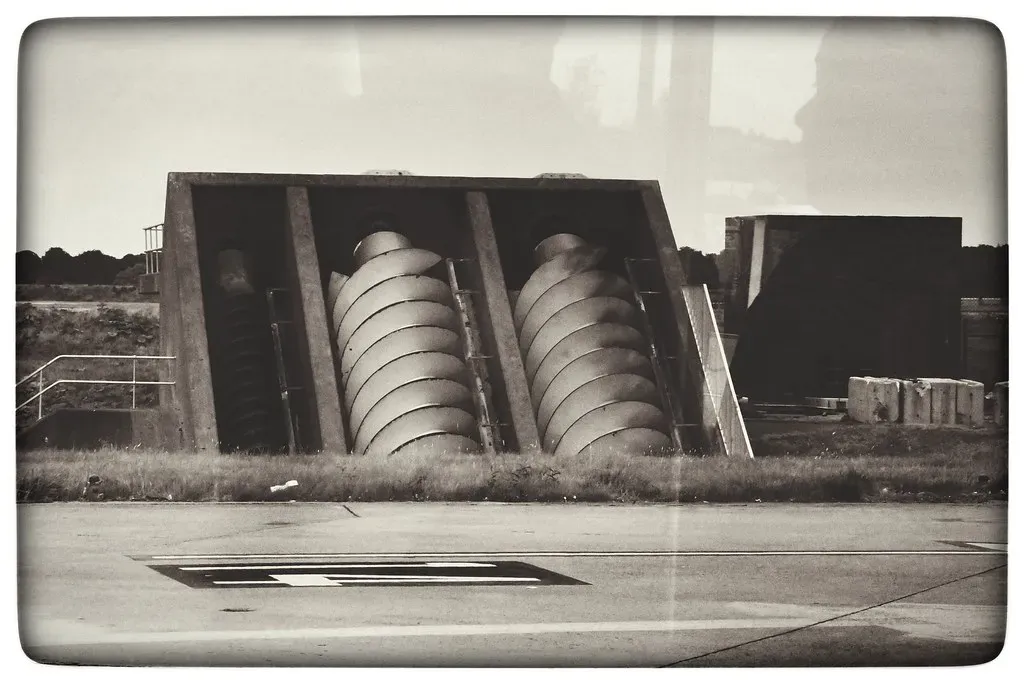
When the screw is turned, it lifts the material inside the tube upward. The Archimedes screw is an effective and efficient way to move water or other materials from a lower to a higher elevation. According to the Assyriologist Stephanie Dalley, the earliest pump was the screw pump, first used by Sennacherib, King of Assyria, for the water systems at the Hanging Gardens of Babylon and Nineveh in the 7th century BC.
The Archimedes screw is still commonly used in irrigation systems, water treatment plants, and sewage treatment facilities due to its simplicity and effective design. This makes it one of the most timeless and effective pieces of ancient technology still being used today. The screw’s elegance lies in its simplicity. There are almost no moving parts to wear out, no digital components to fail, and no fuel required beyond a turning motion. That a device conceived roughly 2,300 years ago still runs modern wastewater infrastructure says everything about how well its original designers understood physics.
9. The Greek Water Clock and Alarm: Precise Timekeeping Before Mechanical Clocks
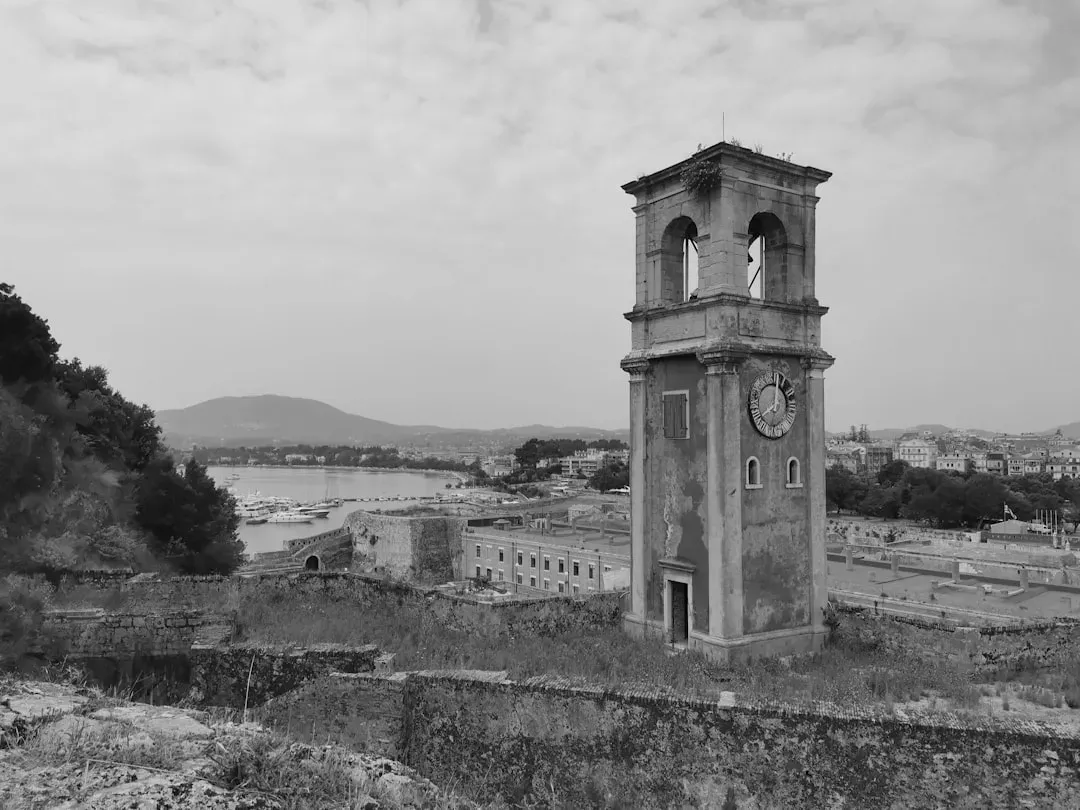
Thousands of years before mechanical timepieces existed, as far back as the 16th century BCE, water clocks were among the most accurate ways to tell time. These early clocks controlled the flow of water from one container to another in order to measure the passage of time with remarkable precision, and unlike sundials, they could be used at night.
Ctesibius’s alarm clock was leaps and bounds ahead of his time, featuring a dial and pointer to indicate the time, connected to a system which would drop small pebbles onto a gong at certain times to ring the alarm. Moreover, it could be set so that the alarm would ring at whatever time you want. More than 2,000 years later, alarm clocks are still essentially the same in concept.
10. The Persian Yakhchal: A Functional Refrigerator Built From Mud
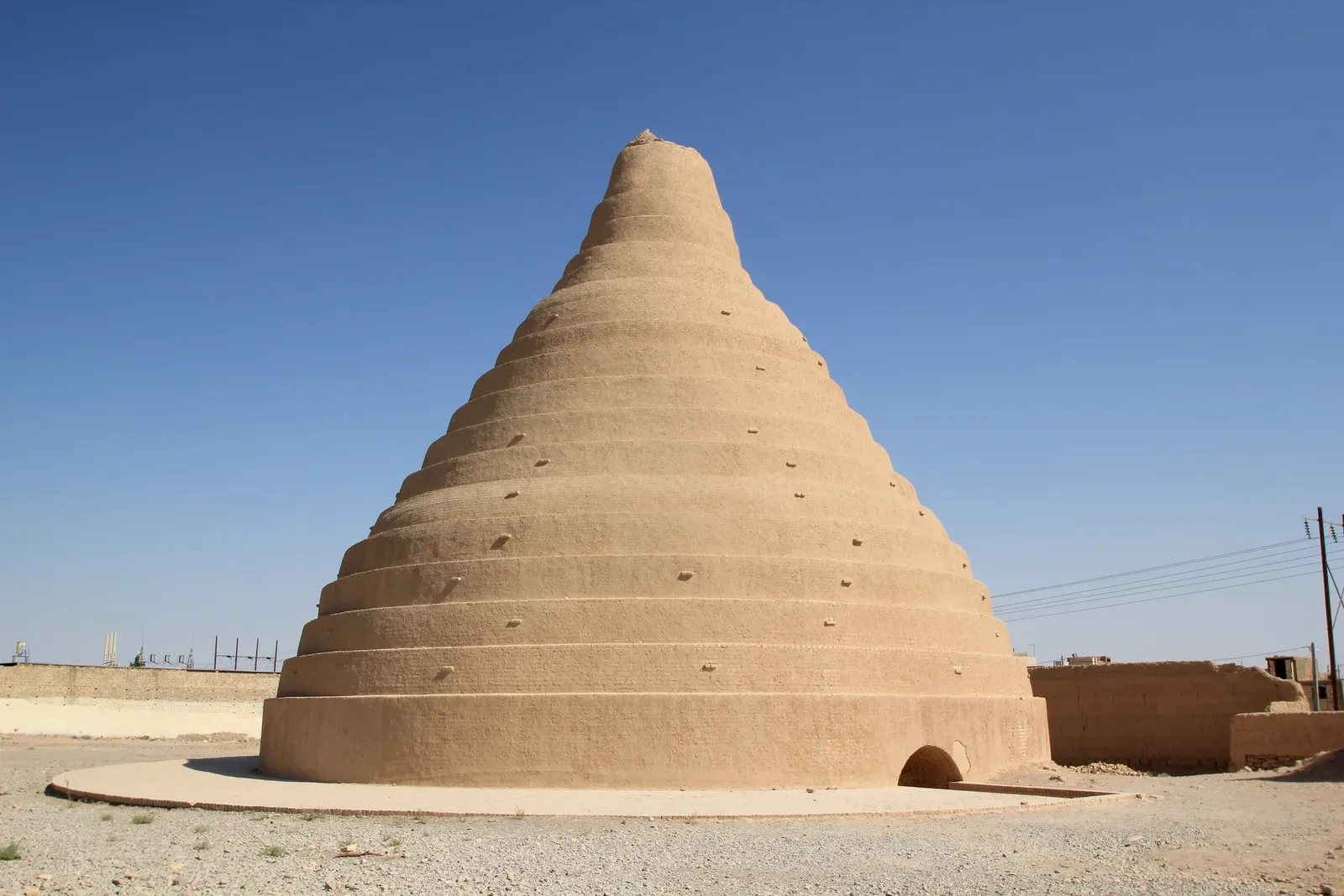
The 4th century BC saw the creation of a modern staple, the freezer. The Persians created dome-like structures in the desert out of sand, clay, and other materials which could effectively trap and maintain ice. Water came in from an aqueduct or was brought to the yakhchal in buckets. The dome is typically 15 meters high, has a small ventilation hole at the top, and could preserve food year-round thanks to two-meter thick walls.
The temperature in a yakhchal could reach as low as minus 5 degrees Celsius. This was not accidental. Persian engineers understood passive cooling through convection, shading, and thermal mass, all without a single wire or compressor. The yakhchal stood in regions where summer temperatures soared well above 40 degrees Celsius, yet ice harvested in winter could last through the hottest months. It’s a remarkable piece of environmental engineering that many modern sustainable architects are now studying for inspiration.
11. The Nebra Sky Disk: A Bronze Age Map of the Cosmos
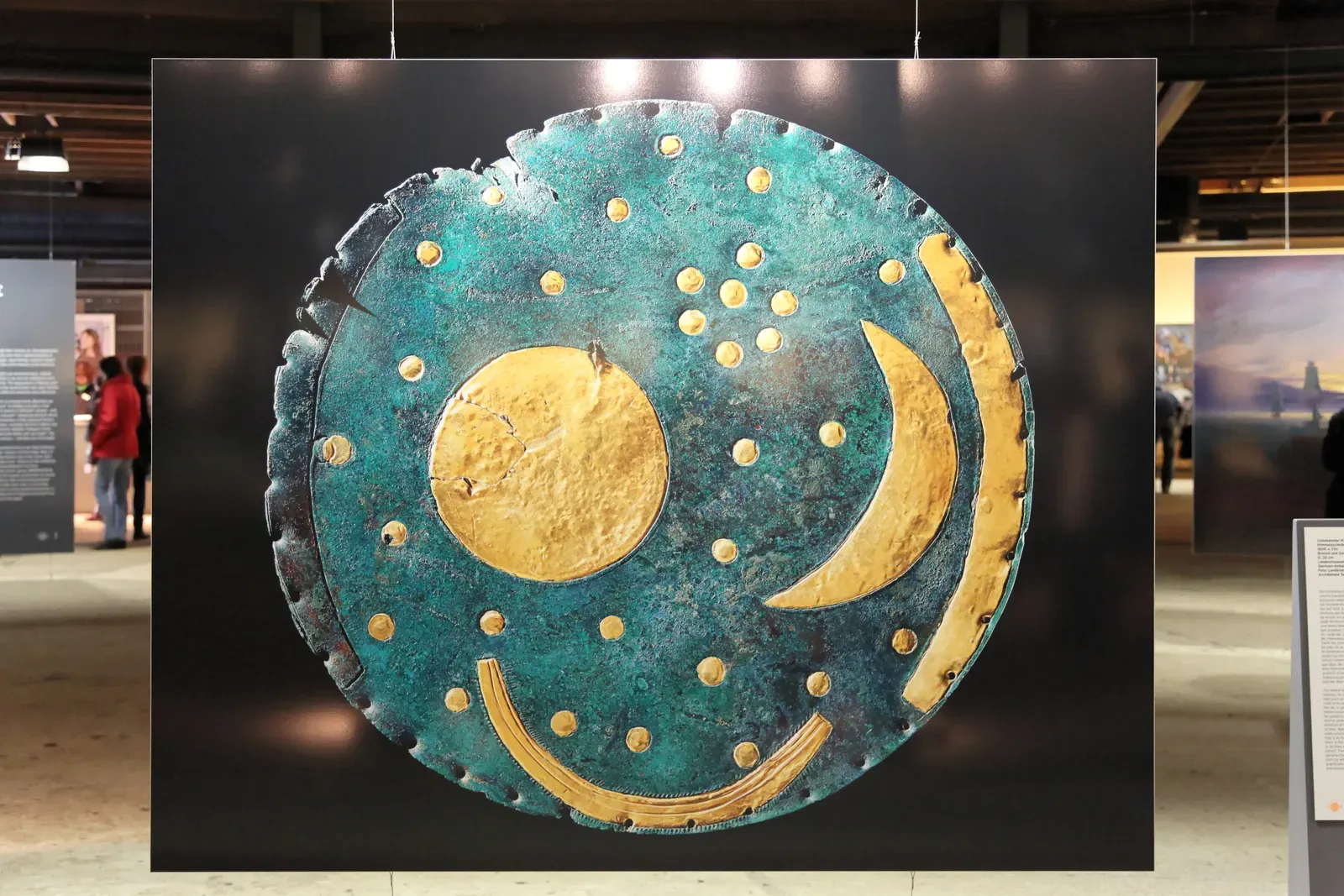
Discovered in Germany and dating to around 1600 BC, the Nebra Sky Disk is the oldest known concrete depiction of the cosmos. The bronze disk features gold inlays representing the sun, moon, and stars, possibly used for astronomical observations and calendar purposes. Its precise astronomical alignments highlight the advanced knowledge of the Bronze Age Europeans. The disk suggests that ancient societies were not only observing the heavens but also integrating this knowledge into daily life and agriculture.
The Nebra Sky Disk also appears to mark the position of the Pleiades star cluster in relation to the solstices, suggesting it functioned as an agricultural calendar. Farmers could use it to determine the optimal time for planting and harvesting, a practical purpose that required a sophisticated understanding of celestial cycles. For a civilization that left no written records, the level of astronomical precision encoded in the disk is striking, and its existence has fundamentally revised how historians view the intellectual life of prehistoric Europe.
12. The Mesopotamian Sexagesimal System: The Mathematical Foundation of Modern Time
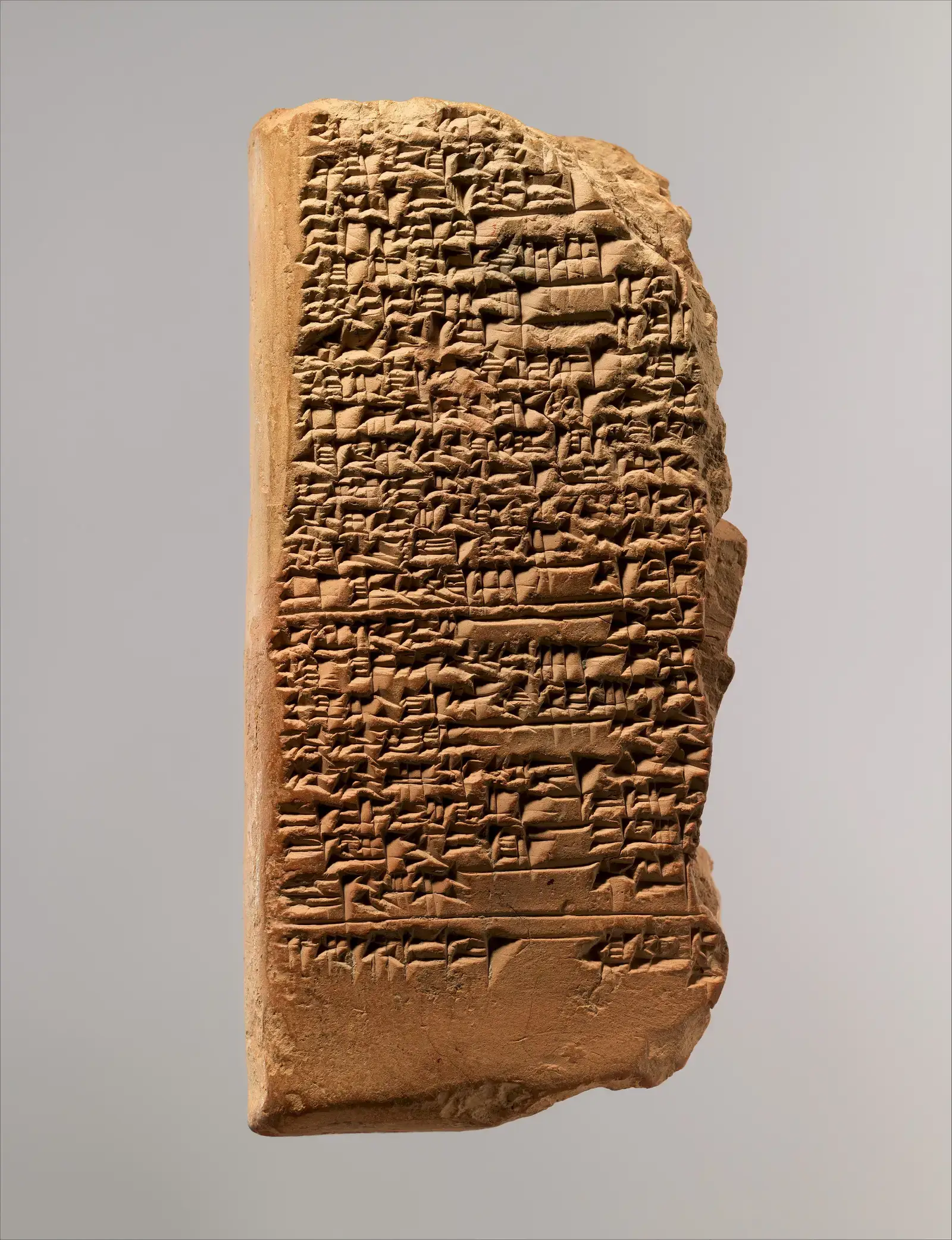
The Mesopotamians used a sexagesimal number system with the base 60. They divided time up by 60s, including a 60-second minute and a 60-minute hour, which we still use today. They also divided up the circle into 360 degrees. They had a wide knowledge of mathematics, including addition, subtraction, multiplication, division, quadratic and cubic equations, and fractions, which was important in keeping track of records as well as in some of their large building projects.
Every time someone checks a clock, measures an angle, or reads a map’s coordinates, they’re using a number system invented over 4,000 years ago in ancient Mesopotamia. The base-60 structure is far from arbitrary. Because 60 is divisible by so many whole numbers, it makes dividing circles and time intervals into equal parts far easier than a base-10 system would. The Babylonian mathematicians who developed this framework had no computers and no formal theory of number systems. They arrived at one of the most practically durable mathematical conventions in human history through pure observation and necessity.
What connects all twelve of these technologies is something harder to quantify than a gear ratio or a chemical formula. Ancient engineers and inventors were working from careful, patient observation of the world around them, often arriving at solutions that modern science can only now fully explain. The gap between ancient and modern isn’t really a gap in human intelligence. It’s mostly a gap in accumulated knowledge and access to materials. Given the right conditions, people have always been capable of extraordinary things.
Partner offer
Planning a trip to Vegas?
Compare hotel rates and show tickets on VEGAS.com.