Music has always had secrets. Hidden meanings in lyrics, cryptic album art, easter eggs buried so deep only the most obsessed fans ever find them. But there is one trick that goes even further than all of that – messages that literally only reveal themselves when you flip the audio around and play the song backwards. It sounds like something from a thriller movie. Honestly, it is.
This technique is called backmasking – the process of recording a sound or message backward onto a track meant to be played forward. While it originated with avant-garde experimentation in the 1960s, it reached a fever pitch of cultural notoriety during the late 1970s and 1980s. Some bands did it on purpose. Some were accused of it by accident. Some had fun with it. Others ended up in court over it. Let’s dive in.
1. The Beatles – “Rain” (1966): The One That Started It All

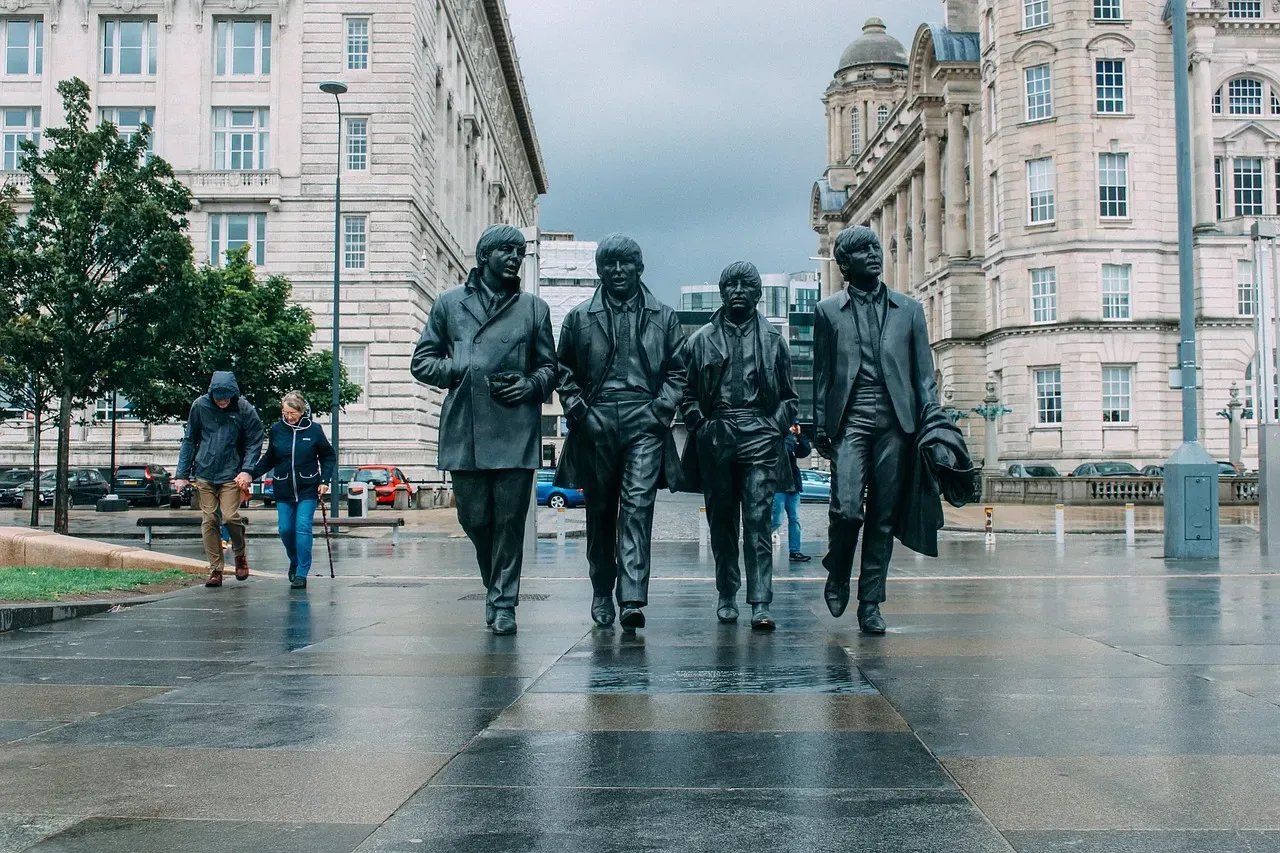
Widely considered the first intentional use of backmasking in popular music, “Rain” was born from John Lennon’s late-night experimentation with a reel-to-reel tape recorder. After returning from a session, a tired Lennon accidentally threaded the tape backward and was mesmerized by the ethereal sound of his own voice. He insisted on incorporating the effect into the song’s coda.
If you listen to the end of the track, you’ll hear Lennon singing the line “Rain, when the rain comes, they run and hide their heads” completely in reverse. It set the stage perfectly for the psychedelic textures of the band’s 1966 magnum opus, Revolver. Think of it as the Big Bang of backmasking – one sleepy, slightly stoned accident that changed music history forever.
2. The Beatles – “Revolution 9” (1968): Turn Me On, Dead Man

During the “Paul is Dead” craze of the late 1960s, fans obsessed over this sound collage from the White Album. The most famous claim is that the looped voice repeating “Number nine” sounds exactly like “Turn me on, dead man” when reversed. While Lennon maintained it was just a random tape loop from a Royal Academy of Music examination, the “message” became the cornerstone of the era’s most famous urban legend.
In 1969, as the rumors of Paul McCartney’s death were spreading, “Revolution 9” became an important piece of evidence to those claiming Paul was dead. A caller to a Detroit radio show explained possible evidence of Paul’s death, and convinced disc jockey Russ Gibb to play “Revolution 9” in reverse. The repeated phrase “number nine” became “turn me on dead man” when played backwards. Listeners called in to the phone lines to voice their opinions, which further spread the rumors.
3. The Beatles – “I’m So Tired” (1968): Paul Is a Dead Man
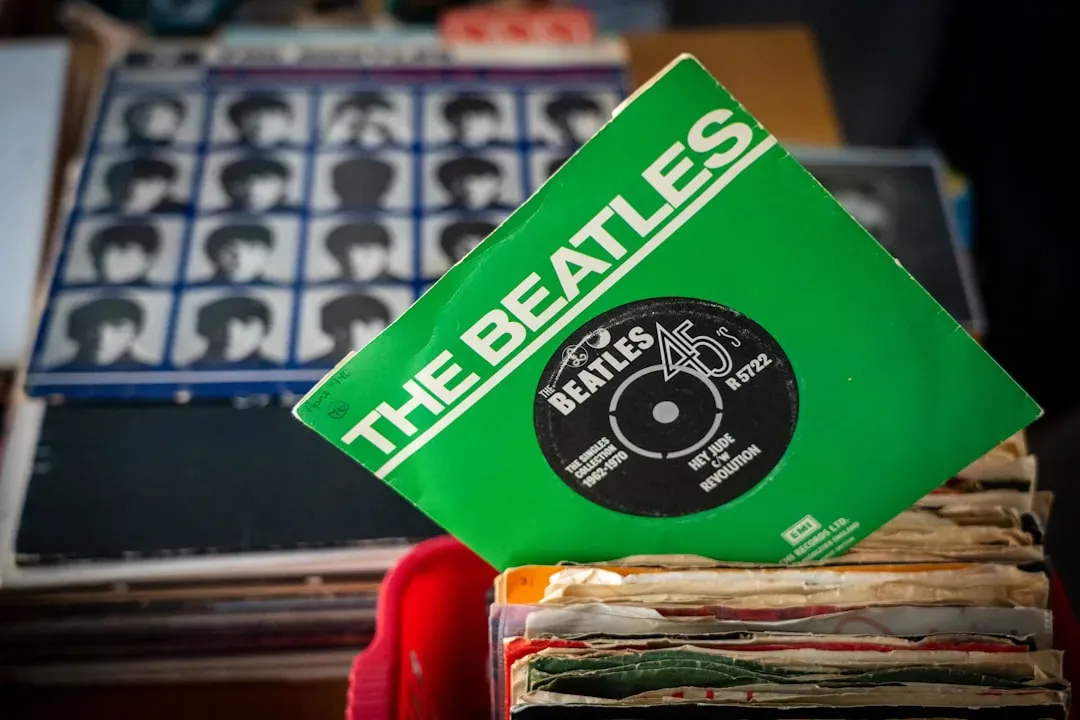
One of the most noticeable pieces of supposed evidence in the “Paul is Dead” investigation was a backmasked message at the end of “I’m So Tired.” At the very end of the song, as the music is fading out, John Lennon can be heard speaking incomprehensibly. When played in reverse, some hear the words “Paul is dead man, miss him, miss him, miss him.” While many saw this as evidence of Paul’s death, the rumor was denied by the band.
This was all added fuel to the infamous rumor that Paul McCartney was actually dead – that he had died in 1966 in a car crash and, to spare the public from grief, the surviving Beatles, aided by MI5, replaced him with a lookalike. Amidst the tumultuous sociopolitical atmosphere of the 1960s, the conspiracy theory never really died and permanently gave backmasking a darker image. Wild stuff, right? The Beatles were just trying to make art, and somehow they ended up at the center of one of the most elaborate death hoaxes in pop culture history.
4. The Beatles – “I’m Only Sleeping” (1966): George Harrison’s Time Travel Solo


This song features a complex, dual-tracked “backwards” guitar solo that sounds like guitars melting and sliding through dimensions. George couldn’t just play a solo and reverse it, because that would sound random and chaotic. Instead, he had to write the solo he wanted, then write it backward note-for-note, then play that backward version, which when reversed again would become the original solo.
It’s the musical equivalent of writing a sentence, translating it to another language, then translating it back perfectly. The result is one of the most distinctive guitar moments in Beatles history. The sheer effort George put into crafting this speaks to just how seriously the Beatles took experimentation. It’s not a party trick. It’s a masterpiece of backwards engineering.
5. Led Zeppelin – “Stairway to Heaven” (1971): Here’s to My Sweet Satan


A well-known alleged message is found in Led Zeppelin’s 1971 song “Stairway to Heaven.” The backwards playing of a portion of the song purportedly results in words beginning with “Here’s to my sweet Satan.” In 1982, televangelist Paul Crouch claimed that playing this rock masterpiece backward revealed a tribute to Satan. Specifically, the “bustle in your hedgerow” section supposedly contains the words: “Here’s to my sweet Satan… the one whose little path would make me sad, whose power is Satan.”
Led Zeppelin vocalist Robert Plant denied the accusations, stating: “To me it’s very sad, because ‘Stairway to Heaven’ was written with every best intention, and as far as reversing tapes and putting messages on the end, that’s not my idea of making music.” Audio engineer Evan Olcott says that messages by artists including Queen and Led Zeppelin are coincidental phonetic reversals, in which the spoken or sung phonemes form new combinations of words when listened to backwards. Probably the most famous backmasking controversy in existence. Period.
6. Pink Floyd – “Empty Spaces” (1979): The Winking Easter Egg
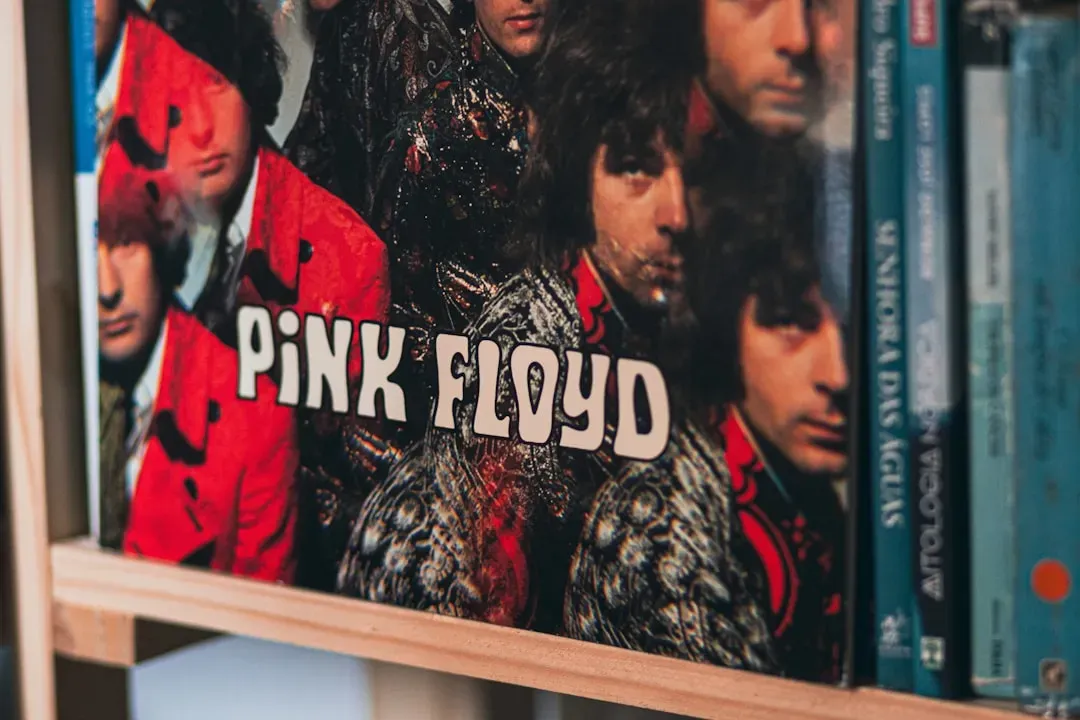
Here’s one that’s actually intentional. When reversed, a voice in “Empty Spaces” clearly says, “Congratulations. You have just discovered the secret message.” It’s a playful Easter egg from the band, poking fun at conspiracy seekers and fans obsessed with decoding hidden meanings behind their iconic album The Wall.
Here, listeners are greeted with a message that’s as puzzling as it is amusing: “Congratulations. You have just discovered the secret message. Please send your answer to Old Pink, care of the Funny Farm, Chalfont… Roger! Carolyne’s on the phone!” But what does it mean? On the surface, it’s a playful nod to their fans, a hidden Easter egg in the vinyl era’s digital treasure hunt. The mention of “Old Pink” and “Funny Farm” could be an inside joke, referencing band dynamics or perhaps an allusion to their former bandmate Syd Barrett’s struggles.
7. Queen – “Another One Bites the Dust” (1980): Smoke ‘Em If You Got ‘Em?


{{Cc-by-sa-2.5}} by Thomas Steffan
{{PD-self}} by Compadre Edua’h
{{Cc-by-sa-3.0}} by Carl Lender
{{Cc-by-sa-4.0}} by Fronteira, CC BY-SA 4.0)
In the early 1980s, Queen was accused of hiding a reversed message in their song “Another One Bites the Dust.” Christian evangelists claimed that when played in reverse, the lyrics become “It’s fun to smoke marijuana.” Some believed, since the song had other strange effects on it, that it was possible the band had purposely used backmasking to hide the pro-marijuana message.
A spokesperson for Hollywood Records denied that the song contained a hidden message. The message is widely considered to be unintended. Many cite this song as an example of phonetic reversal, where a word when reversed sounds like another word. Here’s the thing – this is where the concept of auditory pareidolia comes in. Listeners may hear words or phrases when a song is played backward due to the brain’s tendency to seek patterns and make sense of random noise – a phenomenon known as pareidolia. Your brain wants to find meaning, even when there is none.
8. Judas Priest – “Better by You, Better Than Me” (1978): The Trial That Shocked the World

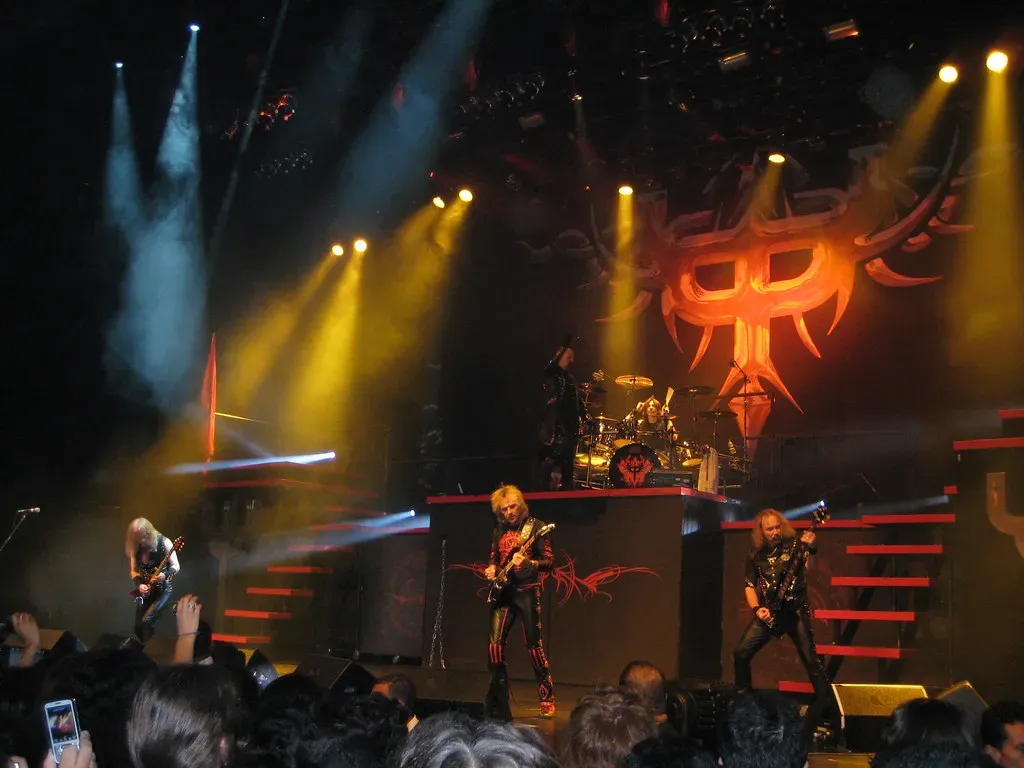
This track from the British metallers’ 1978 album Stained Class involved the claim that a faint exhaling sound in the background was a backmasked command to “Do it.” Vocalist Rob Halford famously testified that the sound was a mere breathing artifact from a vocal take. In 1990, Judas Priest was involved in a court case which alleged subliminal messages in their song “Better by You, Better Than Me” led to the suicide, and attempted suicide, of two men in 1985.
To prove how ridiculous the claim was, Halford showed that if you play other parts of the album backward, you can hear “messages” like “I asked for a peppermint” or “In the middle of the night, my mother made me a cheese toastie.” Honestly, that defense is so good it almost sounds fictional. A cheese toastie. The band walked free, but the case became a landmark moment in music and legal history.
9. ELO – “Fire on High” (1975): Mocking the Mob
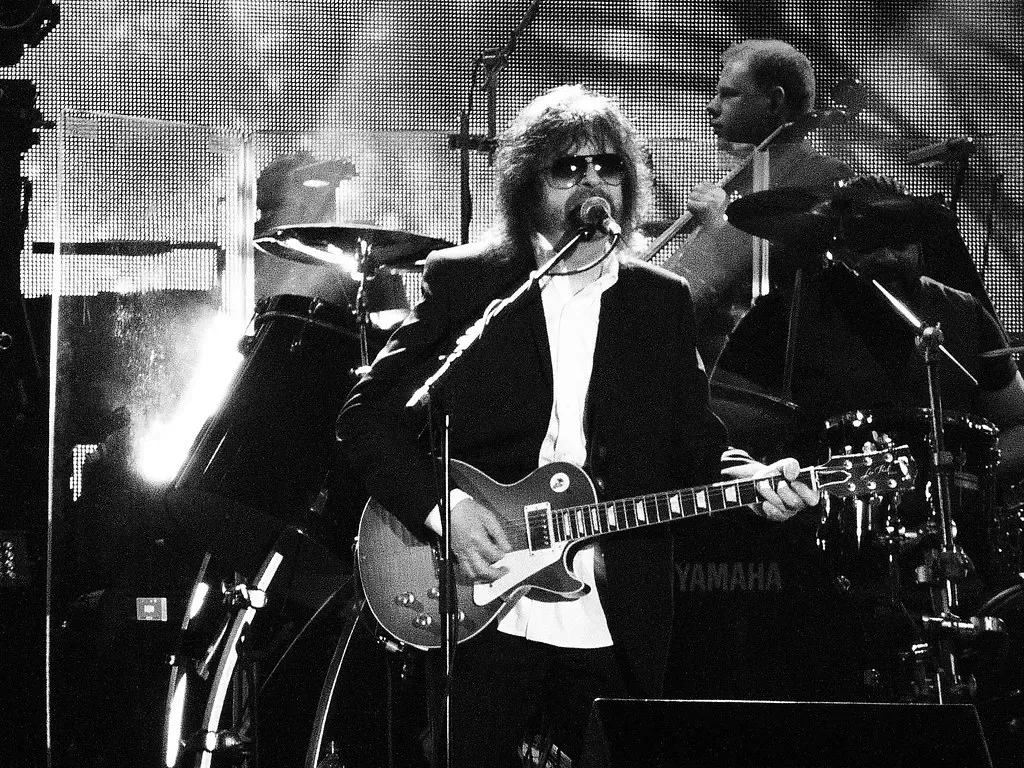
ELO, after being accused of Satanic backmasking on their 1974 album Eldorado, included backmasked messages in two songs on their next album, 1975’s Face the Music. “Down Home Town” begins with a voice twice repeating “Face the mighty waterfall.” The opening instrumental “Fire on High” contains the backmasked message “The music is reversible, but time is not. Turn back! Turn back!”
By 1975, Jeff Lynne had grown annoyed by accusations of Satanic backmasking on their previous album Eldorado, so he decided to open this instrumental track with a blatant, intentional message. The reversed voice – that of drummer Bev Bevan – says: “The music is reversible, but time is not. Turn back!” By being so literal, Lynne hoped to mock the absurdity of the hysteria while simultaneously creating one of the most recognizable backmasked openings in classic rock history. It is one of the most perfectly timed “I told you so” moments in rock and roll.
10. Slayer – “Hell Awaits” (1985): An Actual Invitation


Fellow metallers Slayer utilized backmasking to genuinely chilling effect. The opening of the title track of their 1985 album Hell Awaits features a wall of deep, guttural noise that sounds like the ambient roar of a crowd. When played backward, the voices are chanting “Join us!” over and over again.
Slayer’s “Hell Awaits” stands as a towering monument in the realm of thrash metal, notorious not just for its ferocious sound but also for the enigmatic messages it harbors when played in reverse. The title track from their 1985 album whispers “Join us” to those who dare to explore its depths backward – a chilling invitation that aligns perfectly with the band’s dark themes and fascination with the occult. This deliberate backmasking serves as a bridge between the band’s musical intensity and their thematic explorations of hell. Unlike most entries on this list, this one was completely intentional. Slayer was not joking around.
11. Iron Maiden – “Still Life” (1983): The Drummer’s Joke

Following the “Satanist” labels slapped on the band after The Number of the Beast, Iron Maiden took a comedic approach to their 1983 follow-up Piece of Mind. They included a backmasked message featuring drummer Nicko McBrain imitating idiomatic British gibberish. Reversed, he says: “What ho, said the t’ing with the three bonce, don’t meddle with things you don’t understand.” Followed by a lusty belch. It was a direct, playful jab at the religious groups who were “meddling” in the band’s creative business.
Iron Maiden’s 1983 album Piece of Mind features a short backwards message, included by the band in response to allegations of Satanism that were surrounding them at the time. It is hard not to admire a band that responds to being called Satanists by hiding a comedian’s British gibberish – complete with a belch – in their record. That is peak heavy metal wit right there.
12. Soundgarden – “665” (1988): Santa Claus, Not Satan


In a move of pure Seattle grunge irony, Soundgarden parodied the “Number of the Beast” by naming a track “665” – one digit short of the devil. Throughout the song, Chris Cornell’s vocals are backmasked. For those expecting a dark incantation, the reveal was a letdown: Cornell is actually chanting “Santa, I love you baby,” “My Christmas king,” and “Got what I need.”
Many artists denied the presence of backmasking in their music. Seattle grunge group Soundgarden made fun of the phenomenon with their 1989 album Ultramega OK. The tracks “665” and “667” feature a song about Santa Claus when played backward. The genius of this move is almost too good. In the middle of the Satanic Panic, Chris Cornell hid a Christmas carol. That’s the kind of humor that ages beautifully.
13. Missy Elliott – “Work It” (2002): The Accidental Genius

During the chorus, the lyric “I put my thing down, flip it, and reverse it” is immediately followed by the same line played in reverse, and later in the song, the phrase “Watch the way Missy like to take it backwards” is also reversed. Elliott revealed to Billboard in a 2018 interview that it was a happy accident caused by the finger slip of an engineer. “The reverse thing, that was a mistake,” she said. “The engineer happened to hit something, and it just went backward, and I was like, ‘Oh that’s kind of crazy’ because it went backward on the beat.” Elliott added: “Yo, keep that in there and I’m going to write around it.”
Over 20 years after its release, it is still only becoming clear to some that on Missy Elliott’s 2002 hit “Work It,” the line in the chorus that follows the lyric “I put my thing down flip it and reverse it” is not gibberish – but those very lyrics reversed. Released as the album’s first single on September 16, 2002, “Work It” became a major international commercial success, peaking at number two on the US Billboard Hot 100 for ten weeks. Sometimes the best creative decisions are the ones you stumble into.
14. The Mars Volta – “Eunuch Provocateur” (2002): The Itsy Bitsy Spider


The Mars Volta are a prog-rock band known for cryptic lyrics and messages. One instance that had fans buzzing was on the track “Eunuch Provocateur” on their EP Tremulant. At around the 5:30 mark, the track transforms into echoing drums with an eerie guitar. A voice can be heard, but none of the words can be made out. Fans found that when played in reverse the gibberish could be heard as “The Itsy Bitsy Spider.” The band used an old record that contained children’s songs for the samples.
Also in the track, the phrase “Did mommy or daddy ever have to spank you?” can be heard when reversed. I know it sounds crazy, but a children’s nursery rhyme hidden inside an avant-garde prog-rock track might be the most psychologically unsettling entry in this entire list. The Mars Volta built an entire brand on being deeply, wonderfully strange.
15. Weird Al Yankovic – “I Remember Larry” (1996): The Sass-Back Message
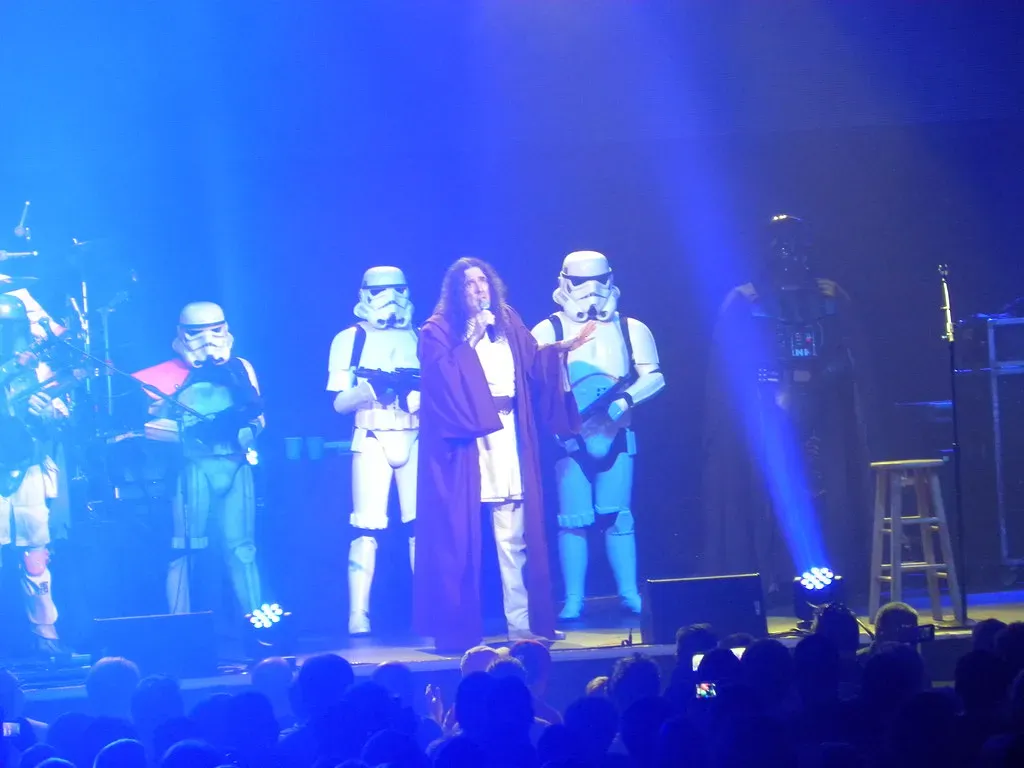
Weird Al poked fun at the backmasking issue and hid a humorous message about those searching for hidden messages on the track “I Remember Larry” off his album Bad Hair Day. In the bridge of the song at around 3:14, Al’s voice can be heard speaking nonsense. When reversed, one can hear: “Wow, you must have an awful lot of free time on your hands.”
Not to be outdone, Weird Al Yankovic included the backward line “Wow, you must have an awful lot of free time on your hands” on the track “I Remember Larry.” The Satanic Panic was able to cause enough of a social uproar for supposed instances of backmasking to end up in state legislatures. Arguably the most self-aware and perfectly targeted use of backmasking ever recorded. Weird Al essentially looked at every conspiracy theorist obsessively scrubbing records in reverse and said, “Get a life.” He hid it in the song itself. Magnificent.
The Bigger Picture: Why Backmasking Still Fascinates


Whether used as a legitimate artistic choice, a cheeky prank to troll conspiracy theorists, or a purely accidental phonetic coincidence, backmasking continues to fascinate. While the controversy surrounding backmasking may have faded over time, the technique itself remains a fascinating aspect of music production. Many artists continue to experiment with backward recordings as a means of adding depth and texture to their music.
Rumors of backmasking in popular music have been described as auditory pareidolia. James Walker, president of Christian research group Watchman Fellowship, states that “You could take a Christian hymn, and if you played it backwards long enough at different speeds, you could make that hymn say anything you want to.” The allure of backmasking has persisted in popular culture, inspiring countless urban legends and conspiracy theories. In the age of the internet, fans and enthusiasts continue to dissect songs in search of hidden messages, perpetuating the mystique surrounding this elusive technique.
Some of these messages were deliberate art. Some were happy accidents. Some were pure coincidence dressed up by an overactive human imagination. Yet that gray area – the uncertainty of it all – is precisely what keeps backmasking alive. So the next time you’re listening to your favorite record, you might want to ask yourself: what happens if you flip it around? What were they really trying to say? What do you think – which of these 15 surprised you the most? Drop it in the comments.