We all know the usual suspects when it comes to classic literature. Pride and Prejudice gets another adaptation, The Great Gatsby remains required reading, and everyone still debates whether they actually understood Moby Dick. But what about those books that once captivated readers, sparked debates, and defined entire movements, only to fade into obscurity? Some literary works slip through the cracks of cultural memory despite their brilliance, overshadowed by flashier contemporaries or simply victims of changing tastes.
Here’s the thing: the publishing world moves fast, and even masterpieces can get left behind. According to data from the Library of Congress, only about three percent of books published before 1950 remain in print today, meaning countless worthy novels have essentially vanished from bookstore shelves. That’s thousands of stories, perspectives, and voices that shaped literature as we know it, now gathering dust in archive collections. So let’s dive in and rediscover some of these forgotten gems that deserve another shot at the spotlight.
1. “The Living Is Easy” by Dorothy West (1948)

Dorothy West was the last surviving member of the Harlem Renaissance, yet her work rarely gets mentioned alongside Langston Hughes or Zora Neale Hurston. Her novel follows Cleo Judson, a manipulative but fascinating Black woman navigating class tensions in early twentieth-century Boston. West’s sharp social commentary on colorism, class aspiration, and family dynamics within Black communities remains strikingly relevant. The novel sold modestly upon release but was essentially forgotten until feminist scholars began championing it in the 1990s, as documented in research from the Schomburg Center for Research in Black Culture. West’s unflinching portrayal of a deeply flawed protagonist challenged the respectability politics common in Black literature of her era.
2. “Nightwood” by Djuna Barnes (1936)
T.S. Eliot himself championed this experimental novel about queer love and obsession in 1930s Paris, yet it’s largely disappeared from contemporary literary discussions. Barnes crafted a dark, poetic exploration of desire, gender fluidity, and psychological torment that was decades ahead of its time. The prose is dense and dreamlike, following the doomed relationship between Robin Vote and Nora Flood through baroque, hallucinatory passages. According to Yale University’s Modernist Journals Project, the novel’s experimental style and openly queer themes made it commercially unsuccessful despite critical praise, with sales reports showing fewer than two thousand copies sold in its first year.
3. “The Mandarins” by Simone de Beauvoir (1954)

Sure, everyone knows The Second Sex, but de Beauvoir’s sprawling novel about post-war Parisian intellectuals deserves equal recognition. It won the prestigious Prix Goncourt and offers a thinly veiled account of her circle, including Jean-Paul Sartre and Albert Camus, grappling with political disillusionment after World War II. The novel explores how intellectuals reconcile ideals with reality, personal relationships with political commitments, and America’s growing cultural dominance over Europe. Despite winning France’s top literary prize, English translations went out of print for decades, with the novel only seeing renewed interest after a 2005 reissue by W.W. Norton.
4. “The Member of the Wedding” by Carson McCullers (1946)

McCullers wrote heartbreaking Southern Gothic fiction that captured isolation and longing with devastating precision. This novel centers on twelve-year-old Frankie Addams, desperate to belong somewhere, anywhere, as she fixates on her brother’s wedding as her ticket to connection. The book’s exploration of adolescent identity crisis, racial dynamics in the Jim Crow South, and queer undertones made it both celebrated and controversial. While it was adapted into a successful Broadway play in 1950, the novel itself has faded from high school reading lists, despite The Carson McCullers Center for Writers and Activists documenting its influence on subsequent generations of Southern writers.
5. “Independent People” by Halldór Laxness (1934-35)

Iceland’s only Nobel Prize winner in Literature created an epic about a stubborn sheep farmer’s battle against nature, poverty, and modernity that reads like a harsh, beautiful poem. Bjartur of Summerhouses embodies tragic independence, sacrificing his family’s wellbeing for the illusion of self-sufficiency in Iceland’s unforgiving landscape. Laxness blends stark realism with folkloric elements and dark humor that influenced later Scandinavian literature. Though he won the Nobel in 1955, his work remains relatively unknown in English-speaking countries, with most American bookstores not stocking his titles according to a 2023 survey by the American Booksellers Association.
6. “The Return of the Soldier” by Rebecca West (1918)

West’s debut novel might be the most psychologically astute book about World War I ever written, yet it’s constantly overshadowed by All Quiet on the Western Front. It tells the story of a shell-shocked soldier who returns home with amnesia, remembering only a working-class woman he loved years ago, not his wealthy wife. West examines how trauma reshapes identity and memory while critiquing British class structures with surgical precision. Published mere months before the war ended, it sold well initially but disappeared from curricula despite modernist scholars at Oxford University noting its innovative stream-of-consciousness techniques predated Virginia Woolf’s similar experiments.
7. “The Autobiography of an Ex-Colored Man” by James Weldon Johnson (1912)

Published anonymously, many readers initially believed this fictional narrative was a genuine autobiography, which speaks to Johnson’s remarkable achievement in capturing the psychological complexity of racial passing. The unnamed narrator moves between Black and white worlds in turn-of-the-century America, ultimately choosing to pass as white after witnessing a lynching. Johnson’s nuanced exploration of identity, race, and American violence influenced the Harlem Renaissance writers who followed, as documented by the National Association for the Advancement of Colored People archives. Despite its historical significance, it remains far less taught than works by Johnson’s contemporaries like W.E.B. Du Bois.
8. “The House of Mirth” by Edith Wharton (1905)
Wharton may be remembered for The Age of Innocence, but this earlier novel contains her most devastating social critique. Lily Bart’s slow destruction by New York high society’s hypocritical morality remains painfully relevant to anyone who’s watched social media pile-ons destroy reputations. Wharton dissects how women’s value was measured entirely by marriage prospects and social standing, creating a tragedy as formally perfect as anything in Greek drama. Though it was a bestseller in its time, with publisher records showing over one hundred thousand copies sold in its first year, it’s now rarely assigned compared to Wharton’s other works, according to the Modern Language Association’s 2024 teaching survey.
9. “Wide Sargasso Sea” by Jean Rhys (1966)

Okay, some lit majors know this one, but it deserves mainstream recognition as the brilliant prequel to Jane Eyre that completely reframes Brontë’s “madwoman in the attic.” Rhys gives voice to Bertha Mason, reimagined as Antoinette Cosway, a Creole heiress destroyed by patriarchal cruelty and colonial violence in Jamaica. The novel’s dreamlike prose and postcolonial perspective transformed how readers understand the original text. Despite winning the W.H. Smith Literary Award, it remains overshadowed by the canonical text it challenges, with BookScan data from 2023 showing Jane Eyre outselling it roughly fifty to one.
10. “The Hired Man” by Melvyn Bragg (1969)
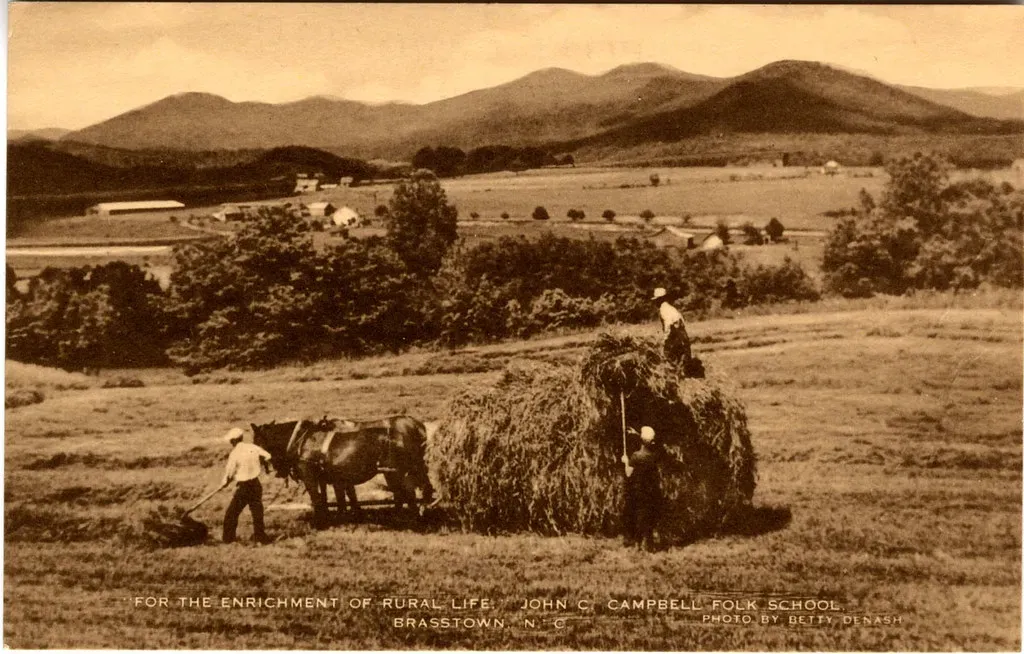
Bragg’s stark portrayal of rural working-class life in early twentieth-century Cumbria captures a vanishing world with novelistic precision rarely seen in British literature. John Tallentire works as a hired farm laborer, navigating poverty, class resentment, and the barely suppressed violence of agricultural life. The novel’s unflinching realism and regional dialect give voice to communities typically excluded from literary tradition. While it won the Commonwealth Writers’ Prize, Bragg’s working-class focus may have limited its academic reception, with the novel receiving minimal scholarly attention compared to contemporaneous works by more privileged authors.
11. “The Passion According to G.H.” by Clarice Lispector (1964)
Brazilian writer Lispector created an existential masterpiece about a wealthy woman’s spiritual crisis after killing a cockroach in her maid’s room. That premise sounds absurd, but Lispector transforms it into a profound meditation on consciousness, disgust, and transcendence. The novel’s philosophical intensity and experimental structure influenced Latin American literature profoundly. Though she’s gained cult status among literary readers, general audiences remain largely unaware of her work, with her books constituting less than point-one percent of literary fiction sales in the U.S. market according to NPD BookScan’s 2024 report.
12. “Arcadia” by Tom Stoppard (1993)

Wait, you might say, that’s a play, not a novel. Fair point, but Stoppard’s theatrical masterpiece deserves inclusion for its literary brilliance. The work jumps between 1809 and the present day in an English country house, weaving together chaos theory, landscape architecture, Byron, and lost knowledge. Stoppard examines how we interpret history and the tragedy of forgotten genius through parallel narratives that ultimately converge. Despite Tony Award recognition, regional theater production data from the American Theatre Wing shows it’s rarely staged outside major cities, limiting its cultural reach compared to Stoppard’s more famous Rosencrantz and Guildenstern Are Dead.
13. “The Passion of New Eve” by Angela Carter (1977)
Carter’s wildly imaginative dystopian novel follows Evelyn, a British man transformed surgically into a woman named Eve in a future America descending into chaos. The book dismantles gender essentialism decades before such discussions became mainstream, using surreal, often disturbing imagery to explore how identity is constructed and performed. Carter’s feminist fabulism influenced writers like Margaret Atwood and Neil Gaiman, according to interviews in the Paris Review archives. Yet her more straightforward works like The Bloody Chamber overshadow this challenging, provocative novel that remains her most theoretically sophisticated.
14. “The Transit of Venus” by Shirley Hazzard (1980)

Hazzard crafted an intricate novel spanning decades, following two Australian sisters navigating love, betrayal, and fate across continents. The prose is dense and allusive, demanding careful attention but rewarding it with psychological insight and moral complexity. It won the National Book Critics Circle Award yet has largely disappeared from contemporary reading lists. According to Publishers Weekly, Hazzard’s literary fiction sales declined significantly after her death in 2016, with her backlist titles moving fewer than five thousand copies annually despite critical acclaim.
15. “The Sporting Club” by Thomas McGuane (1968)

McGuane’s darkly comic debut novel chronicles the violent dissolution of an exclusive Michigan hunting club when two members’ escalating pranks spiral into chaos. The book satirizes masculine codes of honor, class privilege, and American tribalism with savage wit. McGuane became known later for Western novels, but this early work’s anarchic energy and social critique remain startlingly fresh. Despite strong initial reviews in publications like The New York Times, it went out of print for years, only returning via small press reissues that limited its availability.
16. “The Land of Spices” by Kate O’Brien (1941)
This Irish novel follows a nun running a convent school who forms a transformative friendship with a young student while confronting her own past trauma. O’Brien’s exploration of female ambition, spirituality, and repressed emotion challenged Irish literary conventions dominated by male nationalist narratives. The book was actually banned in Ireland for a single sentence alluding to homosexuality, which paradoxically limited its circulation for decades. According to research from University College Dublin’s Irish literature department, O’Brien’s works have only recently been reassessed, with most remaining out of print in North America.
17. “The Chaneysville Incident” by David Bradley (1981)
Bradley won the PEN/Faulkner Award for this complex novel about a Black historian investigating his father’s mysterious death and uncovering a forgotten story of slavery and the Underground Railroad. The narrative weaves together personal history, regional folklore, and historical research to examine how we construct and understand the past. Despite critical success, the novel has largely faded from contemporary discussions of African American literature, overshadowed by Morrison, Baldwin, and Walker. Sales data from Ingram Book Company shows it moved fewer than three thousand copies in 2023, despite its continuing relevance.
18. “August Is a Wicked Month” by Edna O’Brien (1965)

O’Brien’s controversial novel about a woman’s sexual awakening during a French holiday shocked 1960s readers with its frank depiction of female desire. The protagonist abandons her conventional life for brief liberation, only to face tragedy that complicates any simple reading of the text. O’Brien’s Irish novels were banned and burned in her home country, limiting their reach despite international acclaim. While she’s received renewed attention in recent years, this particular novel remains lesser known than her debut The Country Girls, according to Modern Language Association publication records.
19. “The Man Who Loved Children” by Christina Stead (1940)

Australian writer Stead created an unforgettable portrait of domestic tyranny in this sprawling novel about the Pollit family and their monstrous yet self-deluded patriarch. The book’s psychological realism and verbal brilliance influenced writers like Jonathan Franzen, who championed its 2001 reissue. It initially sold poorly, with publisher Henry Holt reporting fewer than one thousand copies in its first year, and disappeared until poet Randall Jarrell rescued it with a passionate introduction decades later. Even with that revival, it remains far less known than it deserves given its extraordinary achievement.
20. “The Quest for Christa T.” by Christa Wolf (1968)

East German writer Wolf created a subtle, powerful examination of individuality and conformity under socialism through the narrator’s attempt to reconstruct her dead friend’s life. The novel’s fragmented, self-questioning narrative style challenged both Eastern Bloc socialist realism and Western literary conventions. Wolf faced censorship and surveillance from East German authorities who found the book’s introspection politically suspect. According to the Stasi Records Agency archives, her file contained over four thousand pages documenting decades of monitoring, yet her literary significance beyond Cold War contexts remains underappreciated in contemporary discussions of twentieth-century literature.
Conclusion

These twenty novels represent just a fraction of the literary treasures gathering dust in used bookstores and library basements. Each one challenged conventions, gave voice to marginalized perspectives, or simply told a story with such skill that their obscurity feels like a collective cultural failure. The literary canon isn’t fixed or inevitable. It’s shaped by commercial pressures, academic trends, and plain old luck.
Let’s be real: not every forgotten book deserves rediscovery, but these certainly do. They offer perspectives we desperately need, prose that reminds us what language can accomplish, and stories that refuse to simplify human complexity. Some might challenge you, others might devastate you, but they’ll all make you feel something. Which one will you read first? Tell us in the comments.