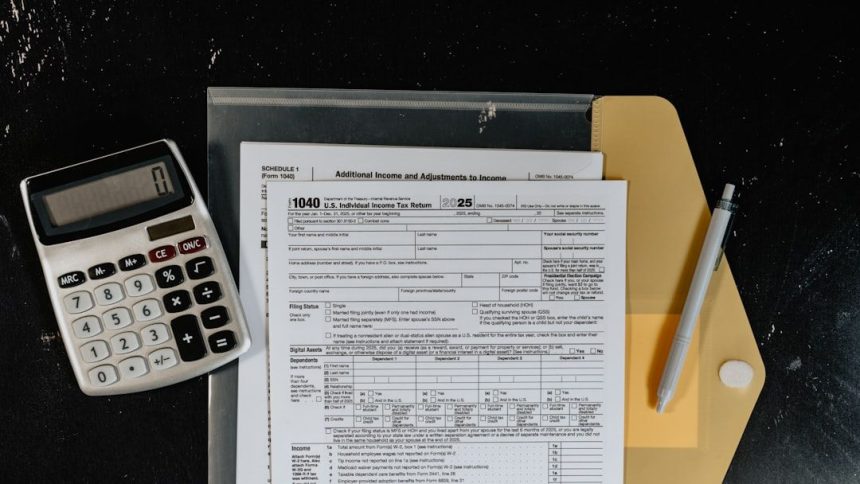
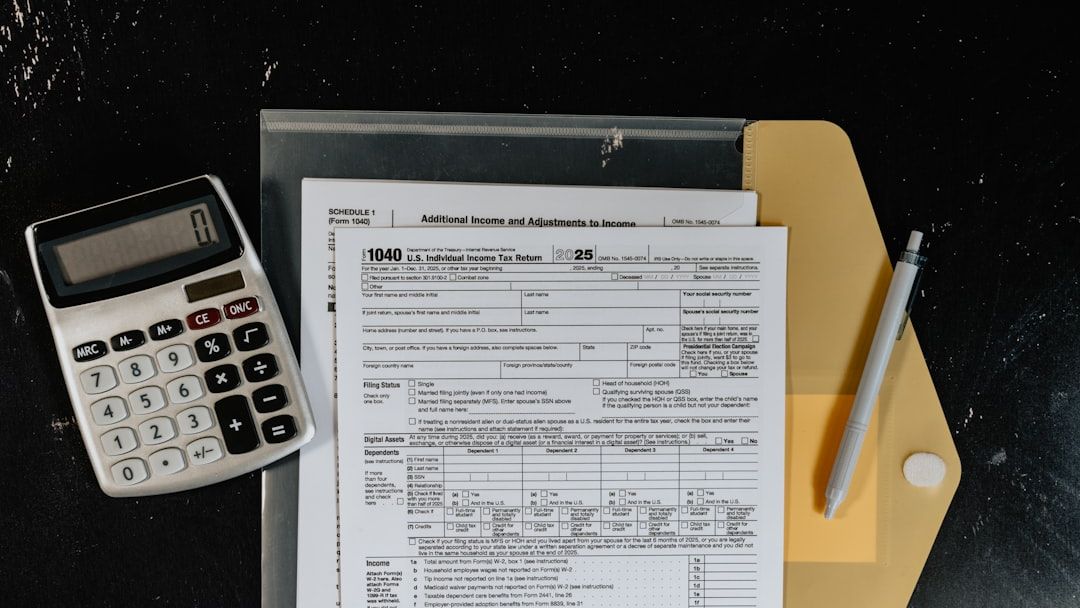

New IRS Charitable Deduction Tax Rules in 2026 – Image for illustrative purposes only (Image credits: Unsplash)
As the 2026 tax year approaches, federal employees and retirees face significant shifts in how they can claim deductions for charitable contributions. The One Big Beautiful Bill Act of 2025 introduced these changes, effective January 1, 2026, altering strategies for both those who take the standard deduction and those who itemize.[1][2] Financial planner Edward A. Zurndorfer highlighted the impacts in a recent analysis, noting effects on cash gifts, property donations, and high-income filers. Many in public service, often with steady but predictable incomes, now must reassess their giving plans to optimize tax benefits.
Non-Itemizers Gain a Limited Above-the-Line Option
Taxpayers who opt for the standard deduction received a new tool under the OBBBA. They can now subtract up to $1,000 in cash or check donations for single filers, or $2,000 for married couples filing jointly, directly from their taxable income.[1] This “below-the-line” adjustment applies only to contributions to qualified charities during the calendar year and requires documentation like canceled checks or receipts showing the charity’s name, date, and amount.
However, the provision comes with strict boundaries. Donations of property, such as clothing or furniture, appreciated stocks, bonds, or gifts to donor-advised funds do not qualify. Excess amounts over the cap cannot carry forward, forcing donors to plan carefully. For instance, a married couple with $170,000 in adjusted gross income who donated $1,600 in cash to their church and the Red Cross, plus $750 in goods to a thrift store, could claim only the $1,600 cash portion up to the $2,000 limit.[1]
Itemizers Confront an AGI-Based Floor
Those who itemize on Schedule A encountered a new hurdle: charitable gifts now qualify for deduction only after exceeding 0.5 percent of adjusted gross income. A couple with $250,000 AGI, for example, must surpass $1,250 in contributions before claiming any amount on their return.[2] This floor applies across cash, checks, and property donations alike.
The change compounds challenges for higher earners. Filers in the top 37 percent marginal tax bracket face an additional cap, where the tax benefit of itemized deductions tops out at 35 percent. Combined with the AGI disallowance, this reduces the effective value of gifts. A married couple earning $175,000 AGI who gave $1,500 cash and $750 in property could deduct just $1,325 after subtracting 0.5 percent of their income, or $875.[1]
Partner offer

Strategic Adjustments for Federal Employees and Retirees
Federal workers and pension recipients, many of whom itemize due to state and local taxes, must adapt quickly. The OBBBA also raised the SALT deduction cap to $40,000 through 2029, potentially drawing more into itemizing but exposing them to the charity floor.[1] Non-itemizers might sell donated goods first – at a personal loss, though nondeductible – and contribute the proceeds in cash to fit the new rule.
Timing emerges as a key tactic. Experts urged accelerating larger gifts into 2025, before the rules took effect, especially for those with AGI above $200,000. Retirees over 70.5 years old hold a distinct advantage through qualified charitable distributions from IRAs. These transfers count toward required minimum distributions without boosting taxable income or triggering the new limits.[3]
- Sell property and donate cash proceeds for non-itemizers.
- Evaluate itemizing versus standard deduction with expanded SALT.
- Prioritize QCDs for eligible seniors to bypass deduction caps.
- Document all cash gifts meticulously for the $1,000/$2,000 allowance.
What Matters Now
With tax season planning underway, federal households should review 2026 projections. The dual structure – capped relief for standard deduction takers, floored deductions for itemizers – demands precise calculations to preserve giving incentives.
Broader Implications for Philanthropy
These reforms aimed to refine tax incentives amid fiscal pressures, but they sparked debate over reduced encouragement for generosity. High-net-worth individuals, including senior federal retirees, stood to lose the most from the layered restrictions. Yet the non-itemizer provision offered modest access for middle-income donors previously shut out.
Analyses from federal benefits specialists emphasized proactive planning. As OBBBA provisions rolled out, filers learned to blend QCDs with cash gifts or shift toward qualifying outlets. The net effect remained a call for intentionality in charitable commitments.
Federal employees and retirees navigated these updates with an eye toward long-term security. The changes underscored a shifting landscape where tax efficiency intertwined ever more closely with personal values. Prudent adjustments now positioned many to sustain their support for causes amid the new constraints.
Partner offer
Planning a trip to Vegas?
Compare hotel rates and show tickets on VEGAS.com.