Mid-century science fiction writers liked to aim far ahead, and some of their futures now sit uncomfortably close to our calendar. A few of those books name years we’ve already lived through. Others never give a date, but their timelines drift into our present.
Reading them in 2026 is a odd mix of recognition and mismatch. The rockets and Martian towns didn’t arrive, yet some of the moods did. Here are three novels from the 1950s that reach into the 2020s, each with a different degree of precision about it.
The Martian Chronicles by Ray Bradbury
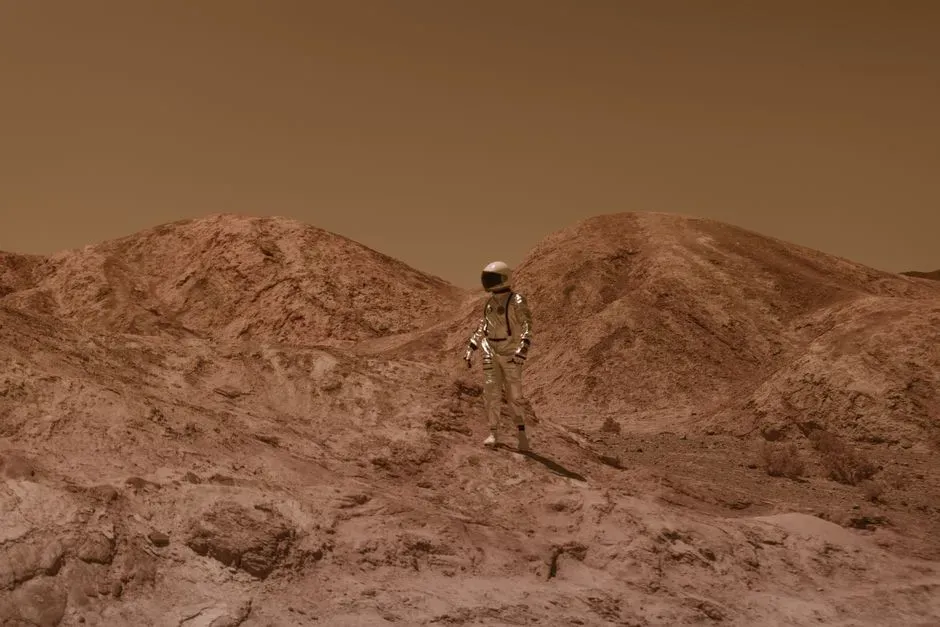
Bradbury’s book appeared in 1951 and is usually described as a novel built from linked stories. The last three stories in it are set in 2026, which makes it the most exact match on this list. That’s the year we’re living in now.
One of those stories is “There Will Come Soft Rains.” It was first published in 1950 and appears in the book as the August 2026 chapter, opening with a house computer trying to wake its humans. Another, “The Long Years,” was originally published in 1948 and follows a rescue party that finds a lost astronaut and his family. One caveat for collectors: a 2001 edition changed the year to 2057, though all other copies before and since have kept 2026.
Childhood’s End by Arthur C. Clarke
Clarke’s 1953 novel is less precise, and that’s worth saying plainly. It follows a peaceful alien invasion by mysterious Overlords, whose arrival begins decades of apparent utopia under indirect alien rule, at the cost of human identity and culture. The story is told in three parts, and the middle one is called “The Golden Age.”
The timeline is what pulls it toward the 2020s. One reference guide describes it as set mainly on Earth from the mid 1970s to nearly a century into the future. The opening is anchored in the mid 1970s, though the exact year isn’t given in the text. So the book doesn’t name the 2020s, but its span carries the story through them.
Fahrenheit 451 by Ray Bradbury
This is the loosest fit, and it’s included with that in mind. The novel never states a year. It was published in 1953 as a dystopian story about a society where books are banned, and it follows a fireman named Guy Montag, whose job is to burn them.
Readers have long treated it as a near future, which is why it keeps turning up in conversations about the present. Its wall sized screens, constant noise and shrinking attention feel familiar to anyone with a phone. Since the book gives no date, its place in the 2020s is a matter of reading rather than a fact on the page.