
Most of us own at least one book that works better as décor than as reading material. It sits on the shelf with a cracked spine near page fifty, and it’s ready to be mentioned at a dinner party. Publishers have long suspected that buying a book and finishing it are very different habits.
In 2014, mathematician Jordan Ellenberg tried to measure the gap. His method drew on the five most highlighted passages that Amazon Kindle readers had marked in each title. If those highlights bunch up near the start, fewer people probably reached the end. The method is informal and now dated, but it still gives us a useful way to look at four famous novels.
Infinite Jest by David Foster Wallace

This is the usual first suspect. On Ellenberg’s list it scored about six percent on the Hawking Index, which suggests most readers stopped very early. The book runs to roughly a thousand pages, and that length is part of its reputation.
Owning it sends a signal about ambition, which is probably why so many copies get bought. The data can’t tell us why readers quit, only where the highlights stop. Still, the pattern points to a heavy, demanding book that many people sample and then set aside.
Fifty Shades of Grey by E. L. James

This one is a different case, because nobody bought it to look scholarly. It was a cultural event, and people wanted to know what everyone was talking about. It scored roughly one quarter on the Hawking Index, so most readers seem to have dropped off well before the end.
One column on reading habits suggests why. It says the book sounded like a hit, but readers found the prose repetitive and didn’t finish. That’s a commentator’s explanation, not a measured result. Even so, it fits the idea that buzz can sell a book without carrying readers to the last page.
The Great Gatsby by F. Scott Fitzgerald
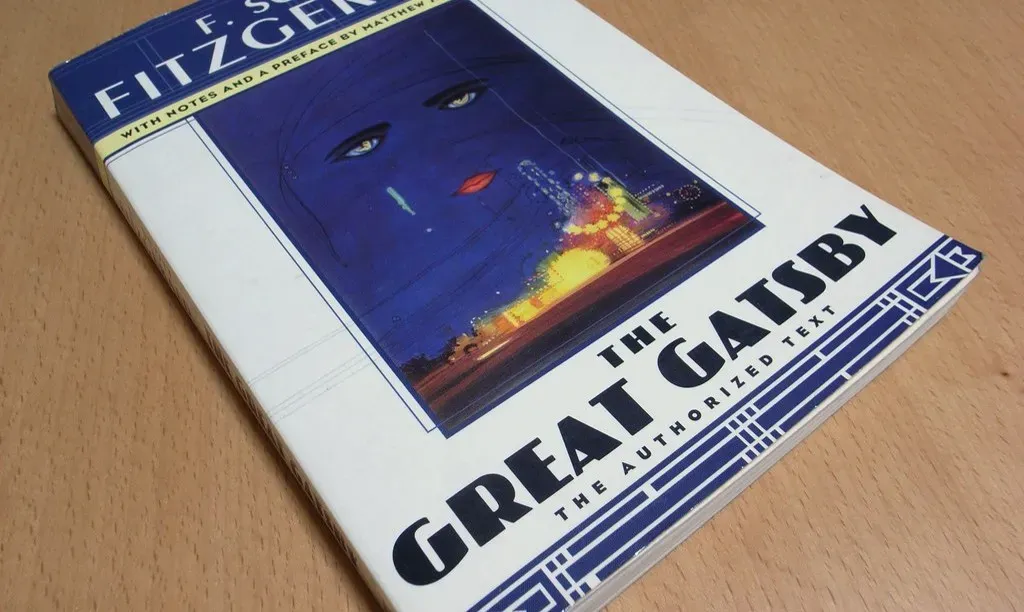
Gatsby is the surprise on this list, since it’s short and sits on school reading lists everywhere. Its score of just over one quarter suggests many Kindle readers highlighted only in the early chapters. That doesn’t prove they quit, because highlighting habits vary and early passages attract more marks.
The book is a good example of a title people feel they’ve read already. It’s quoted constantly, studied in classrooms and adapted for the screen, so owning it feels like proof of familiarity. The index was never designed to settle that question, but it does raise it.
Ulysses by James Joyce

I couldn’t find Hawking Index figures for Ulysses, so this entry rests on reputation rather than data. The novel, published in 1922, has a long standing image as a book more admired than completed. It’s dense, allusive and deliberately difficult, and it’s often named among the greatest novels in English.
That combination makes it an ideal shelf piece. Plenty of readers have probably bought a copy with good intentions and stalled early. Without hard numbers, though, it’s fairer to call it a likely candidate than a proven one.