
There are people who live inside their time. Then there are people who remake it. Throughout history, a handful of Americans did not simply ride the wave of progress – they created the wave entirely. From factory floors in Detroit to the streets of Birmingham, from a garage in California to the halls of Congress, their decisions echo in every corner of daily life today.
Honestly, picking just five is nearly impossible. The names you are about to read are not chosen casually. Each one carries a story that, once you understand it fully, makes you see in a completely different way. Let’s dive in.
1. Henry Ford – The Man Who Built the World You Live In

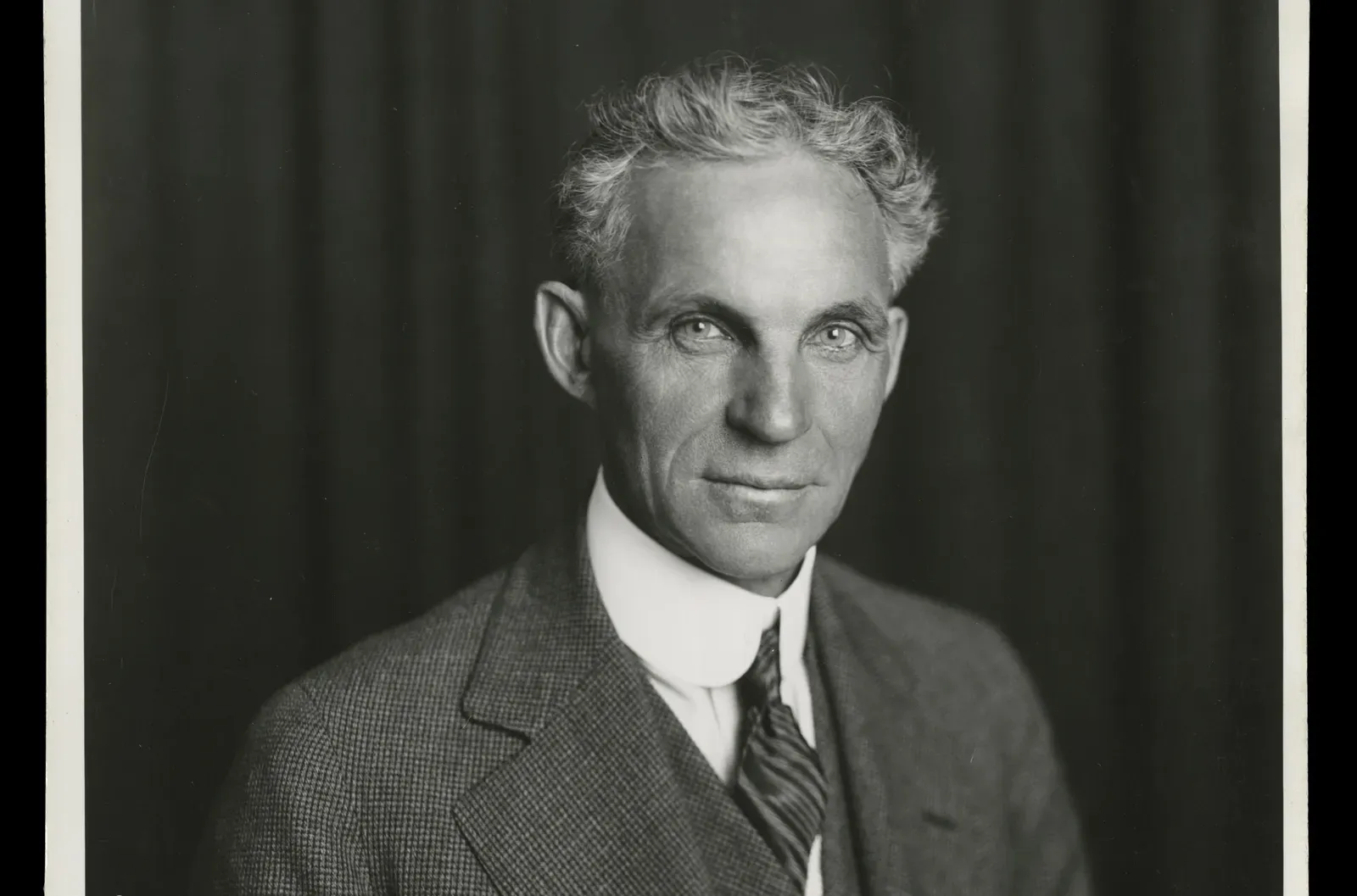
Most people think Henry Ford invented the car. He didn’t. What he invented was something far more consequential. When we think of Henry Ford, his name is forever linked with the Model T, but his most significant contribution wasn’t just car design – it was how he redefined the way products are made, revolutionizing manufacturing through the moving assembly line.
On December 1, 1913, Ford introduced the first moving assembly line at the Highland Park Ford Plant, and it slashed the time it took to build a car from over 12 hours to just 1 hour and 33 minutes. Think about that for a second. Cutting production time by nearly ninety percent changed everything. Mass production of the Model T allowed Ford to cut costs significantly – in 1908, the Model T was priced at $850, but by 1924 the price had dropped to $260.
Ford’s methodology became so influential that it gave rise to its own term: Fordism – a system of mass production paired with high wages and mass consumption. This model reshaped capitalism by creating a consumer economy fueled by well-paid workers who could afford the very products they were making, and Fordism became a foundational concept in industrial economics, influencing labour practices, economic policy, and educational systems around the globe.
Ford also pioneered the five-day, 40-hour workweek in 1926, a standard that remains common today. That weekend you spent relaxing, hiking, or binging your favorite show? You can thank Henry Ford for that too. Ford’s focus on efficiency, mass production, and cost reduction has influenced manufacturing practices for over a century, shaping industries ranging from electronics to food to pharmaceuticals.
2. Martin Luther King Jr. – The Conscience of a Nation

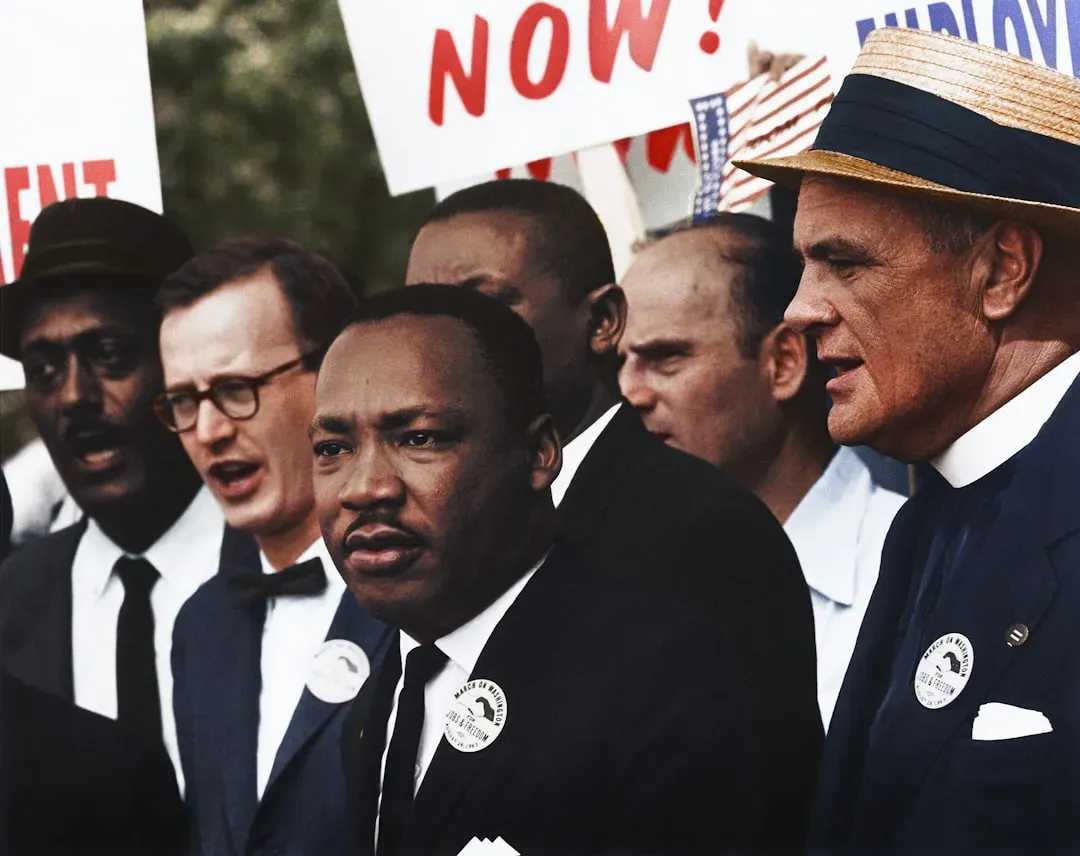
Here’s the thing about Dr. King: his impact is almost impossible to fully measure because it extends well beyond America’s borders. Martin Luther King Jr.’s leadership of the modern American Civil Rights Movement, from December 1955 until April 4, 1968, helped African Americans achieve more genuine progress toward racial equality than the previous 350 years had produced. That single sentence should stop you cold.
Dr. King led the civil rights movement from 1955 until his assassination in 1968, advancing nonviolent resistance against racial segregation, discrimination, and the disenfranchisement of Black Americans. His leadership helped secure federal civil rights protections for all Americans in the Civil Rights Act of 1964 and the Voting Rights Act of 1965. These were not minor policy adjustments – they were tectonic shifts in how American democracy functioned.
On August 28, 1963, about 250,000 people gathered at the Lincoln Memorial in Washington, D.C., for the March on Washington for Jobs and Freedom, where King gave his historic “I Have a Dream” speech advocating for economic and civil rights for Black Americans. According to Pew Research Center, most Americans say King has had a positive impact on the country, with nearly half saying he has had a very positive impact, while more than a third say their own views on racial equality have been influenced by King’s legacy.
The civil rights movement reshaped the nation’s understanding of discrimination, access, and equality as matters of fundamental rights, opening the door for every civil rights struggle that followed, including disability rights – by reframing segregation and inequality as violations of citizenship and human dignity, it paved the way for Section 504 of the Rehabilitation Act of 1973 and the Americans with Disabilities Act of 1990. King did not just change one movement. He wrote the blueprint for all of them.
3. Steve Jobs – The Architect of the Digital Age


I think there’s a real case to be made that no single person transformed everyday human behavior more completely in the last fifty years than Steve Jobs. Not just technology. Behavior. Steve Jobs wasn’t just a successful entrepreneur – he was a visionary who changed the way we think about technology. As the co-founder of Apple Inc., Jobs introduced trailblazing products that have defined the modern era, from the personal computer to the smartphone, transforming our interactions with the world.
Steve Jobs co-founded Apple Computer in 1976 alongside Steve Wozniak and Ronald Wayne. Working out of a Los Altos garage, Jobs helped usher in the personal computer revolution with the launch of the Apple I and later the Apple II, and it was the 1984 release of the Macintosh that truly put his design philosophy in motion, featuring intuitive interfaces paired with powerful computing in a user-friendly package.
The iPhone was not just a phone – it was a powerful handheld computer that combined a phone, an iPod, and an internet communicator in a single device, setting the stage for the modern smartphone era. Its impact on technology and society has been profound, redefining the mobile phone as a central part of daily life and catalyzing the development of mobile apps, which have since become a multi-billion-dollar industry.
Steve Jobs’ impact went further than product design – he also transformed the strategic approach of the technology industry. His product launches were energetic and innovative, and strategic business activities such as the App Store and iTunes not only helped Apple generate revenue but also revolutionized industries such as music and mobile applications. Long before AI became mainstream, Jobs foresaw its transformative impact – in his 1983 speech at the International Design Conference in Aspen, he predicted that AI-driven systems would revolutionize daily life in our lifetimes.
4. Bill Gates – The Man Who Put a Computer on Every Desk


Before Bill Gates, using a computer felt like learning a foreign language from scratch, with no dictionary. Bill Gates’ main impact on society was making computers available and easy to use for everyone. Before computers were something people carried around in their pockets, they were very complicated machines that only trained people could use. Gates’ company, Microsoft, changed this by making them personal, making computers much more widely available to the everyday person.
Although the code that Gates created may look crude compared to what powers today’s artificial intelligence platforms, it played a critical role in creating Microsoft in April 1975. Gates set the stage for that milestone alongside his old high school friend Paul Allen, scrambling to create the world’s first “software factory” after reading about the Altair 8800, a minicomputer powered by a chip made by the then-obscure technology company Intel.
The code would go on to provide the foundation for a business that would make personal computers a household staple, with a suite of software that includes the Word, Excel, and PowerPoint programs, as well as the Windows operating system that still powers most PCs today. Microsoft Windows runs on roughly three quarters of the world’s desktop computers – the operating system which now runs on over 75% of desktop computers worldwide made its debut over 40 years ago.
In Microsoft’s 2024 fiscal year, revenues grew more than 150% to $245 billion, while at its current stock price, Microsoft has the third highest market capitalization in the world at $3.1 trillion, behind only Apple and Nvidia. Beyond his business achievements, Gates is also recognized for his philanthropic efforts that have impacted global health, education, and more. The scale of that giving is almost surreal – few Americans have poured more private wealth into global human welfare than he has.
5. Martin Luther King Jr.’s Spiritual and Intellectual Predecessor: Thomas Edison – The Inventor Who Lit the World

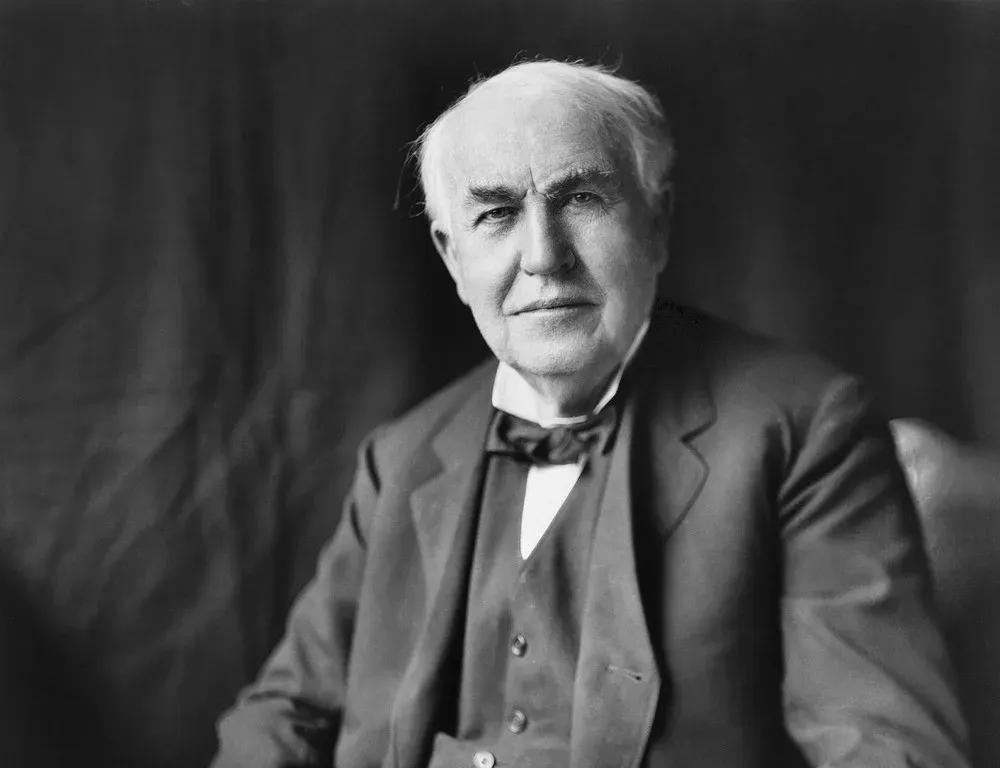
Wait. Before you skip past this name thinking Edison is too familiar, too obvious – consider what the world actually looked like without him. No electric light. No recorded sound. No practical power grid. Thomas Edison was a creative inventor that pushed the science world forward and had a major positive impact on his decade, the world, and the rest of history. Edison had a major positive impact on his society, and a large portion of jobs and inventions can be traced back to the late 19th and early 20th centuries.
The recent past has seen a number of men build companies that harness technology in ways that have dramatically influenced our culture, our country, and indeed the world – and like J.P. Morgan, Andrew Carnegie, J.D. Rockefeller, Thomas Edison, and Henry Ford before them between 1865 and 1900, these men are in many ways larger than life. Edison belongs in that conversation permanently, perhaps at the very top.
In 1983, People magazine described Bill Gates as being “to software what Edison was to the light bulb – part innovator, part entrepreneur, and full-time genius.” That comparison exists because Edison set a standard so high that, a full century later, people still used him as the benchmark of American invention. He patented over a thousand inventions during his lifetime, and the modern electrical grid, the phonograph, and commercially viable electric lighting all trace directly back to his Menlo Park laboratory.
Edison did something deeper than inventing things – he built a system for inventing. His Menlo Park research facility is widely considered the world’s first true industrial research laboratory, a concept that every modern R&D department in every tech company on the planet descends from. All of this and much more was made possible by Thomas Alva Edison – the man behind the light bulb, domestic electricity, and countless inventions that continue to shape everyday life.
—
Five names. Five stories. Each one rewired something essential about how human beings live, work, vote, communicate, or simply turn on a light. What’s remarkable is that none of them started with certainty – they all started with conviction. That distinction matters more than most people realize.
Which of these five surprised you most? Tell us in the comments.