Translation is never just a technical swap of words from one language into another. It is a deeply interpretive act, shaped by the translator’s background, instincts, cultural assumptions, and sometimes even personal agendas. When great works of literature are translated, they are able to retain the central idea but often lose the witty side or the figures of speech. The result is that readers in different languages can end up experiencing what are, in essence, fundamentally different books. Some of the world’s most celebrated novels have been reshaped, softened, inflated, or accidentally distorted on their journey across languages, and a handful of those cases are nothing short of extraordinary.
1. The Little Prince by Antoine de Saint-Exupéry


Few readers realize that early English translations of “The Little Prince” dramatically reshaped the book’s soul. Large sections were simply omitted, and the nuanced reflections on love, loss, and the essence of childhood were softened, making the story less thought-provoking than the original French. What most English-speaking readers absorbed as a charming children’s tale was, in its original form, a much denser and more philosophically ambitious work. Scholars have pointed out that the French text brims with poetic metaphors and existential questions, elements that fade in translation – for example, the famous line “What is essential is invisible to the eye” is rendered less powerfully in some English versions.
The Little Prince by Antoine de Saint-Exupéry is recognized as the most translated philosophical work in the world, having been translated into more than 250 languages. That staggering reach makes the translation discrepancies even more consequential – countless generations of readers have encountered a version of the story that is, by scholarly standards, incomplete. These changes sparked debates about preserving an author’s intent and the impact on readers’ emotional responses, with the missing philosophical layers causing generations of English-speaking readers to miss out on the book’s deepest meanings.
2. The Stranger by Albert Camus

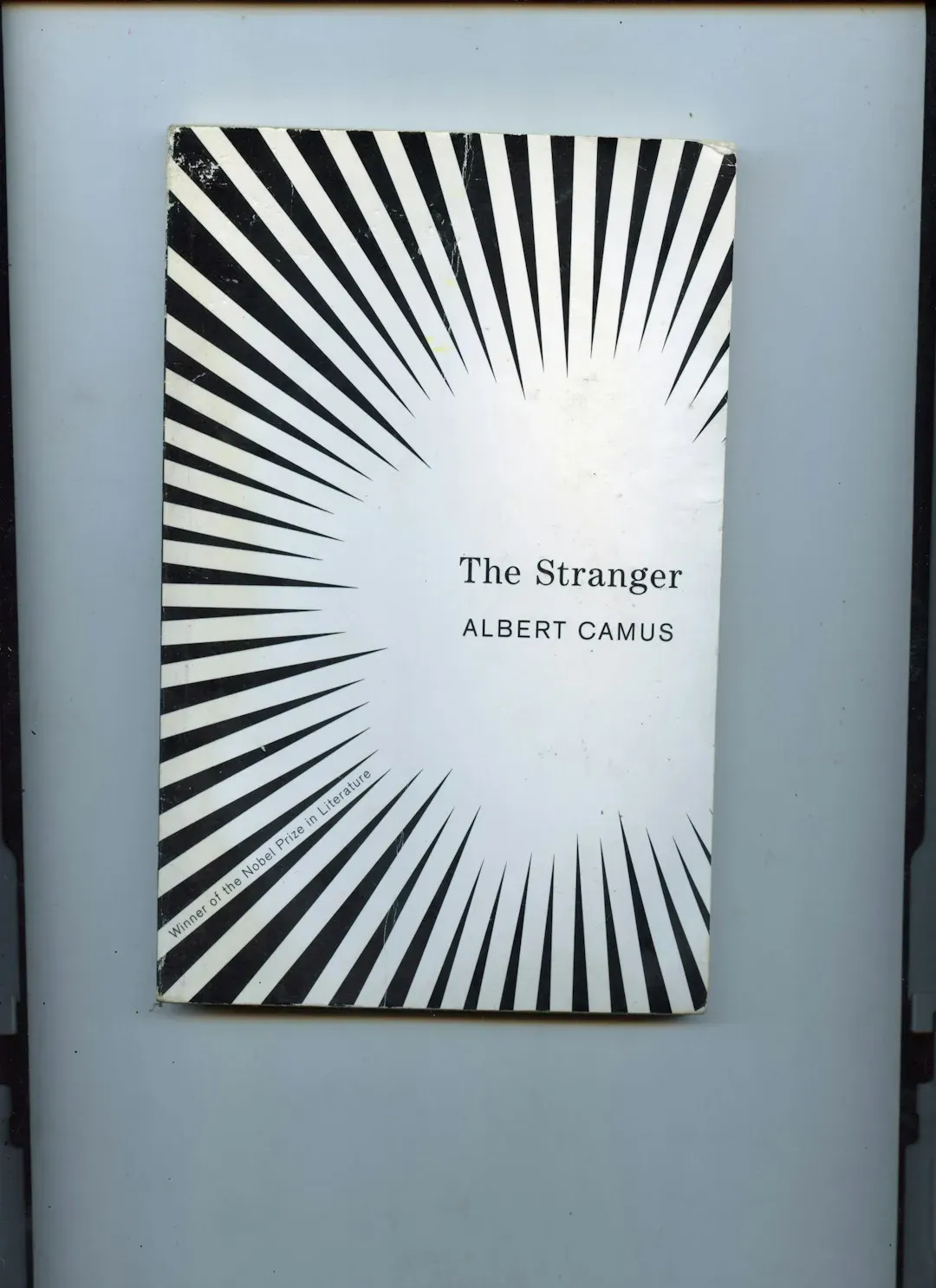
Albert Camus’s “The Stranger” is remembered for its cool, detached protagonist, Meursault. In the original French, Meursault’s “indifference” is a striking philosophical stance, rooted in existential ideas about the absurdity of existence. However, early English versions softened this to “peculiar,” making Meursault seem merely odd rather than profoundly disconnected. That single word swap carries enormous weight for any reader trying to understand what Camus was really doing with this character. The shift repositions Meursault from a philosophical figure into something resembling a social misfit, and that is a very different kind of story.
Scholars argue that this mistranslation undercuts the book’s central message about the human condition, with the difference in language also affecting how readers judge Meursault’s actions, especially his response to his mother’s death. The translation controversy has led to new versions attempting to restore the original meaning, but the “peculiar” perception still lingers in popular culture, and the novel’s reputation as a philosophical touchstone depends heavily on which translation readers encounter first. It is one of the clearest examples of how a single translator’s choice can alter the entire reception of a masterpiece for decades.
3. Don Quixote by Miguel de Cervantes


“Don Quixote” has been translated countless times, and each version brings its own interpretation, sometimes changing the very genre of the book. The original Spanish is a biting parody of chivalric romance, filled with irony and social satire, yet some translations emphasize the tragicomic elements, making the story more of a poignant drama than a playful farce. This matters enormously because it changes your entire relationship to the main character. This shift affects how readers view Don Quixote himself – either as a ridiculous dreamer or a tragic hero – with translators’ choices about tone, humor, and even wordplay dramatically influencing the novel’s meaning.
Literary experts have called attention to how these differences shape readers’ understanding of Spanish literature and culture, and it is not uncommon for two English readers to have completely different impressions of the book based on which translation they read. The challenge with Cervantes is that his comedy is deeply embedded in the rhythms and idioms of early modern Spanish, which resists clean conversion into any other language. As one translator noted, “There’s not a single word in any of the languages I translate that can map perfectly onto a word in English. So, it’s always interpretative, approximate, creative. Anything that is, itself, a ‘linguistic’ quality will by definition be anchored in a particular language.”
4. The Vegetarian by Han Kang


Written in Korean in 2007, “The Vegetarian” was Han Kang’s first novel to be translated into English and won the 2016 Man Booker International Prize. In October 2024, Han Kang was announced as the winner of the Nobel Prize in Literature. The translation was done by Deborah Smith, who had only recently become fluent in Korean. Controversy ensued when critics noticed striking deviations from Han’s original Korean text compared to Smith’s English translation, which now suddenly had a British-Victorian tinge.
One of the most notable changes was that of the novel’s opening sentence. Originally, Yeong-hye’s husband stated that he never thought of his wife as “anything special,” whereas in English, Yeong-hye was described as “completely unremarkable in every way.” These two statements have very different tones, as the Korean is simply more dismissive and the English seems to imply that the husband looks down upon his wife. According to an article in The Guardian, a speaker at a 2016 conference stated that “10.9% of the first part of the novel was mistranslated.” Smith herself acknowledged the imperfections, while defending translation as a creative and interpretive process. Critics pinpointed the many thematic changes Smith made as revisions that altered Han Kang’s work, with investigators finding numerous inaccuracies, as Smith had only just become a fluent speaker of Korean at the time of translating.
5. In Search of Lost Time by Marcel Proust


Marcel Proust’s “In Search of Lost Time,” first translated into English as “Remembrance of Things Past,” is a novel in seven volumes by the French author. The first English translation was done by C.K. Scott Moncrieff, and the choices he made were bold from the very start. The translation was published under the title “Remembrance of Things Past,” a phrase taken from Shakespeare’s Sonnet 30, rather than the more accurate “In Search of Lost Time.” Although cordial with Scott Moncrieff, Proust grudgingly remarked in a letter that “Remembrance” eliminated the correspondence between “Temps perdu” and “Temps retrouvé.”
Moncrieff had a fine ear for the cadences of Proust’s prose, but his language dated over time, especially in dialogue, and from the beginning he was prone to tamper with the text, through embellishment or the heightening of language. Moncrieff’s translation is widely considered a remarkable achievement – some even call it the best single fiction translation ever – though the main criticism is that English language readers tend to think he accurately portrayed the tone of Proust in his native French, but this is not true. Proust’s tone is apparently much more plain in French. From 2013 to 2025, Yale University Press published a new revision of Scott Moncrieff’s translation, and since 2023 Oxford University Press has been publishing a new, complete translation edited by Adam Watt – a testament to how much debate around the “correct” English Proust continues to this day.
6. Pippi Longstocking by Astrid Lindgren

“Pippi Longstocking” is celebrated for its quirky, rebellious heroine, but her spirit was tamed for English-speaking audiences. English editions censored many of Pippi’s more subversive actions and changed cultural references to fit Western sensibilities. In the original Swedish, Pippi openly questions authority, flouts social norms, and lives joyfully outside convention – qualities that were toned down or removed altogether. This is more than a stylistic difference. Lindgren wrote Pippi as a radical figure, and softening her fundamentally changes the book’s message about childhood, freedom, and defiance of adult authority.
Some translators were not satisfied with the source material and made it their responsibility to render it more palatable to the audience that shared their language, or to alter it to suit their own tastes. As a result, they have been accused by the literary world of abusing, misrepresenting, or disrespecting their position – though they do have their defenders, readers who maintain that the changes were necessary for the work to speak more clearly to a different culture or language. With “Pippi Longstocking,” the irony is sharp: a book celebrating a girl who refuses to be tamed was itself tamed in translation. The disagreements carry on as long as the books themselves carry relevance.