
Most people who end up at the center of a criminal case never expected to be there. They were college students, a woman dating a police officer, a bookkeeper at a nursing home, or a PhD student with academic ambitions. Then, in an instant or across a slow unraveling of hidden choices, their names became the ones read on national news broadcasts, debated on social media, and dissected in courtrooms watched by millions.
These five cases, stretching from 2022 through 2025, share one defining quality: none of the people involved started out as public figures. The crimes themselves, the investigations that followed, and the verdicts that came down reshaped how Americans thought about justice, healthcare, grief, and the criminal system itself.
Luigi Mangione and the UnitedHealthcare CEO Killing: A Shooting That Ignited a Nation

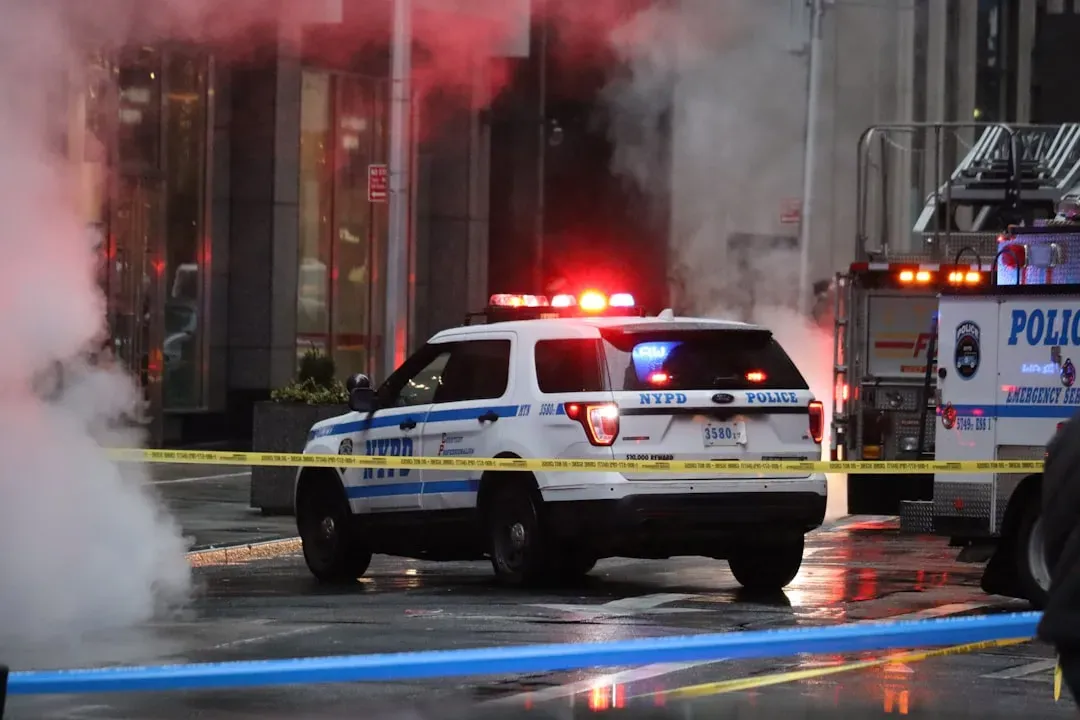
Brian Thompson, the CEO of the American health insurance company UnitedHealthcare, was shot to death in Midtown Manhattan on December 4, 2024, as he walked outside an entrance to the New York Hilton Midtown. The words “delay,” “deny,” and “depose” were inscribed on the cartridge cases used during the shooting, a reference many observers immediately connected to a widely criticized insurance industry practice of rejecting policyholder claims. On December 9, 2024, authorities arrested 26-year-old Luigi Mangione in Altoona, Pennsylvania, and charged him in a Manhattan court with Thompson’s killing.
Mangione was indicted on eleven New York state charges and four federal charges, including first-degree murder in furtherance of terrorism, criminal possession of a weapon, and stalking. In September 2025, a New York state judge dismissed Mangione’s two terror-related murder charges, though he still faces a charge of second-degree murder. Federal prosecutors initially sought the death penalty, but a district judge dismissed two charges against Mangione in January 2026, including the federal murder charge that carried the possibility of execution. Opinion polls showed that a majority of American adult respondents found the killing unacceptable, but a plurality of younger respondents viewed the killing as acceptable, and a majority of Americans believed that health insurance claim denials contributed to Thompson’s death.
Bryan Kohberger and the Idaho Student Murders: A Ph.D. Student’s Dark Secret


Kohberger, a former criminology Ph.D. student, admitted in court that he planned and carried out the brutal stabbings of Kaylee Goncalves, Madison Mogen, Xana Kernodle and Ethan Chapin at their off-campus Moscow, Idaho, home in November 2022. Investigators later revealed that in July 2022, four months before the murders, Kohberger’s cell phone had begun pinging a cell tower near the victims’ home, and from July through the night of the killings, his phone connected to the area approximately 23 times between 10 p.m. and 4 a.m. The case gripped the country for more than two years, with the eventual resolution coming not through a jury trial but through a plea agreement that shocked several of the victims’ families.
Kohberger pleaded guilty to four counts of first-degree murder and burglary in the deaths of Kaylee Goncalves, Madison Mogen, Xana Kernodle, and Ethan Chapin. As part of the deal, he admitted to the killings and waived his right to appeal in exchange for prosecutors agreeing not to seek a death sentence. Idaho District Judge Steven Hippler sentenced Kohberger, 30, to four consecutive life sentences. Goncalves’ father publicly stated that Idaho had failed him and his family when the prosecutors let Kohberger accept a plea deal without the family’s input, a tension that underscored just how differently grief and justice can look to those living through both at the same time.
Karen Read and the Death of John O’Keefe: Two Trials, One Verdict, Unanswered Questions
Karen Read, 45, was accused of killing John O’Keefe in January 2022 by hitting him with her Lexus SUV and leaving him to die in the snow after a night of heavy drinking. Her defense team blamed O’Keefe’s fellow law enforcement officers for killing him in a house fight and dragging his body outside, then tampering with evidence in order to frame Read. Her 2024 trial ended in a hung jury, forcing a retrial that drew even greater national attention.
The retrial ended with the jury returning verdicts of not guilty on charges of second-degree murder, manslaughter while operating under the influence, and leaving the scene of an accident, though the jury found Read guilty of operating under the influence of alcohol. As she was cleared of the most serious charges, Read hugged her lawyers as booming cheers could be heard from the crowd outside. Judge Beverly Cannone sentenced Read to one year of probation on the DUI charge, the standard consequence for a first-time offender. A jury acquitted Karen Read of murder and manslaughter in the 2022 death of her boyfriend, bringing an end to a case that drew national attention – though what actually happened to John O’Keefe on that January night remains officially unresolved.
Carly Gregg and the Rankin County Murder: A Teen’s Deadly Secret


In September 2024, Carly Gregg was sentenced to life in prison for killing her mother, life in prison for attempting to kill her stepfather, and 10 years for tampering with evidence. The sentences were handed down after a dramatic weeklong trial in Rankin County Circuit Court, where defense attorneys attempted to paint the teen as a troubled youth who had no memory of the violent incident. According to court records, Gregg shot and killed her mother, Ashley Smylie, a math teacher at Northwest Rankin High School, point blank with a .357 handgun. The case gripped Mississippi and reverberated nationally, partly because of how starkly it defied assumptions about family, youth, and the inner lives of teenagers.
Gregg then texted her stepfather, Heath, using her mother’s phone to ask when he would be home. After Heath arrived, the teen shot him in the shoulder, less than six inches from his face. The prosecution built a case that showed calculated, premeditated behavior, while defense attorneys tried to frame Gregg’s actions through the lens of trauma and mental health struggles. The jury rejected those arguments entirely, delivering a verdict that landed with the weight of finality in a community that had known Gregg’s mother as a beloved teacher.
Amy Elizabeth Curry and the Nursing Home Embezzlement: A Bookkeeper’s Slow Betrayal

A case from 2024 reached its conclusion when 48-year-old Amy Elizabeth Curry, the former bookkeeper for Silver Bluff Village in Bethel, was sentenced to nearly six years in federal prison for embezzling more than $1.5 million from the retirement home. Curry’s embezzlement began in December 2022. Over the next five months, she fraudulently made 154 transfers from a Silver Bluff account to at least five different bank accounts managed by herself and her then-boyfriend. She also took measures to cover her tracks, including deleting the transfer history from the facility’s bank account.
Curry’s defense attorney claimed the embezzlement was the result of a crippling gambling addiction and stated that more than $700,000 of the embezzled money was spent gambling at a casino. Curry was ordered to pay $1,469,407.24 in restitution to Silver Bluff Village. The case drew attention precisely because of what it exposed about institutional vulnerability – a trusted position held for years, a slow theft that accelerated over months, and a victim that was a retirement home whose residents had no idea the funds meant to care for them were quietly disappearing. It’s not the most dramatic story in this list, but in some ways it’s one of the most quietly unsettling.
Each of these five cases arrived in the national conversation carrying a different kind of weight. Some raised questions about systemic injustice, others about grief and accountability, and at least one about the quiet damage a single trusted person can do when no one is watching closely enough. What they all shared was the ability to turn an otherwise unremarkable life into a story that millions of strangers felt compelled to follow.