The San Fernando Valley doesn’t always get the credit it deserves. Tucked behind the Hollywood Hills, away from the glitzy boulevards and the tourist traps, this sprawling stretch of Southern California has quietly served as the backdrop for some of the most beloved scenes in cinematic history. Honestly, it’s a little mind-blowing once you start connecting the dots.
Curving down Interstate 405, tucked away behind the Hollywood Hills far from the beaches and the LA cityscape, the San Fernando Valley is a city of its own. Unlike the extravagant energy of the greater LA area, the mood of the SFV is much more relaxed. Yet that energy has drawn Hollywood producers back here again and again. From suburban bike rides to iconic high school hallways, the Valley has been hiding in plain sight on your screen for decades. So let’s dive in.
1. E.T. the Extra-Terrestrial (1982): The Flying Bicycle Scene, White Oak Avenue, Granada Hills
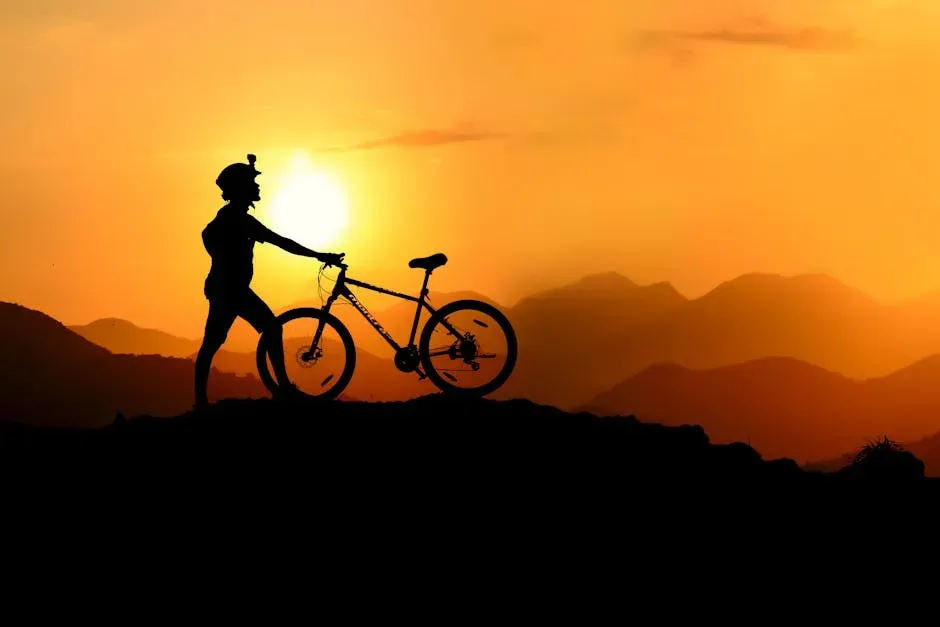
Few movie moments are as universally recognized as the silhouette of a boy on a bicycle soaring across a full moon. It’s one of those images that lives in your chest long after the credits roll. What most people don’t realize is that this magical scene was shot right here in the Valley, on an ordinary residential street.
The ending of the film, when Elliott begins to fly with E.T. on his bike, was filmed near Granada Hills, at the intersection of Tulsa Street and White Oak Avenue. The bike heads north on White Oak as it begins to take flight. You can walk or drive this exact stretch today. It looks nearly the same as it did in 1981.
This stretch of White Oak actually contained 114 Deodar trees that were declared a Historic Cultural Monument in 1966, preserving their longevity in this well-known neighborhood. Those same trees are still standing, tall and canopied, creating that unmistakable tunnel of green that fans recognize immediately. Visiting here feels less like a tourist stop and more like stepping into a memory.
The communities of Tujunga, Porter Ranch, and Granada Hills, located on the outskirts of Los Angeles, served as the locations for Elliott’s neighborhood. Many of the locations used to film the movie are still around today, although there were minor changes made and the vegetation in the area has grown.
2. E.T. the Extra-Terrestrial (1982): Elliott’s House, Tujunga
A lot of fans know the bike scene, but fewer make the trip to the actual house where Elliott and E.T. first crossed paths. It’s a real home, on a real street, and it looks remarkably similar to how it appeared on screen. That alone makes it worth the detour.
E.T. finds a temporary home with young Elliott at 7121 Lonzo Street in Tujunga, a residence still used today. This house had just recently completed construction in 1980 when filming began in September of 1981. Think about that for a second. The ink on the walls was barely dry when Spielberg showed up with cameras.
The house address is 7121 Lonzo Street and over the years, the appearance of the house didn’t change much, except for the trees that have since grown over the years. It’s a private residence, so of course you’ll want to keep a respectful distance. Still, standing on that street and looking up at the house is a genuinely moving experience for any fan of the film.
Elliott’s house was around 20 miles away from where the Halloween scenes and BMX chase scenes were filmed in Tujunga, and it was instantly recognizable even though it was surrounded by a lot more trees.
3. Fast Times at Ridgemont High (1982): Van Nuys High School, Van Nuys

Here’s the thing about Fast Times at Ridgemont High – it didn’t just define a generation of teen movies. It practically invented the template. And the school at the center of it all? Not a fictional set. It’s a real, functioning school right in the heart of the Valley.
The fictional “Ridgemont High” is a combination of two Valley schools. The exterior is Van Nuys High School, 6535 Cedros Avenue, which has included Robert Redford and Jane Russell among its pupils, and, for a short while, Marilyn Monroe. That’s a pretty staggering legacy for one building. Sean Penn as Spicoli was just another chapter in an already remarkable story.
The 1982 comedy, directed by Amy Heckerling and written by Cameron Crowe, is commonly recognized as an exceptional film within the frequently undervalued category of teen comedies. Heckerling’s adaptation of Crowe’s work garnered high praise and helped launch several celebrity careers. The school’s exterior is publicly visible and still looks every bit the part of a classic California high school. If you squint just right, you can almost hear Spicoli ordering a pizza.
Van Nuys High was also the school from the movie “Christine,” “Rock & Roll High School,” as well as “Life Goes On” and “The Wonder Years.” For film fans, this is practically sacred ground, layered with decades of pop culture history.
4. Once Upon a Time in Hollywood (2019): Casa Vega Restaurant, Sherman Oaks
Quentin Tarantino is famously obsessive about authenticity, so it makes perfect sense that when he needed a soulful, lived-in Valley restaurant for a pivotal scene in “Once Upon a Time in Hollywood,” he didn’t build a set. He walked right into one of the most beloved institutions on Ventura Boulevard.
The film utilizes Casa Vega during a pivotal moment where Leonardo DiCaprio’s Rick Dalton and Brad Pitt’s Cliff Booth are spending their last night together as brothers-in-arms after six months in Italy. With tiles on the outside of the establishment that show matadors fighting with bulls, it has a cool blend of a Mexican-American feel. Situated in the Sherman Oaks neighborhood along Ventura Boulevard, it blends the cosmopolitan aesthetic of Hollywood while still preserving the cozy feeling of the Valley.
Casa Vega is still open and still very much alive as a local institution. You can sit in those same red booths, order a margarita, and soak up the exact same ambiance that made Tarantino choose it in the first place. I think there’s something genuinely beautiful about a restaurant that outlasts the eras it keeps appearing in.
Movies from the 1980s up to today have been filmed in distinct Valley locations due to the eclectic styles that the SFV locales have to offer. Casa Vega is perhaps the clearest proof of that. It’s not a film set. It’s just a great restaurant that also happens to be cinematic.
5. Boogie Nights (1997): The Reseda Theater, Sherman Way, Reseda

Paul Thomas Anderson grew up in the Valley. So when he made his debut feature about the adult film industry of the 1970s, he didn’t just use the Valley as a backdrop. He used it as a character. The opening shot of Boogie Nights, that long, gorgeous tracking shot through a nightclub, is one of the most celebrated introductions in modern cinema.
Along a stretch of road on Sherman Way, the now-abandoned Reseda Theater was used in the opening shot sequence of director Paul Thomas Anderson’s film debut, “Boogie Nights.” Its complete 1977 rework of the theater took the audience back into the 1970s as they witnessed the early life of upcoming pornstar Dirk Diggler, played by Mark Wahlberg. The theater’s bones are still there, even if it has since been abandoned.
On the same stretch of road as the Reseda Theater, the donut shop where Don Cheadle’s character was held at gunpoint is still standing and in operation today. That’s remarkable. A functioning, ordinary donut shop that you can walk into, order a glazed, and stand exactly where a famous movie scene unfolded.
Anderson wanted all of the locations that were shot in the movie to be close to each other to give a more cohesive and realistic point of view into Dirk Diggler’s narrative in the film. That intention is still visible today if you walk or drive that stretch of Sherman Way. Everything is right there, like an open-air museum of 1970s Valley nostalgia.
What Makes the Valley Such a Magnet for Filmmakers?
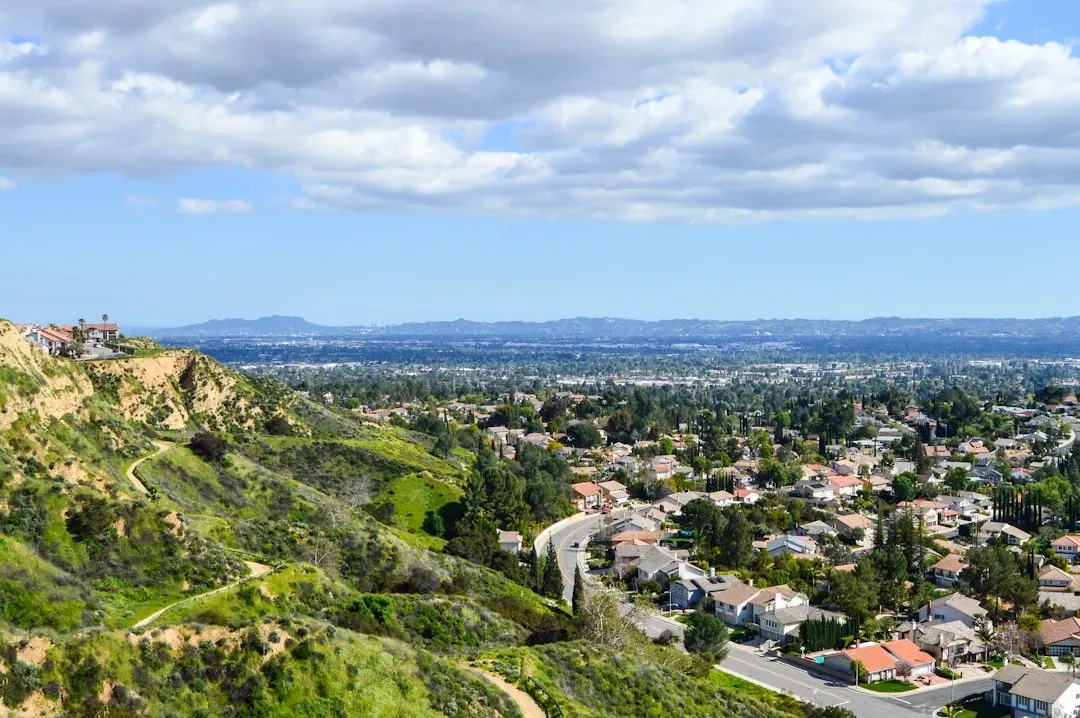
It’s worth asking why this particular pocket of Los Angeles keeps showing up on screen. The answer is more practical than romantic, though it ends up being both. The Valley offers variety. Quiet suburbs, busy commercial strips, wide streets, modest homes. It looks like everywhere and nowhere at once.
Hollywood executives have used the Valley’s rurality to their advantage with old Western shows, and movies from the 1980s up to today have been filmed in distinct Valley locations due to the eclectic styles the SFV locales have to offer. In other words, it’s endlessly versatile. That’s a rare quality in a city where half the neighborhoods already feel like movie sets.
The San Fernando Valley has provided filming locations for films as diverse as Fast Times at Ridgemont High and Psycho to Terminator 2: Judgment Day to E.T. That’s a wild range of genres, tones, and eras. Not many places on earth can say the same.
The studios had a policy that their locations would be within a 30 to 35 mile zone to accommodate actors and crew having to drive to locations. The Valley slots perfectly into that radius, and film crews have been taking advantage of it for well over a century.
Visiting These Locations: What to Know Before You Go
Planning a self-guided Valley film tour is genuinely one of the more fun ways to spend a Saturday in Los Angeles. Most of these locations are accessible by car with no ticket required. That said, a few things are worth keeping in mind before you load up the GPS.
Several of the spots, particularly the residential ones like Elliott’s house in Tujunga, are private property. Many of the locations used to film the movie are still around today, and with so many locations being close to cities and other points of interest, you’ll have something to look forward to once you’re done visiting the filming locations. Treat private homes with the same respect you’d want for your own neighborhood.
Tour guides like Jared Cowan offer organized tours of Valley film and TV spots for a chance to see up close the iconic places. As the tour weaves through Reseda, Chatsworth, Van Nuys and San Fernando, locations are compared to actual film frames so you can match them side by side. If you prefer not to navigate solo, that kind of guided experience adds real depth to what you’re seeing.
Some spots, like Casa Vega, actively welcome visitors. Others are simply streets and intersections where something unforgettable happened to be captured on film. Either way, the Valley rewards the curious.
The Legacy Lives On: Why These Locations Still Matter in 2026

In an age where everything feels disposable and productions increasingly lean on CGI environments, there’s something quietly radical about standing on an actual street where an actual movie was made. These locations ground films in reality in a way that no visual effect can replicate.
Curving down Interstate 405, tucked away behind the Hollywood Hills, lies the San Fernando Valley, a city of its own with a culture that consists entirely of a melting pot of orange groves, gritty locale and calming suburbs for Angelenos. Unlike the extravagant energy of the LA area, the mood of the SFV is much more relaxed. Yet the energy resides in the heart of the people that live here, and that’s evident in the attention the Valley has gotten from Hollywood producers over the years.
Film tourism has grown consistently as a category of travel, and the Valley is one of its most underrated destinations. You won’t find massive signs or souvenir shops at most of these spots. You’ll just find real places that happen to carry extraordinary stories. Honestly, that’s better.
There’s something poetic about a donut shop on Sherman Way still selling coffee to the same neighborhood that once watched a film crew take over the block. The Valley keeps moving, keeps changing, keeps showing up on screen. These five locations are proof that the best film history isn’t always behind glass. Sometimes it’s just parked along a tree-lined street in Granada Hills, waiting for you to notice.
What would you have guessed if someone told you E.T.’s most iconic scene was filmed on a quiet residential street you’ve probably driven past a hundred times?