History loves a good rise. The warrior who unites a fractured people. The entrepreneur who turns nothing into billions. The general who rewrites geography with his armies. We admire these figures, study them, name streets after them. Yet just as often, these same leaders are the ones who trigger the very collapses we remember them for. It turns out that the qualities that build empires, raw ambition, total confidence, an almost frightening willingness to push past limits, are sometimes the exact same qualities that destroy them.
Honestly, that tension is what makes these stories so hard to look away from. Each of the five leaders here achieved something genuinely extraordinary, something most humans could never dream of. Then they watched it fall apart. Let’s dive in.
1. Genghis Khan – The Nomad Who Conquered the World, Then Left It to Fracture

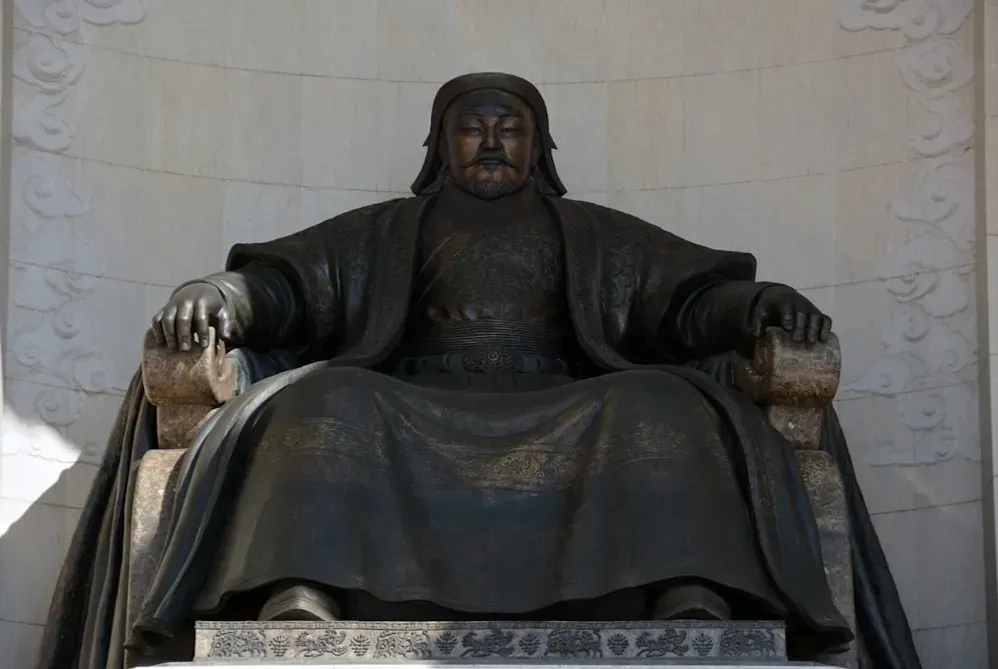
Few origin stories in history are more improbable than this one. Genghis Khan was born Temüjin, around 1162, near Lake Baikal in what is now the border region between Mongolia and Siberia. His father was a member of the royal Borjigin clan but was killed in a local blood feud when Temujin was young, leaving him to grow up as an outcast. From that bleak starting point, he built the largest contiguous empire the world has ever seen.
By the time Genghis Khan died on August 18, 1227, the Mongol Empire ruled from the Pacific Ocean to the Caspian Sea, twice the size of the Roman Empire or Muslim Caliphate at their height, and the largest contiguous state in history. Think about that for a moment. Twice the size of Rome. In a single lifetime.
It took Genghis Khan roughly 25 years to claim more territories than the Roman Empire, which had existed over four centuries. The empire covered approximately 24 million square kilometers at its peak, about a sixth of the entire Earth’s land area, encompassing some 110 million people.
The empire began to split due to wars over succession, as the grandchildren of Genghis Khan disputed whether the royal line should follow from his son and initial heir Ögedei, or from one of his other sons, such as Tolui, Chagatai, or Jochi. The Toluids prevailed after a bloody purge of the Ögedeid and Chagatayid factions, but disputes continued among the descendants of Tolui. The man who united warring tribes could not build a system that survived his own death. By Kublai’s death in 1294, the empire had fractured into four separate khanates or empires, each pursuing its own objectives: the Golden Horde khanate in the northwest, the Chagatai Khanate in Central Asia, the Ilkhanate in Iran, and the Yuan dynasty in China.
2. Napoleon Bonaparte – The Emperor Who Mistook Ambition for Invincibility

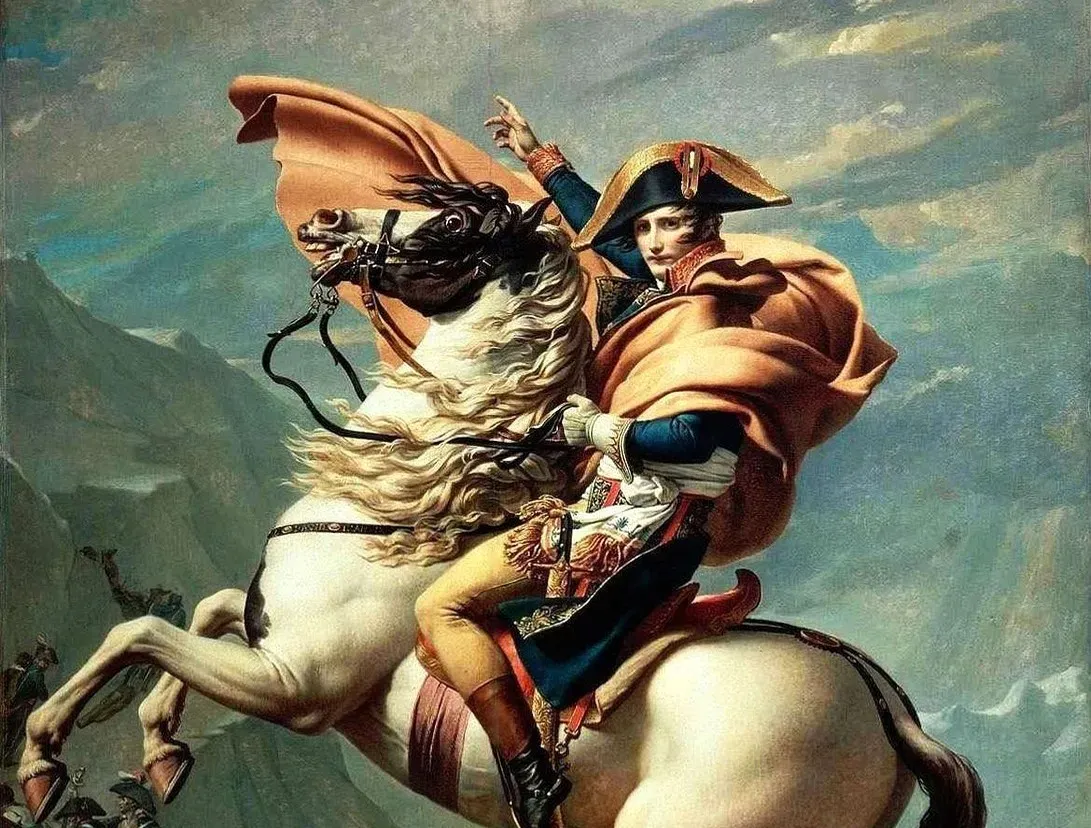
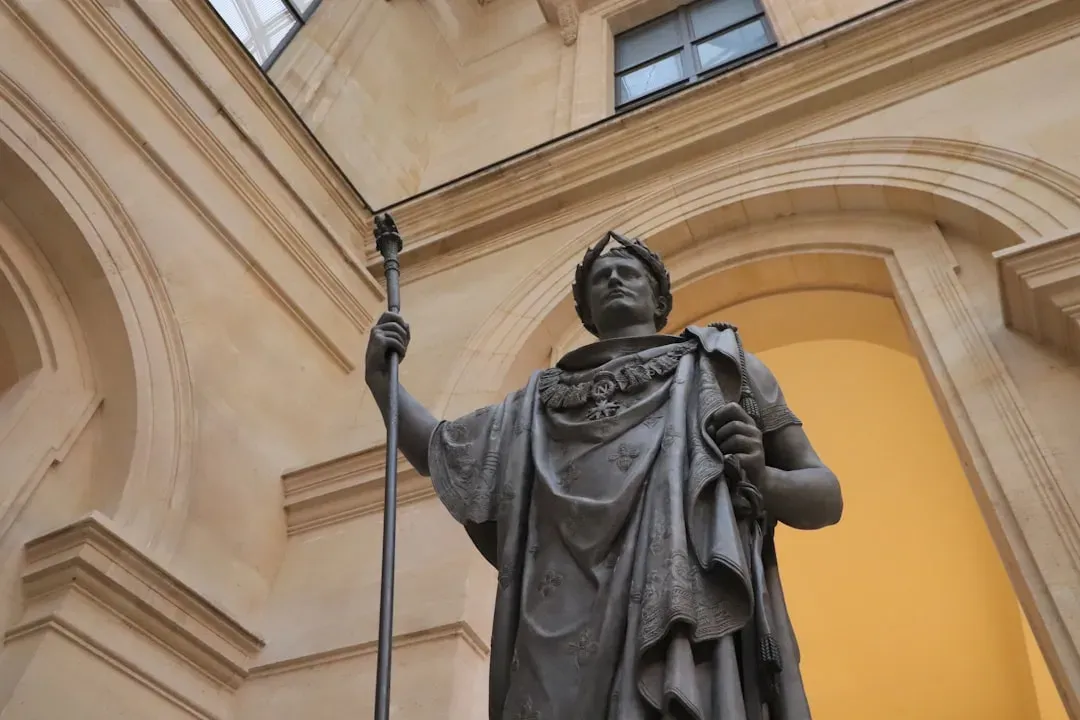
Napoleon Bonaparte rose from humble beginnings to become a successful general and emperor of the French, but his fall and exile were equally dramatic. Born on the island of Corsica in 1769, Napoleon Bonaparte came to prominence as a brilliant military commander during the French Revolution. He is one of those rare figures who genuinely reshaped the map of an entire continent. That is not a metaphor. He literally redrew borders.
The coronation, held on December 2, 1804, was a lavish ceremony at Notre-Dame Cathedral in Paris. In a dramatic gesture, Napoleon took the crown from the Pope’s hands and placed it on his own head, signaling that his authority was self-created rather than divinely bestowed. That single image tells you everything you need to know about Napoleon. Nobody gave him power. He took it.
In 1806, his victory at the Battle of Austerlitz dismantled and brought under French control most of the Holy Roman Empire, a state that had existed in some form for over a thousand years. In the ensuing years, Napoleon conquered most of eastern and southern Europe up to the Russian border. Yet overreach was always lurking at the edges of his genius.
The turning point in Napoleon Bonaparte’s French Empire came in 1812, when, after Russia’s alliance with France broke down, Napoleon decided to invade Russia in the summer. Rather than face the superior French army in the field, the Russian army chose instead to retreat further and further into the Russian interior. Napoleon’s failure to equip his troops for the harsh Russian winter caused him to lose thousands of men and turned the tide against the French Empire. By 1814, France was defeated and Napoleon was exiled. A brief return to power less than a year later only led to his final defeat at the Battle of Waterloo, and his exile to an even more remote location, where he died in 1821. The man who took the crown from the Pope died alone on a remote island. Few stories in history carry that kind of brutal symmetry.
3. Julius Caesar – The Man Who Killed the Republic to Save It

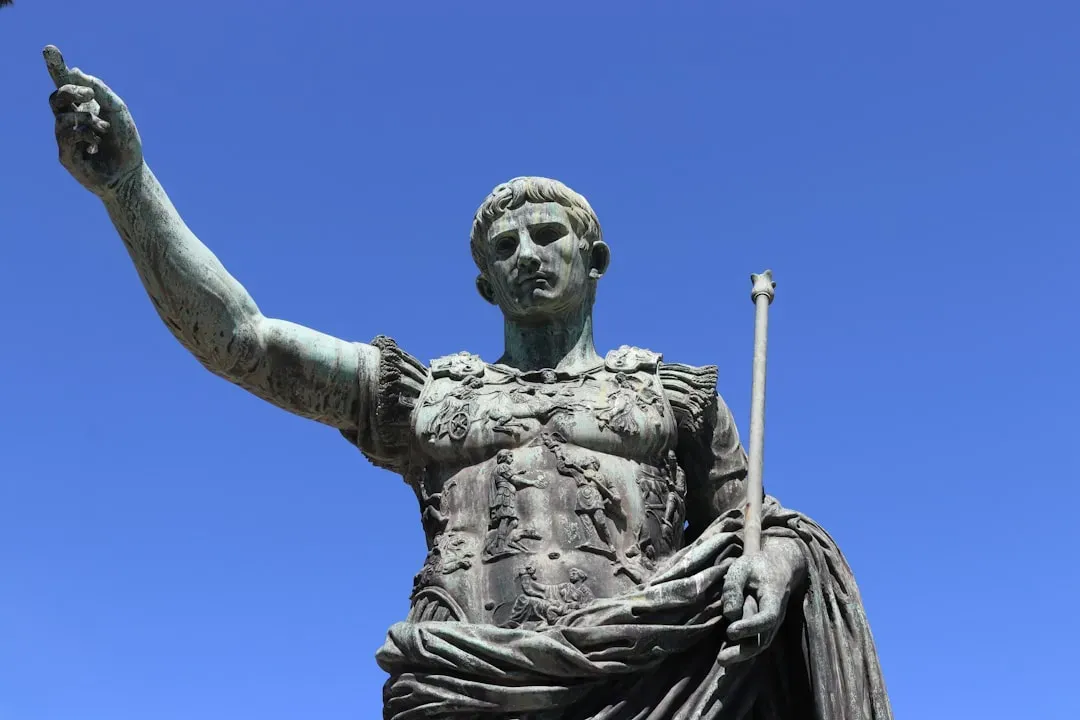
Julius Caesar is one of history’s most compelling paradoxes. He was a reformer who destroyed the very institution he claimed to be rescuing. Beginning in 27 BC when Augustus Caesar, the adopted son of Julius Caesar, became the first emperor of Rome, the Roman Empire reached its peak in the second century AD when its territory spanned some five million square kilometres. The empire Caesar’s actions birthed became one of the most influential civilizations in human history.
Caesar himself rose through the ranks of Roman politics and military command with extraordinary speed. His campaigns in Gaul, stretching across nearly a decade, added vast territories to Roman control and cemented his reputation as a military commander without equal. He turned those legions loyal to him personally, not to the Senate, and that shift in loyalty was the seed of everything that followed.
The Roman Empire spread classical culture, created legal systems still used today, and inspired modern governance structures, with over 2,000 years of influence including the Byzantine era. Yet Caesar’s own story ended on the Ides of March, 44 BC, when senators who feared his growing power stabbed him 23 times inside the Theatre of Pompey. The man who had conquered vast territories was felled inside a building.
His assassination did not save the republic. It destroyed it. The civil wars that followed tore Rome apart until his adopted heir Augustus finally consolidated power and declared himself emperor. Caesar built the conditions for a five-century empire. He just didn’t live to see it, or control it. I think there’s a lesson somewhere in there about leaders who mistake momentum for permanence.
4. Alexander the Great – The Conqueror Who Built Everything Except a Successor


If Genghis Khan’s empire was breathtaking in its size, Alexander the Great’s was breathtaking in its speed. Ancient Greece’s very sudden and brief expansion, replacing Persia, represents Alexander the Great’s famous conquest, and subsequent fracturing of his kingdom into successor states. He did not conquer gradually. He exploded across the known world like a force of nature, then died at 32.
The Achaemenid Persian Empire, founded by Cyrus the Great around 550 BCE, was the world’s first true empire in both scale and structure. At its peak, it governed nearly half of the global population and linked regions from the Mediterranean to Central Asia. Alexander dismantled that entire structure and replaced it with his own. That is an almost incomprehensible achievement for a man who barely lived past his early thirties.
Here’s the thing about Alexander, though. He was a visionary in battle and a catastrophe as a planner. He never named a successor. When asked on his deathbed who should inherit his empire, he reportedly said “the strongest,” which was essentially an invitation for his generals, the Diadochi, to tear everything apart. And they did, with remarkable efficiency.
Within roughly 50 years of his death in 323 BC, his unified empire had shattered into competing kingdoms. His generals fought each other for decades. His own mother, wife, and son were all eventually murdered in the political bloodshed. Through the course of history, we’ve seen empires rise and fall over decades, centuries and even millennia. If it’s true that history repeats itself, then perhaps we can learn from the missteps and the achievements of the world’s greatest and longest lasting empires. Alexander’s story is perhaps the sharpest illustration of that principle.
5. Sam Bankman-Fried – The Crypto Wunderkind Who Built a $32 Billion Empire on Sand


Let’s move from ancient history to something that still feels shockingly recent. Sam Bankman-Fried built FTX into a $32 billion crypto giant before it collapsed in 2022. The fallout shook the entire crypto industry. He was not a general or a conqueror. He was a 30-year-old with a messy apartment in the Bahamas and a vision of himself as a crypto JP Morgan. The scale of what he built, and destroyed, was staggering.
Prior to its collapse, FTX was the third-largest cryptocurrency exchange by volume and had over one million users. By January 2022, the company was worth $32 billion. Celebrity endorsements, sports arena naming rights, Super Bowl ads. FTX was everywhere. Bankman-Fried appeared on magazine covers and testified before Congress as a reasonable voice for crypto regulation.
The entire crash started to make its appearance when CoinDesk published a report on November 2, 2022, and showed that Alameda Research’s balance sheet was heavily dependent on FTT, the token created by FTX itself. The market reacted instantly, the price of the FTT tokens crashed by about four fifths, wiping out billions in paper value and shaking user confidence overnight. What followed was, as one account described it, a classic bank run at crypto speed.
The collapse of FTX, caused by a spike in customer withdrawals that exposed an $8 billion hole in FTX’s accounts, served as the impetus for its bankruptcy. On March 28, 2024, he was sentenced to 25 years in prison and ordered to forfeit $11 billion. The trial was described as one of the most notorious cases of white-collar crime in the United States. In 2026, his appeals are still ongoing. The empire was gone in ten days. The sentence is for 25 years.
What Every One of These Stories Has in Common
Across centuries and continents, across ancient battlefields and modern cryptocurrency exchanges, these five leaders share a recognizable pattern. They each possessed an extraordinary, almost frightening talent for building something from nothing. Genghis Khan from nomadic outcast to ruler of a sixth of the Earth. Napoleon from a minor Corsican family to Emperor of France. Caesar from ambitious politician to de facto dictator of Rome. Alexander from a student of Aristotle to conqueror of the known world. Bankman-Fried from a trading desk at Jane Street to the self-proclaimed savior of crypto.
The pattern of collapse is equally consistent. Succession was ignored or botched. Overextension outpaced judgment. Confidence curdled into arrogance. These are empires whose leaders lost sight of their civic obligations, leading to revolts, social disruption, and inescapable destruction. The machinery of empire building, that engine of ambition, speed, and total commitment, does not come with an off switch.
I think the most honest takeaway here is not that these leaders were simply reckless or villainous. Most of them had genuine vision. Some of them changed the world in ways we still live with today. The Napoleonic Code still influences legal systems globally. Roman infrastructure still shapes European cities. What undid them was the belief that the same force that built the empire could sustain it indefinitely. It never can.
The empires fell. The legacies remained. What those legacies actually teach us, well, that depends on which part of the story you choose to remember. What would you have done differently in their shoes?