Some jokes fade the moment the credits roll. Others get quoted at dinner tables, repeated in office break rooms, and mimicked so often that people forget which movie they came from in the first place. The lines below have survived changing tastes, streaming algorithms, and multiple generations of viewers who weren’t even born when the films first hit theaters.
What makes a movie line last this long usually comes down to timing, delivery, and a script that trusted its actors to sell the moment. Here are six lines that prove great comedic writing doesn’t have an expiration date.
1. “I’ll have what she’s having” – When Harry Met Sally (1989)

Nora Ephron’s script for this Rob Reiner film built an entire romantic comedy around the tension between friendship and attraction, but the scene everyone remembers has nothing to do with either. Set inside Katz’s Delicatessen in New York City, Meg Ryan’s character stages an exaggerated demonstration that leaves the whole restaurant stunned into silence. The punchline lands seconds later when a nearby diner, played by director Rob Reiner’s own mother Estelle Reiner, calmly tells the waiter what she’d like to order.
The joke works because of the contrast: chaos followed by deadpan calm. It has been referenced in sitcoms, parodied in commercials, and remains one of the most cited comedic beats in American film history. Decades later, the deli itself still gets visitors asking about “that scene,” which says something about how deeply the line embedded itself in pop culture.
2. “I am serious. And don’t call me Shirley.” – Airplane! (1980)

Airplane! built its humor on stone-faced actors delivering absurd dialogue as if nothing were unusual, and this exchange between Robert Hays and Leslie Nielsen is the clearest example of that formula. Nielsen, previously known for dramatic roles, plays Dr. Rumack with total sincerity, which makes the wordplay land even harder. The joke depends entirely on the gap between the seriousness of the moment and the silliness of the response.
This approach to comedy, sometimes called deadpan absurdism, influenced decades of spoof films that followed, including the Naked Gun series that also starred Nielsen. The line still shows up in lists of the funniest movie quotes of all time, and its structure has been copied so often that audiences recognize the rhythm even before the punchline arrives. Few one-liners have aged this well while requiring so little context to understand.
3. “There’s no crying in baseball!” – A League of Their Own (1992)

Tom Hanks plays a washed-up, hard-drinking manager coaching a women’s professional baseball team during World War II, and this outburst captures his character’s frustration in a single, escalating rant. The delivery starts loud and gets louder, and Hanks commits to the bit with a physicality that turns simple frustration into something genuinely funny. It helps that the line contradicts itself almost immediately within the scene, which is part of the joke.
The film was directed by Penny Marshall and drew on the real history of the All-American Girls Professional Baseball League, giving the comedy a grounded backdrop. Sports commentators, coaches, and casual fans still reference the line during real games when players get emotional. Few sports-comedy quotes have crossed over into everyday sports culture as thoroughly as this one.
Partner offer
4. “Well, nobody’s perfect.” – Some Like It Hot (1959)
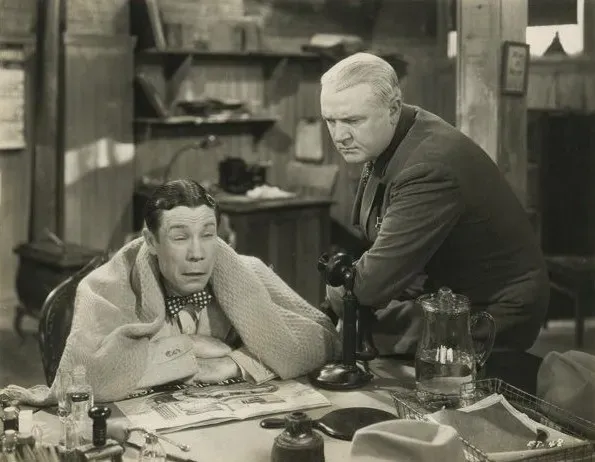
Billy Wilder’s farce ends on one of the most famous closing lines in cinema, delivered by Joe E. Brown’s character Osgood after a startling revelation from Jack Lemmon’s character Daphne. The joke lands because of its restraint. Instead of a big reaction, Osgood simply shrugs off the news with a line that’s almost absurdly understated given what he’s just been told.
American Film Institute polls have repeatedly ranked Some Like It Hot among the greatest comedies ever made, and this closing exchange is frequently cited as one of the best final lines in film history. Its brevity is part of its staying power. Modern comedies still study how much can be said with so little dialogue, and this scene remains a common reference point in film school discussions.
5. “Toga! Toga!” – National Lampoon’s Animal House (1978)
John Belushi’s chant during the fraternity party scene became more than a movie line. It turned into an actual cultural phenomenon, inspiring real toga parties on college campuses across the country well into the 1980s and beyond. Belushi says almost nothing else in the scene, relying instead on physical energy and repetition to build the moment into something memorable.
Animal House helped define the modern college comedy genre, and this scene in particular is often credited with popularizing an entire style of campus party culture. The chant still gets referenced whenever college parties or Greek life come up in conversation, decades after the film’s release. Few single words from a comedy have generated this much real-world influence outside the theater.
6. “You’re killing me, Smalls!” – The Sandlot (1993)

Patrick Renna, playing the loud and confident Hamilton “Ham” Porter, delivers this line with the kind of exasperated confidence only a kid can pull off, and it has become one of the most quoted phrases from 1990s family films. The joke works because Ham says it with total seriousness about something completely trivial, which is exactly the kind of exaggeration kids find hilarious and adults find charming in hindsight. The Sandlot never relied on slapstick to get its laughs; it leaned on character voices, and Ham’s blunt delivery style became the film’s signature.
The line has outlived the film’s original theatrical run by a wide margin, showing up regularly in sports commentary, social media captions, and casual conversation whenever someone states the obvious with too much confidence. It’s frequently listed among the most quotable lines from 1990s cinema. For a movie aimed largely at kids, its comedic dialogue has aged remarkably well among adult audiences who grew up with it.
These six lines share a common thread: they all depend on contrast, whether it’s a calm reaction to chaos, a serious tone paired with silly wordplay, or a kid’s blunt confidence about something small. That contrast is often what separates a forgettable joke from one that gets repeated for decades. Comedy trends shift constantly, but lines built on strong character work and precise timing tend to survive long after the rest of the script fades from memory.
Partner offer
Planning a trip to Vegas?
Compare hotel rates and show tickets on VEGAS.com.