Throughout history, scientific progress has rarely followed a straight path. Some of the most revolutionary ideas were initially met with ridicule, dismissal, and outright hostility from the established scientific community. Yet these controversial theories ultimately transformed our understanding of the natural world. The journey from rejection to acceptance reveals something essential about how science works: truth doesn’t always arrive on a silver platter. These six groundbreaking theories challenged prevailing beliefs and eventually earned their rightful place in modern science.
Continental Drift: When Continents Were Thought to Be Fixed Forever


In 1912, German meteorologist Alfred Wegener proposed that continents were once compressed into a single protocontinent called Pangaea, which over time drifted apart into their current distribution. Wegener noticed that the coastlines of Africa and South America appeared shaped as though they had once been connected, eventually leading him to deliver a lecture on continental displacement in 1912. He compiled evidence by comparing similar rocks, mountains, and fossils across oceans, noting that fossils of the primitive aquatic reptile Mesosaurus were found on the separate coastlines of Africa and South America. These land-dwelling creatures could not have possibly swum across an entire ocean.
Scientists did not accept Wegener’s theory of continental drift, with one of the elements lacking in the theory being the mechanism for how it works. Wegener’s inability to provide an adequate explanation of the forces responsible for continental drift and the prevailing belief that the earth was solid and immovable resulted in the scientific dismissal of his theories. David Attenborough recounted an incident from the 1940s where he asked a lecturer about continental drift and was told sneeringly that if he could prove there was a force that could move continents, then the lecturer might think about it, calling the idea moonshine. By the 1960s, scientists had amassed enough evidence to support the missing mechanism, namely seafloor spreading, for Wegener’s hypothesis to be accepted as the theory of plate tectonics.
Helicobacter Pylori: The Bacteria Everyone Said Couldn’t Exist in Stomachs


Barry Marshall and Robin Warren showed that the bacterium Helicobacter pylori plays a major role in causing many peptic ulcers, challenging decades of medical doctrine holding that ulcers were caused primarily by stress, spicy foods, and too much acid. Up until their breakthrough in 1982, the long-held view was that spicy foods or stress caused ulcer disease. It has been claimed that the H. pylori theory was ridiculed by established scientists and doctors who did not believe that any bacteria could live in the acidic environment of the stomach, with Marshall quoted as saying in 1998 that everyone was against him but he knew he was right.
Hoping to persuade skeptics, Marshall drank a culture of H. pylori and within a week began suffering stomach pain and other symptoms of acute gastritis, with stomach biopsies confirming that he had gastritis and that the affected areas were infected with H. pylori, after which he took antibiotics and was cured. In 2005, the Karolinska Institute in Stockholm awarded the Nobel Prize in Physiology or Medicine to Marshall and Robin Warren for their discovery of the bacterium Helicobacter pylori and its role in gastritis and peptic ulcer disease. Thanks to the pioneering discovery by Marshall and Warren, peptic ulcer disease is no longer a chronic, frequently disabling condition, but a disease that can be cured by a short regimen of antibiotics and acid secretion inhibitors.
Germ Theory: The Invisible Enemies Doctors Refused to Believe In

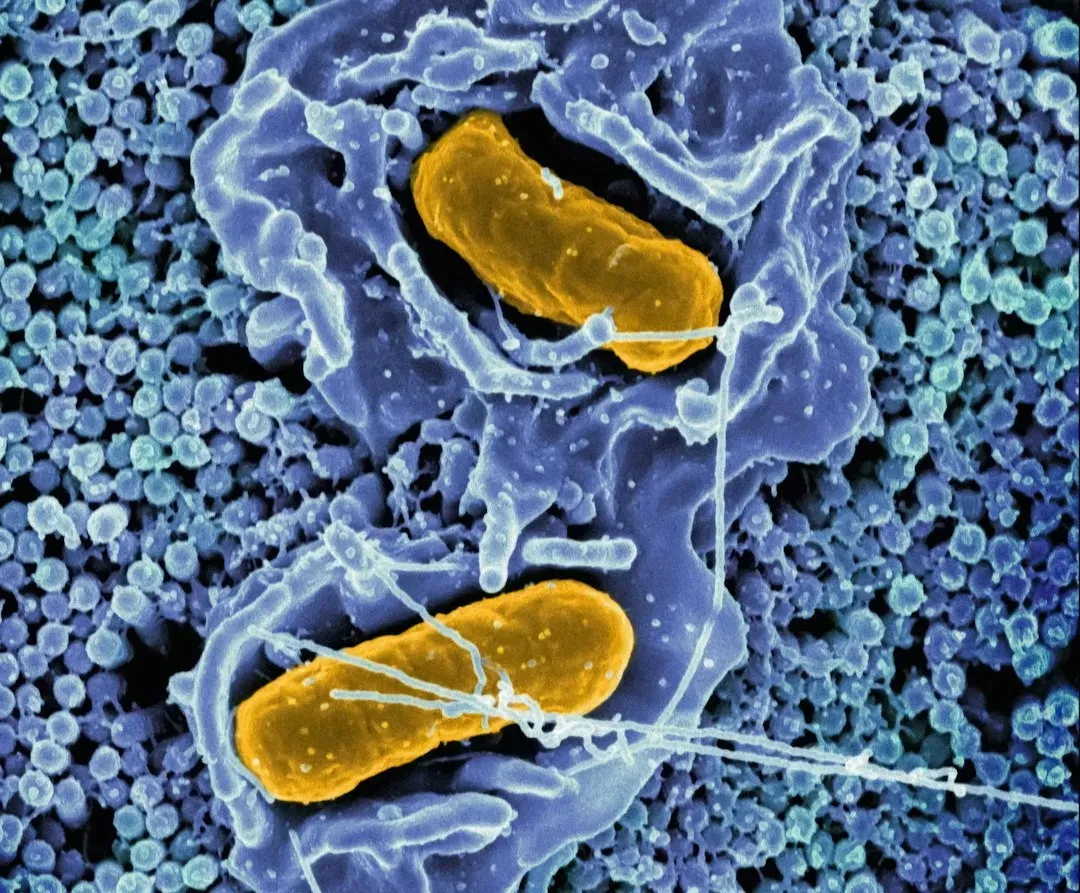
Louis Pasteur, a French chemist and microbiologist, and Robert Koch, a German physician and microbiologist, are credited with the discovery of the germ theory in the 1860s-1880s. The miasma theory was the predominant theory of disease transmission before the germ theory took hold towards the end of the 19th century, holding that diseases such as cholera were caused by a miasma, a noxious form of bad air emanating from rotting organic matter. Germ theory was not easily accepted, and all across Europe and into the USA and Canada, it was heavily contested and challenged by medical professionals who were unwilling to accept the changes.
Joseph Lister determined that microbes caused putrefaction of wounds, recommending that not only the surgeon’s hands but also surgical instruments be washed for each patient, and the implementation of this single health measure caused a noticeable decrease in deaths in surgical wards. In 1876, Robert Koch observed the rod-shaped bacteria that caused anthrax in cows, and he injected some of the infected blood into mice which contracted anthrax, thus proving that a specific germ caused a specific disease. Despite the powerful demolition of the theory of spontaneous generation by Pasteur and the marked reduction in surgical operative infections by antiseptic technique developed by Lister, there remained significant doubt about the causative role of bacteria in disease.
Partner offer

The Big Bang Theory: A Catholic Priest’s Universe That Scientists Mocked


In 1927, a professor from Leuven, Georges Lemaître, concluded that the universe was expanding, and later he had another thought: whatever is expanding must have once been smaller, and the idea of the Big Bang was born. In 1927, the year he got his PhD from MIT, Lemaître proposed this theory in which he stated that the expanding universe was the same in all directions but it was not static, though he had no data to prove this, so many scientists ignored it. Lemaître’s critics included Einstein, who by the time he encountered Lemaître’s theory of cosmic expansion had already rejected a similar argument put forth earlier by Russian mathematician Aleksandr Friedmann.
At first, the theory was laughed off and jokingly called Lemaître’s Big Bang Theory, with Einstein’s initial assessment being that the math was quite good but Lemaître’s grasp of physics was abominable. The astronomer Fred Hoyle introduced the term Big Bang in a 1949 BBC radio broadcast to refer to cosmological theories such as Lemaître’s, and Hoyle remained throughout his life an opponent of such theories, advocating instead a steady-state model of an eternal Universe. Lemaître died on 20 June 1966, shortly after having learned of the discovery of cosmic microwave background radiation, which provided solid experimental support for his theory of the Big Bang. After half a century of rejection, Lemaître’s primeval atom, in the guise of the catchphrase big bang theory, had at last been accepted by theoretical physicists.
Heliocentric Solar System: Challenging the Church and Common Sense

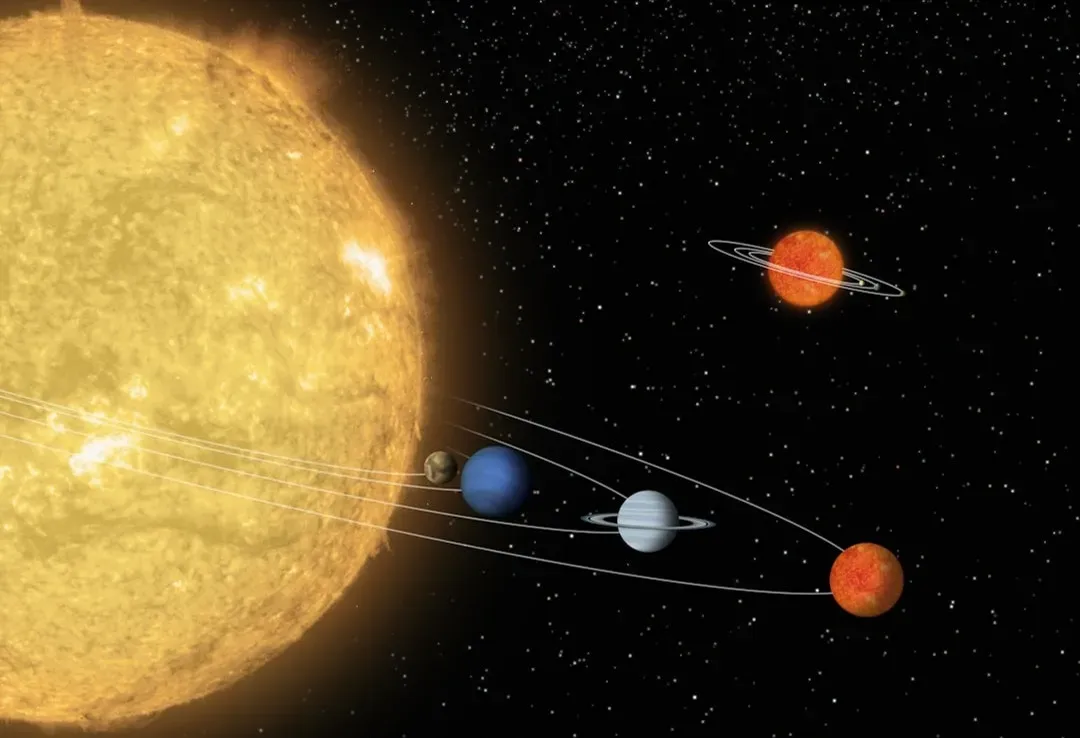
The idea of a heliocentric solar system, where the planets revolve around the sun, can largely be credited to two scientists, Copernicus and Galileo, with Copernicus publishing a theory of planetary motion in 1543 that directly contradicted the accepted notion that the Earth was the center of the universe and was widely derided at the time. Copernicus wrote his findings in his book De revolutionibus orbium coelestium, and he knew the book would be controversial and only sent it to be published when he was near death, with the geocentric model of the universe theory finally being disproved in the 17th century.
In the early 17th century, Galileo used a telescope to observe the movement of celestial bodies, which both confirmed Copernicus’ suspicion that the Earth orbited the sun and raised the ire of the Catholic Church and the Inquisition, which led to Galileo being placed under house arrest for the rest of his life and his book being banned. Several astronomers challenged the geocentric model of the universe over the years, especially between the tenth and 12th centuries, but none were accepted as correct until the 16th century when Nicolaus Copernicus claimed that the Earth is not at the center of the universe. As further scientific research was conducted, Galileo’s beliefs were vindicated, and his theories of heliocentrism served as an important base for modern astrophysics.
Mendelian Genetics: The Monk’s Peas That Science Ignored for Decades


Gregor Mendel, living in an Austrian monastery as a monk, noticed that when he controlled the pollination of pea plants, the resulting peas would often have the same characteristics as the plants they were derived from, and when he combined his observations with the fact that children often had the same characteristics as their parents, his vegetable experiments led him to develop the basic theory on which genetics would be based: Mendel’s Laws of Inheritance. Unfortunately for Mendel, the theory that would revolutionize our understanding of how life develops was ignored by his contemporary scientists almost entirely, despite Mendel attempting to contact and convince many of the luminaries of his day.
It would take several decades for Mendel’s theories to be taken seriously. His work laid dormant in scientific journals until the early twentieth century when other scientists independently rediscovered his principles. The delay in acceptance stemmed partly from the complexity of statistical reasoning required to understand his work, which was unfamiliar to most biologists of his era. Additionally, the mechanism of inheritance through genes and chromosomes had not yet been discovered, making his mathematical patterns seem abstract and disconnected from physical reality. Today, Mendelian genetics forms the foundation of modern biology and has enabled revolutionary advances in medicine, agriculture, and our understanding of evolution.
Partner offer
Planning a trip to Vegas?
Compare hotel rates and show tickets on VEGAS.com.