Hollywood loves a good origin story. The scrappy nobody who storms the gates, makes something unforgettable, and then rides that wave for decades. But what happens when someone makes exactly one masterpiece – and then vanishes? It’s rarer than you think, and honestly, more fascinating than any franchise.
Some of these stories are heartbreaking. Others are maddening. A few feel like genuine mysteries that cinema history still hasn’t fully solved. Each one of these directors left behind a film so singular that it almost defies explanation. So let’s get started.
Charles Laughton – The Night of the Hunter (1955)

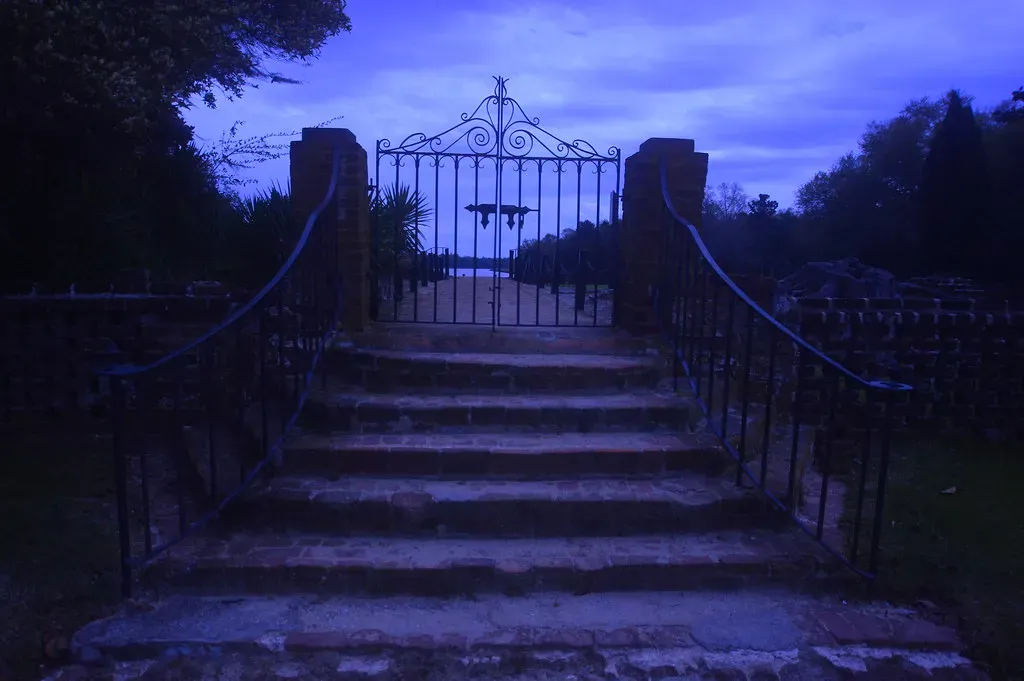
Here’s the thing about Charles Laughton: he was already one of the most respected actors of his generation when he decided to step behind the camera. The Night of the Hunter was the first film directed by Charles Laughton and also, sadly, the last – and it stands among the greatest horror movies ever made. That’s not a small statement. That’s one film. One shot at the chair. And he nailed it so completely that cinema scholars are still writing about it seventy years later.
The Night of the Hunter is a 1955 American Southern Gothic horror-thriller film starring Robert Mitchum, Shelley Winters, and Lillian Gish, with a screenplay by James Agee based on the 1953 novel by Davis Grubb. The plot follows Preacher Harry Powell, a serial killer who poses as a preacher and pursues two children in an attempt to get his hands on ten thousand dollars of stolen cash hidden by their late father. It sounds like a simple thriller. It is anything but.
The film’s lyrical and expressionistic style, borrowing techniques from silent film, sets it apart from other Hollywood films of the era, and it has influenced such later directors as Rainer Werner Fassbinder, Robert Altman, Spike Lee, Martin Scorsese, the Coen Brothers, and Guillermo del Toro. Honestly, that list alone tells you everything. So why did Laughton never direct again?
The film has been cited among critics as one of the best of the 1950s and has been selected by the United States National Film Registry for preservation in the Library of Congress. At the time of its original release, however, it was a critical and box-office failure, and Laughton never directed again. The rejection broke him. On Rotten Tomatoes, 93 percent of 88 critics now give the film a positive review, with a weighted average rating of 9.10 out of 10. Metacritic assigned the film a score of 97 out of 100, indicating universal acclaim. Acclaim that arrived far too late for Laughton to enjoy.
Barbara Loden – Wanda (1970)


Barbara Loden is one of cinema’s most quietly devastating stories. She was an actress, a Tony Award winner, and the wife of legendary director Elia Kazan. Yet the film she made entirely on her own terms, with almost no resources, turned out to be one of the most radical American films of the 20th century. Wanda is a semi-autobiographical portrait of a passive, disconnected coal miner’s wife who attaches herself to a petty crook. Innovative in its cinéma vérité and improvisational style, it was one of the few American films directed by a woman to be theatrically released at that time.
The film was the only American film accepted by the Venice Film Festival in 1970, where it won the International Critics’ Prize, and the only American film presented at the 1971 Cannes Film Festival. Think about that for a moment. One American film at Venice. And it was this quiet, grimy, improvised portrait of a woman adrift in Pennsylvania coal country. In 2022, the film appeared on Sight and Sound’s critics poll for the Top 100 Films of All Time, tied for 48th place.
Loden worked with a tiny budget of approximately one hundred thousand dollars, a three-person crew, and only two professional actors. The result was rawer and more honest than almost anything Hollywood was producing at the time. Loden’s first and only film as a director is a searingly honest character study whose jagged, unvarnished aesthetic stood in stark contrast to the slick Hollywood dramatic tradition.
Loden, whose own life was cut short a mere ten years after Wanda was released due to breast cancer, had had other movie aspirations. She was never able to get another independent feature film financed. It’s one of those stories where the silence after the single great work feels almost unbearably heavy. What she might have made, had the industry made room for her, is a question cinema still can’t answer.
Tony Kaye – American History X (1998)


I think Tony Kaye might be the most infuriating entry on this list – not because of the film itself, which is genuinely brilliant, but because of what came after it. The cautionary tale of Tony Kaye is one still spoken about in hushed whispers in Hollywood circles. In 1998, his debut feature, American History X, an incendiary piece of filmmaking that attacked the dark heart of white supremacy, was released to rave reviews and an Oscar nomination for star Edward Norton.
The battle over artistic control of the film, which has become part of Hollywood folklore, all but destroyed Kaye’s career. He had delivered his original cut on time and within budget, but when the producer, New Line Cinema, insisted on changes, the arguments began. What followed was a spectacular, self-destructive meltdown that Kaye himself has since partially acknowledged. Kaye spent one hundred thousand dollars of his own money to take out 35 full-page ads in the Hollywood trade press denouncing Norton and the producer.
The final version was 40 minutes longer than Kaye’s 95-minute cut, which resulted in him publicly disowning the film through dozens of trade paper advertisements, thus negatively affecting his directing career. For years, Kaye was effectively a ghost. He didn’t become the next Scorsese or Tarantino after American History X, which had seemed entirely plausible given the film’s quality. Instead, he became persona non grata in Hollywood and helmed only two obscure independent features in the 27 years since it caused such a stir.
In a surprising twist, Kaye returned to the global film stage with the Rome Film Festival premiere of “The Trainer,” a satirical Los Angeles fairytale about a deluded fitness hustler. While Kaye had produced an Oscar-shortlisted documentary and a festival darling drama starring Adrien Brody in the 25 years since he was drummed out of the studio system, “The Trainer” represented a bold return to form for Kaye. Whether it sticks this time remains to be seen.
Paul Brickman – Risky Business (1983)

Risky Business is one of those films that defined an entire decade in a single image. You know the one. Tom Cruise, white socks, sunglasses, sliding across a hardwood floor. After directing the iconic teen movie Risky Business, which gave Tom Cruise a star vehicle to speed ahead to Hollywood’s A-list, Brickman followed it up with the drama Men Don’t Leave. The film received little fanfare and Brickman entered a period of self-imposed hiatus to avoid being in the public eye.
It turns out the reason for Brickman’s departure wasn’t simply creative exhaustion. In a classic case of artistic integrity versus cold, hard commerce, Brickman pushed for an ambiguous, downbeat ending, but the studio insisted he shoot a happy denouement. Brickman hated the compromise. Instead of walking away during production, he chose to leave directing behind entirely, and now his only contact with Hollywood is writing the occasional screenplay.
It’s a surprisingly principled decision when you stop to think about it. Most directors would have made peace with the happy ending and used the clout to do something else. Brickman chose silence instead. His premature exit from Hollywood is saddening, but at least his single hit has endured a long shelf life. Risky Business still gets referenced, still gets screened, still makes people laugh. Whether Brickman watches it from a distance with satisfaction or frustration, nobody really knows.
Josh Trank – Chronicle (2012)

Chronicle, made for a budget of twelve million dollars, was received positively by critics, earning an 85 percent score on Rotten Tomatoes. With its release, Trank became the youngest director to open a film at number one at the US box office, at age 27. That’s not just impressive, that’s generational-talent territory. The kind of debut that makes studios reach for their checkbooks before the opening weekend is even over.
Sure enough, the checkbooks came out fast. In June 2014, amid the commencement of filming of Fantastic Four, Disney and Lucasfilm announced that Josh Trank had been signed to direct a standalone Star Wars film. Within two years of his debut, Trank was directing the Marvel universe and attached to Star Wars. It doesn’t get bigger than that. Then everything collapsed.
Critics attributed much of the film’s failure to extensive studio interference from 20th Century Fox, which reshot significant portions and altered Trank’s darker, horror-inflected vision into a more conventional blockbuster. Trank himself publicly blamed the meddling for the final product’s shortcomings, stating that audiences would never see his intended cut. 20th Century Fox’s 2015 reboot was a colossal failure, earning negative reviews from critics and costing the studio an estimated 100 million dollars.
The fallout was swift and brutal. Trank’s fallout from the Fantastic Four debacle led to him being blacklisted in Hollywood. Because the disastrous commercial and critical reception cast such an enduring shadow over his reputation, it’s easy to forget the great potential he demonstrated before Fantastic Four essentially destroyed his career. As of 2025, it was announced that Trank was working on a new horror film called “Send A Scare,” with Robbie Amell and Victoria Justice leading the cast. A quiet comeback attempt, more than a decade after his moment in the sun.
Saul Bass – Phase IV (1974)


Saul Bass is a name every design student knows. His title sequences for films like Vertigo, Psycho, and Anatomy of a Murder are considered among the greatest works of visual communication in the 20th century. But in 1974, Bass decided he wanted to direct an entire feature film, not just the opening credits. Legendary graphic designer Saul Bass was already famous for his iconic title sequences when he decided to direct his own feature, Phase IV. This science fiction film about hyper-intelligent ants threatening humanity was visually stunning and deeply unsettling, featuring surreal imagery that only Bass could conjure.
The premise sounds almost absurd when described plainly: ants develop a hive intelligence and declare war on humanity. It shouldn’t work. It does. Phase IV is one of those films where the visual instincts of its creator are so overwhelming that conventional storytelling almost becomes irrelevant. Every frame looks like a poster. Every shot feels designed rather than captured. Critics at the time were baffled, but in recent years the film has gained a cult following for its originality and bold style. After this one-of-a-kind film, Bass returned to his design work, never directing another feature.
Honestly, it makes a strange kind of sense. Bass wasn’t trying to launch a directing career. He was a visual artist who wanted to make exactly one film, on exactly his own terms, and then return to his real life. For some directors, their hits are a mere fluke. Others fade into obscurity through choice or bad luck. Bass, perhaps uniquely on this list, seems to have disappeared entirely by design. Phase IV wasn’t a beginning. It was a statement.
Conclusion

What connects all six of these filmmakers isn’t failure. Several of them made work that critics now rank among the greatest films ever produced. What connects them is something stranger: the gap between the magnitude of what they created and the silence that followed.
Some were broken by rejection, like Laughton. Some were destroyed by the very industry that embraced them, like Trank. Some walked away on principle, like Brickman. And one, Barbara Loden, ran out of time before the world was ready to understand what she’d made.
Cinema is full of stories about directors who made too many films. These six remind us that sometimes, one is enough – and that one film, perfectly made, can echo louder than an entire career. Which of these stories surprised you most?