There’s a particular kind of magic that happens when a fictional setting stops feeling like a backdrop and starts feeling like a place you could actually get lost in. The street names become familiar. The local diner feels like somewhere you’ve been before. The town’s history, even the invented kind, starts to feel lived-in and true.
Some stories achieve this through sheer detail, others through an uncanny emotional specificity. The six towns below have earned a strange kind of realness that outlasts the pages or screen they came from.
Stars Hollow, Connecticut – Gilmore Girls

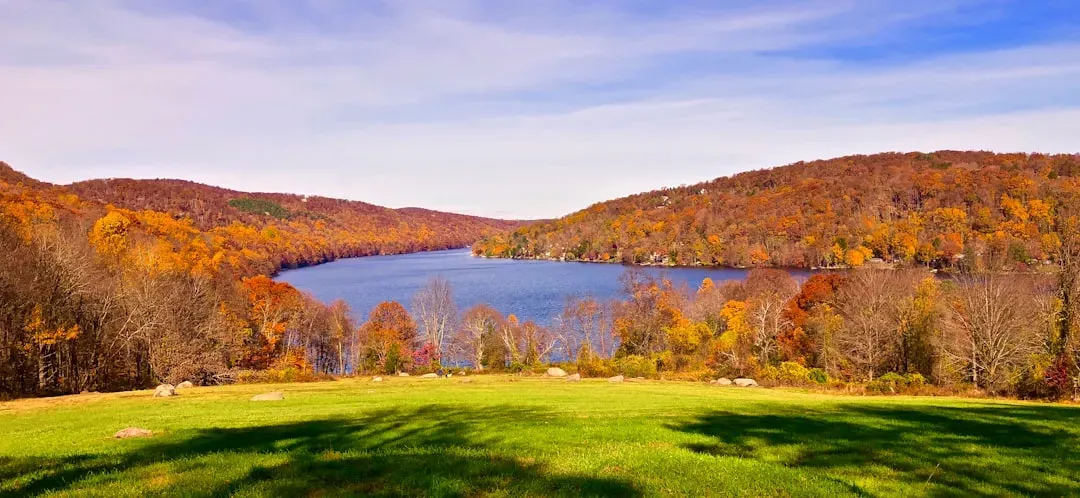
Stars Hollow is the fictional Connecticut town at the heart of Gilmore Girls, home to protagonists Lorelai and Rory Gilmore. The town was founded in 1779, and its name comes from a romantic legend involving two star-crossed lovers drawn together by a shared cosmological event at the spot where the town now stands. The center of town is built around a park with a gazebo, and the town square holds Luke’s Diner, Doose’s Market, Miss Patty’s dance studio, and even a house of worship that doubles as both a Protestant church and a synagogue.
Creator Amy Sherman-Palladino conceived Stars Hollow while staying in Washington, Connecticut, driving through various towns and assembling a fairytale version of New England grounded in real places. The town was ultimately inspired by several real Connecticut communities, including the village of Washington and the towns of West Hartford and New Milford. Stars Hollow draws tens of thousands of online searches each year from fans trying to locate it, and in 2016 the first official fan festival drew over a thousand visitors with cast meet-and-greets.
Twin Peaks, Washington – Twin Peaks

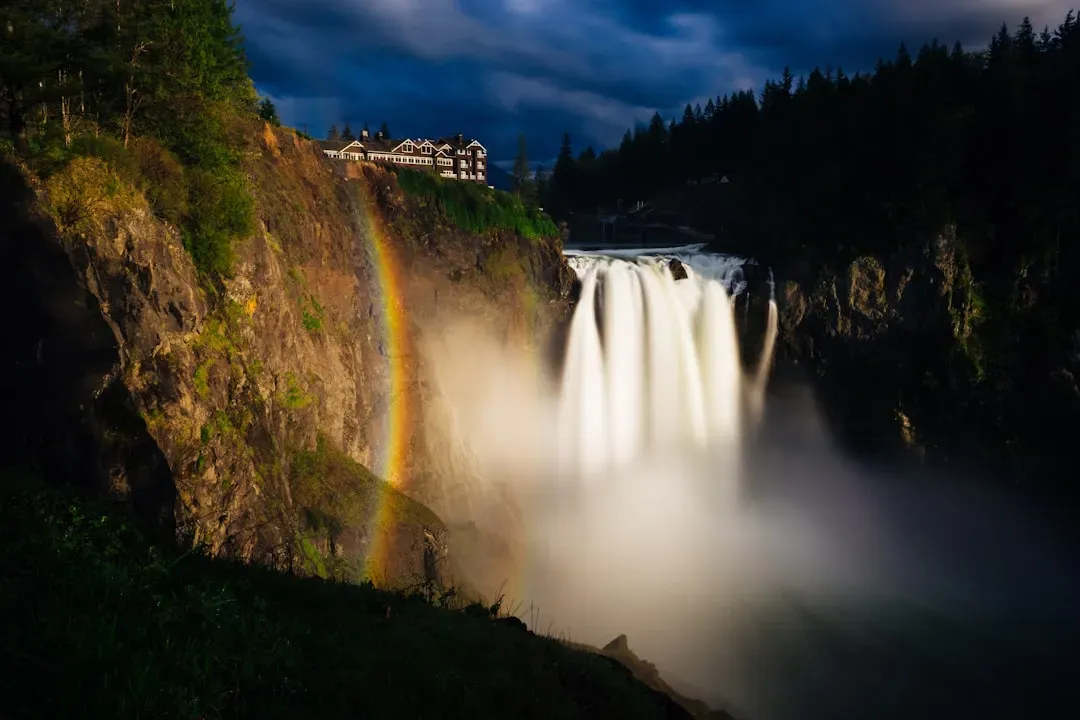
Twin Peaks is a fictional small logging town in northeastern Washington, situated five miles south of the Canadian border and twelve miles west of the Idaho state line, created by David Lynch and Mark Frost as the central setting for their surreal mystery series that debuted on ABC in 1990. The town’s population sits at roughly five thousand, and it features a dense evergreen forest, a working sawmill as its economic backbone, and landmarks like the Double R Diner and the Great Northern Hotel. The welcome sign on the show famously listed a population of 51,201, later corrected to the intended 5,120, and the town drew its name from the two mountains between which it lay: White Tail and Blue Pine Mountain.
The concept for Twin Peaks drew inspiration from small-town soap operas like Peyton Place and Lynch’s earlier film Blue Velvet, blending everyday Americana with surreal, supernatural undercurrents. Most of the show’s exterior footage was filmed in the Washington towns of Snoqualmie, North Bend, and Fall City, all roughly 25 to 30 miles from Seattle. The Snoqualmie Valley attracts thousands of international fans annually for self-guided tours and themed events, including the Real Twin Peaks festival held each February.
Springfield – The Simpsons

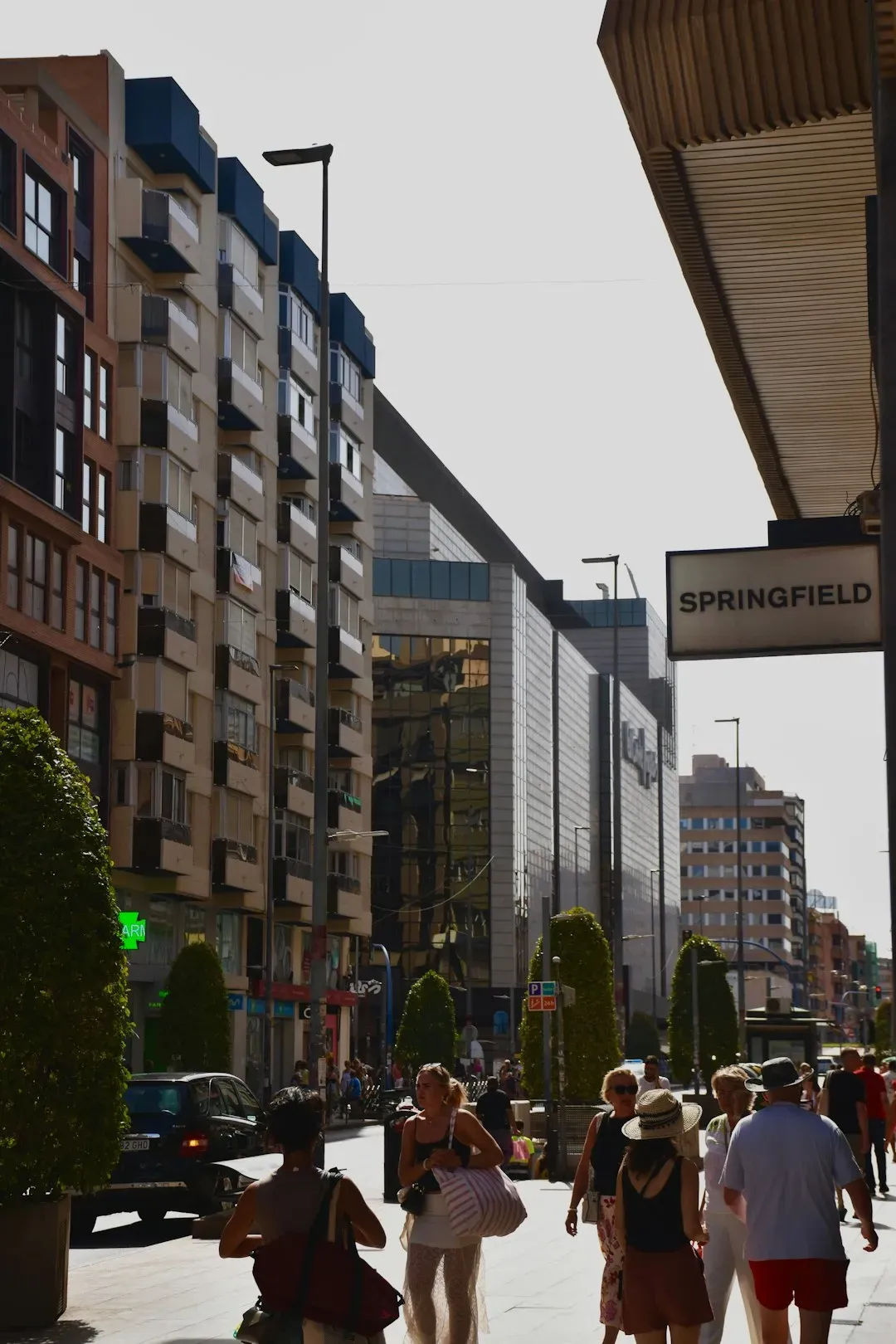
Springfield is the primary fictional setting of The Simpsons, an average-sized American city whose geography and layout shift freely from episode to episode to serve whatever the story demands. Springfield’s fictional geography is comically varied, encompassing forests, meadows, mountain ranges, a desert, a glacier, beaches, badlands, canyons, swamps, a harbor, and waterways. The town is divided into dozens of named neighborhoods, including Rats Nest, Little Bangkok, Ethnictown, Crackton, Springfield Harbor, and a dedicated fast-food district, among many others.
Springfield was inspired by creator Matt Groening’s hometown of Portland, Oregon, as well as the nearby town of Springfield, Oregon, and producer Mike Scully’s hometown of Springfield, Massachusetts, though its precise location was deliberately left unknown to represent “Anytown, USA.” Clues about Springfield’s climate, geology, and distance from real cities appear throughout the series but are intentionally contradictory. Groening himself grew up on Evergreen Terrace, the very street where the Simpsons live, and Portland street names like Lovejoy, Flanders, and Kearney appear throughout the show.
Hawkins, Indiana – Stranger Things
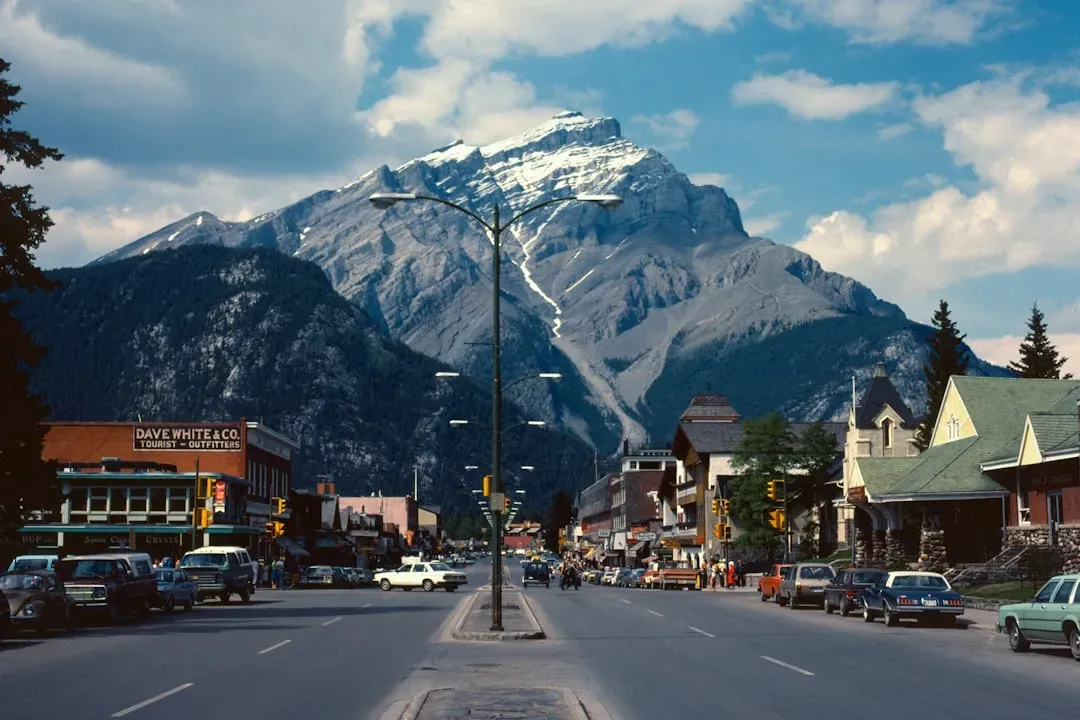
Set in the 1980s, Stranger Things centers on the residents of the fictional small town of Hawkins, Indiana, after a young girl with psychokinetic abilities inadvertently creates a wormhole connecting Earth to a hostile alternate realm called the Upside Down, through a nearby secretive government facility known as Hawkins Lab. Hawkins is described in the show as the town where nothing ever happens, though the nearby National Laboratory secretly experiments with the paranormal, and its influence begins to affect residents in disturbing ways.
The Duffer Brothers took inspiration from classic Spielberg films like E.T. and the works of Stephen King to craft a town that feels like a textbook slice of 1980s American small-town life. The town of Hawkins was itself inspired by King’s own childhood spent in Durham, Maine. Though the show is set in Indiana, it was filmed in and around Atlanta, Georgia, with the small town of Jackson serving as a stand-in for fictional Hawkins. The resulting sense of place is so convincing that fans have mapped out its streets, landmarks, and geography with near-obsessive care.
Pawnee, Indiana – Parks and Recreation

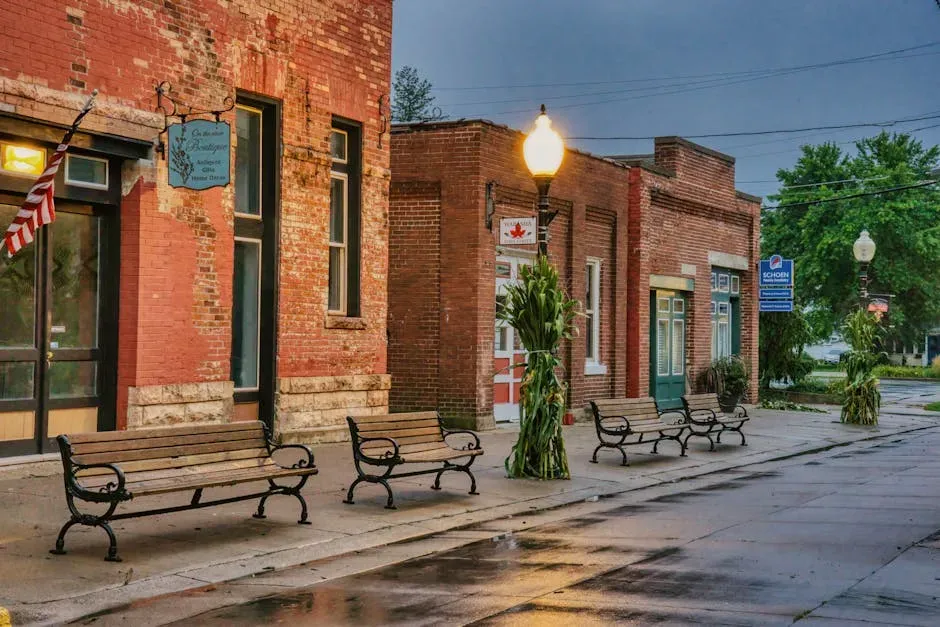
Pawnee is depicted as a typical mid-sized city in south-central Indiana, located in the fictional Wamapoke County about 90 miles from Indianapolis. Its fictional history begins with its founding in 1817, very shortly followed by the forced removal of the Native American Wamapoke tribe, a shameful legacy the town celebrates in various murals on City Hall walls. The town is shown to have a raccoon infestation, an obesity crisis driven largely by its biggest employer being a candy company called Sweetums, and a populace that is generally unsophisticated but deeply civically engaged.
In one episode, Leslie Knope writes a book about the town titled Pawnee: The Greatest Town in America, and NBC later released an actual version of that book filled with information about the fictional city, written by show writer Nate DiMeo under Leslie’s name. When the creators needed a map of Pawnee, they flipped a map of Muncie, Indiana upside down, and for close-up shots they used the streets found on a map of Christchurch, New Zealand. It’s the kind of absurd, affectionate detail that makes Pawnee feel oddly credible.
Castle Rock, Maine – Stephen King’s Universe

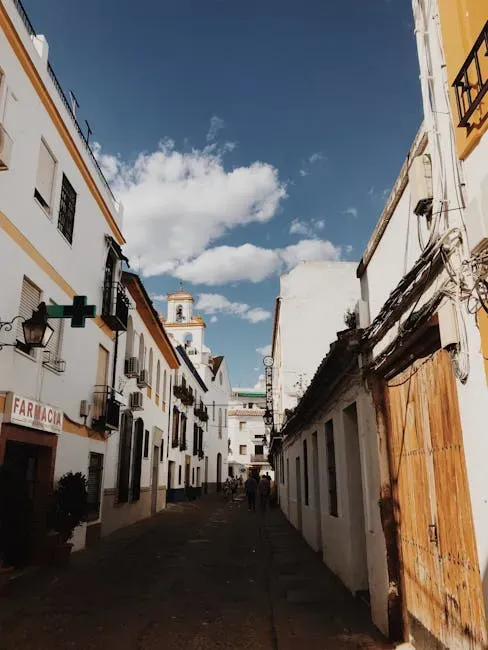
Of all Stephen King’s creations, Castle Rock, Maine is the environment he returns to most consistently: a quaint and quiet town with a deeply supernatural underbelly. King named Castle Rock after the fictional fort in William Golding’s Lord of the Flies, and has since used it not just as a backdrop for his most famous stories but as a connective tissue binding the wider threads of his horror universe. The history of this fictional town is staggering in its depth, with every house holding a family with its own buried secrets, and the cumulative weight of that detail is part of what makes King’s horror feel so genuinely unsettling.
King’s America is so frightening precisely because it is so recognizable: the horror walks the same park paths and sees the same faces on the street as ordinary people do. In Bag of Bones alone, King includes excerpts from a fictional historical book titled A History of Castle County and Castle Rock, a layer of invented scholarship that deepens the town’s sense of documented reality. Castle Rock has since inspired a dedicated TV series, a wiki meticulously cataloguing its streets and residents, and decades of reader maps drawn from scattered textual clues across King’s sprawling bibliography.
What these six towns share isn’t just detail. It’s a sense that life was happening there before the story started and keeps happening after it ends. The best fictional places feel not like sets but like somewhere you almost remember, which is probably why fans keep trying to find them on actual maps.