History is full of people who were told they were wrong. Outsiders. Dreamers. Troublemakers who kept asking questions nobody else thought worth asking. Some were laughed at, some were ignored, and some were locked up for daring to challenge the way the world worked. Funny thing is, most of them turned out to be right.
What separates a genius from a brilliant person isn’t just raw brainpower. It’s the willingness to follow an idea into uncomfortable places, to sit with uncertainty and not flinch. These six people did exactly that – and the world has never been the same. Let’s dive in.
1. Albert Einstein – The Patent Clerk Who Rewrote Reality

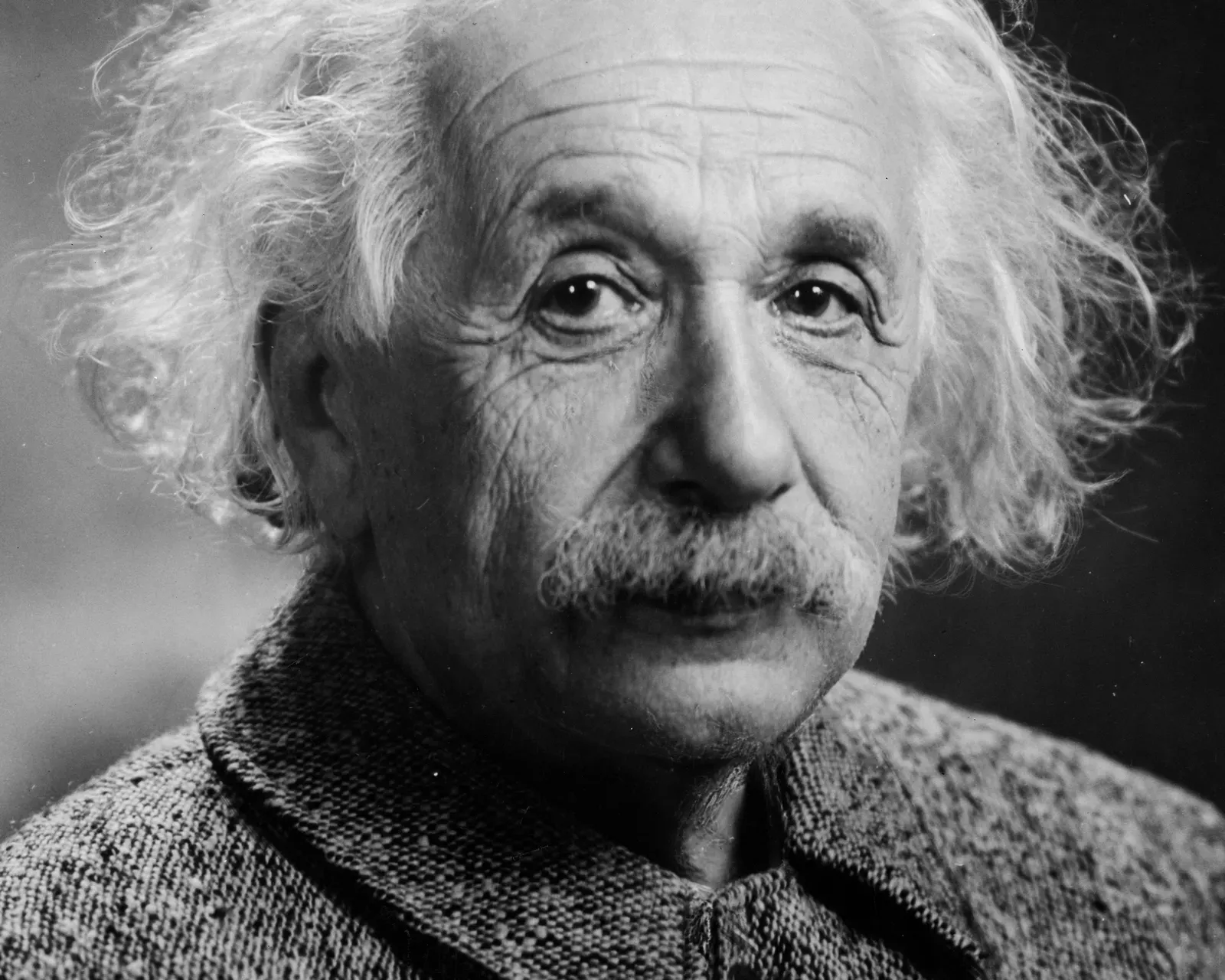
Einstein shot to fame within the scientific community in 1905, a year christened as his “annus mirabilis.” While working eight-hour days, six days a week at the Swiss patent office in Bern, he wrote four papers in his spare time that changed the course of physics. Let that sink in for a second. The most consequential scientific papers of the modern era were written on lunch breaks.
Einstein was known for using thought experiments – imagined scenarios that helped him test ideas logically before expressing them mathematically. This approach allowed him to challenge existing theories and develop entirely new ways of thinking about the universe. It wasn’t a laboratory that produced his breakthroughs. It was his mind.
While many people assume Einstein won the Nobel Prize for relativity, he was actually awarded the Nobel Prize in Physics in 1921 for his explanation of the photoelectric effect. This work showed that light can behave like particles, knocking electrons loose from certain materials. The discovery helped establish quantum theory and later made technologies such as solar cells and light sensors possible.
Many of his ideas were way ahead of his time. In fact, scientists are still winning Nobel Prizes for experiments based on his work decades after his death in 1955. Honestly, it’s hard to think of another figure in history whose ideas kept producing new discoveries long after they were gone.
2. Nikola Tesla – The Visionary Nobody Wanted to Pay

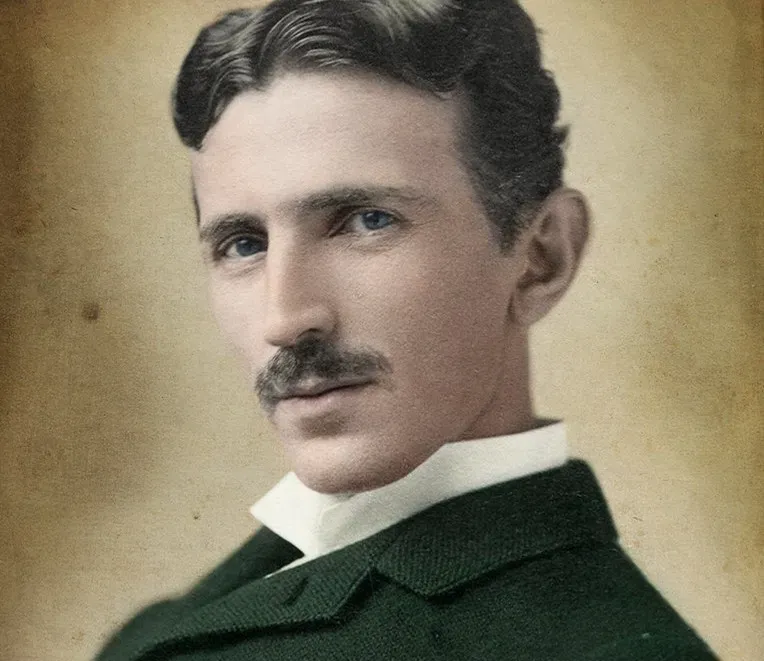
Nikola Tesla was a Serbian-American engineer, futurist, and inventor, known for his contributions to the design of the modern alternating current electricity supply system. That system powers virtually every building on earth today. Yet for much of his life, Tesla was broke and largely forgotten.
He invented the AC system, which made it possible to transmit electricity over long distances – a system still widely used today. Tesla also devoted much of his time to studying wireless transmission, leading to the development of technologies such as radio, television, and Wi-Fi. The man was building the infrastructure of the 21st century while living in the 19th.
When at age seventeen Tesla first turned to invention, he realized that his childhood ability to visualize objects in three dimensions had become a precious gift, allowing him to materialize mentally the design of any machine he wished to create, to take it apart and put it back together, or simply to observe it in action. He essentially ran a full engineering simulation inside his own head.
Tesla’s work fell into relative obscurity following his death, until 1960, when the General Conference on Weights and Measures named the SI measurement of magnetic flux density the tesla in his honor. There has been a resurgence in popular interest in Tesla since the 1990s. In 2013, Time named Tesla one of the 100 most significant figures of all time.
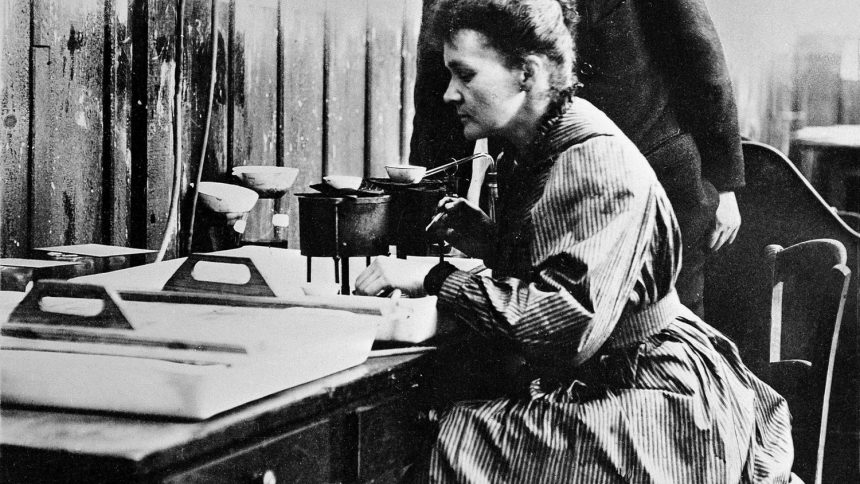
3. Marie Curie – The Woman Who Walked Into the Unknown

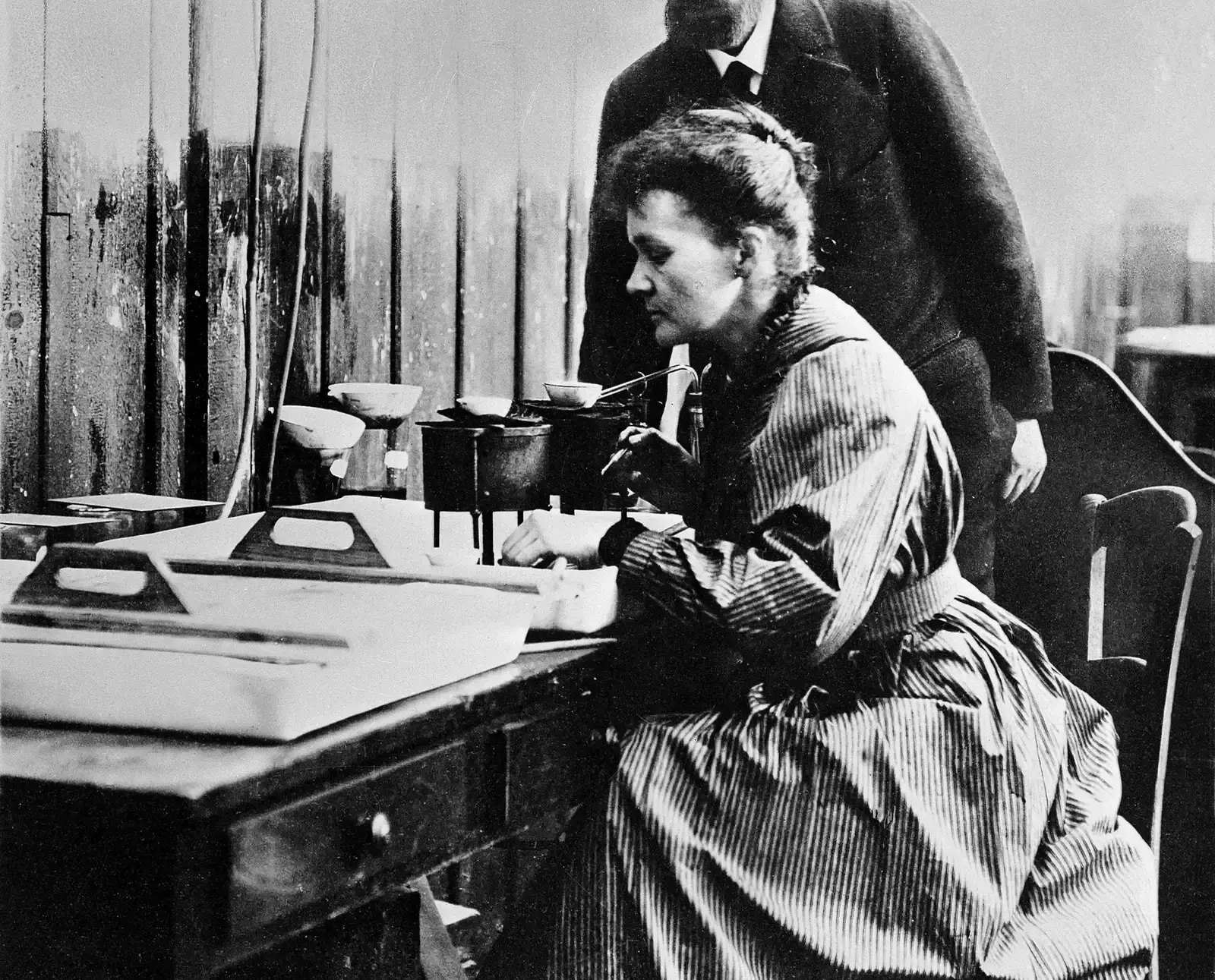
Marie Curie, a Polish-born physicist and chemist, revolutionized science. She discovered radium and polonium, coined the term “radioactivity,” and became the first woman to win a Nobel Prize. Her tireless work in radiation research laid the foundation for modern medicine and cancer treatment. Two Nobel Prizes. Two completely different scientific fields. That has never been matched.
She helped set up the first radiology center during World War I and is the world’s first medical physicist. While others theorized from the safety of lecture halls, Curie took her work directly to where it was needed most – hospital tents at the front line.
She codiscovered the chemical elements radium and polonium, made numerous pioneering contributions to the study of radioactive elements, and carried out the first research into the treatment of tumors with radiation. That last point is worth pausing on. Cancer treatment as we know it today traces its roots directly back to her lab.
Marie Curie also broke barriers for women in science. She inspired many women to pursue careers in research. In a field and an era that actively discouraged women from participating, she didn’t just persevere. She dominated.
4. Charles Darwin – The Reluctant Revolutionary

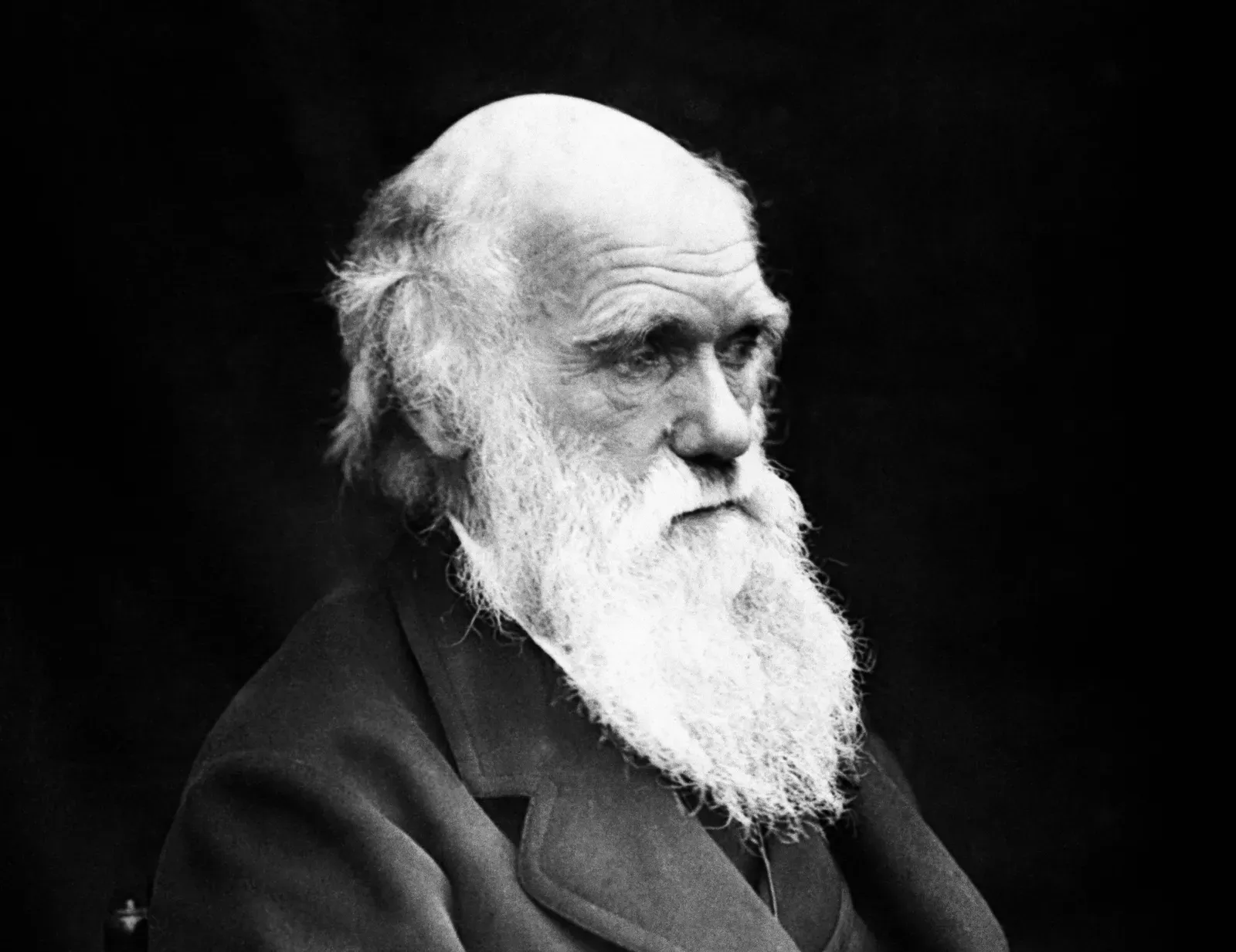
Charles Darwin has become one of the world’s most renowned scientists. His inspiration came from a deep curiosity about beetles and geology, setting him on a transformative path. His theory of evolution through natural selection challenged prevailing beliefs and left an enduring legacy that continues to shape the field of biology. It all started with beetles. I find that strangely comforting.
Growing up in Great Britain, Darwin was raised in a Christian family and held creationist beliefs. That’s not what you’d expect from the man whose landmark 1859 book “On the Origin of Species” provided a detailed description of the theory of evolution. In his writings, he outlined his natural selection concept, in which species that evolve and adapt to their environment thrive while others perish.
His book “On the Origin of Species” is still a key text in biology. Darwin’s ideas came from his observations on the HMS Beagle. He studied the diversity of species, especially on the Galápagos Islands, leading to his groundbreaking theory. A five-year voyage, a notebook full of observations, and a mind willing to follow the evidence wherever it led.
Though controversial at the time, Darwin’s work is now fundamental to modern science. It continues to influence various fields of study. He shook religion, science, philosophy, and our understanding of what it means to be human – all from one carefully reasoned book.
5. Leonardo da Vinci – The Mind That Belonged to No Century

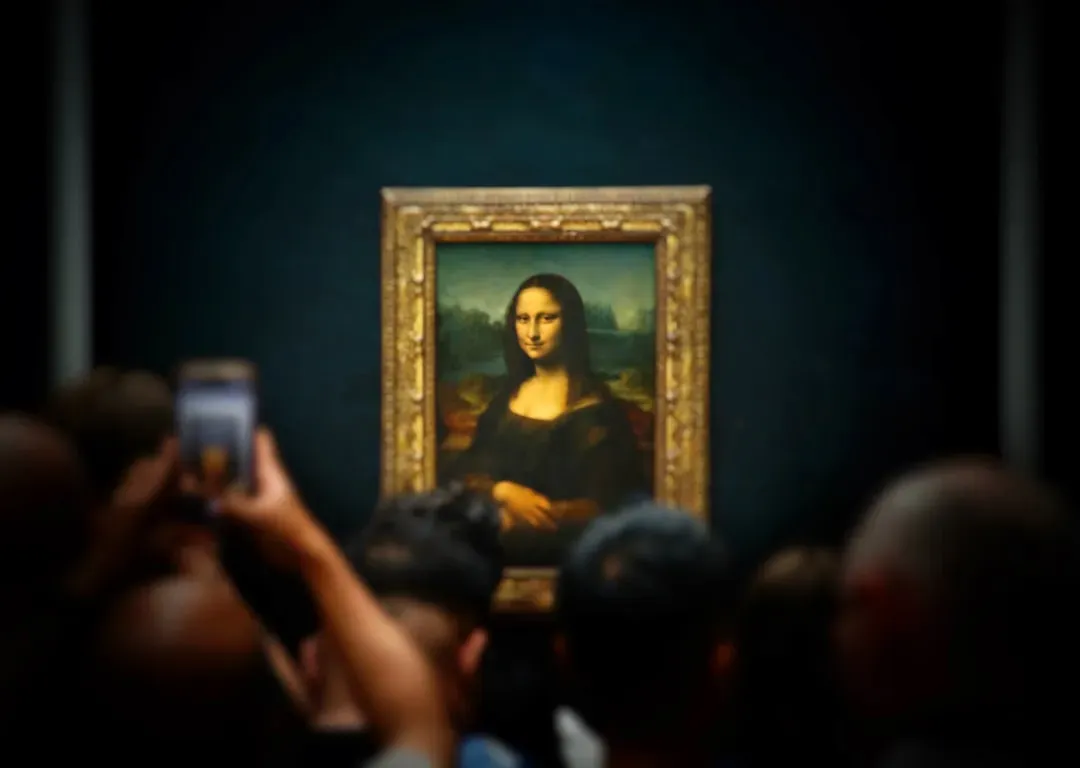
When we think of the archetypal Renaissance genius, one name towers above all others: Leonardo da Vinci. More than five centuries after his death, Leonardo remains the ultimate symbol of human curiosity and creative potential. What made this Italian polymath truly revolutionary wasn’t just his artistic mastery – it was his unprecedented fusion of scientific inquiry with artistic practice.
Leonardo’s notebooks demonstrate that he didn’t separate his various interests into distinct categories. A single page might contain studies of water flow, sketches of human hair, designs for mechanical devices, and notes on painting techniques. This integration of knowledge was revolutionary, challenging the medieval division between liberal arts and mechanical arts. Think of it like this: if Leonardo lived today, he’d be equally at home at a physics conference, an art studio, and a robotics lab.
Leonardo da Vinci’s curiosity of learning transcended his art; he was always trying to understand the world he lived in and all of its mysteries. He kept his scientific discoveries, explorations, and observations in thousands of notebooks, which he kept hidden while he was alive, and the majority of which were not understood in their entirety until many hundreds of years after his death.
Leonardo is considered a potent symbol of the “universal man” because of the breadth of his interests in the arts, science, and technology, spanning disciplines from chemistry to astronomy to mathematics. It’s hard to say for sure, but one can only wonder how much further science might have advanced had his notebooks been shared during his lifetime.
6. Ada Lovelace – The First Programmer in a World Without Computers

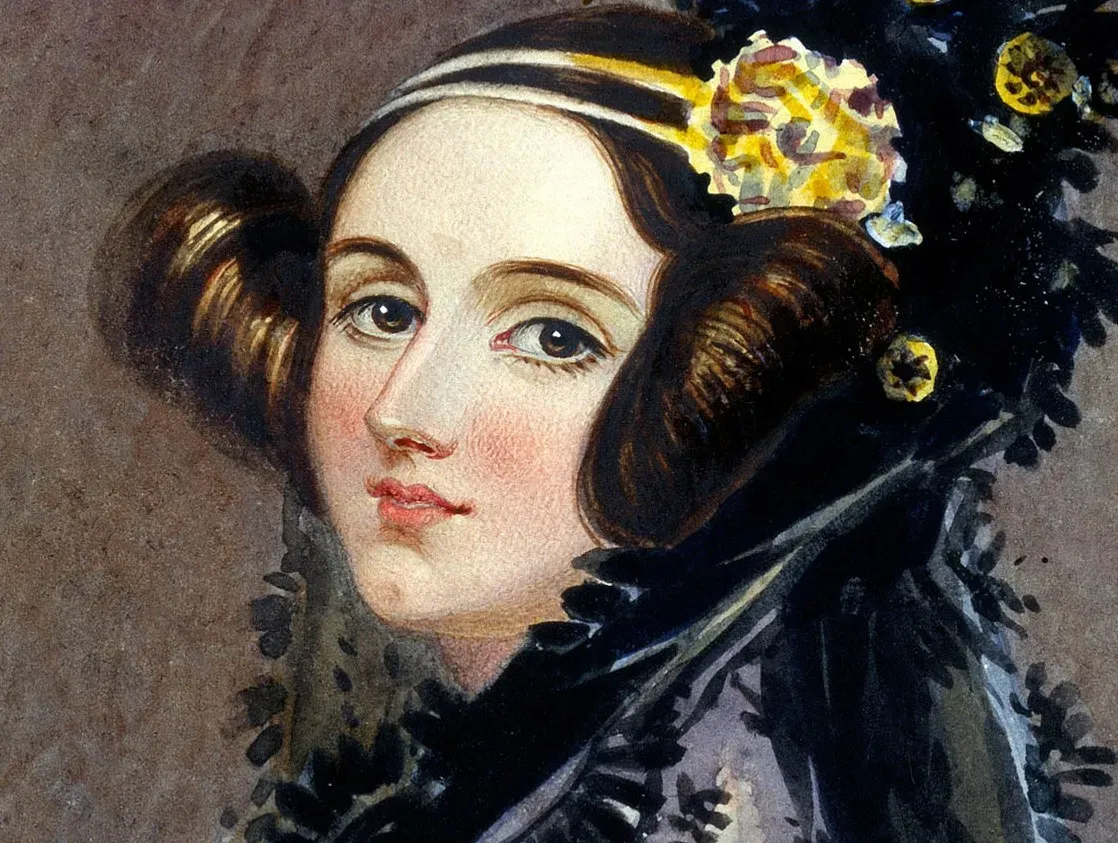
Ada Lovelace, who lived from 1815 to 1852, is recognized as the mother of computing science. She contributed to the first published computer program and was the first person to see that computers could do more than mathematical calculations, recognizing that musical notes and letters of the alphabet could be turned into numbers for manipulation by computers. She imagined the entire digital age from within the Victorian era. Full stop.
Ada Lovelace, an English mathematician and writer, collaborated with Charles Babbage on his Analytical Engine. She envisioned its potential beyond mere calculations and wrote the first algorithm, making her the world’s first computer programmer. Her foresight laid the groundwork for modern computing.
Lovelace’s notes and instructions on mentor Charles Babbage’s “analytical engine” are considered a breakthrough on the path to modern computers. The London-born Lovelace first theorized a process now called looping, in which computer programs repeat a series of instructions until a desired outcome is reached. Looping is the foundation of modern programming. She described it nearly two centuries before the first working computer existed.
Ada Lovelace was a mathematician who contributed one of the most useful innovations in the world. She is the first person to devise the language of computer programming. She did this a century before the first computer in the world was invented. That’s not ahead of your time. That’s ahead of everyone else’s time, by generations.
What These Six Geniuses Have in Common

None of these six people fit neatly into the box their era built for them. Einstein was a patent clerk. Tesla died broke. Curie was told the lab wasn’t a place for women. Darwin feared the backlash of his own theory so much he delayed publishing for over two decades. Leonardo left most of his work unfinished. Lovelace was dismissed in her own lifetime.
Here’s the thing though: every single one of them kept going anyway. They didn’t think differently because it was fashionable. They did it because they couldn’t help it. The curiosity was stronger than the criticism, and the ideas were too important to keep quiet.
The real lesson here isn’t that genius is rare. It’s that the world often makes it very hard for genius to survive long enough to matter. Which makes you wonder – whose ideas, whose notebooks, whose unfinished theories are we still sleeping on right now?