There’s something different about the way a poem lands when it’s spoken aloud on screen, timed to a certain look on an actor’s face or a swelling piece of score. Filmmakers have leaned on poetry for decades, not as decoration but as the emotional spine of a scene. The six examples below aren’t just poems that happen to appear in movies. They’re the ones that shape the meaning of the entire film around them.
1. “Do Not Go Gentle into That Good Night” in Interstellar
Dylan Thomas wrote this villanelle in 1951 as a plea to his dying father, urging him to resist death rather than accept it quietly. Christopher Nolan’s 2014 film Interstellar turns the poem into a recurring refrain, with Michael Caine’s character reciting fragments of it at several key moments as humanity faces extinction. The repetition of the line about raging against the dying of the light becomes a kind of thesis statement for the entire film’s stance on survival.
What makes the choice effective is how the poem’s original context, a son begging his father not to die, gets stretched to cover an entire species facing collapse. Nolan doesn’t just quote the poem once for atmosphere. He returns to it across the film’s three-hour runtime, letting its meaning shift slightly each time it resurfaces.
2. “O Captain! My Captain!” in Dead Poets Society
Walt Whitman wrote this elegy in 1865 following the assassination of Abraham Lincoln, using the image of a ship’s captain who dies just as his vessel reaches safe harbor. In Peter Weir’s 1989 film Dead Poets Society, the poem becomes shorthand for everything Robin Williams’ character, John Keating, represents to his students. The title itself is drawn directly from the poem’s opening line.
The film’s final scene, where students stand on their desks and address their teacher with the poem’s title as he leaves the classroom for the last time, has become one of the most referenced moments in American cinema. It works because the poem was already about loss and gratitude intertwined, which mirrors exactly what the boys are feeling as their mentor is forced out. Few films have built an entire emotional payoff so directly around a single line of verse.
3. “Invictus” in Invictus
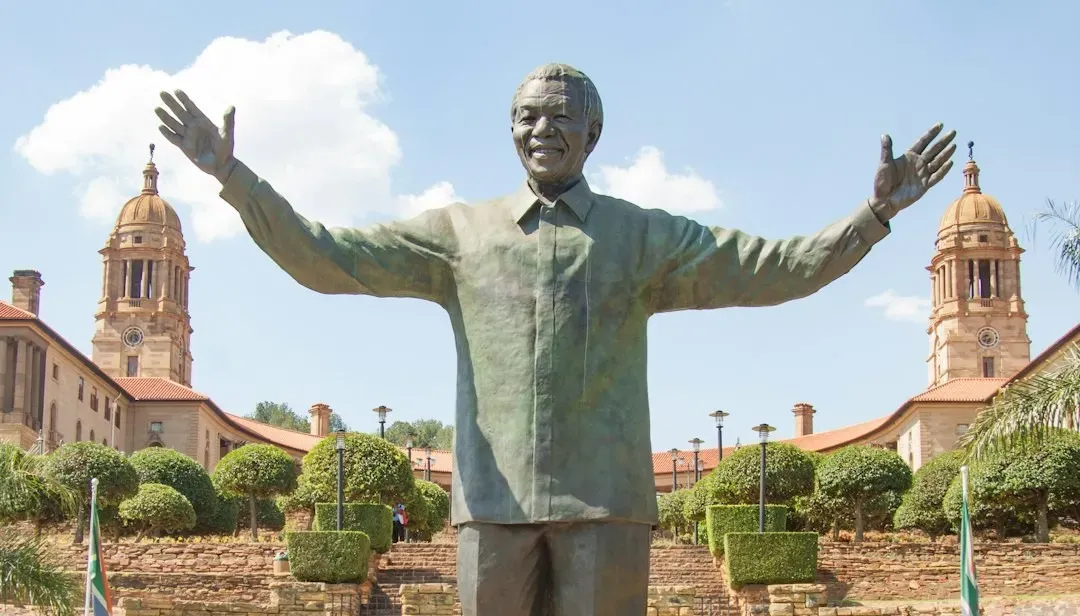
William Ernest Henley wrote this short poem in 1875 while recovering from a leg amputation, and its closing lines about being the master of one’s fate have made it one of the most quoted poems in English. Clint Eastwood’s 2009 film Invictus, starring Morgan Freeman as Nelson Mandela, takes its title directly from the poem. According to the film, Mandela drew strength from the poem during his twenty-seven years of imprisonment on Robben Island.
The poem functions as a bridge between Mandela’s personal endurance and South Africa’s broader struggle toward reconciliation after apartheid, which the film ties to the 1995 Rugby World Cup. Freeman’s character shares the poem with the national rugby captain, played by Matt Damon, turning a private source of resilience into a shared national symbol. It’s a rare case where a poem’s real historical significance to a public figure becomes the entire narrative hook for a film.
4. “Funeral Blues” in Four Weddings and a Funeral
W.H. Auden originally wrote this poem, sometimes known by its opening line “Stop all the clocks,” in 1936 as part of a satirical cabaret piece before revising it into the more sincere elegy audiences know today. Mike Newell’s 1994 film Four Weddings and a Funeral gave the poem a massive resurgence when Matthew, played by John Hannah, reads it aloud at his partner’s funeral. The scene marks the tonal turning point of the film, shifting from romantic comedy toward genuine grief.
Partner offer
Auden’s original poem had circulated quietly among poetry readers for decades, but the film introduced it to a mainstream audience that had likely never encountered his work before. Sales of Auden’s poetry reportedly spiked in the UK following the film’s release, a rare instance of a movie directly reviving interest in a poet’s collected works. The scene remains one of the most cited examples of how a film can rescue a poem from relative obscurity.
5. “The Hollow Men” in Apocalypse Now
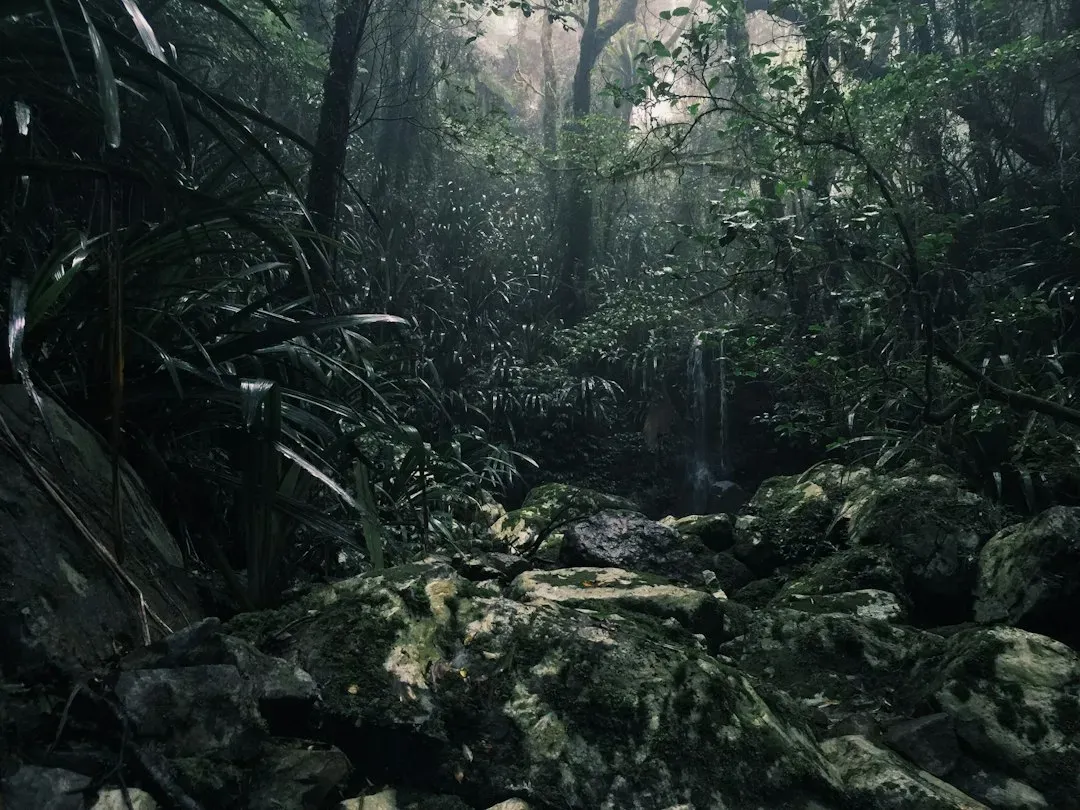
T.S. Eliot published “The Hollow Men” in 1925, a fragmented, unsettling meditation on spiritual emptiness that ends with the now-famous line about the world ending not with a bang but a whimper. Francis Ford Coppola’s 1979 film Apocalypse Now has Marlon Brando’s Colonel Kurtz recite lines from the poem in the jungle darkness of Cambodia, alongside passages from Sir James Frazer’s The Golden Bough. The choice reinforces Kurtz’s descent into a kind of civilizational madness that Eliot’s poem itself seems to describe.
Coppola reportedly placed copies of both texts on set for Brando to read from during filming, treating them less as literary references and more as source material for the character’s worldview. The poem’s bleak, disjointed style matches the film’s own fractured structure, which mirrors the chaos of the Vietnam War it depicts. It’s a dense literary choice for a war film, but one that critics have consistently pointed to as central to the movie’s unsettling final act.
6. “Jabberwocky” in Alice in Wonderland

Lewis Carroll wrote “Jabberwocky” as part of his 1871 novel Through the Looking-Glass, filling it with invented words that somehow still convey a clear narrative of a monster being slain. Tim Burton’s 2010 film Alice in Wonderland, starring Johnny Depp as the Mad Hatter, builds much of its climax around the poem, with the Hatter reciting it and Alice ultimately using its content as a literal guide to defeating the Jabberwocky creature. The poem shifts from wordplay to plot device, which is an unusual transformation for a piece of nonsense verse.
Burton’s film leans into the poem’s rhythm and invented vocabulary for its own visual style, matching Carroll’s playful language with equally strange production design. Depp’s delivery of the poem became one of the more memorable moments of the film upon its release, helped along by the poem’s built-in musicality. It’s a fitting choice given that “Jabberwocky” has remained one of the most recognizable poems in the English language since its publication.
These six examples show how differently poetry can function inside a film, sometimes as a private code between characters, sometimes as the literal key to a plot, and sometimes as the emotional center that a whole story pivots around. In each case, the poem existed long before the film, yet the movie changed how audiences encounter and remember it. That relationship between old words and new images is part of what keeps both mediums alive.
Partner offer
Planning a trip to Vegas?
Compare hotel rates and show tickets on VEGAS.com.