Movies have an unusual kind of authority with young audiences. Unlike a lecture or a textbook, a film wraps its values inside music, humor, and characters kids actually want to follow. The problem is that the message embedded in those stories isn’t always one a teacher would put on a lesson plan.
Educators have long raised concerns about films that normalize troubling behavior, frame unhealthy dynamics as romantic, or simply reward characters for doing the wrong thing. These aren’t fringe opinions, either. Many of these critiques come up repeatedly in classrooms, parenting guides, and media literacy discussions. Here are six popular movies that .
Grease (1978)


Sandy’s transformation at the end of the movie stands out as one of the film’s most discussed problems. It portrays a message that you need to change yourself to get your man. Teachers who use media literacy in the classroom frequently point to this as a textbook example of a film that rewards self-erasure and calls it romance. The main messages from this movie can be confusing for children, since both Sandy and Danny make changes to their images to attract each other, but in Sandy’s case this involves dressing like a “bad” girl and taking up smoking.
Rather than suggesting schools stop producing or screening Grease altogether, many educators argue for taking a serious look at the message being delivered, noting that with all the issues going on in social circles in high school, performing a piece where a character gets bullied into changing herself to please everyone else isn’t a great signal to send. The film never pauses to question whether Sandy’s dramatic reinvention is actually a good idea. While the songs are undeniably catchy, the message portrayed by Sandy’s drastic change at the end of the movie is not entirely the right one to send to impressionable teens and young adults.
Beauty and the Beast (1991)

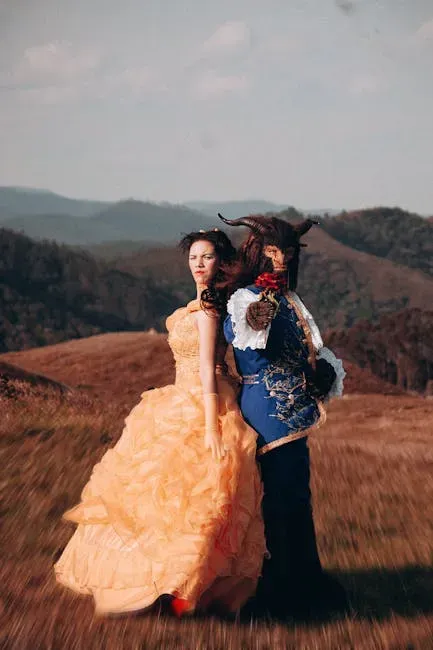
Feminist scholars have long argued that the film sends a terrible message to audiences, especially young girls, by showcasing an abusive and power-imbalanced relationship as some kind of ideal fairy-tale romance. Belle is held captive in a castle, and the story frames her growing attachment to her captor as a romantic journey. Beauty and the Beast shows that putting up with horrible, abusive behavior and tolerating a literal monster who kidnaps you is all well and good, so long as he’s ultimately handsome and rich.
There are many who call Beauty and the Beast Disney’s best film, but that doesn’t mean its story always adds up. The romance between Belle and the Beast is sweet, but to get all those warm and fuzzy feelings, you also have to ignore one alarming detail about how it all started. After Belle is found sneaking around the castle, the Beast imprisons her there, making it unclear if Belle really does develop genuine feelings or is simply experiencing something closer to Stockholm Syndrome. Teachers who cover healthy relationship dynamics often flag this film precisely because its emotional pull makes the underlying setup easy to overlook.
The Little Mermaid (1989)


Ariel gives up her voice and her family to pursue a man she has never actually spoken to. That’s the core arc of one of Disney’s most beloved animated films, and it’s one that teachers working in social and emotional learning have found genuinely difficult to navigate. The Little Mermaid suggests that you have to lose your voice and personality in order to be loved and conform to certain beauty standards. The metaphor lands harder when you consider that Ariel literally trades her ability to speak for the chance to be seen by someone she’s admired from a distance.
This is another example of the wrong lessons on love being taught. When Ariel wants to be with Eric, she decides the only way to do it is to change who she is. Educators acknowledge the film has genuine warmth and imagination, but many note that the central love story frames radical self-sacrifice as a romantic gesture rather than a warning sign. The fact that it works out for Ariel in the end is precisely what makes the lesson stick the wrong way.
Home Alone (1990)


A kid left home alone turns his house into an elaborate booby trap playground, outsmarting two bumbling criminals with paint cans, ice patches, and a BB gun. Kevin McCallister’s antics are hilarious, wildly entertaining, and completely over-the-top in the best way, making this holiday classic impossible not to watch again and again. The unintentional lesson? Adults are bumbling and children are better off handling crises solo. In real emergencies, calling a trusted adult or dialing 911 beats setting up a blowtorch trap every single time.
All the slapstick gags of the young boy’s booby traps distract from a rather disturbing lesson. Young Kevin, instead of getting help from an adult, decides to take the law into his own hands in some pretty extreme ways. Teachers working in elementary schools often note that the film makes independent, unsupervised problem-solving look not just achievable but heroic. For young viewers who take movies at something close to face value, that framing quietly erodes the instinct to seek adult help when things go wrong.
Ferris Bueller’s Day Off (1986)


Ferris Bueller is basically the patron saint of getting away with everything. He fakes illness, manipulates his best friend, cons his way into a fancy restaurant, and somehow ends up a hero. The movie never shows real consequences for his choices. If you tried Ferris’s tricks in real life, a phone call home would be the least of your worries. That consequence-free arc is the part that educators find most frustrating, because it’s also the part that makes the film so deeply satisfying to watch.
Teachers, of all people, tend to notice that Ferris essentially gamifies dishonesty and wins every round. There have been a lot of unrealistic portrayals of educators in the movies and on TV, along with a few that have been spot on. Ferris Bueller falls squarely in the unrealistic category. The film is genuinely funny and well-crafted, but the takeaway for kids is simple: bend every rule, charm everyone around you, and face zero consequences. That’s a tough message to walk back on a Monday morning.
Project X (2012)

Three high school guys throw a party that destroys a neighborhood, involves a flamethrower, and spirals so far out of control that news helicopters show up. The film ends with everyone treating them like legends. No real consequences land. No one reflects on the damage caused to innocent neighbors or property. Teaching young viewers that chaos earns popularity is a spectacularly bad idea wrapped in a surprisingly catchy soundtrack.
In Project X, the party is the movie and the movie is absolutely terrible. Even bad movies send messages that are sometimes picked up. Quite a few kids around North America watched this film and decided that stupid is as stupid does. Educators who work with teenagers are particularly pointed in their criticism of this one. It doesn’t just normalize reckless behavior. It presents the destruction itself as the point, and frames the fallout as something to be celebrated rather than regretted. Teachers need to directly point students’ attention to the aspects that need correction and spend classroom time discussing them, because otherwise fiction becomes truth and this is certainly counterproductive in education.